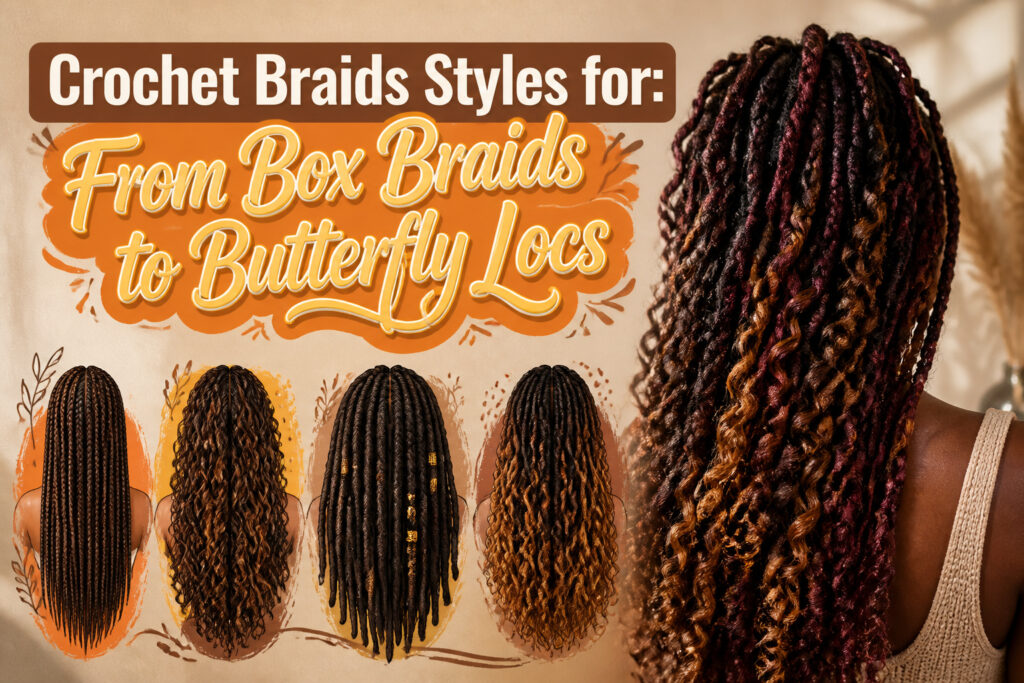
Crochet braids styles span from two-hour installs to full-day commitments, and the deciding factor is how long you need the style to stay neat. The catch is weight: faux locs and butterfly locs outlast curls by weeks, but the bulk tugs at your edges and neck over time. Yarn braids cut that heaviness entirely, trading synthetic hair for acrylic fiber you can find in any craft aisle.
1. Box Braids
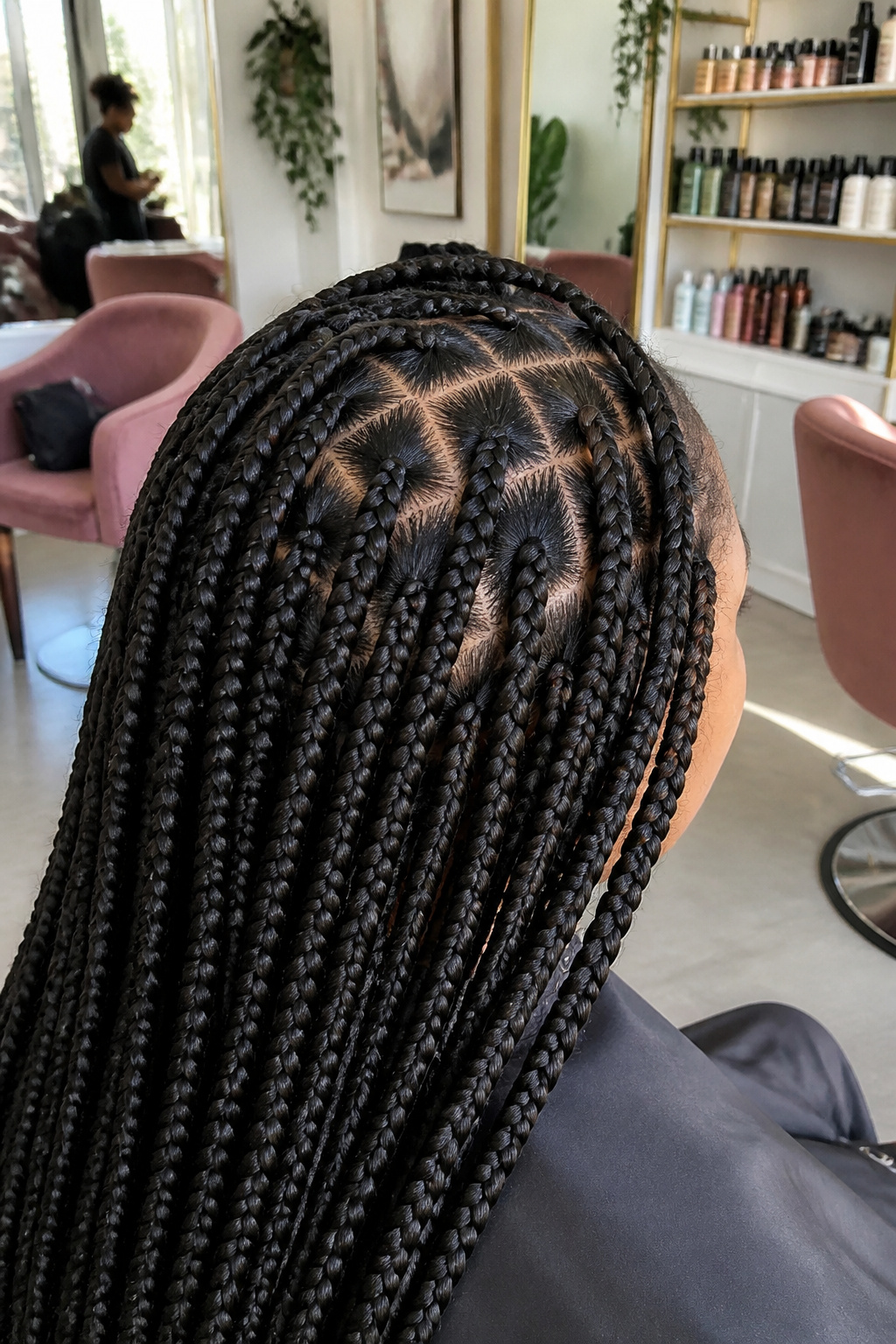
Square sections of hair, neat and uniform, are what most people picture when they think of protective braiding. The crochet version keeps that same clean geometry but cuts installation time to roughly two to four hours instead of the six to ten traditional box braids demand. Your natural hair gets cornrowed flat against the scalp first, then pre-made braids loop through with a crochet hook. That double layer, cornrows beneath extensions, is what makes this a genuinely protective option: your own strands stay tucked away from manipulation and weather.
The tradeoff is subtle but real. Crochet box braids are the easiest of these styles to pull into a ponytail, which matters more than you’d think by week three. Expect them to hold four to eight weeks with basic upkeep, and they typically run cheaper than traditional box braids since you need less extension hair overall.

Premium Material Protein Fiber: Crafted With A Unique Combination Of Premium Protein Fiber, Our Boho Box Braids Crochet Hair Curls Offers A Super Natural Braided Look With Realistic, Soft Curls Touch Feel Human Hair That Are Durable And Long-Lasting.

【Premium Material】: Our Goddess Boho Box Braids Crochet Hair Feels Like Real Hair Made With Premium Protein Fiber, Curls Look like Human hair Natural, Realistic, Durable And Long-Lasting.
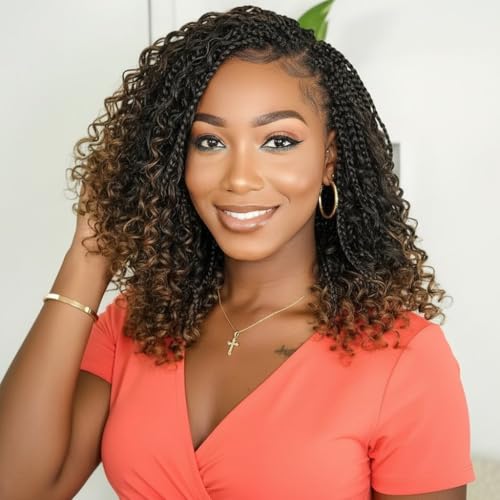
☎1. 【Crochet Braids Material】: Goddess Box Braids Crochet Hair is Made by 100% High Quality Synthetic Fiber, Crochet Box Braids with Deep Curly in Middle and Ends. Boho Crochet Braids Handmade Crochet Hair for Black Women.
2. Senegalese Twists
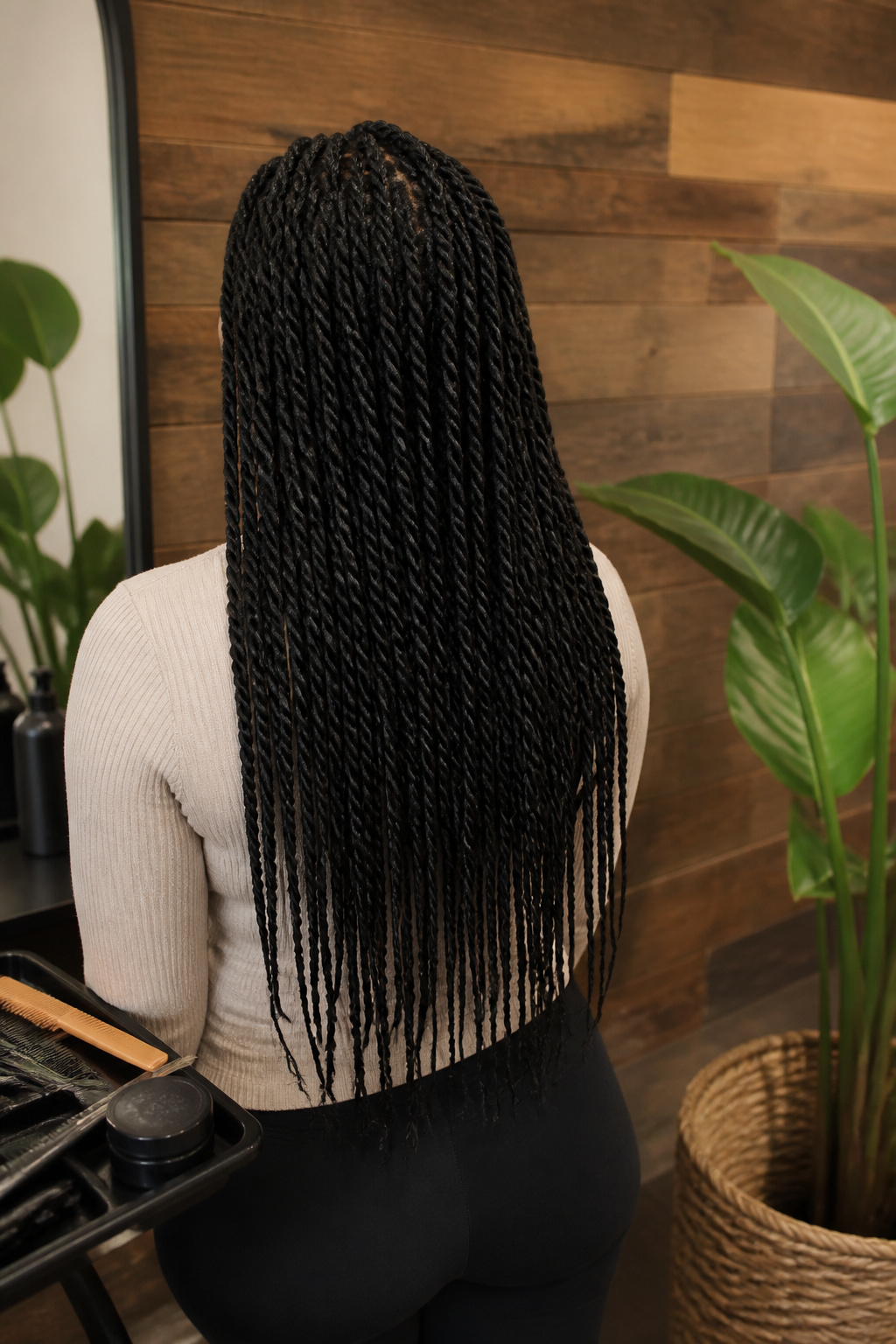
Senegalese twists use smooth, silky extension hair to create a sleek, rope-like twist that moves differently than the squared-off sections of box braids. Where box braids hold their shape in crisp, geometric rows, twists have a softer, more fluid quality that sways when you turn your head. That two-strand construction also reads a little more feminine to my eye, though you still get the same versatility in length and styling.
The texture difference matters for wear, too. Twists generally outlast straight or curly crochet styles, which tend to frizz or lose definition faster. In my experience browsing installs, the smoother surface of Senegalese twists just doesn’t tangle as readily as open curls or blunt-cut straight hair. Most crochet installs run 2 to 4 hours and use 5 to 8 packs of hair, so plan for that time investment either way; the payoff with twists is a few extra weeks of neat wear before you need a refresh.

【Boho Twist Crochet Hair Specification】Our Boho Island Twist Crochet Braids for Women Comes with 9 Packs/Lot, 12 Strands/Pack. Usually 6~7 Packs Is Enough to Make A Full Hairstyle. Different Color and Length Available for Making Choice. The Color Is Beautiful and Natural.

1.【Senegalese Twist Crochet Hair】:Straight and neat Ends give you the freedom to create an exclusive style. You can design the twist crochet hair kelagoo such as ponytail, bun and Shawl hair.We design the Pre LoopedCrochet Hair in order to support you make various styles.Twist Hair uses high-quality Kanekalon Hair, soft and smooth,which is not afraid of high temperature and frizz.

Jumbo Senegalese Twist Crochet Hair Pre Looped Braiding Material: Low Temperature Synthetic Fiber Havana Twist Crochet Hair Jumbo Senegalese Twsit Crochet Braiding Hair Extensions
3. Curly Crochet Braids
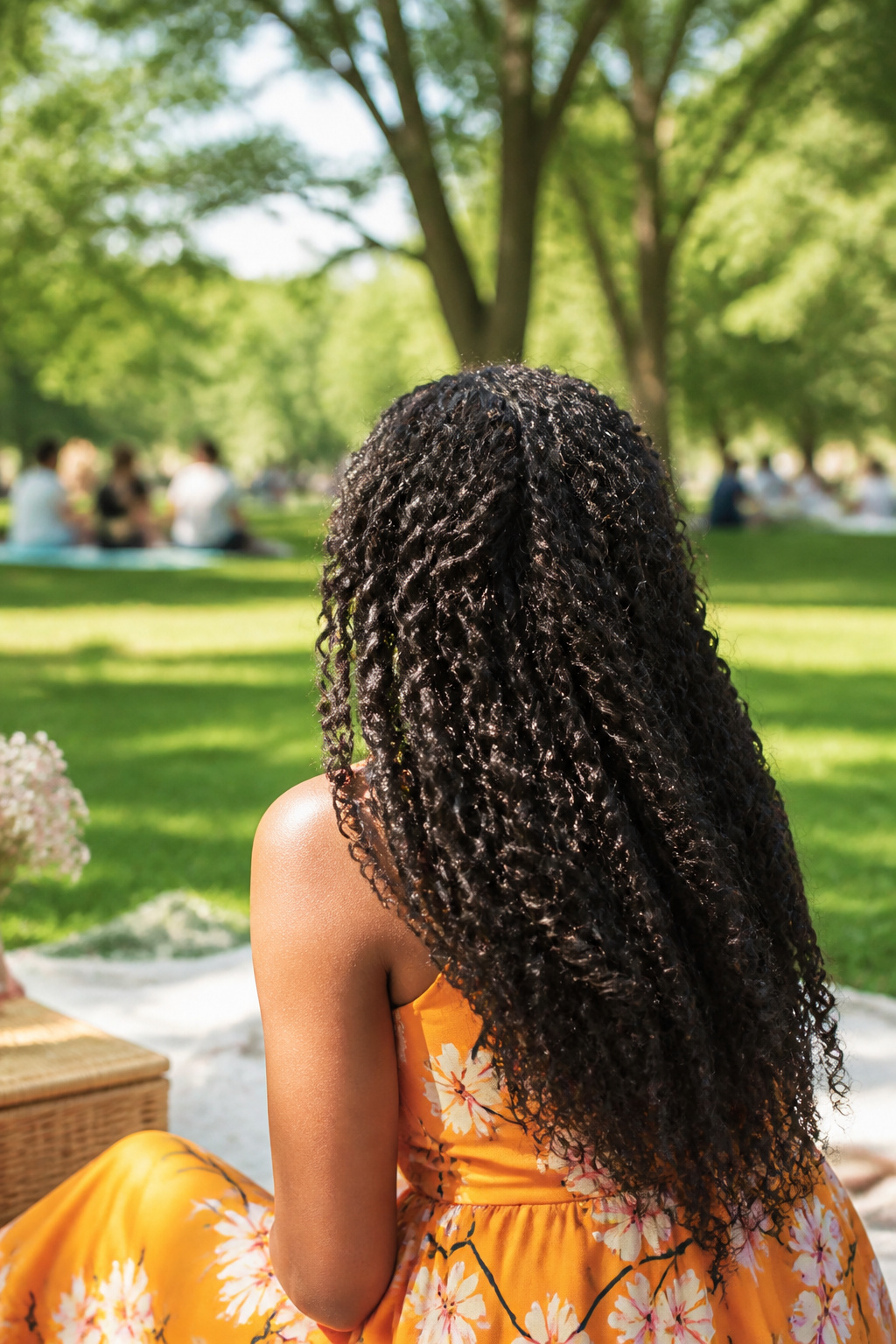
Curly crochet braids are the fastest style to install, running about two to four hours for a full head, and they deliver instant volume no natural routine can match. Water waves, tight ringlets, and Jamaican bounce braids each give a completely different look without waiting months for your own curl pattern to clump and define. The tradeoff is longevity: curls and straight styles sit at the quicker end of the install range, but locs and twists will outlast them.
"Crochet braids take about 3.5 hours to install and can last for five to six weeks… Perfect for vacation. Your hair will look great — and the same — every day!"
That consistency is what sells me. Natural curls shift daily with humidity, sleep, and product, but crochet curls hold their shape from morning to night. Five to six weeks of style memory beats redefining your wash-and-go every single morning.
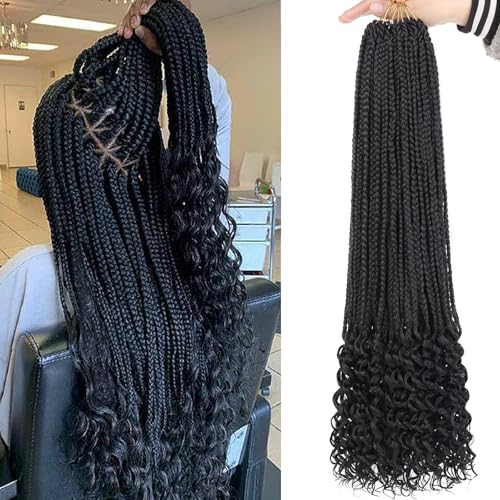
Material: Goddess box braids crochet hair, is made of high-quality synthetic fiber, natural texture, no odor, light weight, long service life, very comfortable to wear.
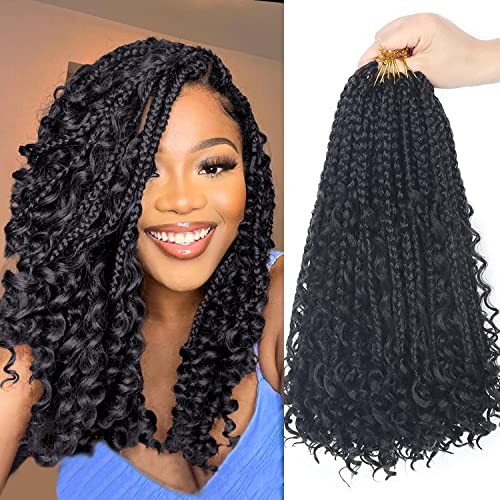
1.Goddess Braids Crochet Hair Material:Features: 100% Handmade Crochet Braids.Natural Looking, Box Braid Crochet hair Curly Ends is Every Beautiful.Usually 6-9 Packs Can Full A Head.
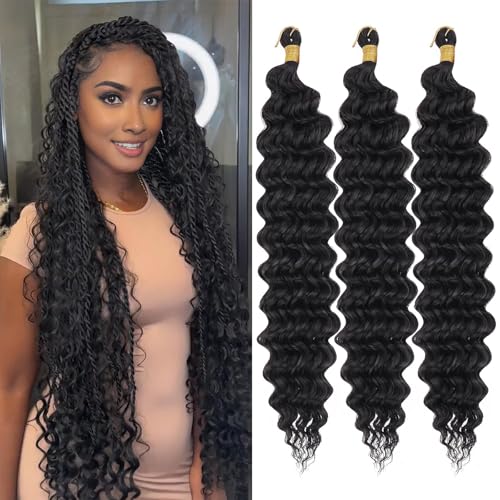
【Hair Materials】The Deep Wave Braiding Hair Is Crafted 100% High Quality Synthetic Fiber, it Is Light Weight,Smooth,Soft,Tangle-free.
4. Faux Locs
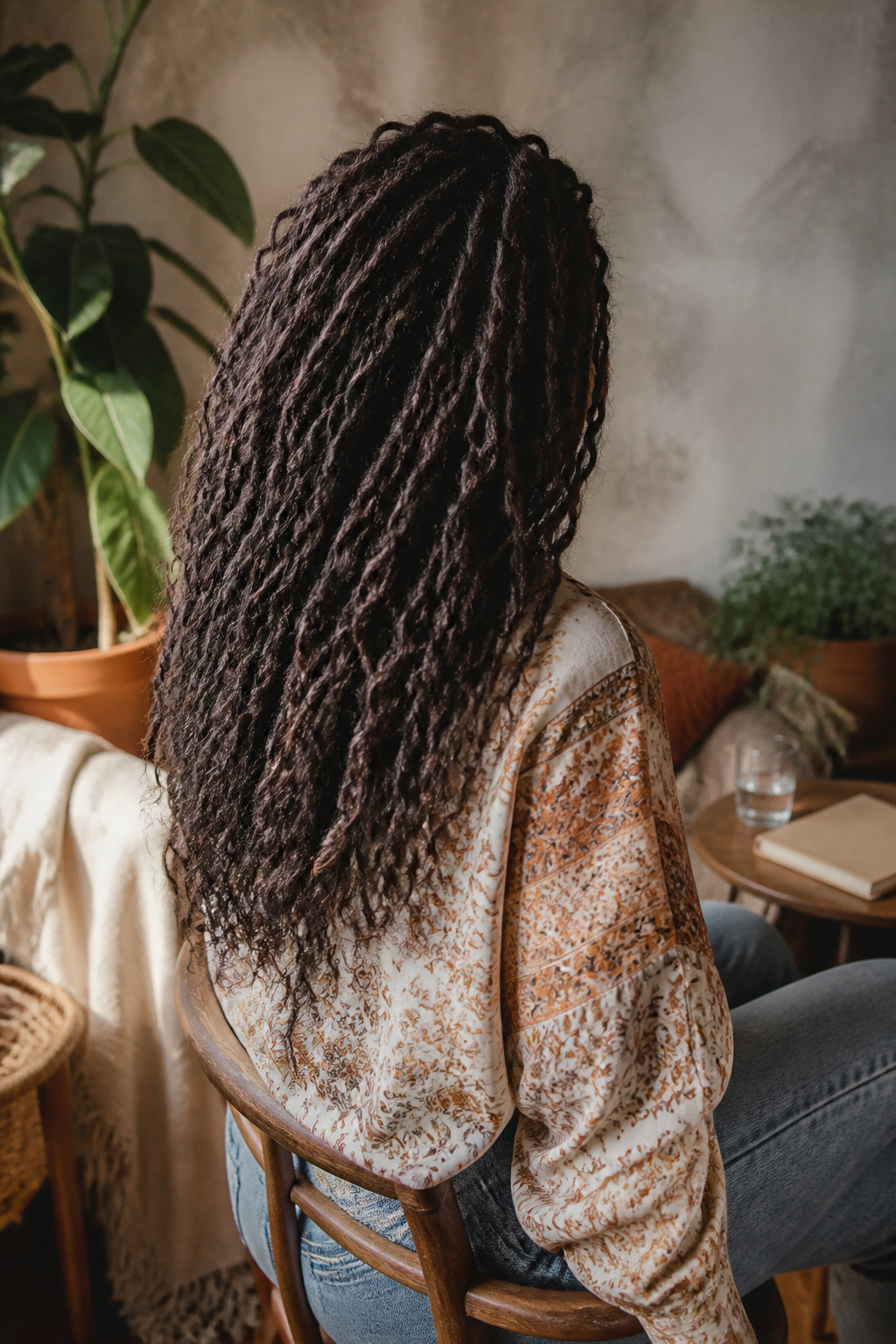
Crochet faux locs attach to cornrows the same way every other crochet style does: a latch hook pulls pre-made locs through each braid, and the loop tightens against the scalp. The difference is what sits on top. You get the texture and silhouette of mature locs without the years of growth, the retwisting, or the permanent decision.
Locs and twists share the longevity crown in crochet braids. Both styles outlast curls and straight installs by weeks, which matters when most crochet work lasts four to eight weeks total. The smooth, uniform surface of faux locs does not frizz or tangle the way curly textures do, so they stay presentable longer with less daily fuss.
Weight is the tradeoff. Faux locs carry more bulk per strand than twists or curls, and a full head uses five to eight packs of hair. The installed locs hang from cornrows rather than pulling directly from the scalp, which protects fragile natural hair, but the overall load still sits heavier than a twist install. I would not plan to wear them at maximum length for the full eight weeks; the tension on the neck and edges adds up. For anyone who has wanted the loc look but worried about traditional installation stress on their hair, crochet is the gentler door in.

Fashion Locs Texture Style: Faux locs crochet hair, soft locs hair for river locs, new goddess locs crochet hair for black women, bohemian locs boho style, 3 beautiful curls hair in middle and ends, beautiful and fashion

Soft Marley Twist Braiding Hair: XSASLYET marley twist braiding hair has a soft afro kinky texture that creates a natural, fluffy look. It blends well with natural hair and is ideal for protective hairstyles such as marley twists, passion twists, faux locs, and crochet styles.

Color Shown on Model: 1B
5. Passion Twists
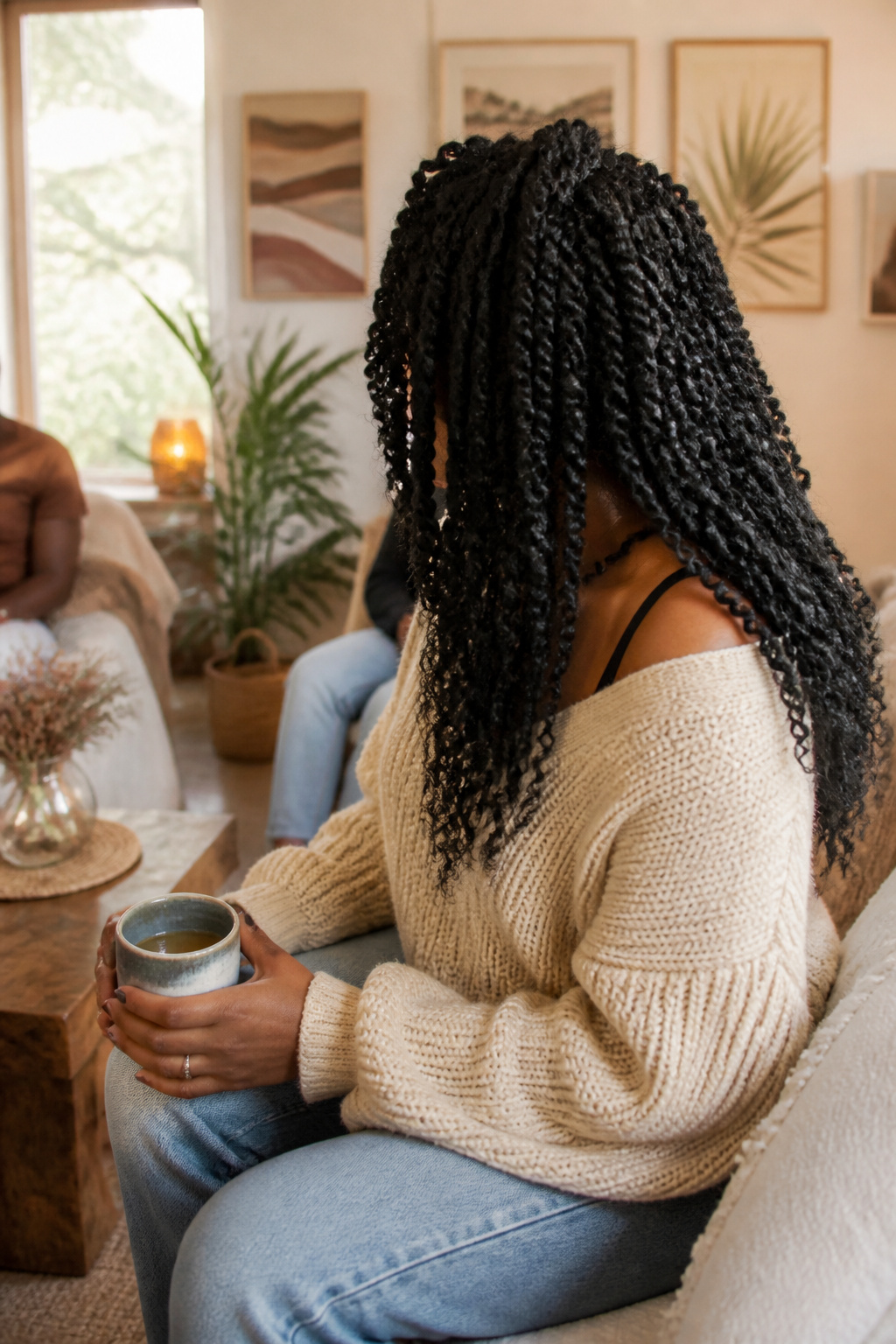
Passion twists sit somewhere between a neat protective style and full bohemian chaos, and that middle ground is exactly why they took over Instagram feeds a couple of years back. The technique uses two strands of wavy extension hair twisted together, which gives you a softer, less uniform rope than the sleek, straight finish of Senegalese twists. Where Senegalese twists look almost polished to a shine, passion twists have a little curl and movement at the ends that reads more lived-in and casual.
The crochet method for these is straightforward: the twists are pre-made and looped onto your braided base, which is how you get those 8" bob lengths done quickly without sitting for a full day of hand-twisting. Sources disagree slightly on naming here; some vendors and stylists use "passion twists" and "spring twists" interchangeably, while others treat them as distinct styles with similar textures. What you are actually getting matters more than the label: wavy hair, curly ends, and a lighter weight on your scalp than kinkier-textured options like Marley twists.
I would skip these if you want a style that stays neat for six weeks. The wave pattern loosens faster than smoother textures, and the whole point of the look is that slightly undone finish. If you need boardroom-polished, Senegalese twists win. If you want something that photographs well with minimal effort and reads as intentional rather than grown-out, passion twists are the better bet.

Unique Appearance:The Butterfly Locs Crochet Hair is New Fashion Trendy,Goddess Locs Crochet Hair,soft locs crochet braids is synthetic crochet Hair for black women

【Cute Bow Tie Stay On Head All Night】- Hate headache or leaving a mark on the head? Do you want to protect your fresh braids or heavy curly hair all night? Our big hair bonnets with soft elastic long straps will make you feel comfortable. Stays on all night, non-slip and breathable.
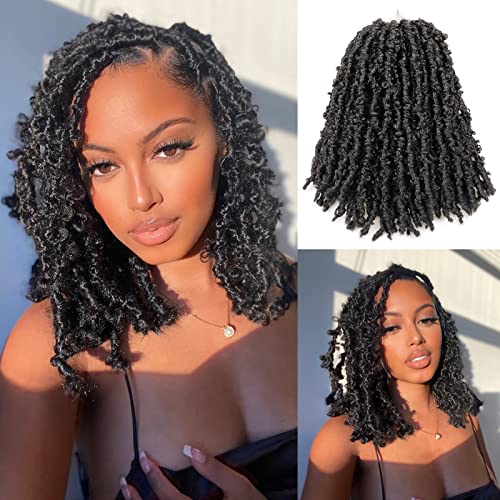
1. Made by high quality Low temperature synthetic fiber which is skin-friendly.
6. Butterfly Locs
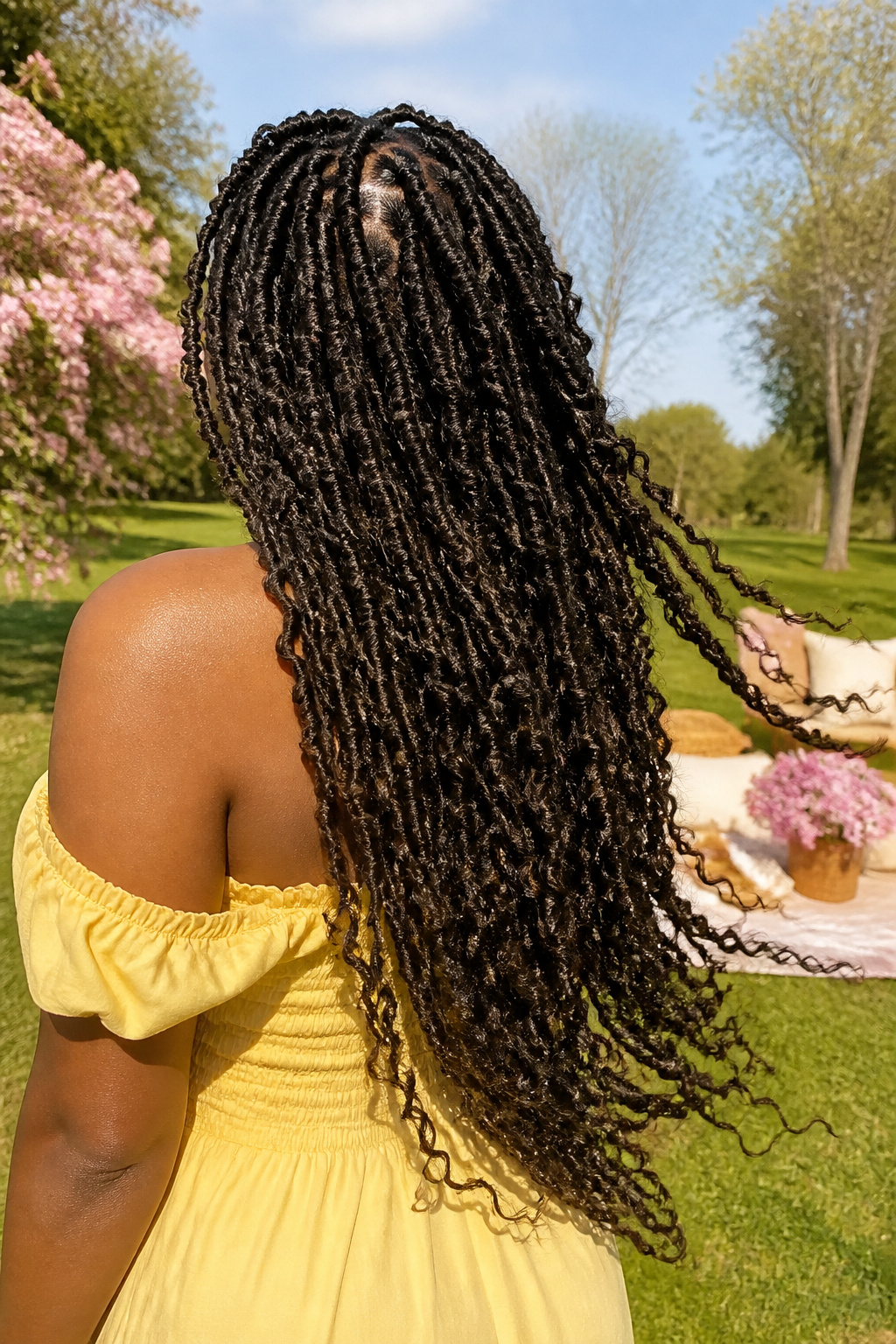
Butterfly locs are the distressed cousin of traditional faux locs, and the difference is right there in the loops. Hair is left out along the length of each loc, creating a textured, intentionally messy silhouette that reads as lived-in from day one. The name comes from those loops, which flare out like wings against the smoother base.
The crochet method matters here because the loops reduce weight significantly compared to fully wrapped faux locs. That lighter load on your scalp becomes important when you’re wearing the style for four to eight weeks. Less tension means fewer headaches and less stress on your roots over time, which is why I point people toward butterfly locs when they want the loc aesthetic but need to go long.
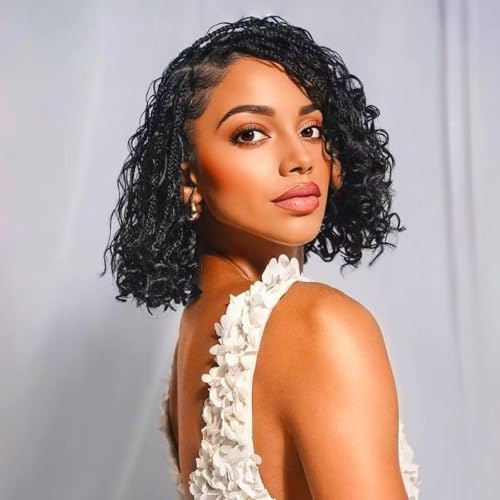
Goddess Box Braids Crochet Hair Material: Goddess Braids Crochet Hair Is Made Of High Quality Flame-retardant Low Temperature Synthetic Fiber. 100% Handmade Crochet Braids With Curly Ends.

Material: Box braids crochet hair, crochet hair made with low temperature synthetic fibers, is very close to real human hair, natural luster, light weight, comfortable and soft.

Premium Material Protein Fiber: Crafted With A Unique Combination Of Premium Protein Fiber, Our Boho Box Braids Crochet Hair Curls Offers A Super Natural Braided Look With Realistic, Soft Curls Touch Feel Human Hair That Are Durable And Long-Lasting.
7. Jumbo Twists
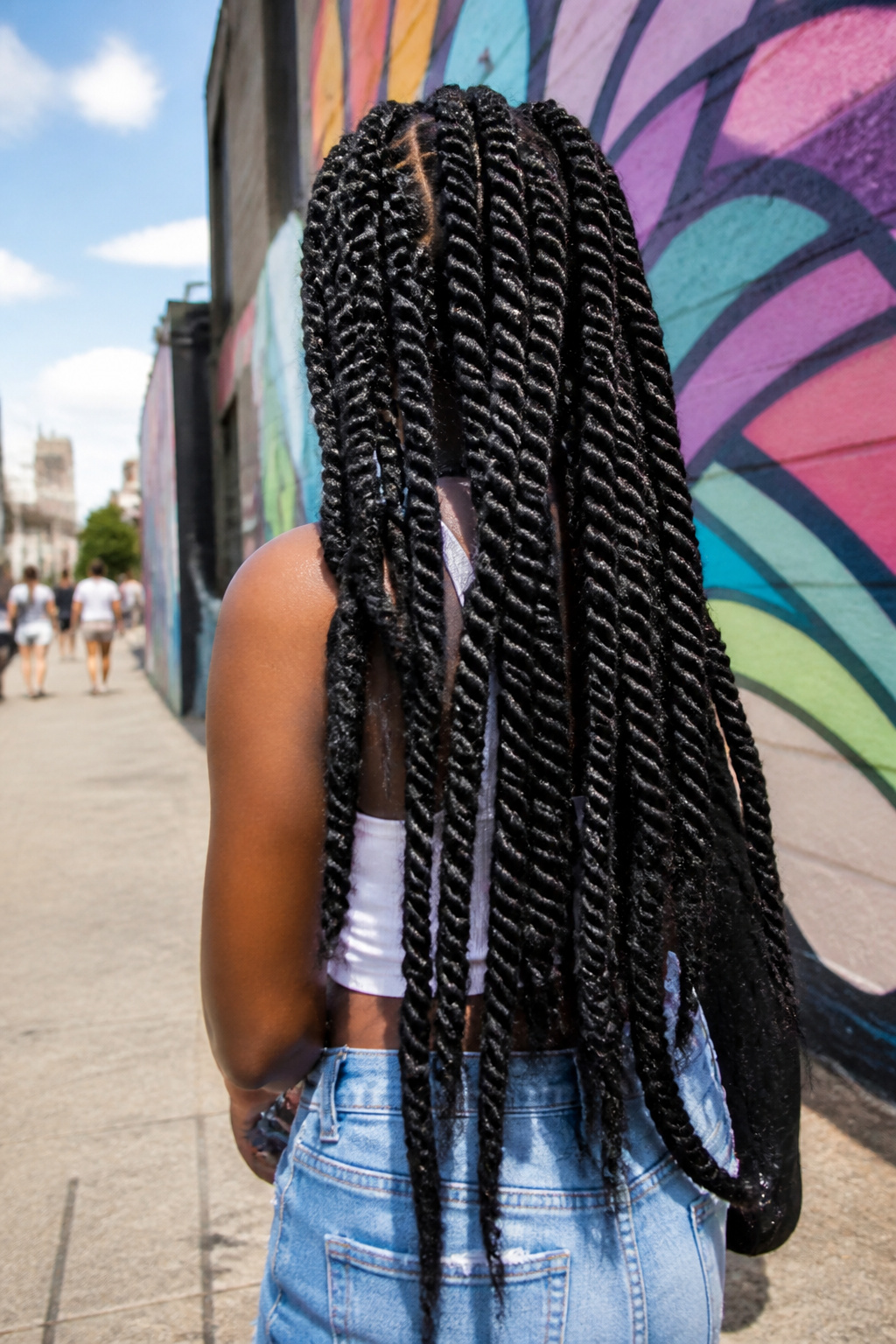
Jumbo twists are the shortcut version of a full head of smaller twists. You use fewer sections overall, so the install moves faster and the finished style carries more visual weight. The bold, oversized look reads as statement hair from across a room, which is exactly what draws people to it.
The tradeoff sits at the scalp. Each jumbo twist anchors more hair per section, so tension concentrates rather than spreading out. What feels fine in the salon chair can tighten over the first 48 hours as the hair settles. I’d rather check the parting grid twice during install than deal with a headache later. Light oil on the scalp, not the twists themselves, keeps things comfortable without dulling the sheen.
For texture, X-Pression Whirly Loop crochet hair builds the curl right into the twist. Pull each bundle apart before looping it in so the finished shape stays full rather than clumping. The style holds up with minimal daily effort, which is the whole point of going bigger.

1.【Senegalese Twist Crochet Hair】:Straight and neat Ends give you the freedom to create an exclusive style. You can design the twist crochet hair such as ponytail, bun and Shawl hair.We design the Pre LoopedCrochet Hair in order to support you make various styles.Twist Hair uses high-quality Kanekalon Hair, soft and smooth,which is not afraid of high temperature and frizz.
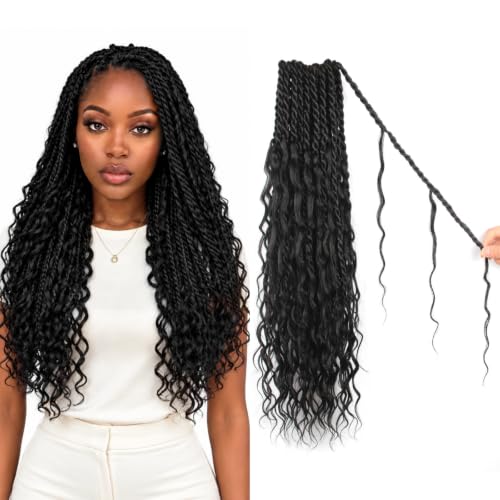
SOFT & NATURAL LOOK — No Stiff Plastic Feel:Made with upgraded protein fiber, these boho goddess twists feel soft and flexible, blending naturally with your own hair. The low-shine finish avoids the plastic look of ordinary synthetic hair, giving you a more realistic, everyday style.

【24 Inch Senegalese Twist Crochet Hair with Curls】Our Boho Senegalese Crochet Crochet Hair is made of high quality fiber,no smell,very light and soft, natural shine,silky to the touch,skin friendly,natural curls and curly ends.Boho style design makes the hair more fashionable and attractive,the hair is pre-plooped and pre-twisted,easy to install and save time,also very easy to clean and care,Come and try it!
8. Straight Crochet Hair
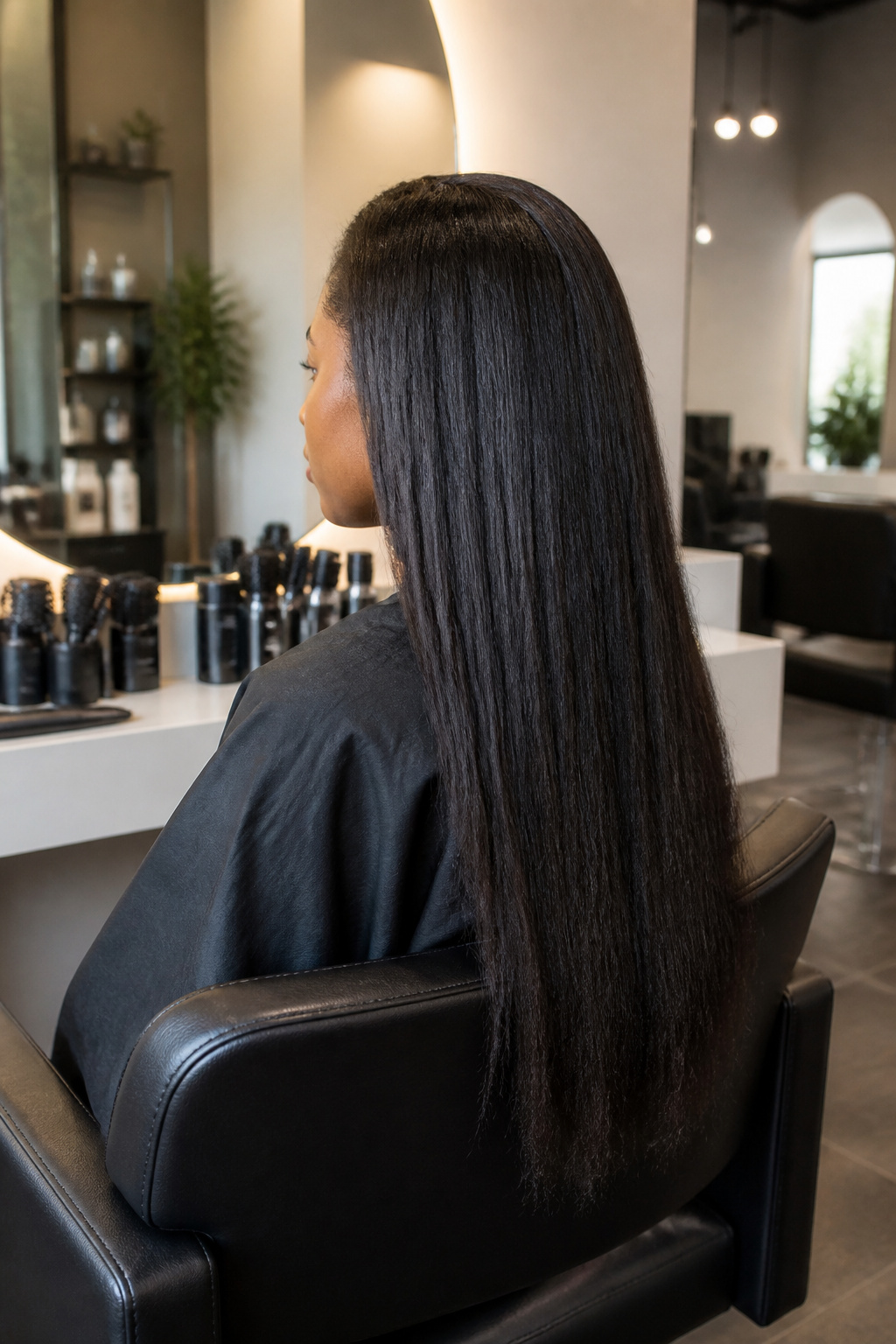
Straight crochet hair gives the sleekest finish of any texture, but that polish comes with a catch. Every bump in your cornrow pattern shows through, so the install has to be flat and the parting clean. Most people get three to four weeks before frizz at the root starts to give it away.
This is one of the two fastest installs you can choose, right alongside curly styles. A typical session runs two to four hours, and you will likely use five to eight packs of hair. The real challenge is blending. Yaki textures mimic relaxed hair and hide the transition better at the root, while silky straight options sit smoother but need more work to look seamless.
If you want the roots to truly disappear, human hair is worth the upgrade here more than anywhere else. You can flat iron the roots to blend with your own texture, and you can wash it without the synthetic finish going dull. A bob or waist-length install both work; the texture does the heavy lifting either way, and you skip the heat damage of pressing your own hair to match.

Hair Matearial: Our Pre Looped micro brazilian kinky curly crochet hair is made of made with 100% high quality high temperature synthetic fibers, which can be washed with hot water, does not distort at high temperatures and is easy to style. Also,since it has been Pre Looped, it will not tangle, so if you are more worried about this, please rest assured.

Eerya Goddess Box Braids Crochet Hair: Bohemian Crochet Braids Box Braids Crochet Hair Boho Box Braids, Made of High Quality Synthetic Fiber, 100% Handmade 3X Smedium Box Braids Crochet Braids Hair Extensions.

Goddess Box Braids Crochet Hair Material: Goddess Braids Crochet Hair Is Made Of High Quality Flame-retardant Low Temperature Synthetic Fiber. 100% Handmade Crochet Braids With Curly Ends.
9. Ombre Crochet Styles
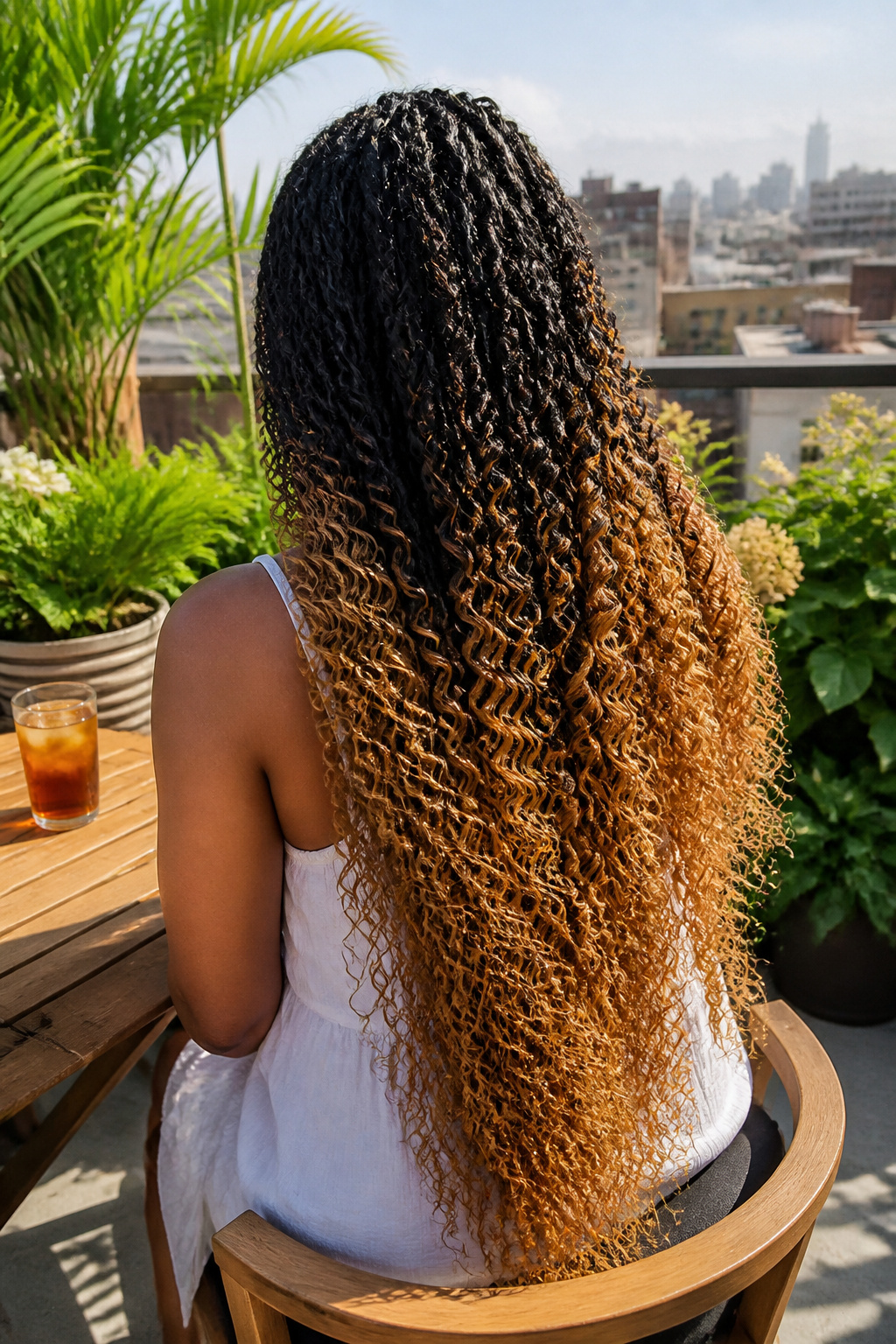
Pre-colored gradient extensions let you skip the chemical processing entirely. The color shift is already woven into the pack, darker at the loop and lighter toward the ends, so your natural hair stays untouched underneath. What convinced me, reading through the available options, is how the base color determines whether the ombre reads as subtle or dramatic. A dark root fading into honey or amber stays close to natural tones and works for everyday wear. If you want something bolder, the packs that move from deep amethyst or indigo into brighter ends give the same effect without the salon commitment. The transition itself is gradual, not a hard line, because the fibers are blended during manufacturing rather than dip-dyed after. That means less tangling at the color shift and a smoother overall look. For maintenance, a silk scarf at night keeps the gradient intact longer, since friction tends to dull the lighter tips first. Moisturizing the scalp still matters; the color may be synthetic but your roots are not.

🎄Material: Curly goddess locs crochet hair extension is 100% synthetic high temperature fiber. Goddess locs crochet hair with curly ends, faux locs crochet synthetic braiding hair, goddess loc crochet hair extensions wavy for black women.

Faux Locs 20 Inch Material: Soft Locs 20 Inch Crochet Hair extension is made of High Quality Low Temperature Flame-Retardant Synthetic Fiber, 100% Aayubb Synthetic Hair Extensions Suitable for All Hair Types

1.Material: Synthetic Hair Extensions,New Goddess Locs Crochet Hair Braid Extension With Deep Curly In Middle And Ends.
10. Curly Crochet Pixie Cut
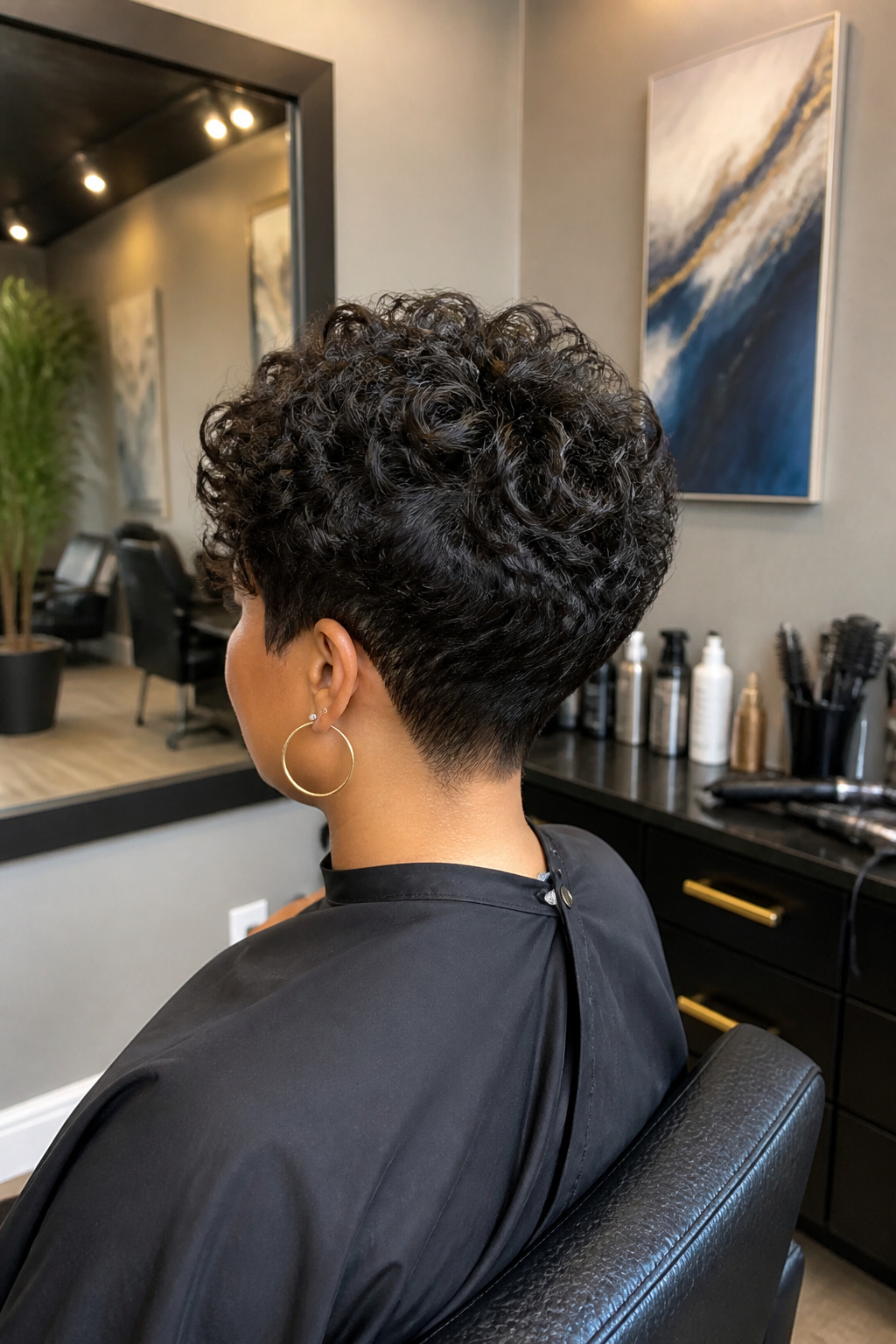
A curly crochet pixie cut lets you wear cropped, face-framing volume without touching your own length. Your stylist cornrows your natural hair close to the scalp, then crochets in short, curly pieces and trims them into shape around your jawline and cheekbones. The cornrow base stays hidden underneath, so the cut reads as your own hair.
What sold me on this method is the freedom to go dramatic without growing anything out or cutting anything off. Want to try a pixie for a month? The crochet version comes out when you’re ready. Want your long hair back tomorrow? Take the braids down and you’re there. Alicia B. Gettys built hers with Harlem125 Synthetic Hair Braids in size large for those soft, piled-high curls, and the whole install moves fast compared to hand-braiding.
Short crochet works because the cornrows give the stylist a fixed grid to shape against. They can place density exactly where your face needs it, keep the silhouette tight at the nape, and build height at the crown. No awkward grow-out phase, no salon chair regret.

1.ToyoTress Distressed Butterfly Locs Crochet Hair is made of high quality low temperature synthetic fiber which is skin-friendly.

1:24 Inch New Hairstyle Pre-Twisted Butterfly Locs Crochet Hair Made of 100% High Quality Synthetic Firber By Professional Braider,It Is Soft Neat and Tight and not easy to Spread.

1:24 Inch New Hairstyle Pre-Twisted Butterfly Locs Crochet Hair Made of 100% High Quality Synthetic Firber By Professional Braider,It Is Soft Neat and Tight and not easy to Spread.
11. Half-Up Half-Down Styles
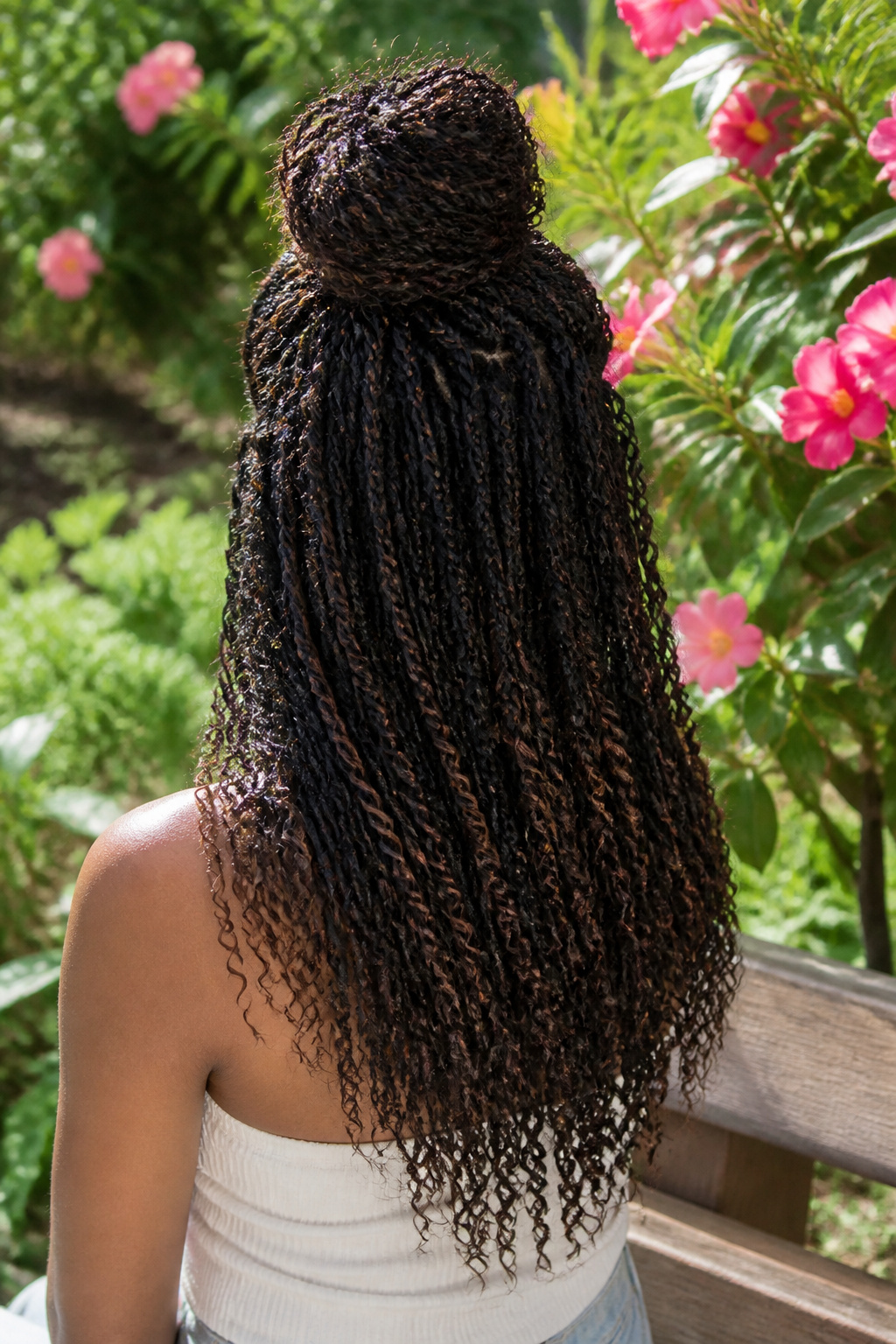
A half-up half-down style with crochet braids gives you the polish of an updo without the tension of pulling everything back. The trick is where you place the part and how you gather the hair, because the cornrow base underneath is doing more work than it looks.
Most stylists install crochet braids using the cornrow method, which creates a flat, secure foundation. For a half-up style, work with the direction of those cornrows rather than against them. Part the top section from ear to ear, following the curve of your head, and gather that hair with a soft elastic or a few large bobby pins. Keep the tension light. The individual method would let you part anywhere, but the cornrow method most people use means your parting options are guided by where those braids sit.
When you loop the top section up, check that you are not pulling the crochet knots at the crown. Those knots are what hold the extension hair to your braids, and stressing them loosens the whole install. A loose ponytail or two small twists pinned at the back works better than a tight, high gather. The weight of the hair hangs from the cornrows, not your scalp, which is why crochet braids are easier on follicles than traditional box braids. Still, a heavy top knot will tug the front braids backward over time.
For daily wear, I rotate between a low half-up gather and simply pinning the sides back with hair cuffs. Both keep the cornrow base flat and the knots undisturbed.
12. Crochet Braids with Bangs
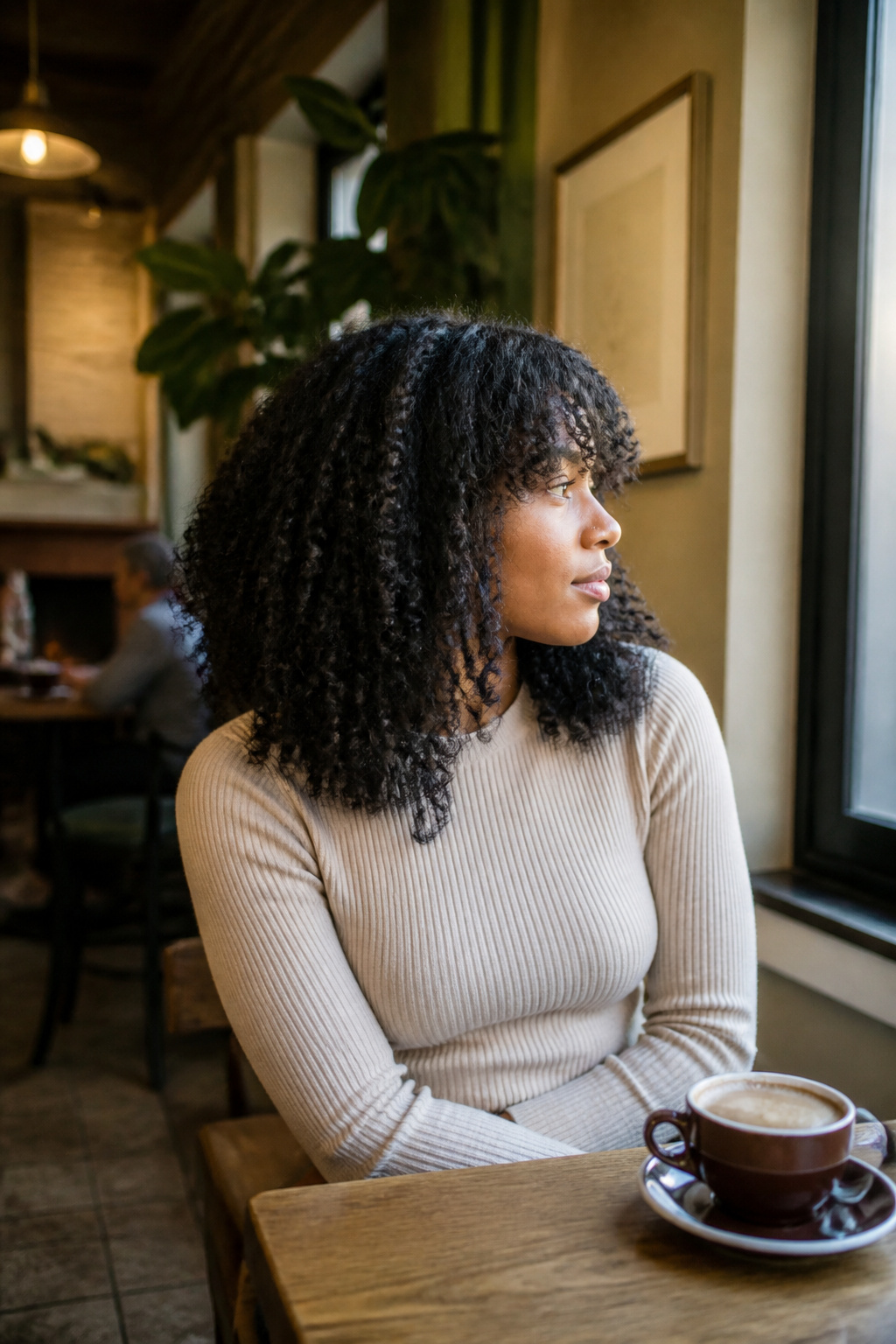
Bangs on crochet braids need a different install pattern than the standard straight-back cornrows. Your stylist will leave the front section of your natural hair in a looser braid pattern, or place shorter crochet pieces along the hairline, so the strands fall forward instead of being pulled into the rest of the style. The forehead contact is the maintenance issue: those front pieces pick up oil and sweat faster than the rest, so they need more frequent washing or at least a dry-shampoo refresh between full washes.
I have seen stylists achieve this two ways. Some use a curly or wavy crochet hair with the loop placed closer to the face, then trim the front to eyebrow length after install. Others buy pre-looped hair already cut into a bang shape and work it into a U-shaped cornrow that curves across the forehead rather than running straight back. Either approach works, but the U-pattern gives you a little more control over exactly where the bangs sit and how dense they look.
The tradeoff is real. Bangs soften the face beautifully, but they also mean you are touching the style more, which shortens its lifespan. If your skin runs oily, plan on a shorter wear time or keep a spray bottle with diluted shampoo handy for spot-cleaning just that front strip.
13. Yarn Crochet Braids
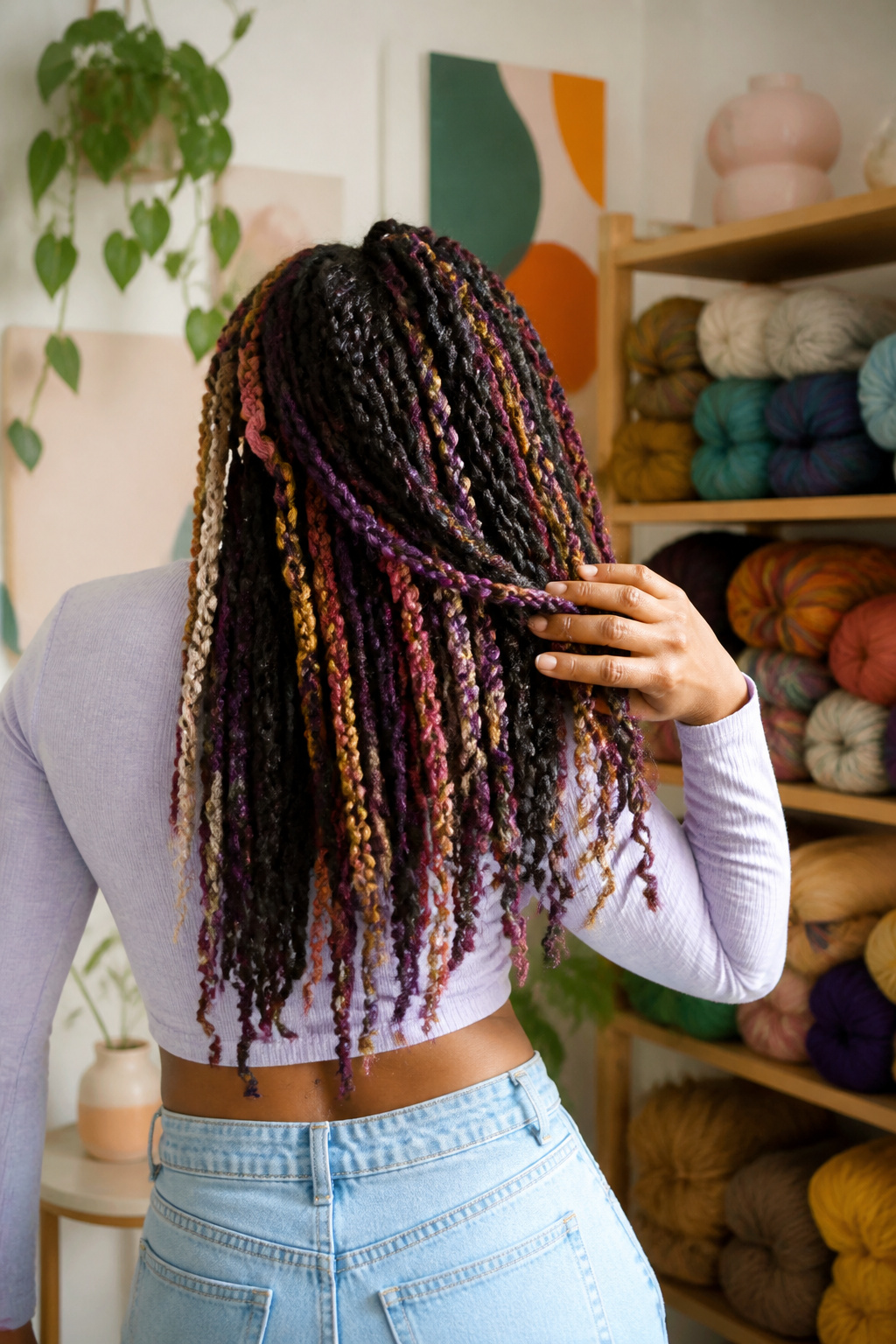
Yarn crochet braids swap synthetic hair extensions for acrylic or wool yarn, and the difference is immediate on your scalp. The material carries far less weight, so tension headaches become a non-issue even with longer installs. Color options open up well beyond natural hair shades; you are working with a fiber made for knitting, so every skein on the craft store wall is fair game. That neon pink or slate gray you would never find in a hair pack? It is right there.
The texture shift matters for daily care. Yarn absorbs moisture differently than synthetic hair, so your scalp can dry out faster underneath. A light oil with tea tree or peppermint keeps itch at bay without weighing the fiber down. Washing demands more attention too: yarn holds water longer, and damp braids tucked against your scalp for hours are asking for mildew. Dry thoroughly, always. At night, a silk or satin bonnet preserves both the color and the shape for the full four to eight week lifespan.
14. Crochet Braids with Rubber Bands
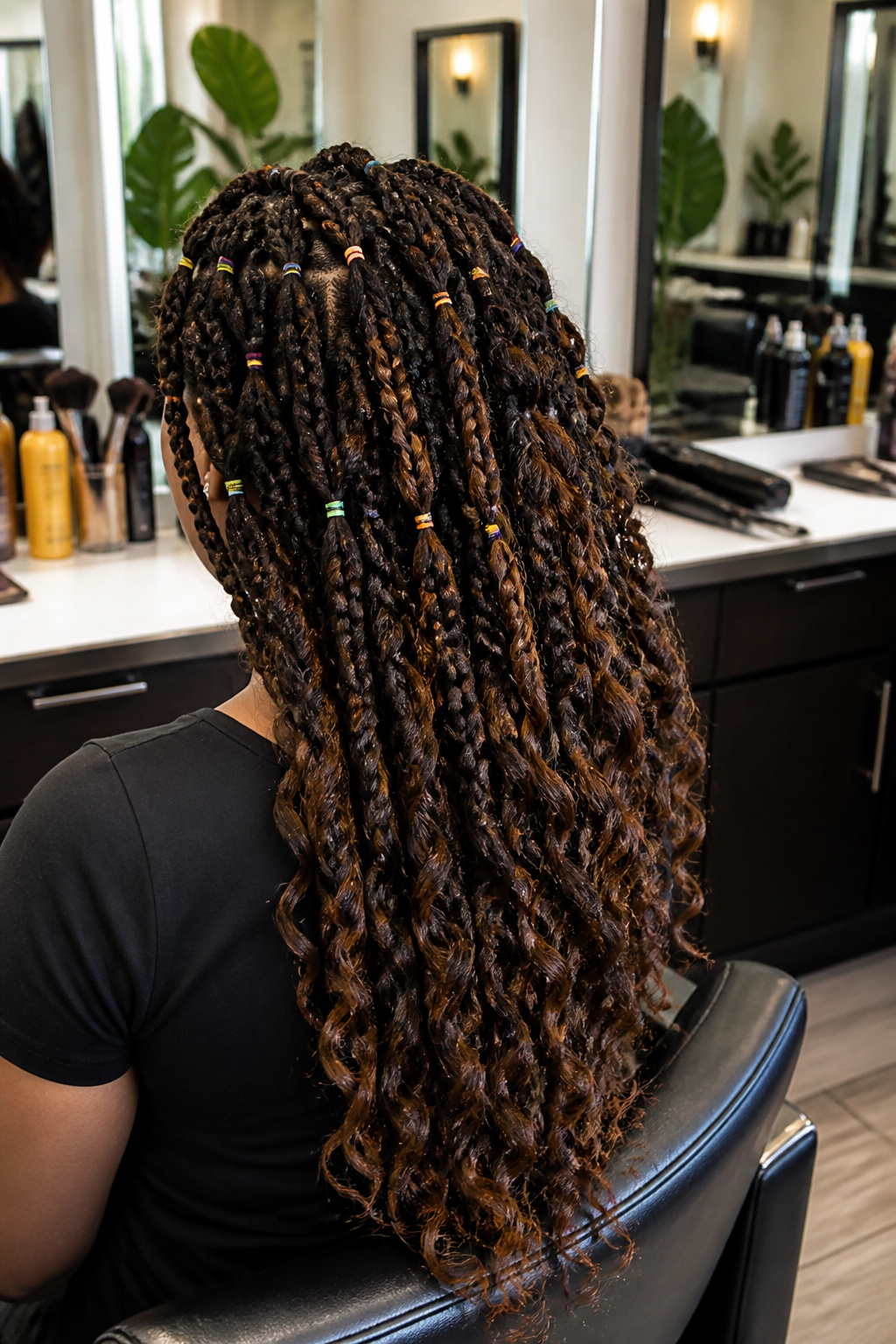
Small rubber bands turn crochet braids into something more deliberate without adding hours to the install. Tying them at intervals down a braid creates clean color-blocked sections or a criss-cross pattern at the hairline, the kind of detail that reads as intentional rather than busy. I like this approach because the band itself does the visual work; you are not re-braiding anything, just stopping and securing.
The catch is tension. Crochet hair is already held by the knot at the root, and a rubber band adds a second compression point. Pull too tight and the braid buckles or the scalp shows stress at both anchors. What works better is sliding the band over the finished braid and letting it sit snug, not strapped, so the two securing methods share the load rather than fight each other. Leave the band loose enough that the braid still hangs straight; if it dimples or bows, it is doing too much.
For the criss-cross front style that pairs with kinky crochet in back, the bands sit only at the front perimeter where the eye actually lands. That keeps the decorative part quick and the rest of the install standard, which saves time and limits the tension issue to a small area.
15. Knotless Crochet Braids
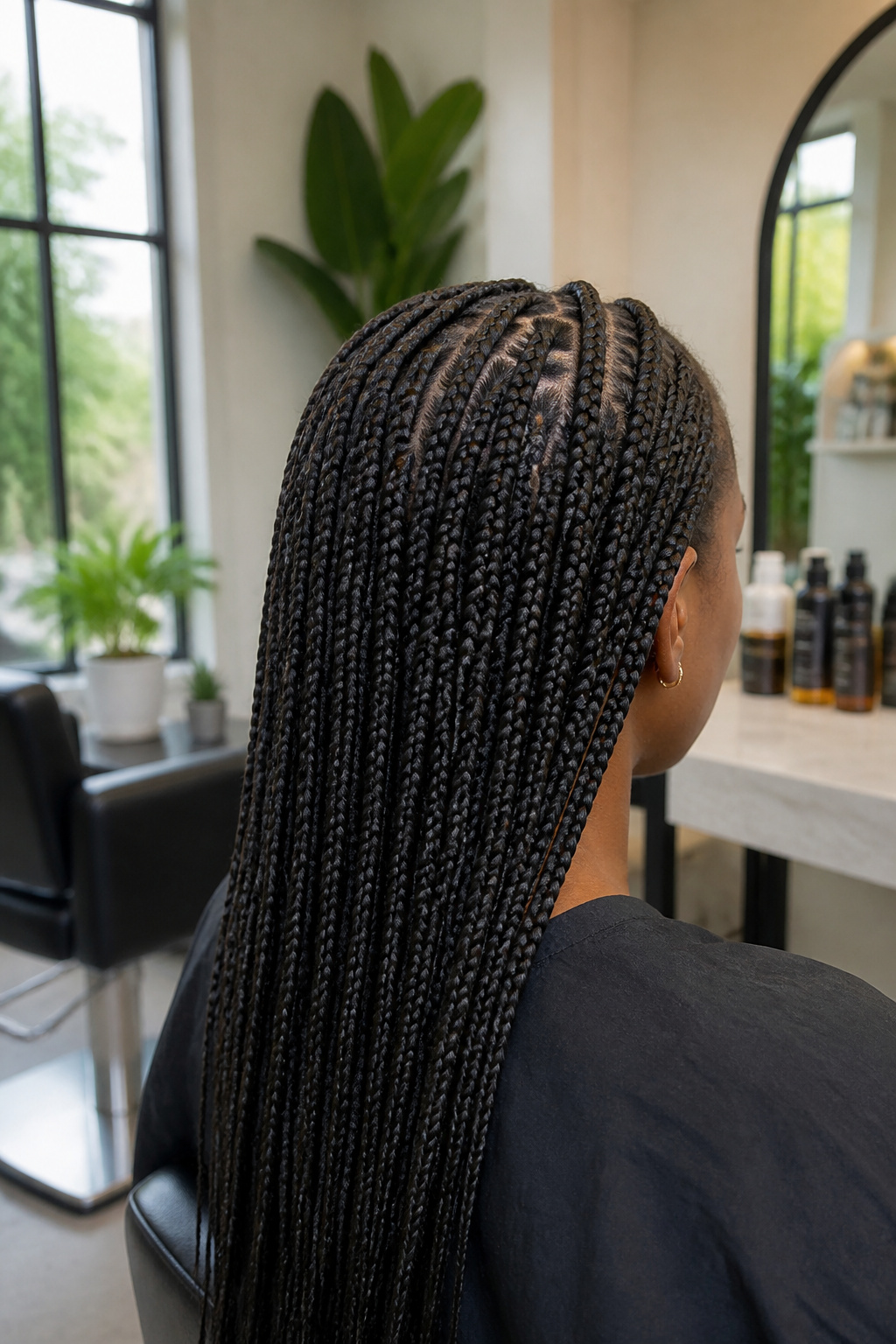
Knotless crochet braids use a newer installation method that hides the anchor knot at the root, giving you a cleaner scalp line that looks more like hair growing straight from your head. The standard crochet technique loops extension hair through your cornrows and leaves a small, visible knot where each piece is secured. With knotless crochet, that knot gets tucked or woven differently so it sits flat and out of sight.
The tradeoff is real. That visible knot in traditional crochet is what keeps the hair locked in place through the full 4–8 week wear window. Locs, twists, and braided styles usually hold the full eight weeks; curls and straight textures slide toward the shorter end. Knotless methods can loosen faster because the anchor point is less pronounced, so you might notice slipping closer to week four or five, especially if you’re active or sleep without a satin cap. For me, the choice comes down to whether I’m wearing the style up or down. If I want high ponytails or exposed parts, knotless wins. If I just need a low-maintenance protective style to last a full two months, I stick with the standard loop.
What Crochet Braids Cost in Time and Materials
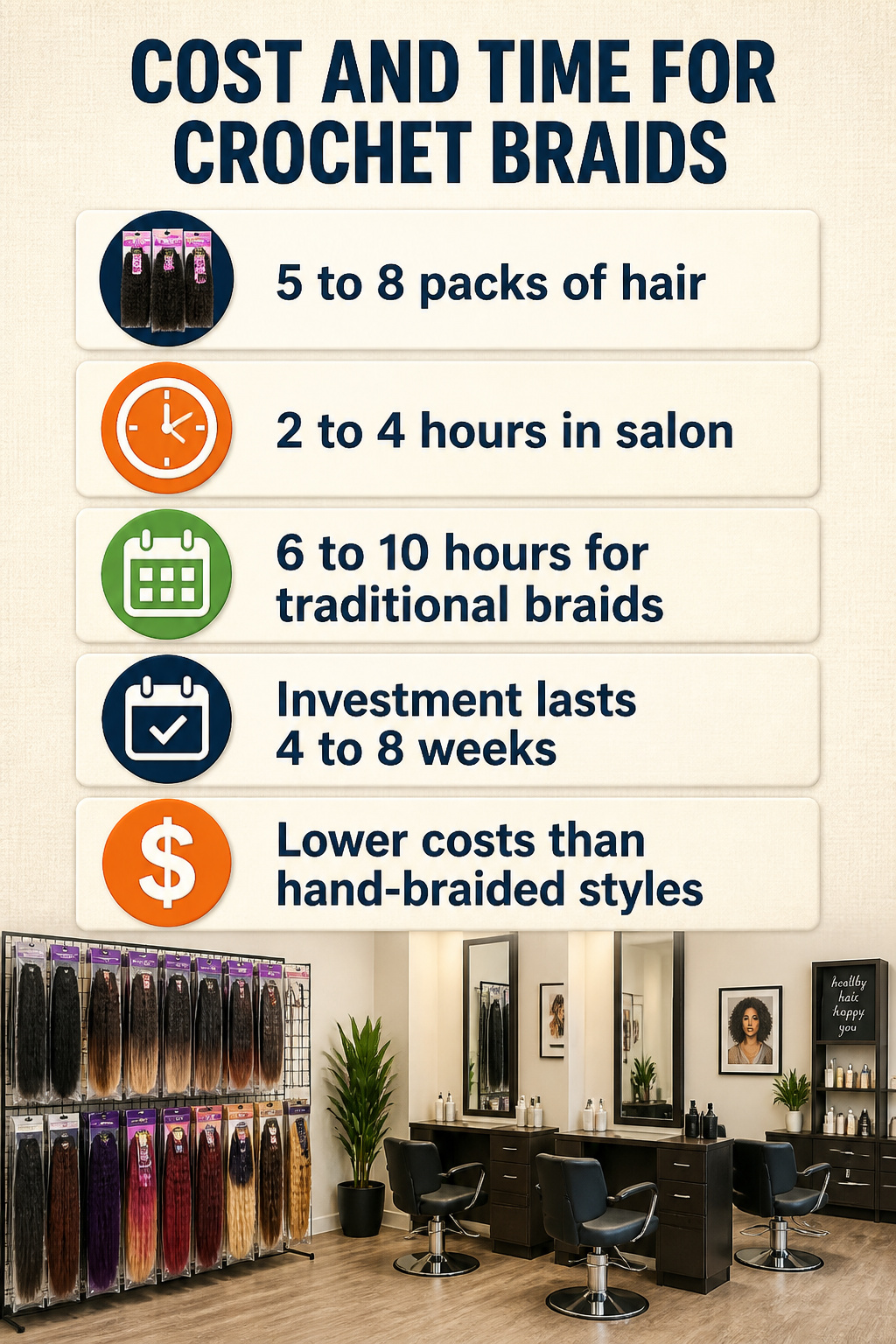
A full head of crochet braids usually needs 5 to 8 packs of hair, which is less than you might guess from the volume you get. The install itself runs 2 to 4 hours in a salon, though curls and straight styles tend to land on the shorter end of that window while locs and twists stretch toward the longer side. I have watched friends block off half a Saturday for traditional box braids that take 6 to 10 hours, so the crochet method saves serious time if your schedule is tight.
Salon pricing varies too much by city and stylist to pin down, but the time savings often translate to a lower bill than hand-braided alternatives. Doing it yourself means buying the hair and a latch hook, then setting aside those same 2 to 4 hours at your own pace. Either way, the style holds 4 to 8 weeks, so the upfront investment spreads across a month or two of wear.
How I Wash Crochet Braids Without Ruining Them
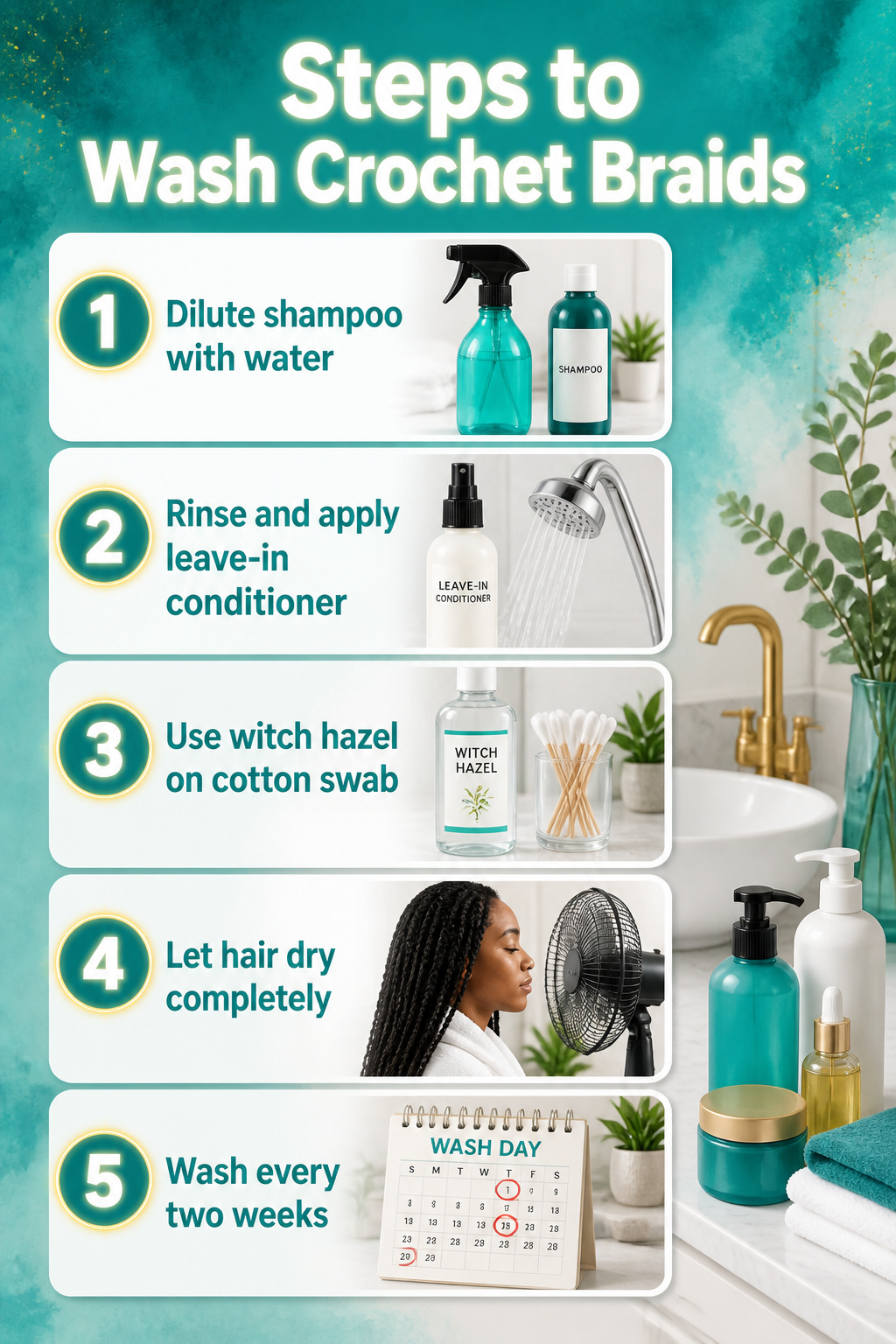
The real work happens at your scalp, not on the extensions themselves. Your cornrows are tucked under there for weeks, and they are what will dry out or itch if you ignore them.
- Dilute your shampoo with water in a spray bottle and mist it directly onto the scalp, not the added hair. Massage gently with your fingertips to lift buildup without loosening the knots.
- Rinse thoroughly, then follow with a leave-in conditioner sprayed the same way: scalp first, then lightly over the extensions if they feel dry.
- Between washes, witch hazel on a cotton swab keeps the scalp clean, and a light oil or calming lotion soothes any tightness. I do this every few days, especially around the edges.
- Let everything dry completely before you style. A damp scalp under crochet braids can lead to mildew or fungus, and that smell does not wash out easily.
Washing every two weeks is the sweet spot: often enough to keep the cornrows healthy, not so often that you shorten the install’s life.
When Crochet Braids Damage Hair
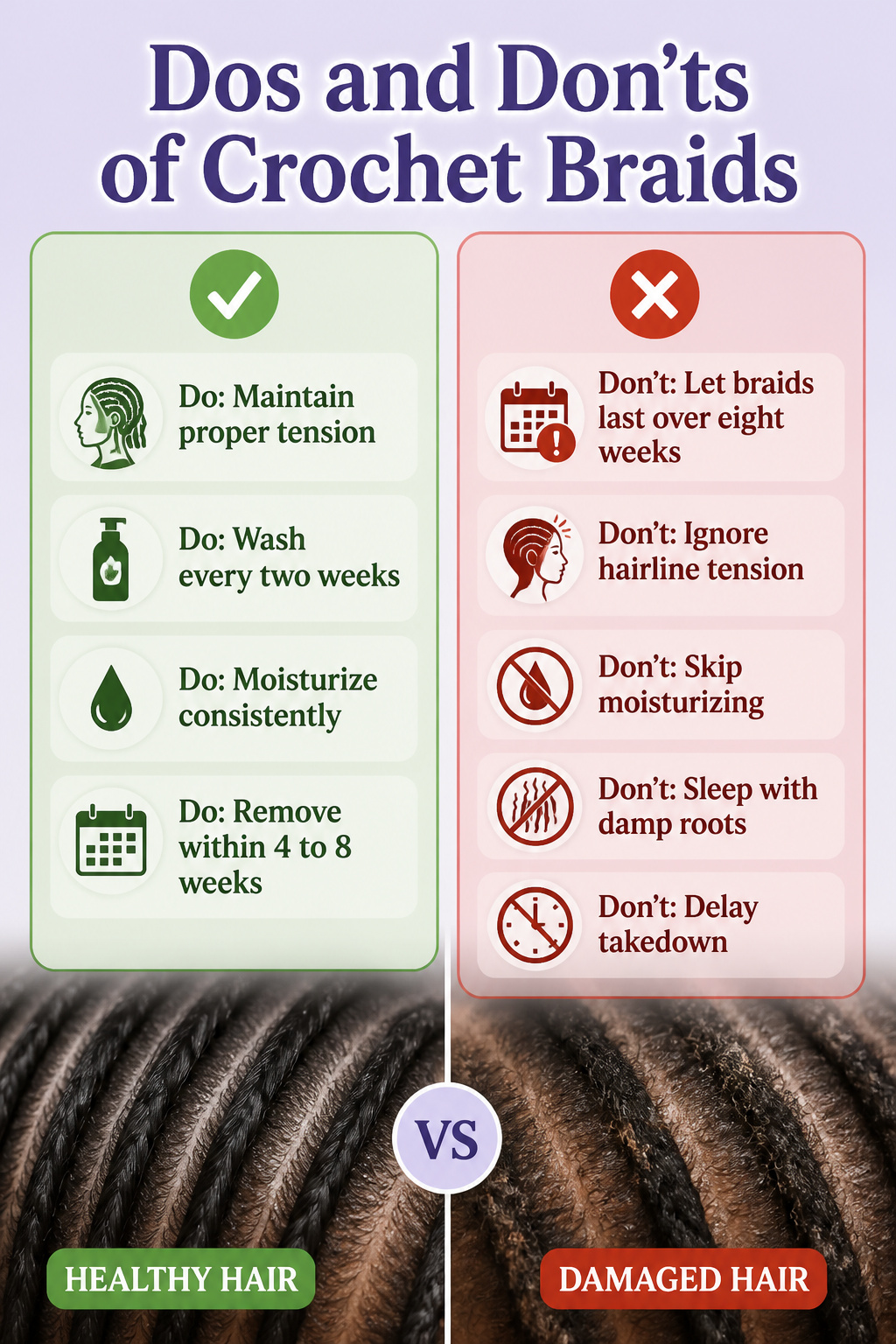
Crochet braids themselves do not damage hair when the install respects your tension threshold. The problems start with cornrows braided too tight at the hairline, which strains the roots from day one. A dry scalp left unmoisturized underneath compounds the stress, and wearing any style past eight weeks risks matting and breakage where you cannot see it forming.
Timing matters more than most people expect. Four to eight weeks is the standard range: straight crochet slips to three or four weeks once the roots frizz, while locs and twists hold closer to six to eight. Pushing past that upper limit, even when the style still looks presentable, is where the real damage sets in.
Washing every two weeks with diluted shampoo, directed at the scalp between the cornrows, keeps buildup from cementing the braids. Dry thoroughly; damp roots near the scalp invite problems you will not notice until takedown. The install and the takedown are bookends. Get the tension right at the start and respect the calendar at the end, and your hair comes through just fine.
Faux Shaved Side Without the Clippers
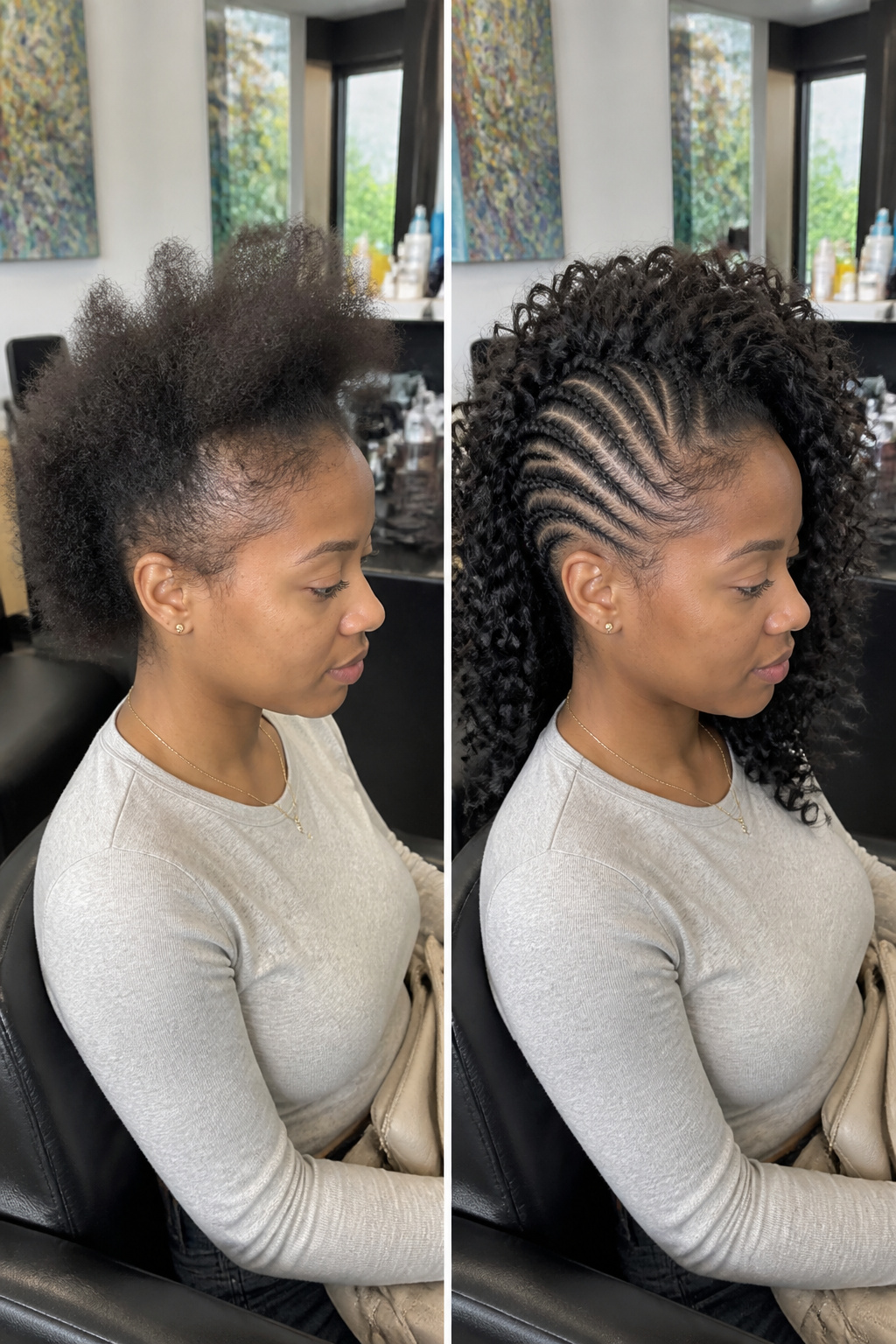
Directional parting is what sells the illusion of a shaved side without ever touching clippers. Your stylist cornrows your hair for the crochet install, then leaves a few cornrows bare on one side while packing the rest with extensions. The bare rows read as scalp, and the dense rows read as volume, so the eye fills in an undercut automatically.
Varying the cornrow density matters more than you’d think. Tight, narrow rows near the "shaved" edge look like regrowth; wider, spaced rows where the hair is "full" mimic the weight of longer hair falling over a fade. I’ve watched stylists angle the part slightly toward the temple rather than drawing it straight back, and that diagonal line makes the whole thing feel intentional rather than like a half-finished install.
Most crochet braids styles roundups skip this one entirely, probably because it lives in the gap between braiding and barbering. It takes a stylist who can read a head shape the way a barber reads a jawline. If yours can, the payoff is a look that shifts from streetwear to office without anyone guessing it’s all loops and knots.
Frequently Asked Questions
What are crochet braids?
Crochet braids are a protective hairstyle where extension hair is looped through cornrowed natural hair using a latch hook. Your own strands stay tucked beneath the cornrows and added hair, which shields them from daily manipulation and weather. The method works with almost any texture: box braids, twists, curls, locs, or straight hair.
How long do crochet braids last?
Most crochet braids styles last four to eight weeks. Locs and twists hold the longest at six to eight weeks, while curls and straight textures slide toward four to six weeks before frizz or root growth becomes noticeable. Pushing past eight weeks risks matting and breakage where you cannot see it.
How are crochet braids installed?
A stylist cornrows your natural hair flat against the scalp, then uses a crochet hook to pull pre-made extension pieces through each cornrow and secure them with a knot. The whole process takes two to four hours for most styles, with curls and straight hair on the faster end and locs or twists toward the longer side.
Can you wash crochet braids?
Yes, every two weeks is the sweet spot. Dilute shampoo with water in a spray bottle and mist it directly onto the scalp between cornrows, not the extension hair. Massage gently, rinse thoroughly, and dry completely before styling; damp roots under braids can lead to mildew or fungus.
Are crochet braids damaging to hair?
They are not damaging when installed with even tension and removed on time. Problems start with cornrows braided too tight at the hairline, a dry scalp left unmoisturized underneath, or wearing the style past eight weeks. The install and takedown are the bookends: get the tension right at the start and respect the calendar at the end.