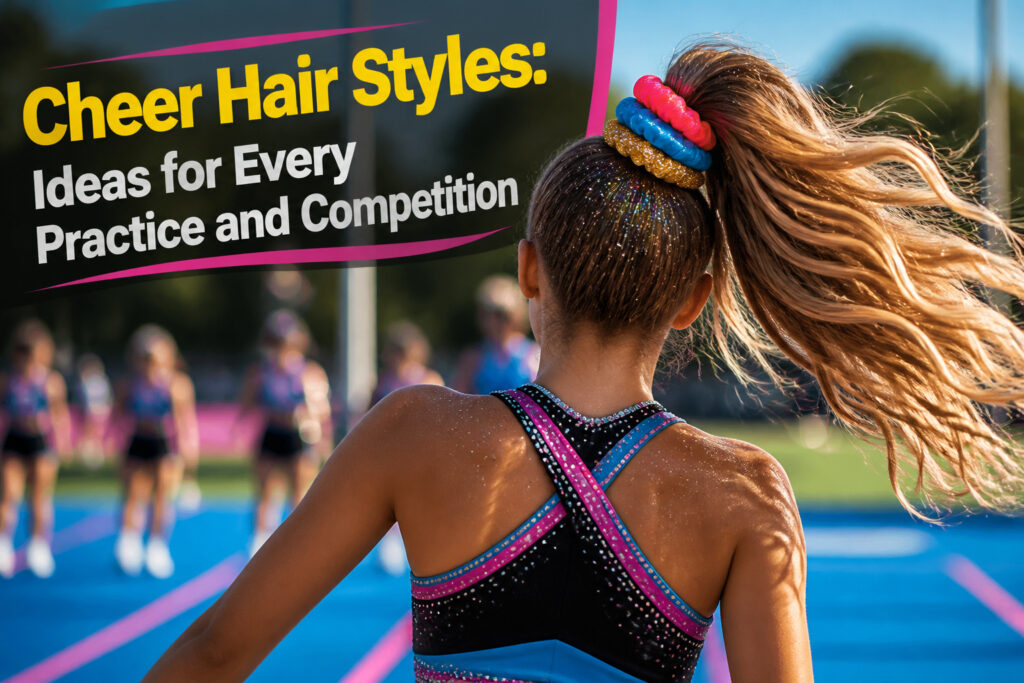
The right hair styles for cheer depend on one thing: whether you are walking into practice or onto a competition mat. A Saturday morning scrunchie ponytail will not survive nationals, and a glued-down competition slickback will give you a headache through two hours of drills. Got2B Glued is what separates the two, but only if you know when to reach for it.
1. High Ponytail
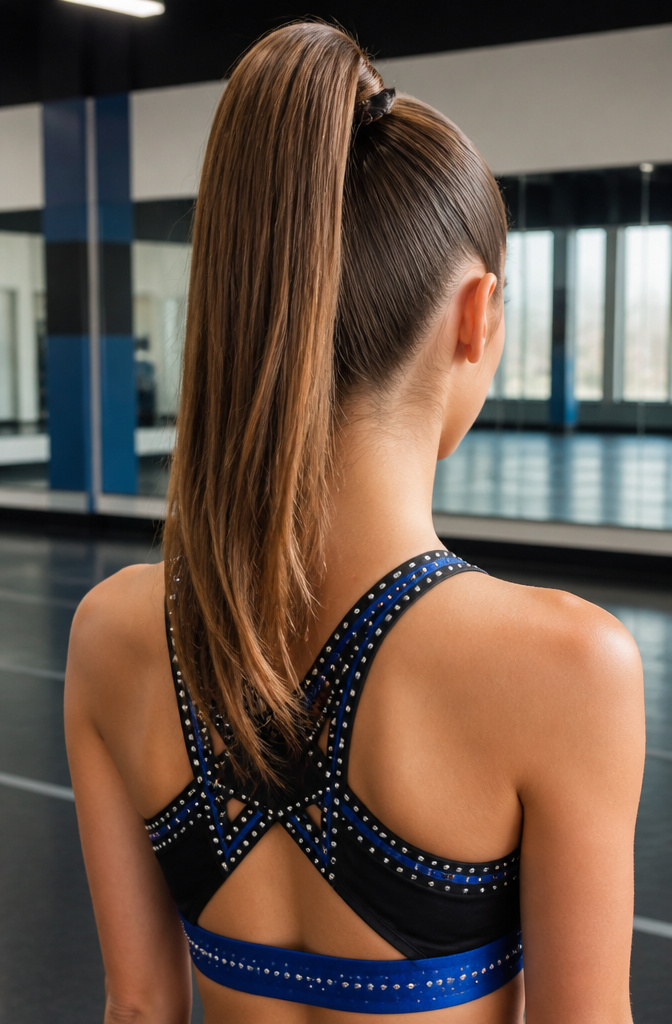
The high ponytail sits at the crown and stays put through jumps, tumbles, and stunts, which is exactly why it has been the default cheer style for so long. Hair gathered that high keeps your face fully visible to judges and teammates, and when every girl on the squad matches the placement, the team looks sharp from the stands.
Slicking it down takes the right product. Got2B Glued hairspray is what cheerleaders reach for to lock flyaways flat without the ponytail going stiff or dusty-looking. A few passes over the smoothed-back base, then a final mist once the elastic is in, and the surface stays clean through a two-minute routine.
That balance matters. Uniformity reads as discipline to the judges, but visibility is what keeps the stunt group safe when you are turning or being thrown. The high ponytail gives you both without asking you to choose.
Natural, Soft & Realistic Look - Crafted with premium SKLAFIUE imported fiber hair, the SEIKEA cheer ponytail hair piece is lightweight, soft, and incredibly natural. It looks, feels, and moves like real human hair, blending seamlessly with your own for a realistic cheer-ready style

Strong Hold Hair Gel That Lasts Up to 24 Hours: Garnier Fructis Pure Clean Styling Gel delivers up to 24 hours of extra strong hold with lasting control and definition. For a strong, reliable hold with a clean finish

A GranNaturals Boar Bristle Hair Brush is perfect for creating a slick back bun! The wider bristles cover a larger area, brushing more hair at once saving you time.The wider bristles also smooth the hair for a polished finish.
2. Braided Bun
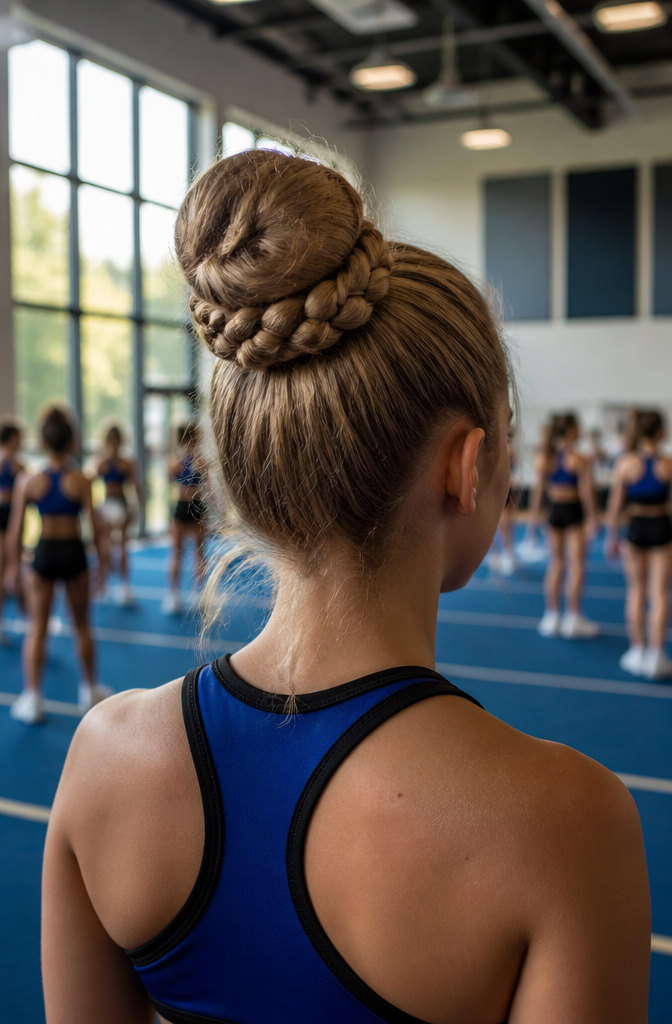
A braided bun solves the main problem a regular bun ignores: grip. When you twist long hair into a standard bun and pin it, the surface is smooth and the pins have almost nothing to bite into. Halfway through a two-hour practice, that bun loosens, drops, and you’re fixing it between stunts instead of hitting your counts.
The braid changes the texture entirely. A single tight braid wrapped into a coil creates ridges and friction all the way around. Bobby pins slide in against those ridges and stay put. The braid itself becomes the anchor, not just the pins.
For all-day wear, the braid also distributes weight better than a twisted rope of hair. There’s no single pressure point where the elastic digs in or the bun starts to sag on one side. Everything stays balanced on the crown of the head, and the neck stays completely clear for uniform collars and spotters’ hands.
I build this one by braiding a low ponytail first, then coiling the braid flat against the head and pinning through the loops. Two or three extra pins at the base catch the braid’s end, and that structure holds through warm-ups, full-outs, and the drive home.

Package includes: 1 pack of 2.7 Oz hair wax stick, 3 pcs of slick back brush set

[4-In-1 Complete Styling Kit] Hair wax stick set includes a 2.7 oz wax stick, an edge brush, a rat tail comb, and a bristle brush. From parting and teasing to smoothing flyaways and baby hairs, this pink set meets all your needs for creating the trendy "Clean Girl" aesthetic or a sleek, polished look.

【Wax Stick & Hair Brush Set】Hair slick sitck & slick back hair stick kit for tame frizz, let you no longer for hair split ends, knots, dry, frizzy, static electricity, flyaway hair, baby hair problem troubles, you can also at any time to organize the perfect long-lasting styling all day long! You can also organize the perfect long-lasting styling all day long at any time.
3. Boxer Braids
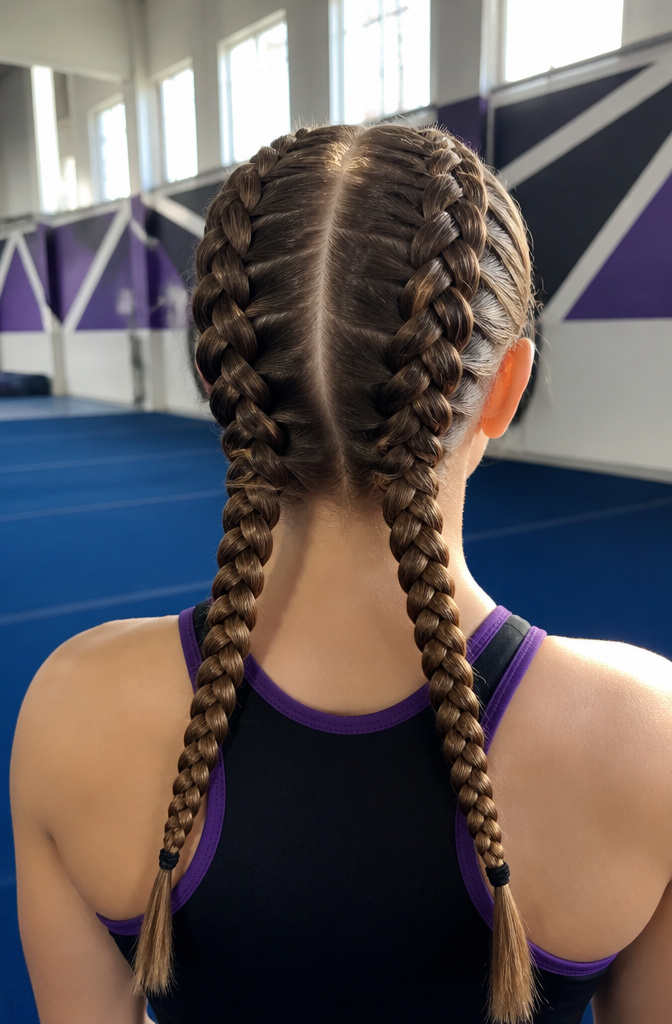
Two tight Dutch braids pulled straight back from the hairline sit flat against the scalp and do not shift under a helmet or bow, which is exactly why cheer squads borrowed them from boxers and contact-sport athletes in the first place. The style starts at the front and works toward the nape, each braid crossing under rather than over so it hugs the head more tightly than a standard French braid. That close fit keeps stray pieces from slipping out during tumbling passes or stunts where any loose hair becomes a distraction.
I have watched teammates pull these off in under ten minutes once they get the parting straight: a clean center divide matters more than perfect tension, since lopsided braids read messy under stage lights. The real payoff comes at the end of a three-hour competition when the braids still look deliberate, not like something slept on. For practice, they work just as well with a scrunchie at each end; for comp day, you tuck the tails under a base bow and the whole thing stays military-neat without extra pins digging in.

【User-Friendly Design】There are wavy folds on both sides of the U-shaped hairpin, so that it will firmly hold your hair and will not slip. The tips have smooth, round balls that don't scratch your scalp. It won't pull your hair.

【User-Friendly Design】There are wavy folds on both sides of the U-shaped hairpin, so that it will firmly hold your hair and will not slip. The tips have smooth, round balls that don't scratch your scalp. It won't pull your hair.

20PCS Brown Pins in A Set: Firm, lightweight, not flimsy, well-made of strong metal with set of 20 pcs and good size packing in a paper box, our stylish bun bobby pins are definitely a cost-effective choice! The material is high quality metal and the cover is glossy. Lightweight keep Your hair won't be pulled and your scalp won't feel uncomfortable. Large number of the pins make sure be enough for your need and for a long run, offer the perfect blend of premium quality and abundant quantity.
4. Half-Up Ponytail
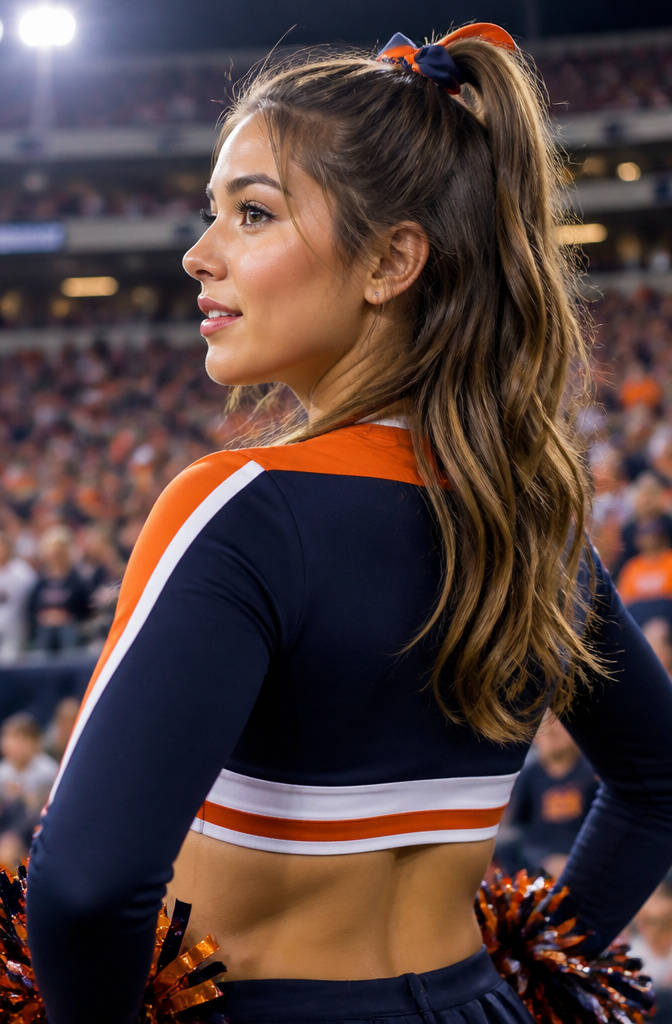
A half-up ponytail gives you the control of an updo without losing the length you have been growing out. Pull the top section back into a high ponytail and let the rest fall free. The style keeps your face clear for stunts and jumps while the loose hair still shows movement when you turn.
This one works best on practice days or lighter game-day routines where you are not upside-down in a basket toss. The loose section can tangle with poms or a uniform collar if the choreography gets aggressive. A large bow in team colors at the base of the ponytail adds spirit without overwhelming the balance.
Round and heart-shaped faces get the most from this style, since the height at the crown draws the eye upward and the loose length softens the jawline. Longer or more angular faces can still wear it, though the effect is less dramatic. For extra hold, twist the top section slightly before you secure it; the tension keeps flyaways flat under stadium lights.

Large Cheer Bows: The jumbo 8 inch solid color cheer hair bows are made by 3 inches width grosgrain ribbon with a ponytail holder in back, a good hair accessories for girls child kids ponytail

No Hair Damage & Gentle Hold: Seamless design with soft cotton material prevents snagging or pulling, making these ouchless hair ties safe for daily use. Ideal no pull hair ties for thick hair, curly hair, and sensitive scalps
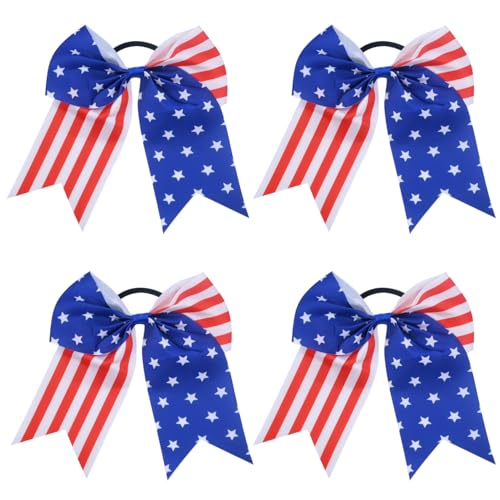
Package Includes:4PCS 4th of July Cheer Bows. Bright and vibrant, which is awesome as you can match any outfit. Perfect for outfitting the whole team and make it an option for any team to add sparkle to any performance.
5. Dutch Braid into Ponytail
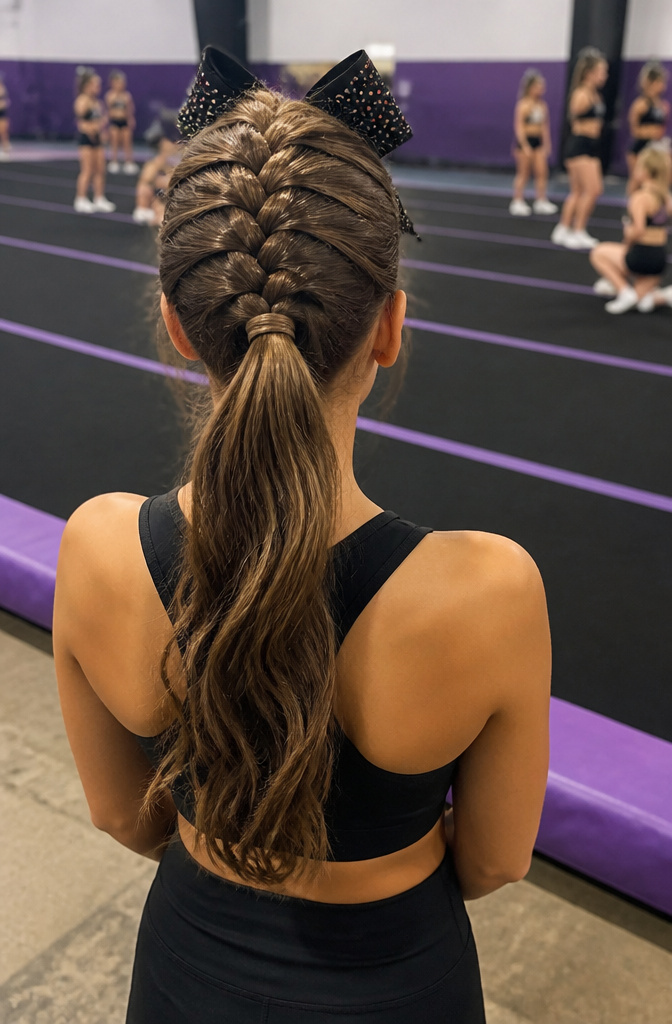
A Dutch braid that starts at the crown and feeds straight into a high ponytail gives you texture and security without pinning anything extra. The braid itself does the gripping, so you’re not chasing loose sections halfway through a routine.
The technique is straightforward: begin a reverse French braid, adding hair from underneath rather than over the top, and keep it centered as you work back toward your crown. Once the braid reaches where you want your ponytail to sit, gather everything together and secure it. The braided section locks down the hair that usually slips free around your face, and the raised texture helps the elastic bite without needing grip spray or a dozen bobby pins.
For game days, this cheerleading hairstyle keeps movement to a minimum and still looks dynamic under stadium lights. A team-themed bow at the base of the ponytail ties the whole look together with your uniform.

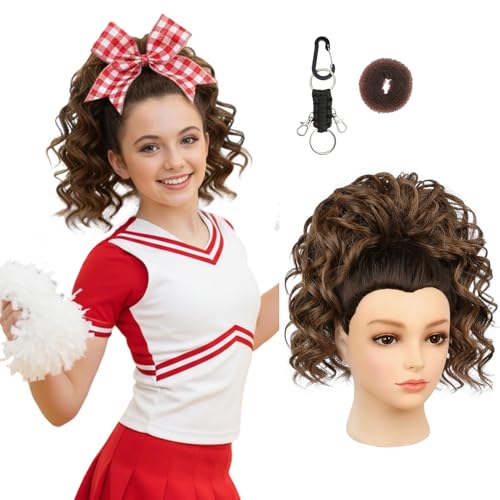
💖Natural & Soft, Tangle-Resistant - The SEIKEA 14" curly cheer ponytail hair piece crafted from SKLAFIUE imported fiber hair, which makes the hair strands smooth, natural, soft and not easy to tangle. Feels like, looks like, and wears like real human hair.

Premium 100% Real Human Hair, Natural Look & Feel: Made with 100% real human hair, this 16" hair length cheer ponytail hair piece (137g) creates an 18" wearing effect depending on placement. Silky-smooth and soft with a natural finish for easy blending. Lightweight yet durable for repeated use—curl, straighten, wash, and tone/dye it just like your own hair for long-lasting wear. Note: Cheerleading bows is NOT INCLUDED in the package

【New advantages & easy install】 There are two sturdy to make the ponytail more steady, the high quality mesh area is large enough and durable, there is more installation space, enough to support fuller hairstyles, You can add a donut hair bun to add major lift and volume to the top of the hairpiece
6. Sleek Low Bun
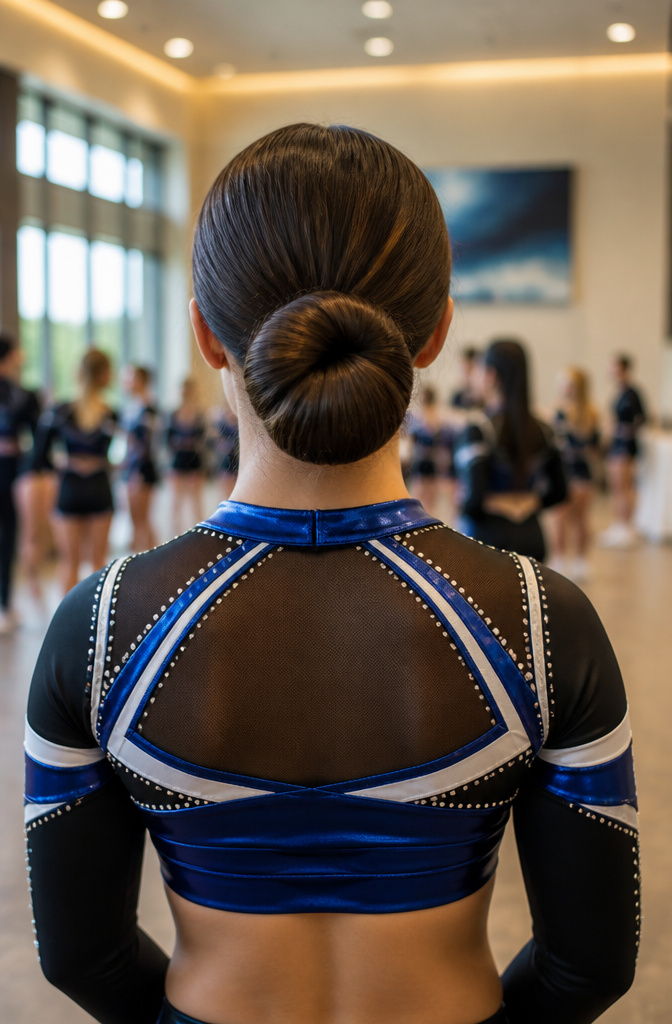
A sleek low bun sits right at the nape and reads polished without trying too hard. It works for games and ceremonies where a high ponytail feels too casual, or when you want the uniform to do the talking instead of your hair. The trick is getting every layer smooth before you twist, because once the bun is set, there is no hiding a bump underneath.
I start with damp hair and work a smoothing product through from roots to ends, then blow dry everything flat against my head with a boar bristle brush. A light tease at the crown keeps the bun from looking too severe, but I keep it minimal. The real work happens with the ponytail base, pulled tight and low, then twisted into a coil and pinned flat against the neck.
Aqua Net Super Hold is the spray that keeps this smooth through humidity and long ceremonies, and it costs a fraction of what salon brands charge. A mist over the finished bun locks down flyaways without making the hair helmet-stiff, and a second pass on a toothbrush smooths the last wisps at the temples. The whole style takes maybe ten minutes once you have the tension right, and it holds from warm-ups through the final handshake line.

The information below is per-pack only
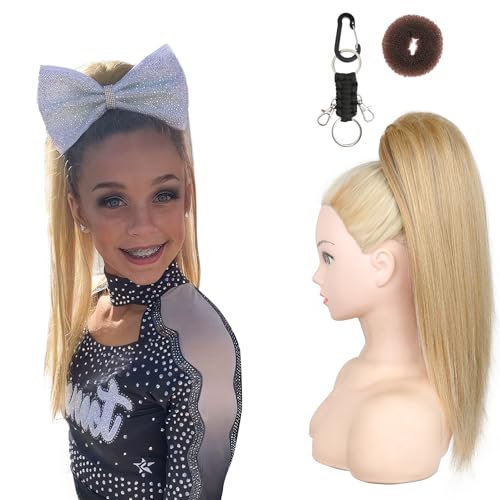
Two Ways to Wear: For thick/long hair: Just make a high bun and clip on; For thin/short hair: Use the included hair donut for extra volume, then clip and tighten. Wrap twice if needed.(Tips:You can adjust the donut bun’s thickness to suit your hair volume, and trim it from the top if needed for a better fit.)

💖Tangle-Resistant, Smooth, Natural & Realistic - The SEIKEA 10" straight cheer ponytail hair piece crafted from SKLAFIUE synthetic heat-resistant fiber hair, which makes the hair strands smooth, full, natural, soft and not easy to tangle. Feels like, looks like, and wears like real human hair. (The fiber can not be curled)
7. High Bun with Braided Wrap
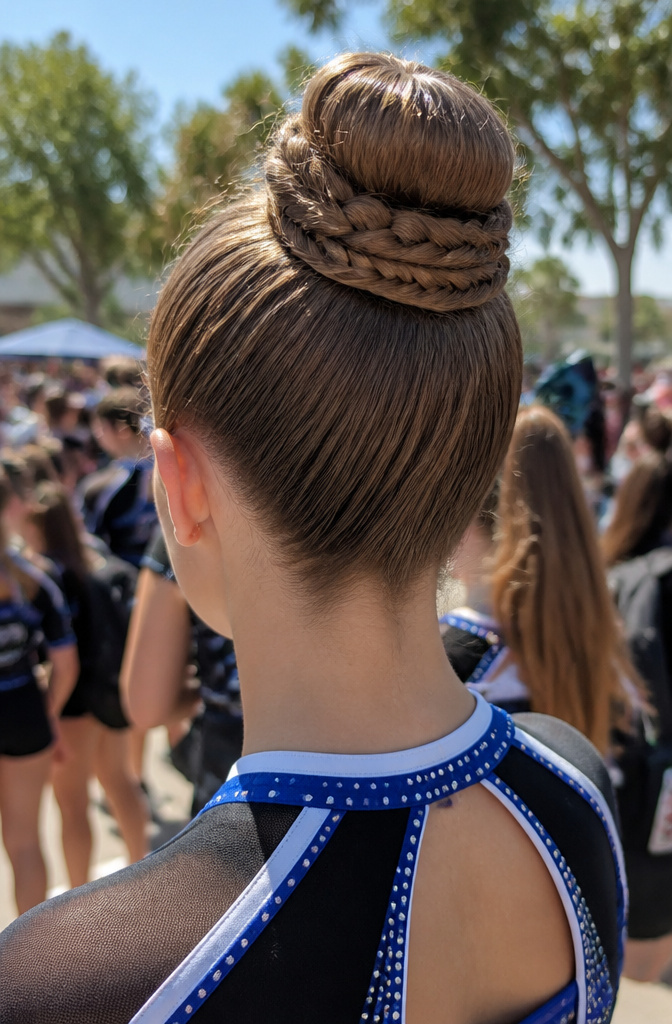
A high bun with a thin braid wrapped around its base keeps every strand locked down through tucks and tumbling passes while still reading as polished from the judges’ table. The braid acts like a built-in hair accessory, adding texture and visual interest without dangling elements that most uniform codes prohibit.
I like this style for competitions where teams have strict rules about sparkle and loose pieces. The wrap itself becomes the decoration, so you are not tempted to add pins or clips that might catch light in a way a judge reads as distraction. Secure the bun first with a strong elastic and bobby pins, then braid a small section from underneath or from the ponytail tail before you coil it. Wrap that braid flat against the scalp around the bun’s base and pin the end underneath where it disappears.
Match the wrap to your uniform’s dominant color or keep it in your natural shade for a subtler effect. Either way, the braid buys you extra security, since it adds friction and anchoring points that a plain bun does not have.

STYLISH AND VERSATILE DESIGN: Elevate your hairstyle with these Kitsch Spiral Hair Pins. These hair pins are perfect for both casual and formal occasions. The rich brown color blends seamlessly with various hair tones, enhancing your overall appearance with a chic and polished finish.

Product is a combo hair accessories set including one braided faux‑hair headband, three satin scrunchies and one pack of black hair pins, designed for styling, gentle hold and coordinated everyday looks.

HIGH QUALITY: These are thick sturdy brown bobby pins which can secure your hair in place. The Wenobby heavy duty bobby pins are stronger than ordinary ones, perfect bobby pins for brown and blonde hair.
8. Crown Braid with Curled Ponytail
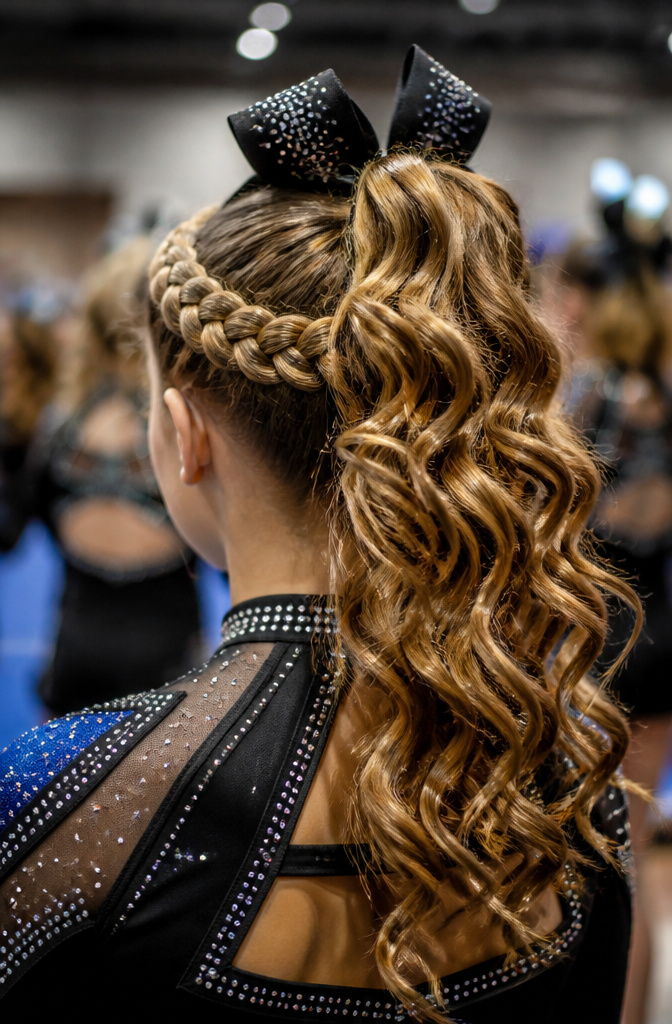
A crown braid with curled ponytail takes more time than most competition styles, and that is the first thing to weigh before you commit to it. The braid circles the head like a headband, gathering all the hair back before the remaining length gets curled into a high ponytail. The payoff is volume and a regal silhouette that photographs well under arena lights and stays managed through jumps and tumbling passes. This is not the style for a Saturday morning practice when you are running late. Save it for the mat where judges are watching and every detail of the uniform, including the hair, contributes to the overall presentation. A bow or floral pin that matches the uniform accents ties the look together without adding time you do not have.

Dazzling Match-Day Sparkle: This large glitter black cheer bow with iridescent rhinestones catches light brilliantly at cheerleading competitions, dance performances, and sports games. The black cheer bow coordinates with any team uniform for a polished, spirited look

Large Cheer Bows: The jumbo 8 inch solid color cheer hair bows are made by 3 inches width grosgrain ribbon with a ponytail holder in back, a good hair accessories for girls child kids ponytail

Glitter Cheer Bow - This product includes 1 sparkling glitter cheer with rhinestones — bold, eye-catching, and full of spirit! Perfect for solo performers, special gifts, or standout moments at practice or competition
9. Pinned Back Curls
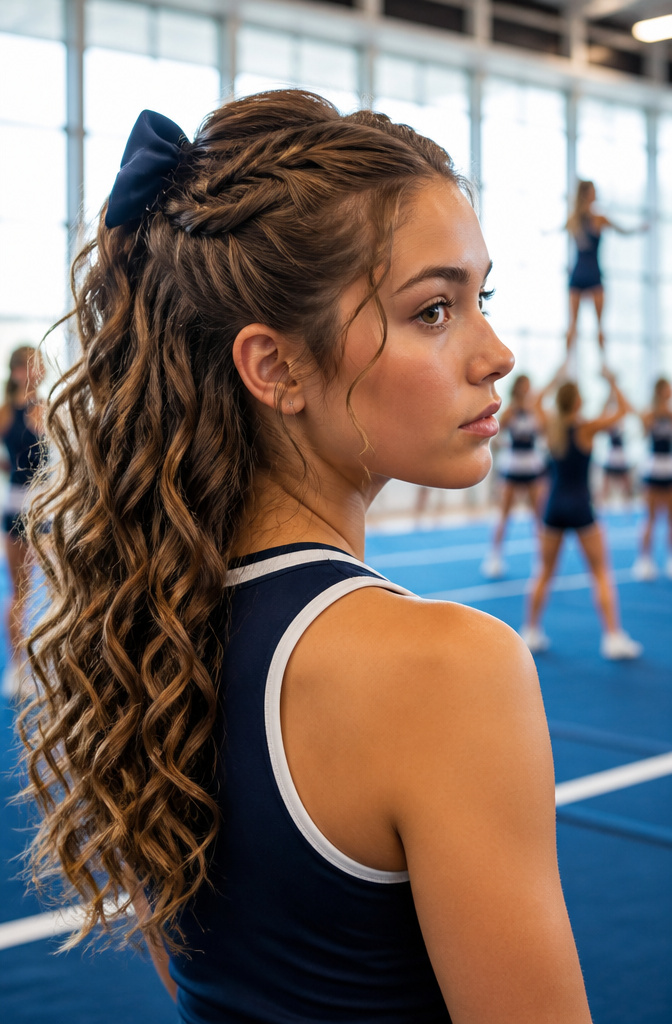
Curling your hair before a routine only works if the curls survive the routine. The trick with pinned back curls is getting the prep right, then keeping the front sections secure without flattening the bounce you just built.
Start with curls that are slightly smaller than you want them to look. A tighter curl on a medium barrel tends to outlast a loose wave through jumps and tumbling; those bigger, relaxed waves fall flat before halftime. I have watched teammates lose their shape entirely between warm-ups and the first stunt sequence, and the difference was almost always that they started too loose.
Once the hair is fully cooled, pin the front sections back at the temple with small clips or bobby pins that match your hair color. Leave the rest falling past your shoulders. The contrast between the controlled front and the free movement behind it reads clean from the stands without looking overdone for practice.
The tighter curl holds through a two-minute routine; the loose wave rarely does. If you are competing, err smaller on the barrel and break the curls apart with your fingers only after they have set completely. For practice, a slightly larger curl is fine, but keep a few extra pins in your bag for touch-ups between drills.

100% Super Protein Hair: Realistic & Soft, made from 100% Super Protein Hair Fiber with silky smooth texture and gentle touch. Fuller, fluffier, and lightweight for all-day comfort. Looks, feels, and wears like real human hair. Enhanced natural look after washing. Low-heat styling only; curls may not hold like human hair. Best for straight, sleek cheer pony looks; for curls, pre-style before wearing. Length: 18 inches/45.7 cm, Weight: 131g/4.6 oz
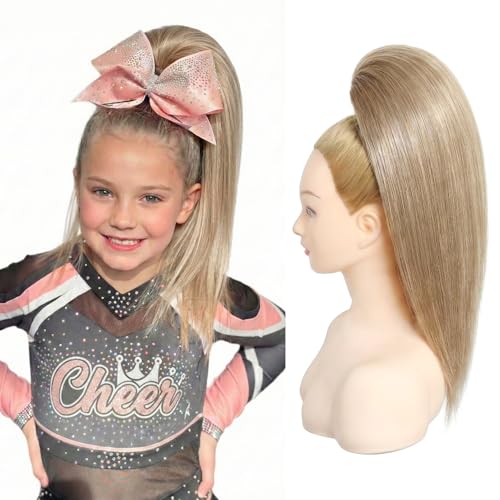
Premium 100% Real Human Hair, Natural Look & Feel: Made with 100% real human hair, this 16" cheer ponytail hair piece creates an 18" wearing effect depending on placement. Silky-smooth and soft with a natural finish for easy blending. Lightweight yet durable for repeated use—curl, straighten, wash, and tone/dye it just like your own hair for long-lasting wear
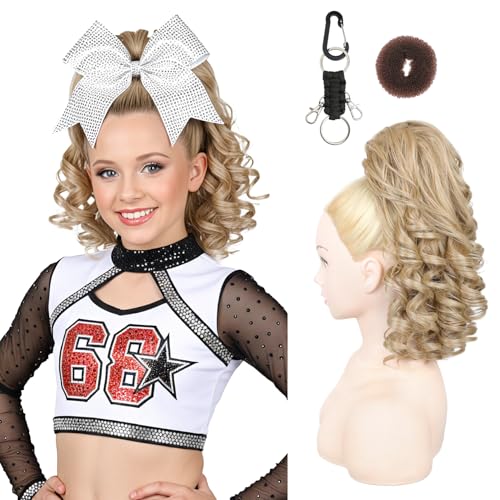
💖Natural & Soft, Tangle-Resistant - The SEIKEA 14" curly cheer ponytail hair piece crafted from SKLAFIUE imported fiber hair, which makes the hair strands smooth, natural, soft and not easy to tangle. Feels like, looks like, and wears like real human hair.
10. Braided Headband
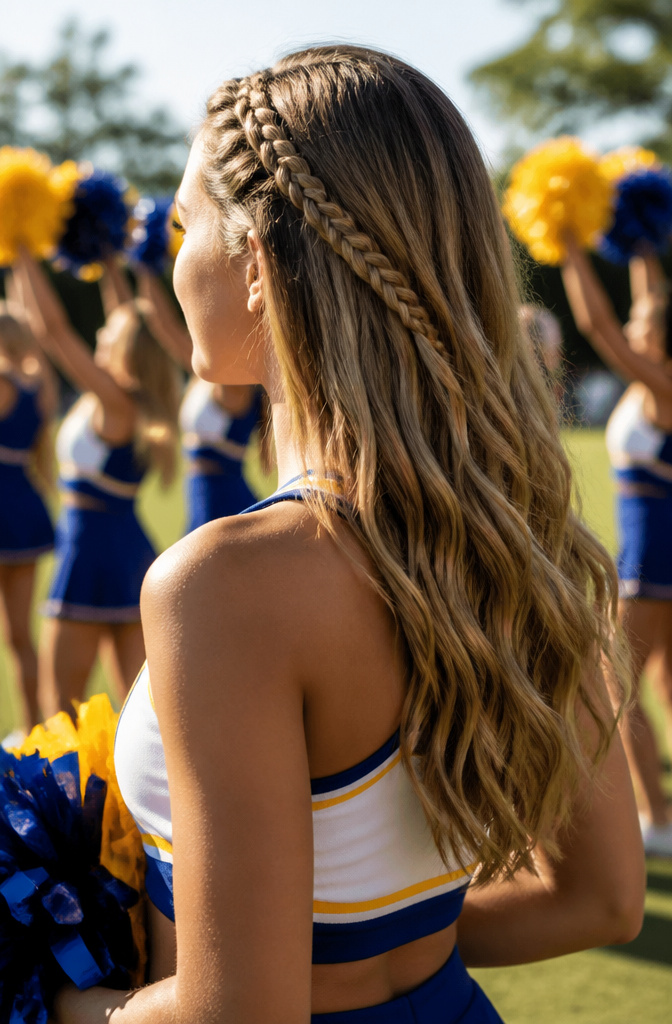
A braided headband works well on days when you want your hair controlled but do not need a full updo. You take a small section from one temple, braid it, and pin it behind the opposite ear so it lies across the forehead like a fabric band. The braid catches wisps that would otherwise fall forward during stunts or jumps, and it keeps the rest of your hair loose for a softer look. It is practical for practice or for games where the dress code allows hair down. The style also reads as polished from the front, which matters when you are facing judges or a crowd. I have seen cheerleaders secure the braid with small bobby pins matched to their hair color so the band stays flat and the pins disappear.

【Non-Greasy & No Residue】Our hair wax sticks are soft & delicate in texture, easy to absorb, easy to apply, no shedding, no frizz, no hardening, no greasy, no residue, leaving you with a more natural hair effect!

💖Natural & Soft - The SEIKEA 16" straight cheer ponytail hair piece crafted from SKLAFIUE synthetic heat-resistant fiber hair, which makes the hair strands natural, soft and not easy to tangle. Feels like, looks like, and wears like real human hair.
11. Double Dutch Braids
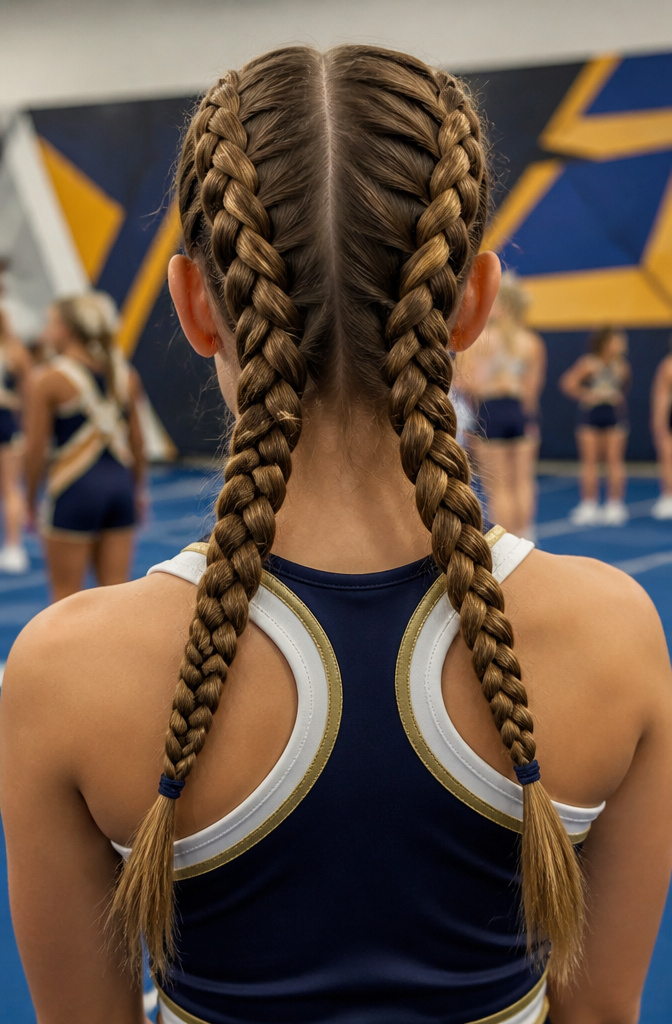
Two tight Dutch braids start at the crown and work straight back, sitting higher on the head than boxer braids, which begin closer to the hairline. That higher starting position is what keeps them flat and comfortable under helmets or warm-up hoods without shifting around.
Cheer teams have stuck with this style partly because the symmetrical parting keeps every strand controlled through tucks and pyramids. When I watch squads warm up, the ones in Dutch braids rarely stop to redo anything; the braids just stay put. They also photograph cleanly from the front, which matters for competition day.
The style works on most hair lengths past the shoulders, though shorter layers need a few extra pins at the nape. If your hair is fine, a light texturizing spray before you start keeps the braids from slipping loose by the third quarter.
12. Bubble Braids
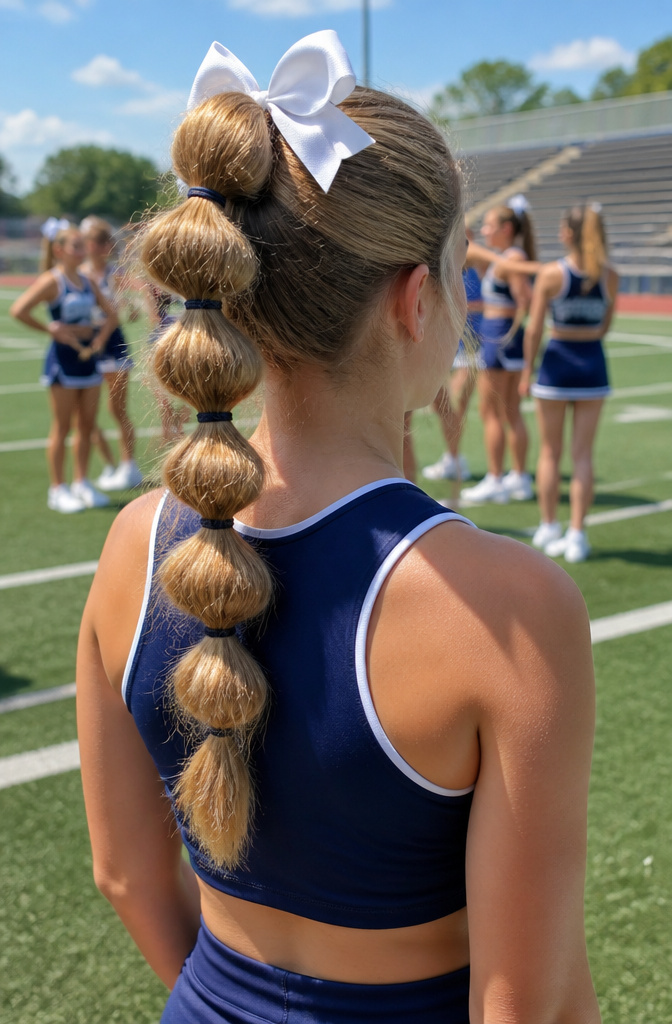
Bubble braids take a basic ponytail and turn it into something that reads as deliberate cheer hair with almost no braiding skill required. You pull the hair back, secure it with a standard elastic, then add more elastics down the length at even intervals of about two to three inches. The trick is in what happens between those bands: you tug the hair outward gently to puff each section into a rounded, bubble-like shape.
Spacing is what separates this look from a ponytail that just got crushed by a locker door. Too tight, and the bubbles collapse flat. Too loose, and the sections sag unevenly. I find the cleanest result comes from sliding each elastic down to the same measured gap, then pulling the bubble width to match the one above it before moving on.
For cheer specifically, this style holds well through tumbling because the multiple elastics distribute tension instead of relying on one band at the base. Satin or no-snag elastics help prevent the breakage you’d get from rubber bands, especially if you’re resetting the bubbles between practice rounds. The bubbles also photograph cleanly from a distance, which matters more than you’d think under competition lights.
13. Knotless Braid
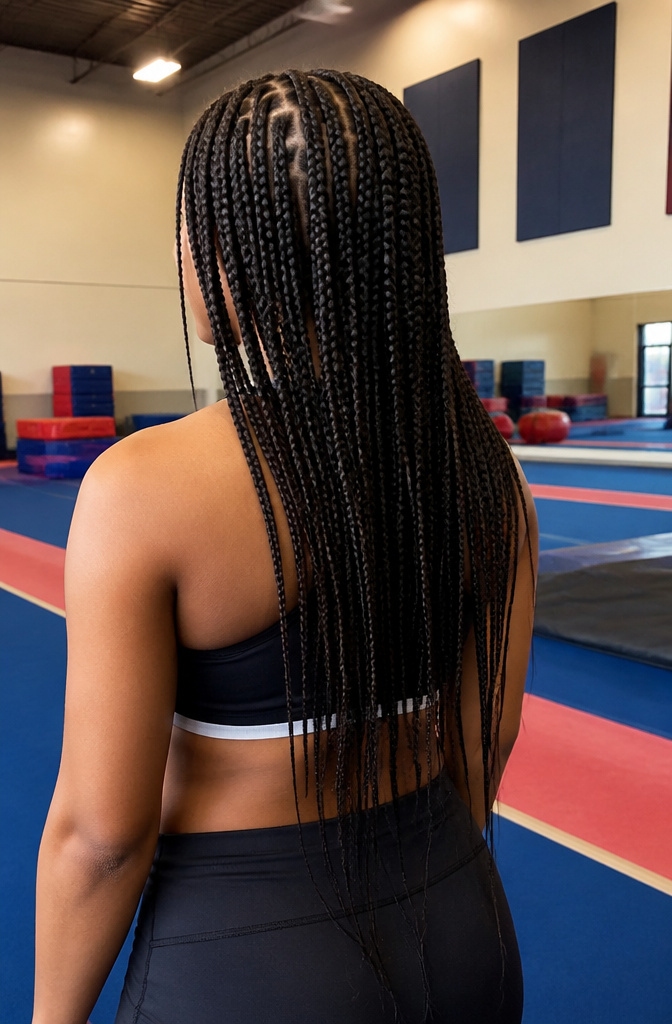
Knotless braids start without the tight knot at the root that you see in traditional box braids. The stylist feeds in extensions gradually, so the tension spreads along the scalp instead of concentrating at one point. For cheerleaders, that difference matters on competition days when a style has to stay put for six hours straight. A tight knot pulling at the same spot all morning turns into a headache by afternoon, and the last thing you want during a full-out routine is a distraction you could have prevented at the braiding chair.
The finished look also sits flatter at the base, which reads cleaner under stage lights and photographs more naturally. If your cheer schedule has you in uniform from dawn to awards, the comfort trade-off is worth it. You will spend a little longer in the chair upfront, since knotless work takes more time to install, but you are buying back the ability to focus on your performance instead of your hair.
14. Upside-Down French Braid Bun
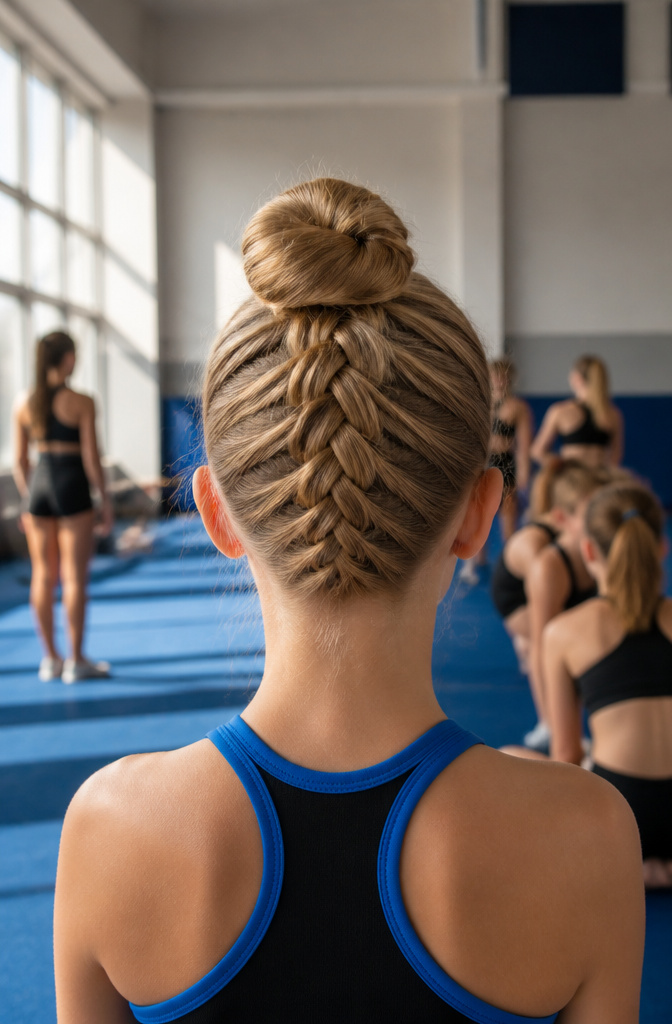
An upside-down French braid bun starts at the nape and travels upward, which changes how the weight sits compared with a standard bun. Instead of piling everything at the crown and fighting gravity, the braid anchors the hair flat along the back of the head before it ever reaches the top. That distributed pull matters for tumbling passes and stunts where any bounce or shift gets noticed fast.
The braid itself is worked inverted, picking up sections as you move toward the crown. Once you reach the top, the remaining length coils into a bun that sits lower and flatter against the skull than a bun built from a ponytail gathered at the same spot. Less bulk means less wobble under a bow, and the style stays tidy through a full routine without the crown-heavy feel that can give you a headache by the third quarter.
15. Twist Braid
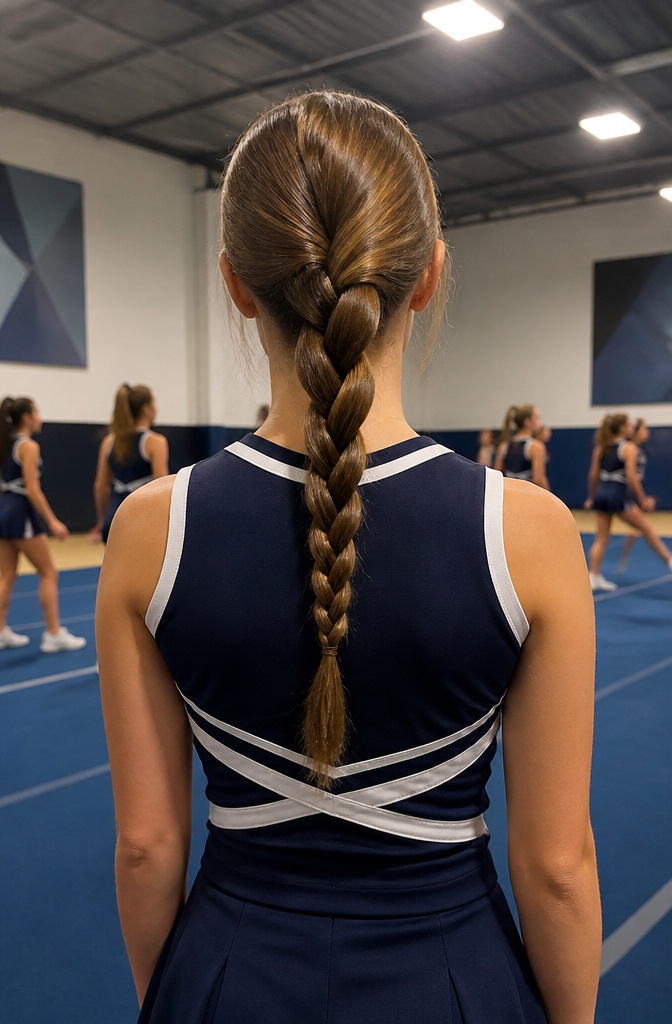
A twist braid uses two strands twisted around each other instead of three woven together. That difference makes it faster to execute when you are working against the clock before practice or a meet.
Two sections of hair wrap around each other in a continuous rope. The technique is simple enough that most cheerleaders pick it up quickly, and it still holds securely through routines when tension is kept even from root to end. It works as well as a standard braid for tumbling and stunting, though the finished profile sits flatter against the head and can look neater under a bow.
Versatility is where this style earns its keep. You can wear it as one long twist down the back, rope both sides into pigtails, or wrap a single twist into a bun. It dresses up or down depending on what the day demands, and it does not fight shorter layers the way a three-strand braid sometimes will.
16. Scarf Hairstyles
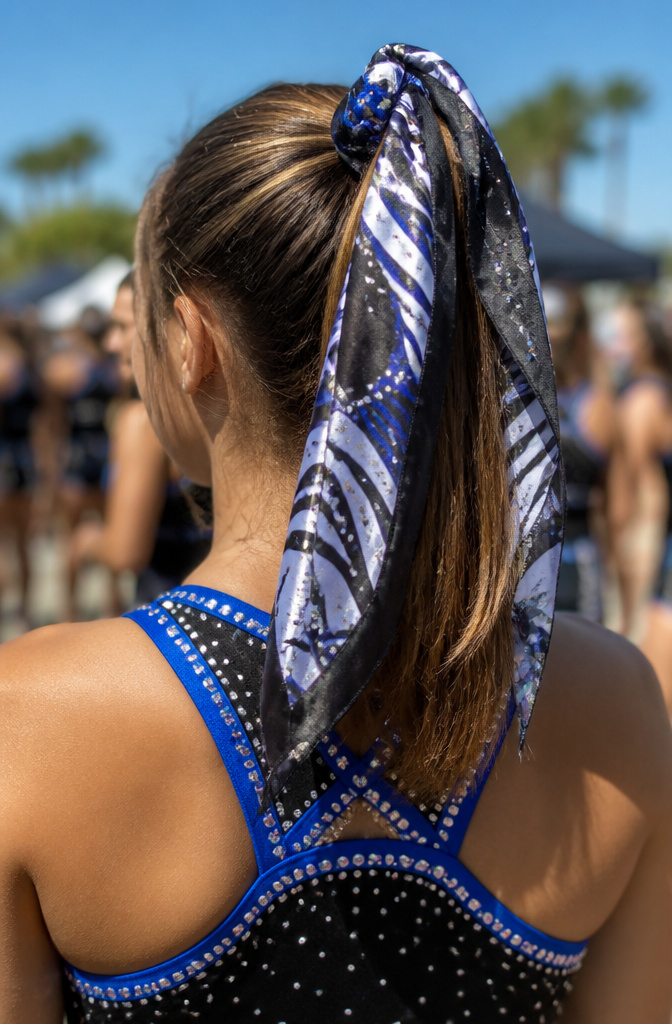
A silk scarf in your team colors can become a headband that keeps flyaways flat, a wrap around a base ponytail, or a thin strip braided straight into a side plait. The fabric adds weight, so it helps the style stay put through tumbling and stunting without extra pins.
Scarf hairstyles look polished, but not every competition allows them. Some levels ban accessories that hang or shift, and rules differ between school leagues, all-star events, and national qualifiers. What passes at practice might earn a deduction on the mat.
Before you braid one in for a big day, check your specific competition’s rule sheet. Look for language about "secure" versus "prohibited" accessories, and ask your coach if the wording is vague. A quick confirmation beats a last-minute restyle in the parking lot.
17. Short Hair Options
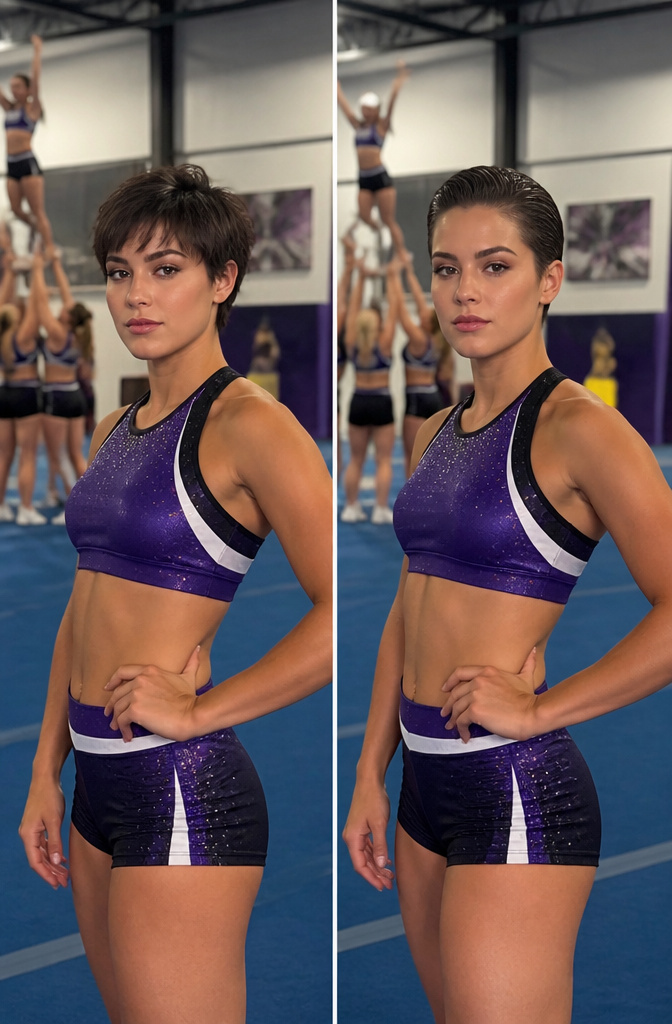
Short hair does not get a pass on cheer rules. Your face still needs to stay clear, and if you stunt, your hair cannot touch your shoulders. That leaves less room for error than a long ponytail, but the styles are there.
A slicked-back pixie works with strong gel or pomade, every strand flattened against the scalp so nothing shifts during a basket toss. If your cut is slightly longer, pin the sides back with small clips that match your hair color, or gather the top into a small pony where the elastic sits tight and flat. Headbands help, but only the kind that grips; a decorative band that slides becomes a distraction you cannot fix mid-routine.
The real challenge with short hair is the grow-out phase, those awkward inches that hit the jaw or the shoulder. That is where product and pinning matter most, because a loose piece at that length falls directly into your eyes or onto your shoulders right when you need to spot a flyer. I have watched teammates spend more time on short-hair prep than girls with waist-length braids, simply because there is no ponytail to hide behind.
Competitions may also ban glitter in hair, so check your specific event before adding sparkle to any short style.
18. Ribbon Accents
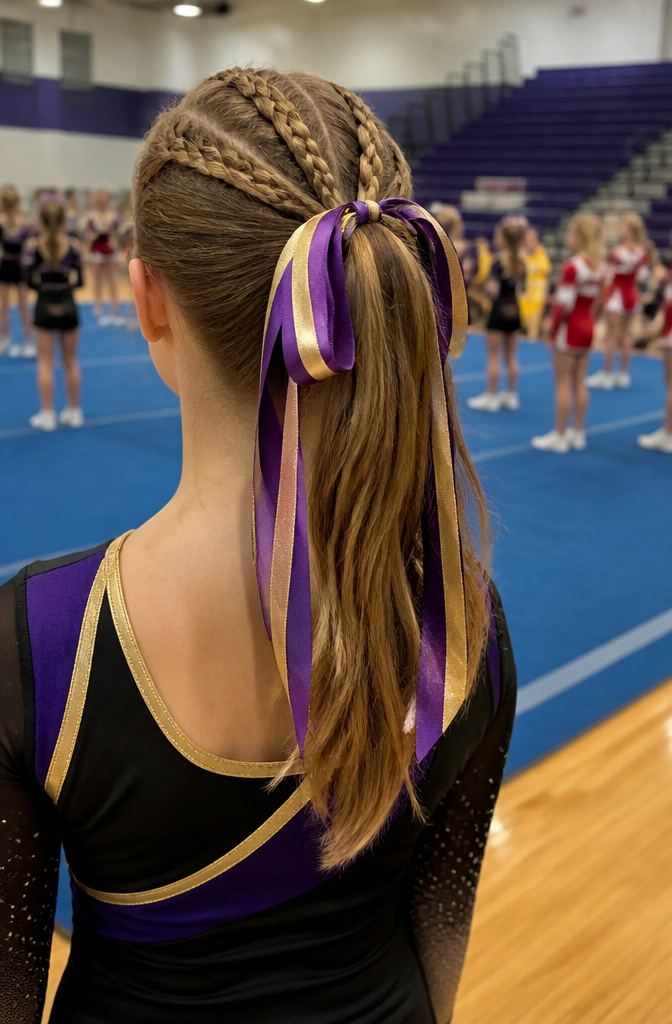
Ribbon stays flatter and quieter than a bow, which makes it the better choice when you want polish without the bounce. I weave thin satin ribbon through Dutch braids by threading it in with the outer strand each time I cross, letting the ends hang loose for a few inches. For ponytails, I wrap the base twice and tie a simple knot instead of a bow; it keeps the line clean and the tail still swings freely.
The difference in movement matters more than you’d think. A standard cheer bow has structure and stiffness, so it catches light and stays readable from the bleachers. Ribbon drapes and flows, which reads as softer and slightly less formal. I use ribbon for practices and exhibition performances where the exact look matters less than keeping hair controlled without distraction. For nationals or anything with judges holding scorecards, I still reach for the bow. The ribbon trick that wins me over is color matching: picking up one accent shade from the uniform instead of the full team palette makes the whole style feel intentional rather than like a bow substitute you settled for.
Practice Day vs. Competition Day
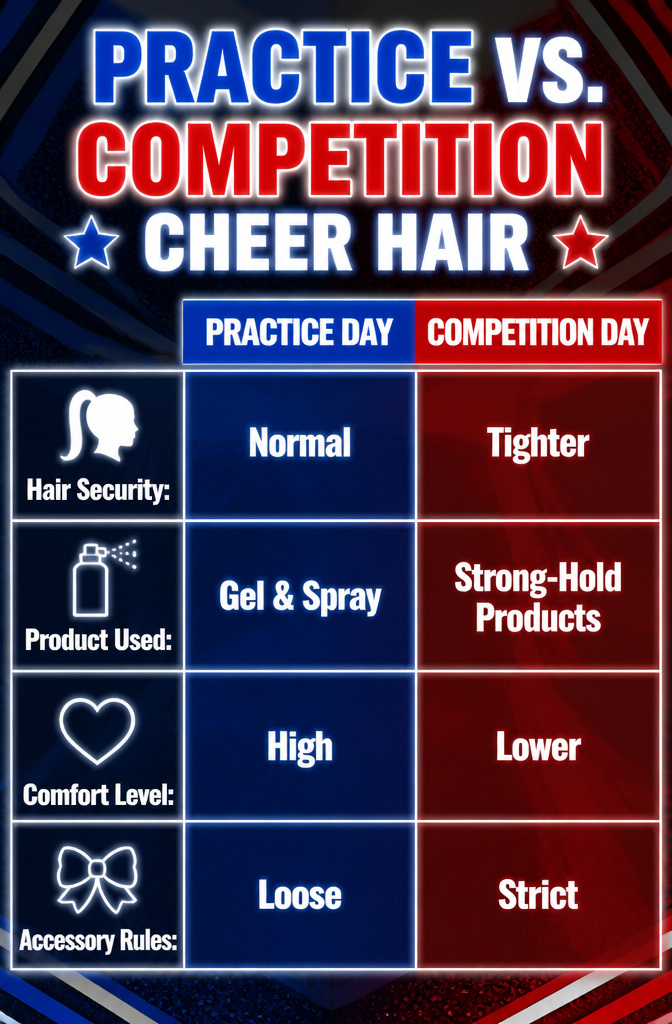
The same high pony you’d wear to practice on Saturday morning won’t survive a nationals routine without some serious adjustments. I’ve watched teammates make that mistake, and the result is always the same: flyaways everywhere by the second stunt sequence.
For practice, you want your hair secure enough to stay out of your face, but pulling it too tight for two hours of conditioning drills will give you a headache. A normal pony with a scrunchie and maybe a headband works fine. You’ll still use gel or spray, but the goal is comfort through a long session, not immovable perfection.
Competition demands tighter security and more product. Every strand gets locked down with stronger-hold gel, extra bobby pins, and sometimes two elastics instead of one. The style itself might look identical from ten feet away, but it feels completely different on your head.
Accessory rules shift too. Some gyms allow ribbons and bows at every practice, but competitions often restrict colors, sizes, or even ban certain attachments entirely for safety scoring. Check your event’s guidelines the night before, not in the parking lot. I’ve seen girls scrambling to pull out decorative pins that were fine all season but suddenly illegal on the biggest stage.
What Holds It All
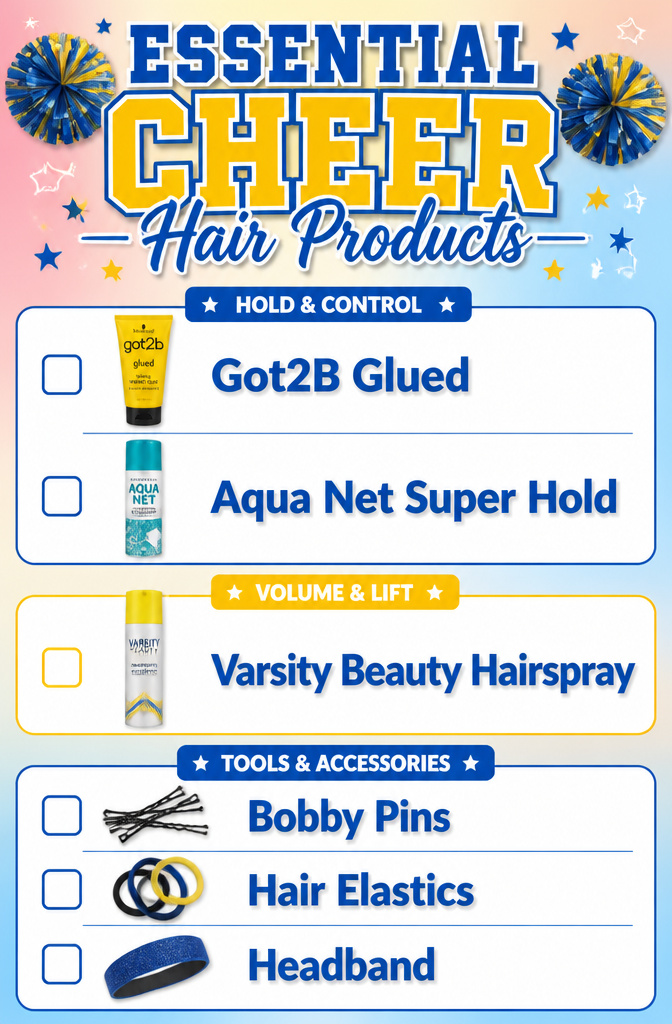
Three products show up on almost every cheer bag, and each has a job it does better than the others. Got2B Glued is the one you reach for when the ponytail has to look wet-slick and stay that way through a full routine. A thin layer through the crown and sides, smoothed with a comb, does the work. Too much and you get the helmet-head look that judges notice for the wrong reasons. Aqua Net Super Hold is the budget fix for flyaways along the part or at the nape. It is cheap enough to layer without guilt, though you will still want to hold the can a full arm’s length away and let it set before you touch it again. Varsity Beauty Hairspray builds volume where the style needs lift, especially at the crown of a high pony or teased base. Spray it in quick bursts while the hair is still warm from the dryer, then let it cool before you comb through. The real trick is knowing which one to combine: Glued for the perimeter, Varsity for the body, Aqua Net for the touch-ups that keep the whole thing clean through warm-ups and awards.
Frequently Asked Questions
How to style short hair for cheerleading?
Short hair follows the same rules as long hair: your face must stay clear and, if you stunt, your hair cannot touch your shoulders. Use strong gel or pomade to slick back a pixie, or pin sides back with small clips that match your hair color. The grow-out phase between jaw and shoulder length needs the most attention, since loose pieces at that length fall directly into your eyes right when you need to spot a flyer.
What are the rules for cheerleading hairstyles?
Hair must stay off your face at all times, and if you stunt, your hair cannot touch your shoulders. Competitions may also ban glitter, ribbons, or other accessories that hang or shift, so check your specific event’s rule sheet before adding anything decorative. Rules differ between school leagues, all-star events, and national qualifiers, so what passes at practice might earn a deduction on the mat.
What is the best hairspray for cheer competitions?
Got2B Glued keeps high ponytails slick and locked flat through full routines, Aqua Net Super Hold offers a cheap way to tame flyaways along the part or nape, and Varsity Beauty Hairspray builds volume in cheer styles. For wet-slick looks that stay immovable, work a thin layer of Got2B through the crown and sides with a comb. For humidity and long ceremonies, Aqua Net’s budget price lets you layer without guilt, though you should still hold the can an arm’s length away.