
Rosemary water is a steeped herbal rinse you spray or pour onto your scalp to calm inflammation, improve circulation, and support stronger hair growth over time. It is not as concentrated as rosemary essential oil, which matched minoxidil in studies, so the tradeoff is gentler daily use against weaker potency. Making it takes one pot, three to five cups of water, and two to four fresh sprigs boiled for fifteen minutes, then steeped for twenty-five more until the liquid turns pinkish-red. Your batch keeps in the refrigerator for up to two weeks, and most people need about four weeks of consistent application before noticing a real difference.
What Rosemary Water Does for Hair
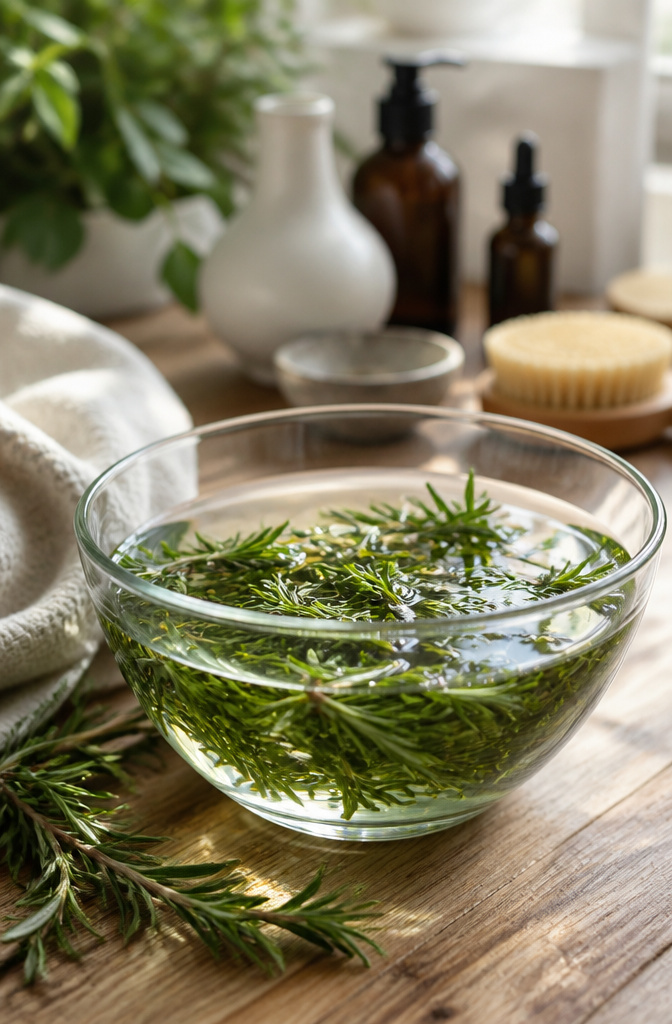
Rosemary water works on hair in a few specific ways that matter if you’re trying to grow it out or just keep what you have. The anti-inflammatory properties calm irritation on the scalp, which helps with dandruff and that tight, itchy feeling that makes you want to scratch. Less inflammation means less stress on the follicle itself, and over time that can mean stronger roots and less shedding.
The circulation boost is probably the part people notice most. Rosemary stimulates blood flow to the scalp, so each follicle gets more oxygen and nutrients delivered to it. That improved blood supply is what may actually increase your growth rate, not just make hair feel healthier.
There’s also an antioxidant effect. Rosemary can help block damage from free radicals, the kind of stress that comes from pollution, UV exposure, even hormonal shifts or anxiety. Less follicle damage means less of the hair loss that happens when follicles weaken prematurely.
Rosemary water also balances scalp oils and hydrates the skin up there, so the whole environment stays healthier. It’s suitable for all hair types, which is useful if your household has more than one texture to deal with.

100% Natural Rosemary & Rice Water Extract- Bare Anatomy Rosemary & Rice Water Hair Growth water spray is made with natural hair growth boosting, strengthening & conditioning ingredients like rosemary & rice water renowned for their benefits. This hair growth spray is a go-to root-to-tip solution for hair fall, hair thinning, frizz control, dry & brittle hair

ROSEMARY OIL FOR HAIR GROWTH - Rosemary oil, the ingredient people reach for when they want hair growth, comes here in a leave in conditioner spray you can use every day. Mist it onto the scalp to support fuller, thicker-looking hair over time, while the mint leaves your scalp feeling refreshed.
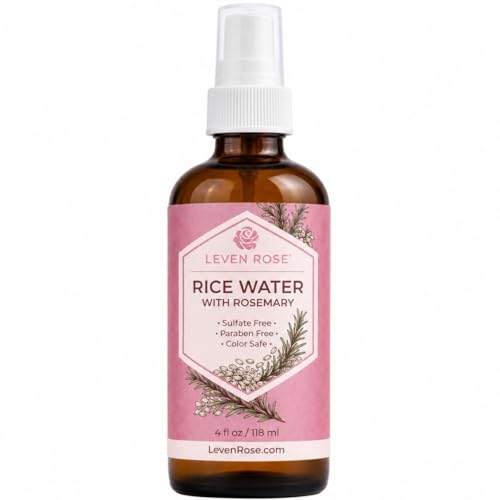
Rice water for hair growth in an easy spray: This lightweight scalp and hair spray combines fermented rice water with rosemary oil in a simple leave-in mist designed for consistent hair care routines.
How I Make Rosemary Water at Home
I keep a batch in the fridge pretty much year-round now, and the routine is simple enough that it barely interrupts my morning.
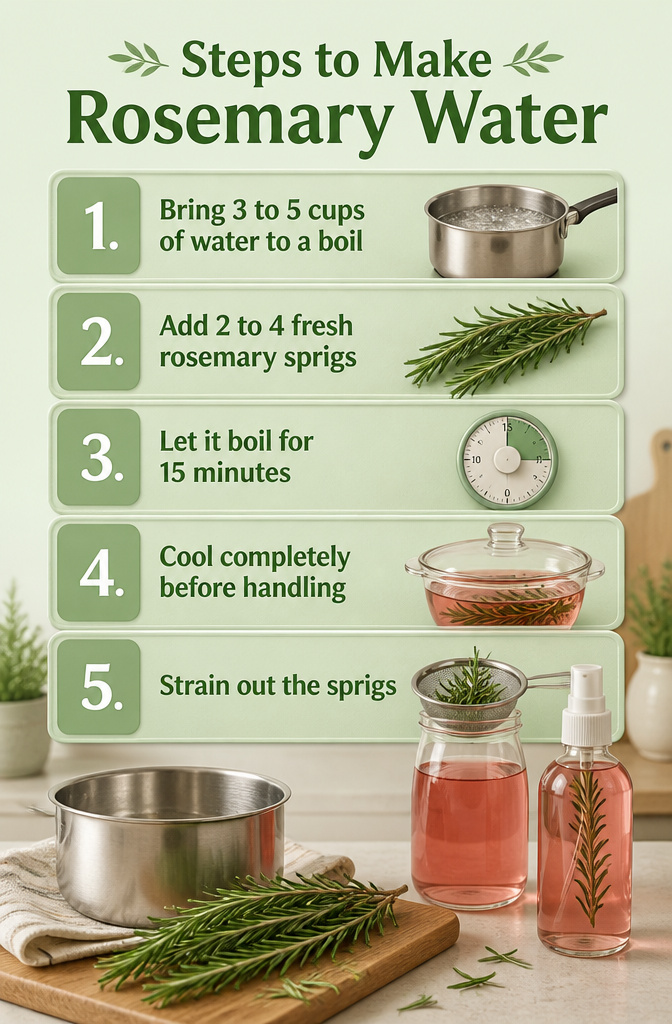
- Bring 3 to 5 cups of water to a boil in a small pot. I usually go with 4 cups, which fills my spray bottle with a little left over.
- Add 2 to 4 fresh rosemary sprigs once the water is rolling. One source suggests one sprig per cup, so 4 sprigs for 4 cups keeps the math clean. You can toss in 2 to 3 tablespoons of fresh mint leaves here if you want a cooling scent, though I skip it most days.
- Let it boil for 15 minutes, then remove the pot from the heat, cover it, and set a timer for 25 minutes of steeping. The liquid will shift to a pinkish-reddish hue as it cools. That color change is your visual cue that the rosemary has fully released into the water.
- Cool completely before you handle it. I leave the lid on and forget about it for an hour or two.
- Strain out the sprigs and pour the finished water into a jar or spray bottle. It stores in the refrigerator for up to 2 weeks.

Rosemary & Rice Water Hair Growth Spray: Infused with rosemary and rice water, this lightweight leave-in spray supports healthy-looking hair growth, nourishes the scalp, and promotes fuller-looking hair. A viral TikTok-inspired hair care favorite.

Strengthens Hair up to 30%.

Made with 100% natural rosemary and rice water extracts for a refreshing, plant-powered experience.
Ways to Use It on Your Hair

There are two practical ways to work rosemary water into your routine, and which one you choose depends on how your hair behaves day to day.
A leave-in mist suits fine or oily hair that gets weighed down easily. You lift your hair in sections, spray directly at the roots, and use your fingertips or a scalp massager to work it in. The massage itself matters here: it boosts circulation while the rosemary gets to your follicles. Many people do this twice daily, morning and night, and it doubles as a light refresher between washes since rosemary helps cut scalp grease.
The rinse method works better for dry, frizzy, or thicker hair that can handle more moisture. After shampooing, you pour rosemary water over your scalp and through your strands, leave it in for 10 to 15 minutes, then decide whether to rinse or let it stay. Leaving it in gives you more conditioning; rinsing avoids any heaviness if your hair is easily overloaded. This approach is especially useful if frizz is your main complaint.
Either way, consistency matters more than intensity. Sources suggest you will need about four weeks of regular use before you notice a real difference.

DOCTOR FORMULATED SHAMPOO: This doctor developed Scalp Relief Shampoo soothes, calms and nourishes an itchy scalp and promotes scalp repair as it cleanses, all with a prescription-free formula.

DEVELOPED FOR BLACK HAIR BY BLACK SCIENTISTS: Royal Oils is the Head and Shoulders line built for natural, relaxed, kinky, and coily crowns by the scientists who understand them.

Hair Growth & Regrowth: Just as a rich harvest emerges from fertile land, hair thrives on a healthy scalp. Our rice water vinegar rinse is designed to clarify and moisturize the scalp surface, balancing its pH level to promote natural hair growth
How Often to Apply It

Daily application as a light leave-in mist is perfectly fine if your scalp tolerates it well. I tend to check in with my own scalp after a few days of daily use, since irritation can creep up quietly. Starting with two or three times per week and adjusting from there is the safer bet for most people, and it still builds the consistency that matters. Results typically show after several weeks of regular use, so patience is part of the routine. If you notice any sensitivity, pulling back on frequency or switching to a rinse-out method instead of leaving it in usually solves the problem without abandoning the treatment entirely.

100% PURE & NATURAL ROSEMARY OIL: Handcraft Blends oils are exactly that! Many other oils claim that but are actually isolates and mixtures. Each oil is tested by an independent lab, so every bottle has a Quality Guarantee.

GET CONNECTED WITH NATURE: Pure Organic Rosemary Oil has a herbaceous, slightly earthy and balsamic scent. It clears the air around you so you can bask in the natural freshness.

Fuller Looking Hair in 8-12 Weeks: Mix 2-3 drops with 1 tablespoon carrier oil (jojoba, coconut, argan, grapeseed), massage scalp 2-3x weekly. Or add 3-5 drops to shampoo directly. Many customers report fuller appearance and improved scalp health after consistent use.
Rosemary Water vs. Rosemary Oil
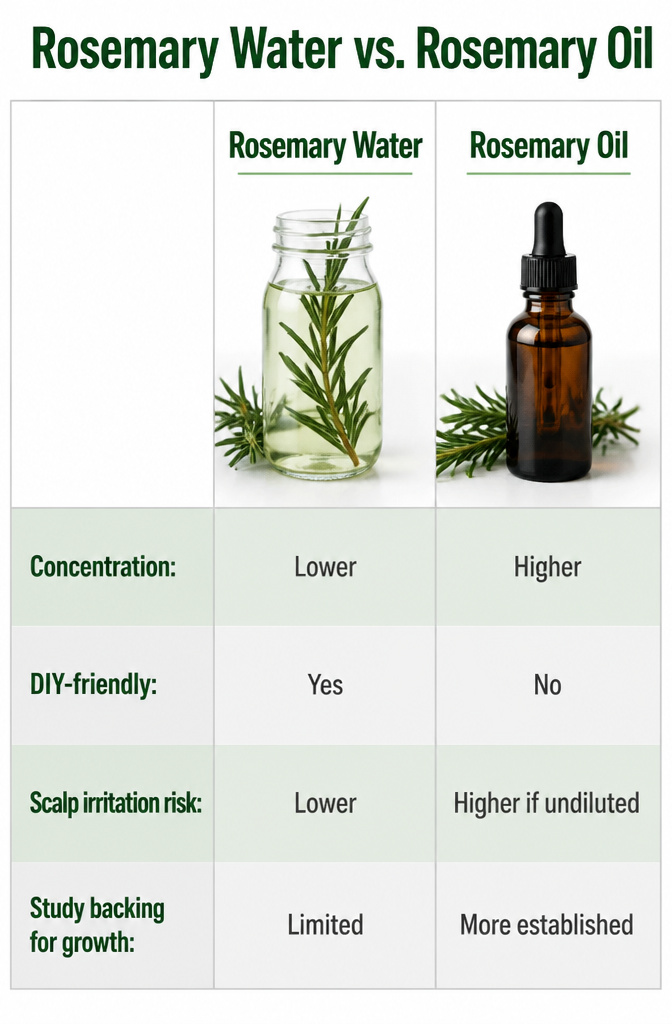
Both rosemary water and rosemary oil come from the same plant, but they deliver it differently. Water is what most of us can actually make at home with a pot and some sprigs. Oil, on the other hand, is the concentrated stuff extracted through steam distillation, and the research tying rosemary to hair growth has mostly used that stronger form.
The process of making an essential oil is to use professional, sterile equipment at controlled temperatures to achieve effective results, as opposed to boiling a plant that has the nutrients cooked out of it with high temperatures and evaporation under conditions that are not uniform.
What this means for you: a homemade water rinse is gentler and easier to whip up, but it is not the same potency that matched 2 percent minoxidil in studies.
| Rosemary Water | Rosemary Oil | |
|---|---|---|
| Concentration | Lower | Higher |
| DIY-friendly | Yes | No |
| Scalp irritation risk | Lower | Higher if undiluted |
| Study backing for growth | Limited | More established |
I reach for water when my scalp feels sensitive or I want something I can spray on daily without thinking too hard. Oil makes more sense if you want the strongest option and do not mind the extra steps: essential oils must be diluted with a carrier oil before they touch your skin, and even then, patch test first. Skip that step and you are trading hair growth for a red, angry scalp.

TEA TREE OIL SCALP TREATMENT - Soothe a dry, itchy scalp with a leave in conditioner spray built around tea tree oil. This scalp treatment helps calm itching and flaking, so anti-dandruff relief and daily scalp care come from one bottle.

ROSEMARY OIL FOR HAIR GROWTH - Rosemary oil, the ingredient people reach for when they want hair growth, comes here in a leave in conditioner spray you can use every day. Mist it onto the scalp to support fuller, thicker-looking hair over time, while the mint leaves your scalp feeling refreshed.

RECLAIM YOUR CONFIDENCE: At Keranique, we understand that hair loss can be a vulnerable experience, so we’re here to empower you with the best hair growth products to address it with confidence
What to Watch Out For
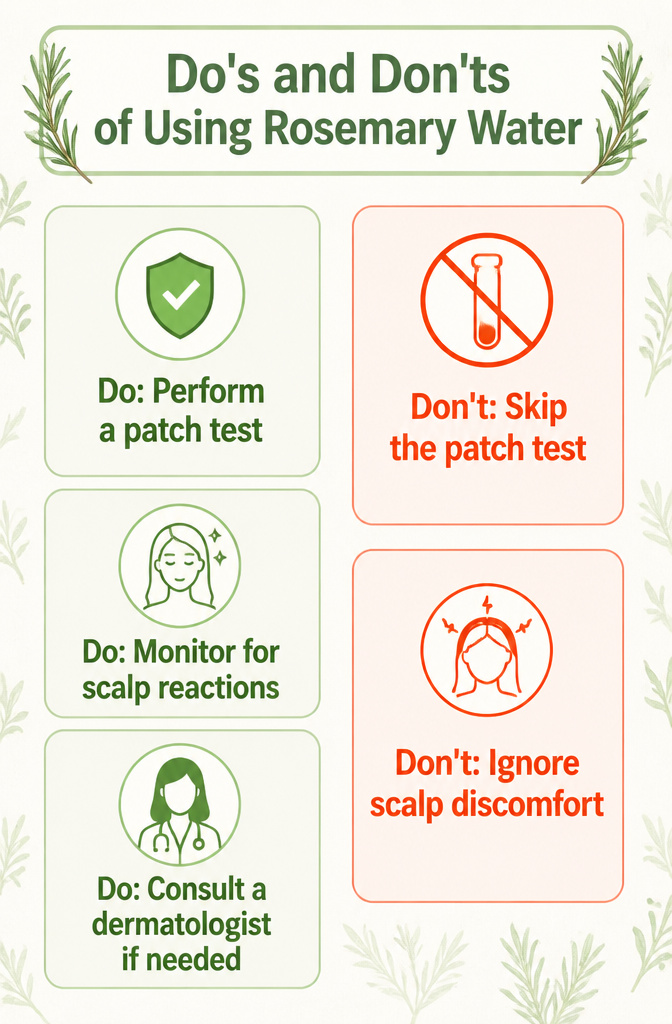
Rosemary water sits on the gentler end of the spectrum, but that does not mean it is risk-free. A small area of skin can react to almost any plant-based rinse, so a patch test on the inner arm before the first full scalp use is the safest move. Leave it there for a minute or two, rinse, and watch for redness or itching over the next day. If anything flares up, wash it off and do not proceed.
The studies on rosemary for hair growth are still small and preliminary, and none specifically track rosemary water over the long haul. That leaves a real gap in what we know about months or years of regular use. If your scalp starts feeling tight, itchy, or unusually dry at any point, that is a sign to stop and reassess. For anyone with existing scalp conditions or sensitivities, running the idea past a dermatologist first is the smarter call than guessing your way through it.

No Parabens, No Sulfates, Pre Shampoo treatment, Scalp treatment, Stimulates hair growth

【Important Notice】: (Patent Number: US D1,070,607 S). Some bottles may come with small amounts of water inside due to quality assurance tests, All products need to be functionally tested with clean water before shipment to ensure that you can receive functional products. So the bottles with some water are not previously used products, pls rest assured.

Rosemary & Mint Leave in Conditioner for Dry Hair- Conditioning & Strength Down to the Roots, Difeel Difeel Rosemary & Mint Strengthening Leave-in Conditioning Spray is infused with nourishing Biotin. Biotin plays an important role in the health of your hair, skin, and nails. A lack of Biotin can lead to hair loss.
Homemade vs. Store-Bought
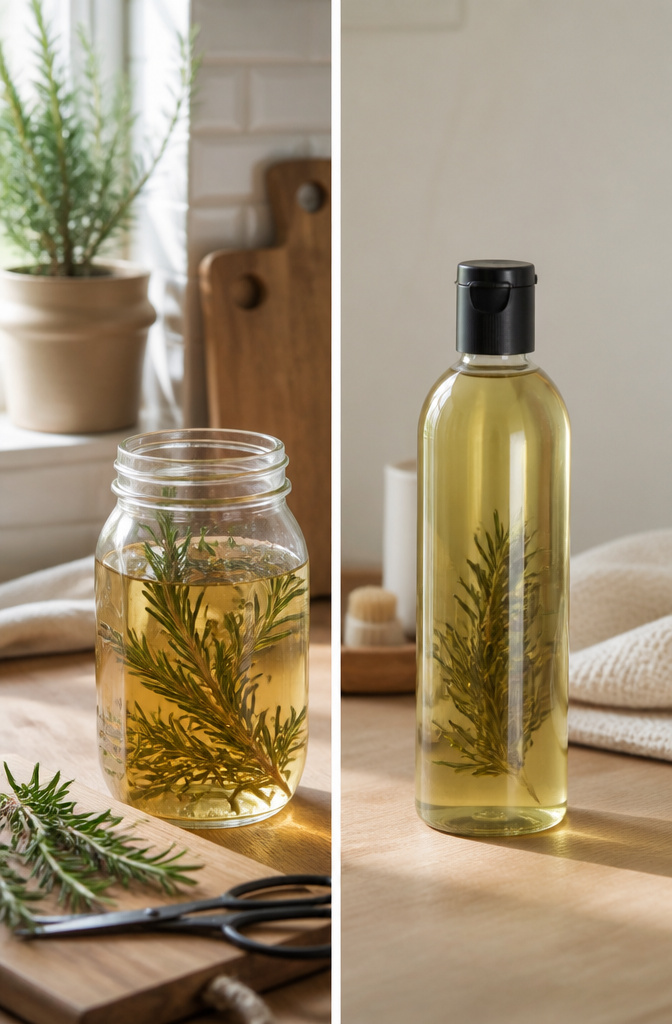
Making rosemary water at home costs next to nothing and takes about ten minutes from stove to spray bottle. A few sprigs of fresh rosemary and three cups of water are all you need, plus whatever jar you already have. The batch stays good in the fridge for two weeks, then you make a fresh one. That short shelf life is the tradeoff: no preservatives means no mystery ingredients, but it also means planning ahead.
Store-bought versions solve the convenience problem. They sit in your cabinet for months, ready whenever you remember to use them. What you gain in shelf life, you lose in knowing exactly what went in. Oils, fragrances, or stabilizers sometimes tag along even when the front label just says "rosemary water."
If you buy instead of brew, the ingredient list is what matters. Look for water and rosemary near the top, with as short a list as possible. Skip anything that reads more like a chemistry set than a kitchen recipe. For me, the two-week rhythm of making a fresh batch is worth the small effort. The homemade version is genuinely just steeped herbs and water, and my scalp notices the difference.

Deep Scalp Exfoliation – Experience a salon-level scalp exfoliant that works like a face peel for your head. This hair exfoliator for scalp blends AHA, BHA, and rosemary to act as an exfoliating scalp scrub and effective scalp build up remover,.
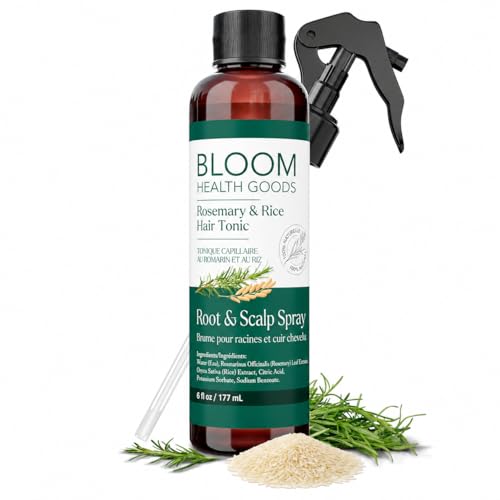
STRONGER, FULLER-LOOKING HAIR: A lightweight leave-in mist of hand-brewed rosemary and fermented rice water that helps strengthen strands, reduce breakage, and leave hair looking thicker, softer, and full of body — no rinsing required.

🌾 ROSEMARY & RICE WATER SPRAY FOR HAIR GROWTH – Our fermented rice water for hair growth targets follicles directly, reducing shedding while rosemary extract boosts scalp circulation for visibly thicker, longer strands.
Other Herbs to Try With It

Mint leaves are a nice companion to rosemary water if you want to experiment. I have seen recipes call for 2–3 tablespoons of fresh mint leaves added right alongside the rosemary sprigs, and the cooling sensation can feel pleasant on the scalp. That said, this is strictly optional. Only one brief I came across even mentioned mint, so the evidence behind it is thin compared with rosemary itself. If you already have mint growing in a windowsill or garden pot, tossing some in costs nothing and will not hurt the batch. Without it, you still get the full effect of the rosemary water for hair growth.

Anti-Dandruff: This medicated shampoo is formulated with 2% salicylic acid to help control dandruff, scaling, flaking and itchy scalp, while helping to prevent recurrence of seborrheic dermatitis, for soft flake-free, healthy looking hair

MOISTURIZING HAIR SCALP TREATMENT – Head & Shoulders Royal Oils Daily Moisture Scalp Cream is a leave-in, daily hair treatment to seal in moisture and prevent flakes and itch*. Use it to wash less, extend the life of your style and have healthy hair and scalp.
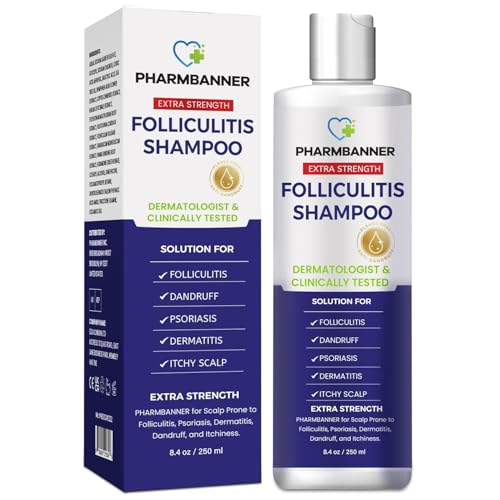
[HIGHLY EFFECTIVE OTC ANTIFUNGAL FORMULA] Powered by Hexamidine Diisethionate 0.1% — our medicated shampoo is specifically formulated to help relieve the itching, burning, redness, scaling, and flaking experienced with seborrheic dermatitis, folliculitis, and dandruff. Enriched with herbal extracts for added scalp comfort.
Frequently Asked Questions
Is rosemary water good for hair growth?
Rosemary water may promote hair growth by improving circulation to the scalp, which delivers more oxygen and nutrients to each follicle. Its anti-inflammatory properties also calm irritation and reduce shedding by strengthening roots. Most people need about four weeks of regular use before noticing a real difference.
How do you make rosemary water?
Bring 3 to 5 cups of water to a boil, add 2 to 4 fresh rosemary sprigs, and boil for 15 minutes. Remove from heat, cover, and steep for 25 minutes until the liquid turns a pinkish-reddish hue. Strain and store in the refrigerator for up to 2 weeks.
How often should I use rosemary water on my hair?
Start with two or three times per week and adjust based on how your scalp responds. Daily use as a light leave-in mist works fine for many people, though you should pull back if any irritation appears. Consistency over several weeks matters more than frequency.
Can I use rosemary water every day?
Yes, daily application as a light leave-in mist is fine if your scalp tolerates it well. Check for creeping irritation after a few days of daily use, and switch to a rinse-out method or reduce frequency if sensitivity develops.
What are the benefits of rosemary for hair?
Rosemary stimulates blood flow to the scalp, which may increase growth rates. It also provides anti-inflammatory relief for dandruff and itchiness, blocks free-radical damage with antioxidants, and balances scalp oils while hydrating the skin. It works for all hair types.