The ideas here run from a costume-only kokoshnik headdress to winter coats, boots and scarves you’ll wear for years, and what sorts them is how much of your closet you’re willing to change.
For a full look, a sarafan over a simple top or a vintage floral puff sleeve dress covers an occasion without a new wardrobe.
1. Kokoshnik Headdress
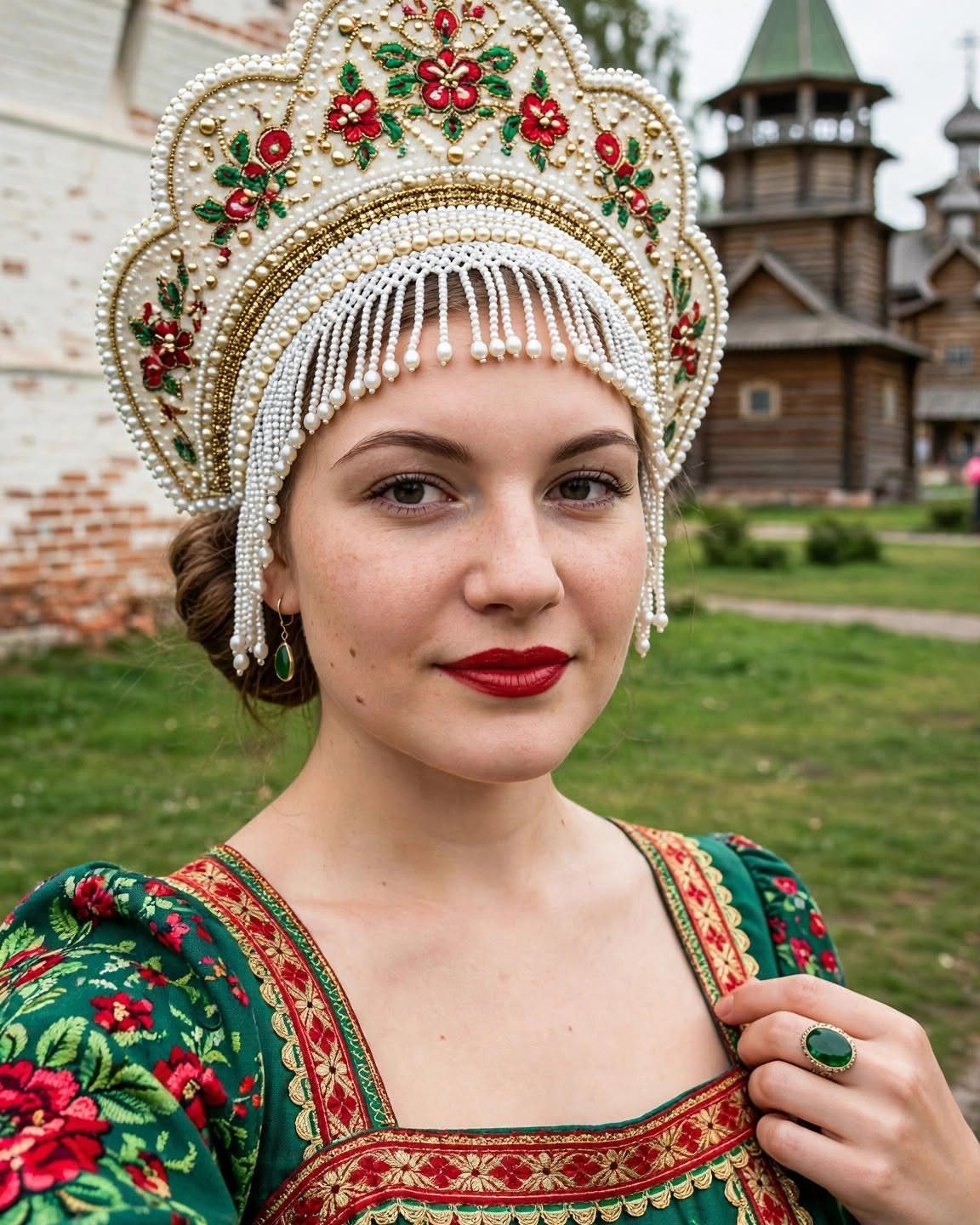
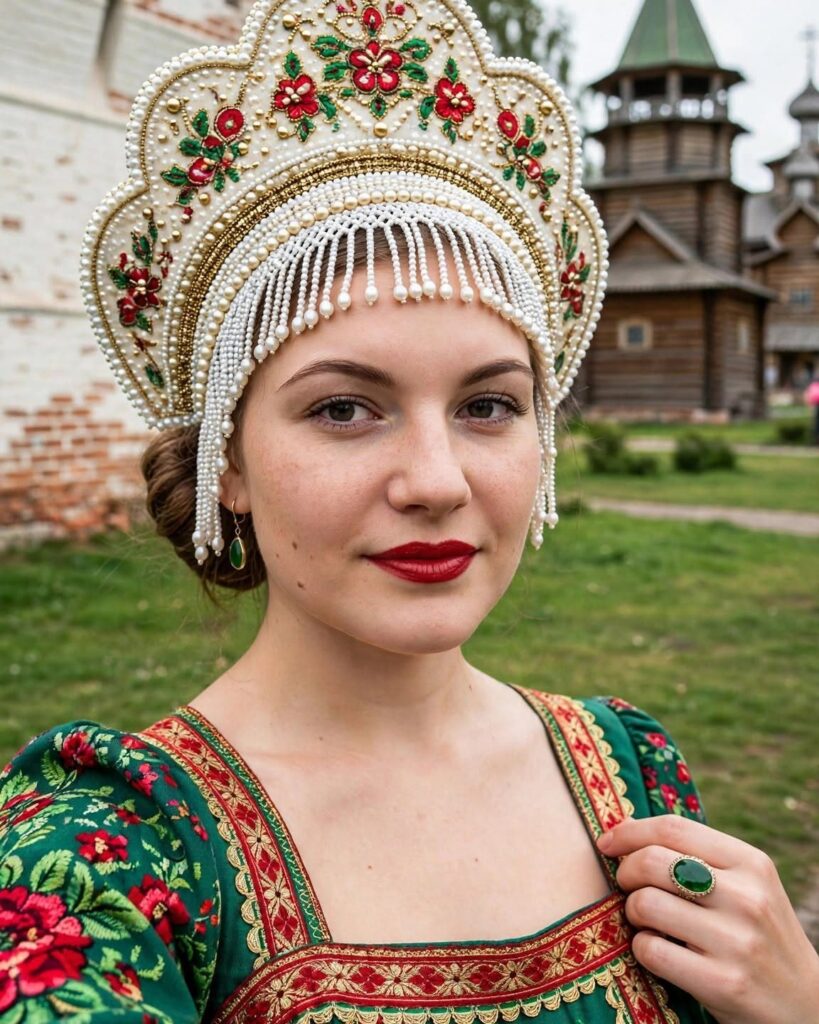
A kokoshnik is a standing headdress, and it works as the focal point of a whole look.
Pearls and beadwork like this do the talking, so keep everything else in the look quiet: a plain dress or a solid knit, no extra jewelry.
For most US closets, I’d treat it as a costume or photo piece, not an everyday accessory.
It suits a themed party, a festival or a portrait session, and a simple embroidered dress underneath keeps it from looking like a mismatch.
If you want the idea without the full headpiece, a beaded headband borrows the same feel and fits a normal day.

Metal beaded tassel hair chain is made of alloy

Pearl headpiece for women made of high quality lustrous artificial pearls, elegant and sturdy, comfortable to wear for long time.

Material: Handmade imitation pearls and beads.
2. Folk Patterns in Modern Fashion
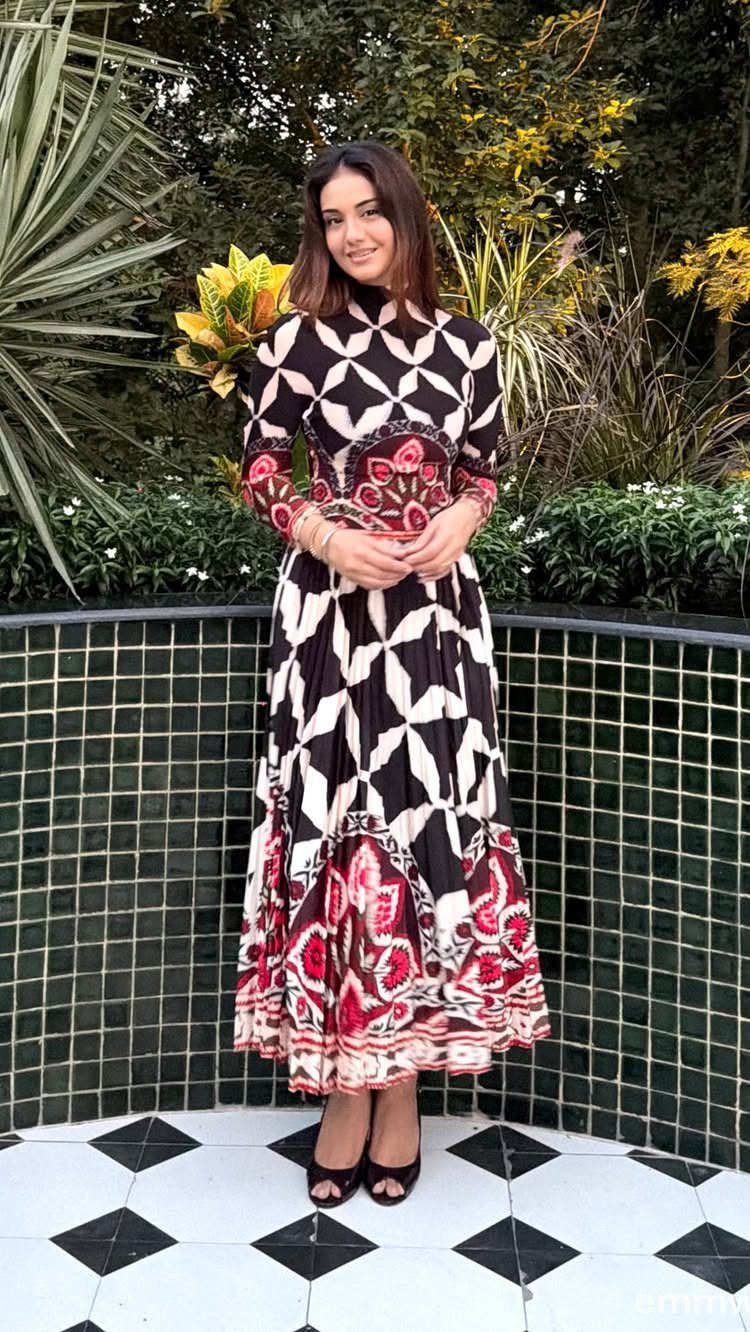
Folk patterns show up best when the cut is modern and the motifs do the traditional work. A long-sleeved maxi with a geometric red and black print carries itself, so a simple belt or none at all is plenty.
I’d keep shoes and bags plain. Black flats or ankle boots pick up the dark tones in the print, which keeps the pattern as the main event.
If a full print feels like a lot, try one piece instead, like a scarf or a blouse, and pair it with solids you already own.

[SOFT FABRIC] This maxi dress is made of high quality fabric, supplying you comfortable wearing experience. The fall long sleeve dress is stretchy and comfy to wear. Trust me, you will get many compliments on this dress everywhere.

US Size Guide: Small=(US 4-6 ), Medium=(US 8-10), Large=(US 12-14), X-Large=(US 16-18), XX-Large=(US 20-22). Model is 5'5", 122lbs, wearing a size Medium, short sleeve maxi dress just above her feet.

Summer Dresses For Women 2026 / Prom Dress / Spring Dress / Easter Dress / Formal Dresses For Women Wedding Guest / Floral Maxi Dress / Sundresses For Women / bridesmaid dresses / Boho Dress / Mesh Dress / Casual Sleeveless Summer Dresses / Elegant Cocktail Dresses / Cowl Neck Beach Long Dresses / Vacation Dresses / Party Dress / Bridal Shower Dress
3. Winter Coats, Boots, and Scarves
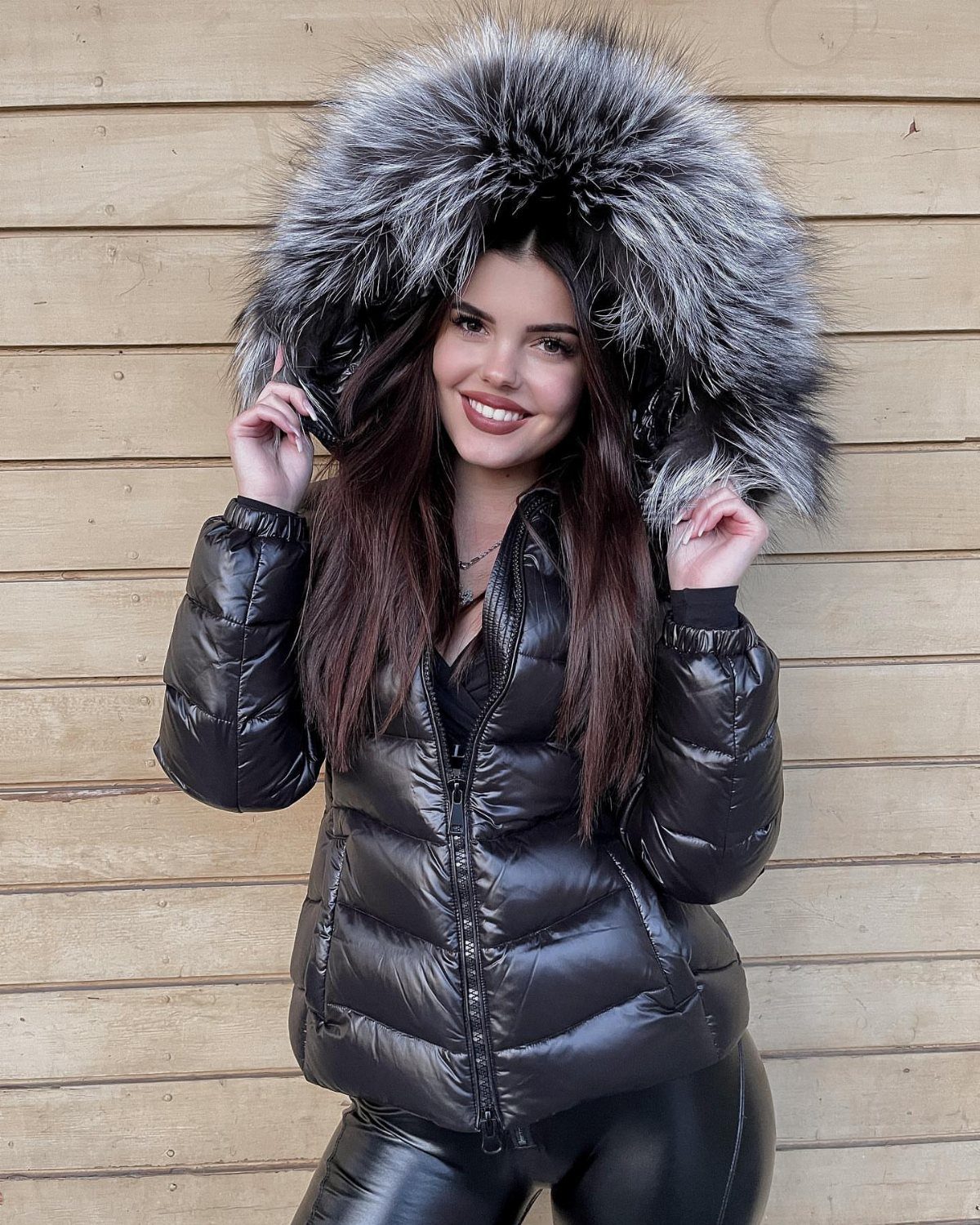
Cold-weather dressing is where practical pieces matter most, and a black puffer with a big fur-style hood is a solid anchor. Black goes with nearly everything in a closet, so it’s easy to build around.
A puffer works well over black leather pants for a clean, all-dark outfit, since the matte quilting and the leather give you 2 textures without adding color.
Add a scarf in a lighter or textured shade to break it up near your face.
Boots round it out. Pick a pair you can walk in, since a winter outfit only counts if you’ll actually wear it outside.
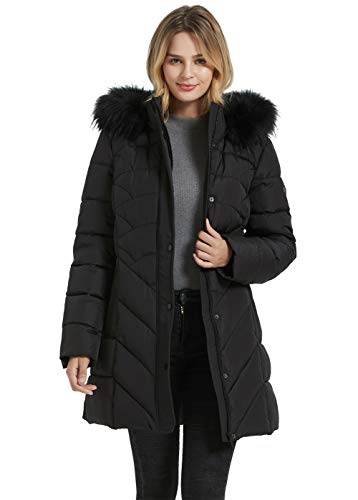
Classic Hooded Style: The hood comes with a non-removable faux fur trim, perfect for colder winter days. The faux fur is soft, smooth, high-quality, and designed to resist shedding, providing excellent warmth and style. The big, deep hood with beautifully trim complements classic winter outfits. While the hood is detachable for versatility, the faux fur trim is securely attached and cannot be removed

Recycled Fabric - The winter jacket for women is made with renewable fabric and filling. With a 10,000mm waterproof rating, the women's winter coat keeps you dry in the rain or warm in snowy weather at all times

Puff jackets for women is make of 100% polyester, lightweight and soft material. Short puffer jacket women are thick and light, and the faux fur over the neckline looks stylish and warm.
4. Sarafan Dress
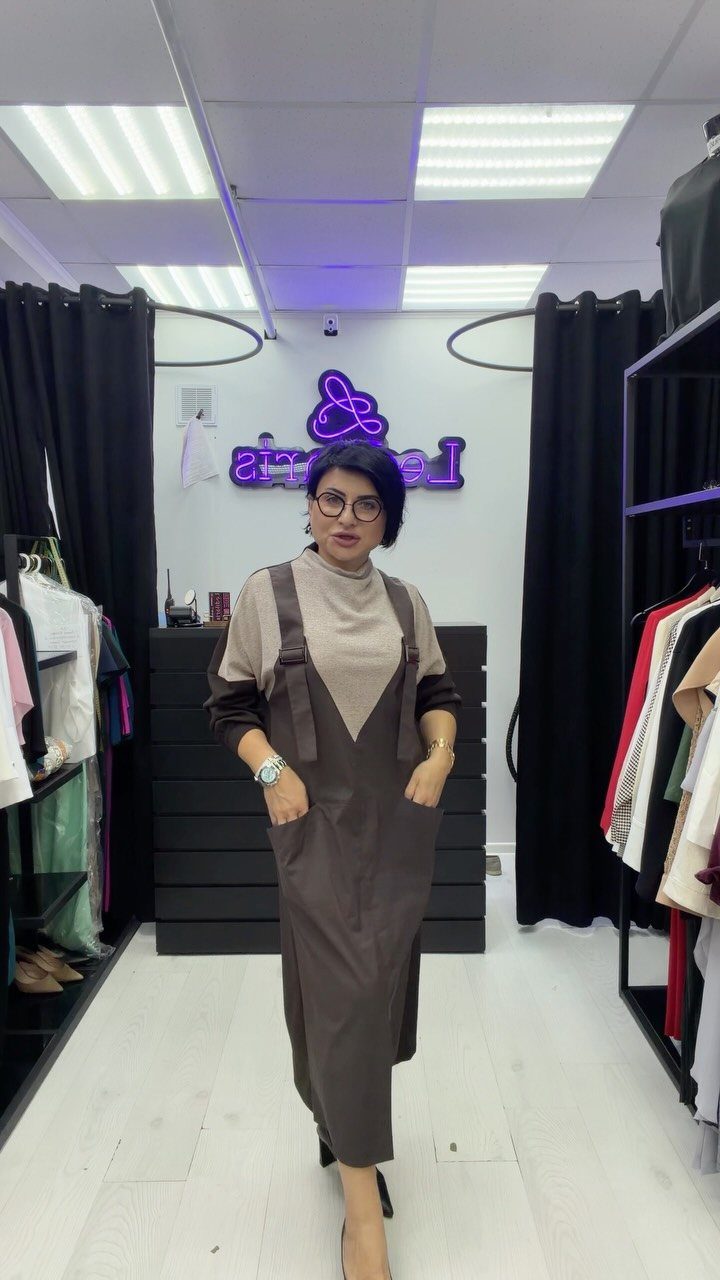
A sarafan is a long, sleeveless dress, close to what Americans call a pinafore or jumper, and it has long been tied to ideas of femininity. Worn over a beige top, as above, it reads as soft and easy.
That layering is why I like it for a closet you’ve already built. Any fitted top or lightweight knit you own can go underneath, and you can change the top with the season.
Brown is a forgiving shade if you want to try one. A long hem gives you plenty of room to play with boots or flats.

【Premium Material】:The vintage apron are made from cotton material,it is soft and breathable,suitable for cooking, baking, painting,or gardening while keeping you comfortable in the kitchen

Denim dress for women sleeveless bodycon long jean dresses

Size Guide: XS=US 0-2, S=US 4-6, M=US 8-10, L= US 12-14, XL=US 1 6-18, XXL=US 20-22. Please check the above "Size Chart" tool before ordering, if you are not sure about the size, please contact us without hesitation.
5. Vintage Floral Puff Sleeve Dress
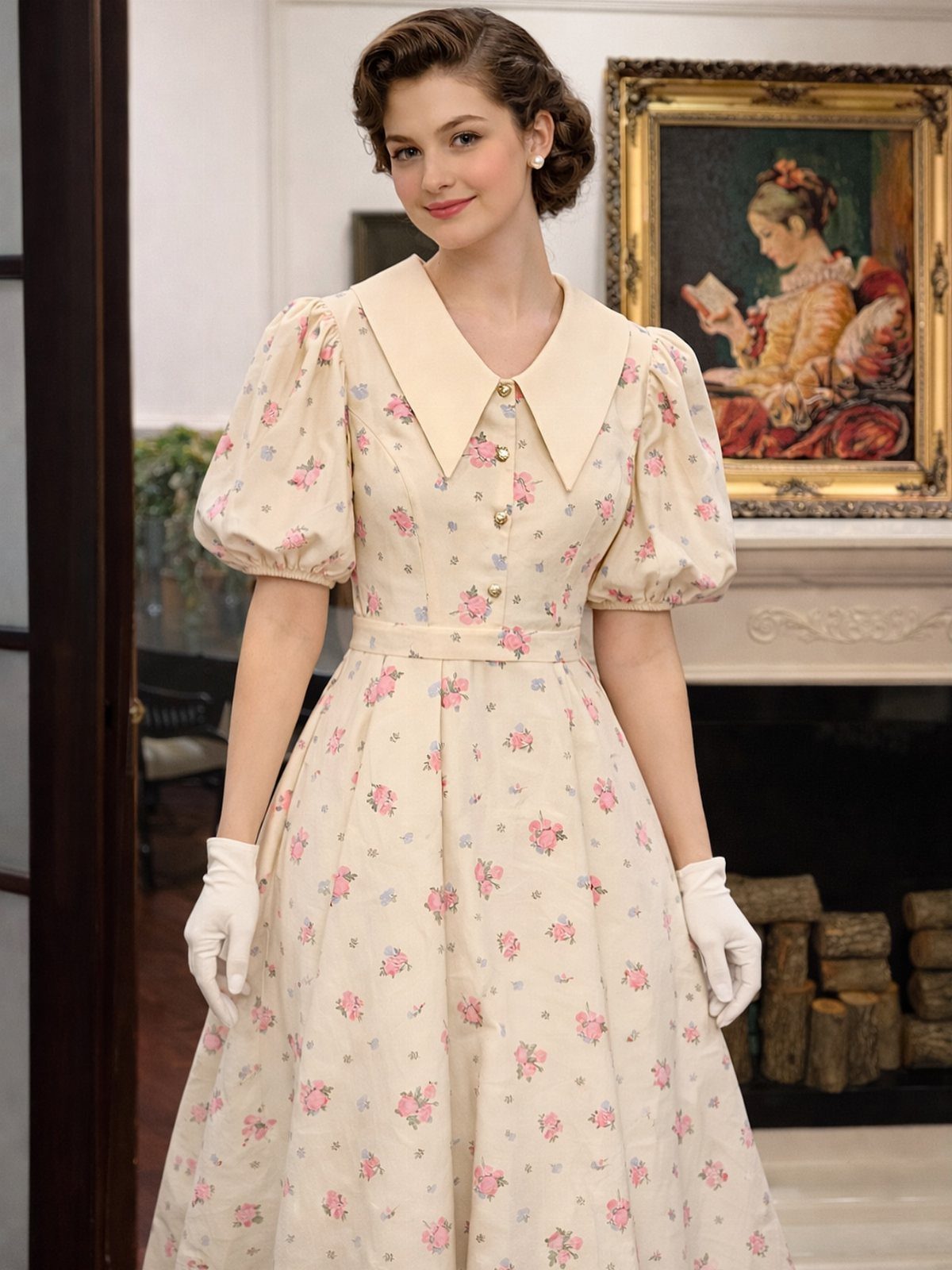
A cream floral dress with puff sleeves and a structured collar is a vintage look that holds together without much help. The collar gives the neckline shape, and the sleeves add volume up top while the print stays light.
White gloves push it fully into costume territory, so I’d treat them as optional. Without them, the dress still works for brunch, a wedding guest outfit or a nice dinner.
Keep accessories simple: small earrings, a neat shoe. The dress already has plenty going on.

Chic Floral Print Design: Features a vibrant and colorful floral pattern perfect for spring and summer fashion

【MATERIAL】: Selected high quality fabric, soft, comfortable and breathable

Premium Fabric:Selected high-quality cotton fabric, with a soft and comfortable touch, protecting the delicate skin of children. Lightweight and breathable fabric promotes air circulation, keeping babies cool and comfortable throughout the day.
Influence of Climate on Fashion
Layering is the practical answer to a cold climate, and it’s also a look. Oversized coats, thick sweaters, long scarves and padded jackets trap heat, and the loose shapes leave room for what’s underneath.
I’d build the volume on purpose. Pick one big piece, like a coat with a dramatic collar, and keep the layers beneath it slimmer so you don’t feel buried.
Wrapped scarves and heavy boots add to that sculpted effect. If you already own a roomy coat, try a chunky sweater under it before you buy anything new.
Oversized shapes are common worldwide now, but in a cold climate they feel natural because the weather asks for them. A coat you can actually stay warm in is the one worth buying.

Metal beaded tassel hair chain is made of alloy

HANDMADE DECORATIVE HEADDRESS – Carefully crafted with satin, beads and ornate detailing for a distinctive traditional-inspired appearance.

Handmade Material-Pearl&Beads:This cap headpiece is made of pearls and beads that have been made by hand. Touch it and you will feel how nice it is.The pearls and beads are lined up neatly, with no loose parts. You can wear it every day or for special events, and it will always look great.
Role of Fashion in Identity
In Russia, getting dressed is tied closely to ideas of self-respect and femininity. Makeup, hair, manicures, fitted clothing, good coats and nice shoes are often read as signs of caring for yourself.
If your daily uniform is leggings, a sweatshirt or flip-flops, the standard there may catch you off guard. Relaxed outfits do exist, but a coat, a good pair of shoes and tidy hair and nails tend to get more thought.
I’d borrow that part. Keep your casual outfit, and upgrade one detail: a better coat, clean shoes, a tidy manicure.
Plenty of younger women reject that polished standard and dress for comfort or their own taste instead.
Streetwear, natural makeup, oversized clothing and gender-neutral looks give them more room to express themselves. So you can take as much or as little of the polish as suits you.

For summer dresses, cotton and rayon are all good choice. Cotton is breathable and skin-friendly but not soft enough to fall well. Conversely, Rayon is soft but shrinks easily. Keeping the advantage but solving the shortage, the blend fabric of cotton with rayon by special weaving is the best! Especially, the ‘bubbles’ due to the interweaving not only rise the sense of design but make the fabric unexpectedly stretchable.

MATERIAL: S=US 4-6, M=US 8-10, L=US 12-14, XL=US 16-18, XXL=US 20 The Boho Maxi Dress Features Lightweight, Soft And Smooth Mesh Fabric With A Stretchy, Breathable Fully Lined Design (Machine Wash & Do Not Tumble Dry)

Features: Floral Print, V Neck, High Low, Flowy beautiful dress
Fashion as a Cultural Language
In Russia, what a woman wears often says something about her, not just how she looks. Polish, fitted shapes and well-kept shoes can signal self-respect, and skipping them may be read as neglecting yourself.
That’s a different language from the casual American one, so it helps to know it before you borrow from it. An outfit that reads as relaxed at home might read differently elsewhere.
I’d treat it as a lens, not a rulebook. Notice which details do the talking in an outfit: the coat, the shoes, the grooming.
Then choose what you want yours to say. Fitted pieces and a good coat are easy ways to look put together without changing your whole closet.
However, their influence is still visible in contemporary fashion, where designers often reinterpret embroidery, patterns, and silhouettes for runway collections. Russian fashion today combines global trends with elements of national heritage, creating a unique blend of modern elegance and folk tradition.

Material: Women's fur collar hoodies jacket is made from high quality polyester and cotton filling, offers excellent warmth retention. The fur collar is made of soft and cozy faux fur, providing a luxurious touch.

Sherpa Fleece Lining: Featuring a classic, lightweight quilted shell, womens puffer jacket offers windproof protection while keeping the insulation securely in place for lasting warmth. Thick, ultra-soft sherpa fleece lines the body and hood for cloud-like comfort and exceptional heat retention. The relaxed fit provides cozy feel without the bulk, allowing for unrestricted movement

Winter Warm Coat: With high-quality warm insulation, this hip-length padded jacket is warm enough to protect you from hard weather conditions. Windproof Elastic rib cuffs and stand collar offer an excellent warmth at the same time
Frequently Asked Questions
How to dress up like a Russian?
Start with polish: fitted pieces, a good coat, clean shoes, tidy hair and nails. In Russia those details are often read as self-respect and femininity, so they tend to get more thought than anything else you’re wearing.
For a themed look, a sarafan (a long, sleeveless pinafore-style dress) over a fitted top works, and a kokoshnik (a standing headdress) suits a party or photo shoot.
What clothing is Russia known for?
2 pieces stand out as traditional Russian dress: the sarafan and the kokoshnik, a decorative headdress. A kokoshnik is a standing headdress, often decorated with pearls and beadwork.
Are you allowed to wear jeans in Russia?
I can’t point to any rule against jeans, and nothing in what I’ve read says they’re banned. Once the Soviet Union broke up, imported American and European clothing flooded the market, and blue jeans were a big part of that.
What tends to draw more attention is the polish around them: a good coat, nice shoes and tidy grooming.