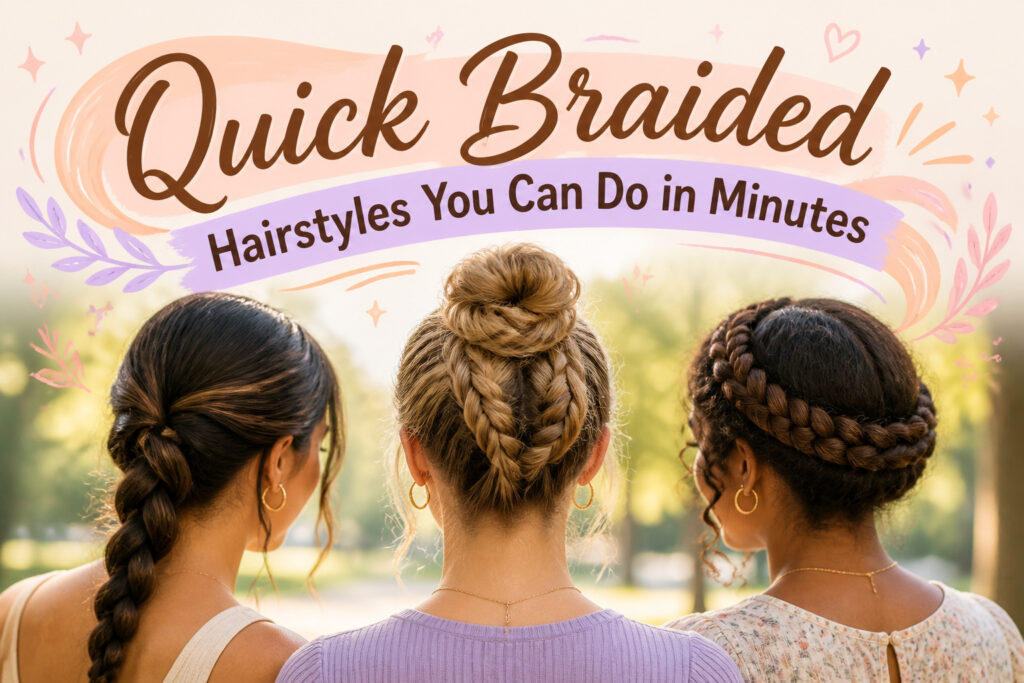
Quick braided hairstyles range from two-minute rope twists to ten-minute crowns, and the deciding factor is usually what your hair did overnight. Second-day texture grips without product; freshly washed strands need dry shampoo first or the braid unravels by lunch. That distinction matters more than the pattern you choose, which is why the upside-down braided bun works on fine hair that slips out of a regular bun, and why box braids trade four hours in the chair for six weeks of no morning routine at all.
1. Classic Three-Strand Side Braid
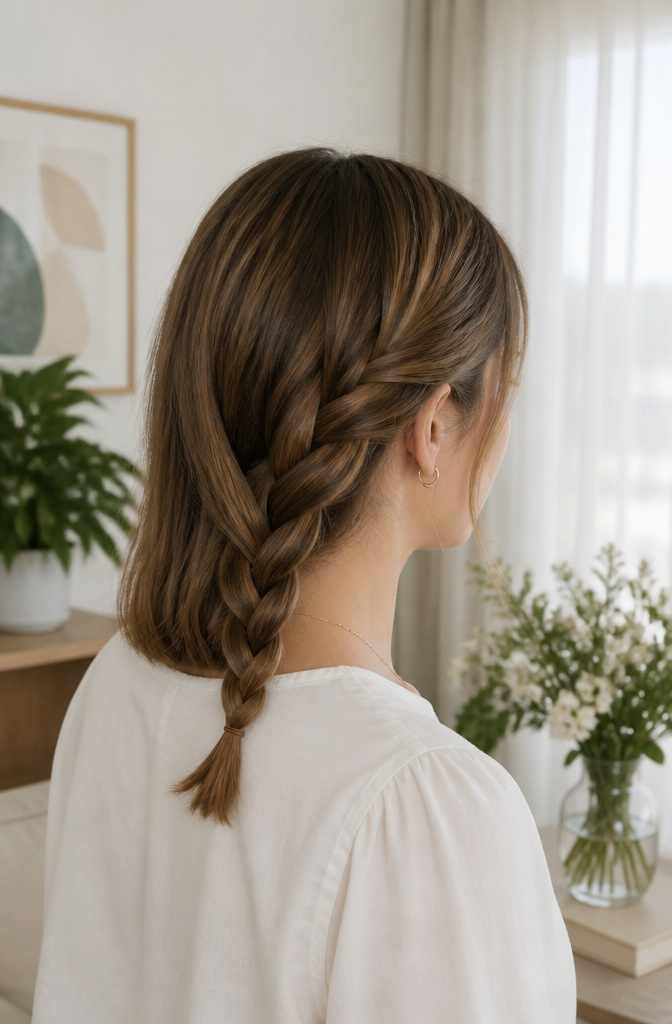
The classic three-strand side braid is where most people should start if they are new to braiding. It is the simplest structure to learn, and it still looks polished enough for work or dinner out.
Sweep everything to one side, divide it into three sections at ear level, and braid straight down. Secure the end with a small elastic, then use your fingers to pull the outer loops slightly wider. That loosening step matters more than it sounds; a tight braid can look stiff, but a gently expanded one reads as intentional and relaxed.
This takes about two minutes once your hands know the motion, and it holds well on straight, wavy, and fine hair from collarbone length down to the waist. Curly textures can wear it too, though the definition of each section will look different and that is not a flaw.

【Package includes】 You will receive 2 pieces. These hair accessories are adorned with delicate turquoise. Our hair jewelry instantly elevates your everyday ponytail. This hair jewelry is exquisitely crafted and has a high-quality feel. Our hair jewelry for women not only securely holds your hair in place without slipping, but also adds a touch of brilliance to any hairstyle. These hair pins for curls are the finishing touch, instantly making a simple style sophisticated and eye-catching.


Package Content: You will get 2pcs hair clip headband in dark coffee, vintage and stylish colors match your daily or formal outfits well. Great present for women, friends, family
2. Braided Ponytail
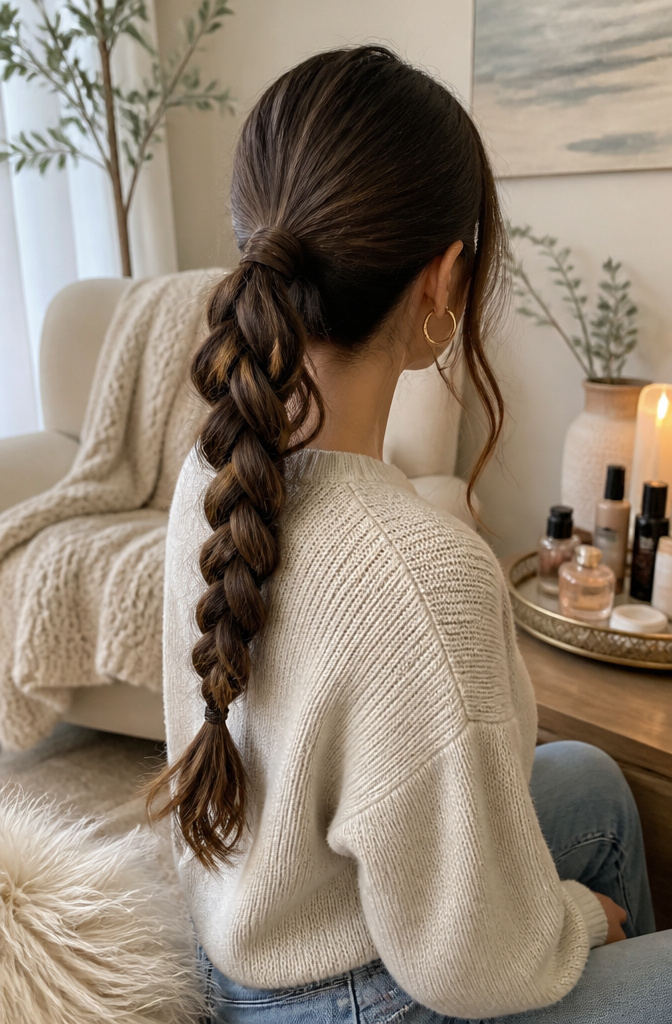
A basic ponytail looks like an afterthought, but a wrapped base and a single braid turn it into something that reads intentional. Start by pulling everything into a low or mid ponytail and securing it with a hair tie. Take a small section from underneath, wrap it around the hair tie to cover it, and pin with a bobby pin tucked underneath so it disappears. Then braid the length of the ponytail and secure the end with another small elastic.
The whole thing takes three to five minutes, and it works on medium to long hair across textures. The wrapped base is what sells the polish; without it, you’re just wearing a gym style to dinner. I usually keep a few pins stashed in my bag because one always walks off when I need it most.

1. Material: Premium Quality Synthetic Hair; Silky and Smooth, Touch Like Real Human Hair

Material: The fake bun is made of high temperature fiber.High temperature fiber bun anti-static, good gloss, make the bun look more natural.High temperature fiber chignon have good flexibility, can keep the shape of the wig.

CRISS CROSS BACK SO YOUR PONYTAIL ACTUALLY FITS: Unlike a regular cap with a solid rear panel, the woven elastic straps on this hat stretch open and let your high ponytail, messy bun, thick braid, or curly updo pull through cleanly from underneath - no flat hair, nothing tugging at the roots, nothing creating an awkward bump at the crown, just a clean comfortable fit that works with updos instead of fighting them all day long on runs, hikes, and busy days.
3. Fishtail Braid
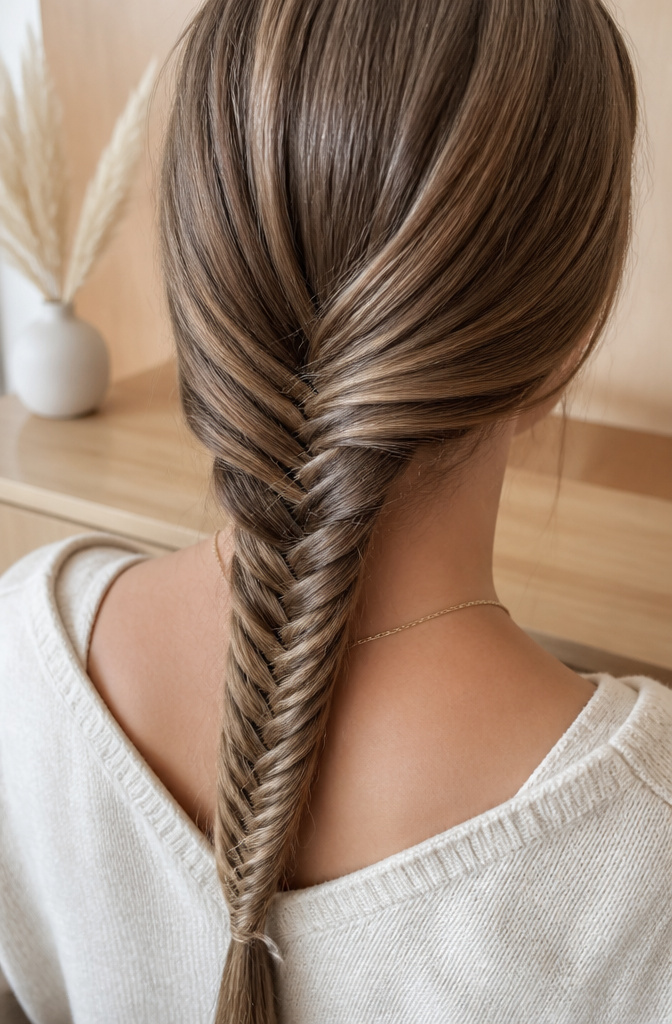
The fishtail braid looks far more complicated than it actually is. You start by dividing your hair into two equal sections, then pull a small strand from the outer edge of one section and cross it over to the opposite side. Repeat from the other side, alternating back and forth until you reach the end. The result is a tight, textured braid with a herringbone pattern that reads as intricate without adding bulk.
Five to seven minutes is all it takes once your hands get used to the rhythm. That timing holds for straight and wavy hair at medium to long lengths, where the sections stay manageable and the strands don’t slip. The alternating method builds its own tension as you go, so you rarely need an elastic until the very end.

Gentle Hold for Daily Use: These baby hair ties come in a 480 piece value pack with 24 colors, giving you plenty of toddler hair ties for daily ponytails, braids, and quick touch-ups. Soft stretchy material helps hold thin hair without pulling, snagging, or leaving dents

High quality material: This is a satin silk hair bonnet for women hair. The satin fabric is as smooth as silk, soft and skin friendly. The reinforced satin fabric is more lightweight, and it is not easy to fade. Don't worry about the color sticking to your pillow. The binding part is also made of skin-friendly soft polyester fabric, which is very elastic and does not feel tight on the head.

Material: Box braids crochet hair, crochet hair made with low temperature synthetic fibers, is very close to real human hair, natural luster, light weight, comfortable and soft.
4. Messy Fishtail Braid
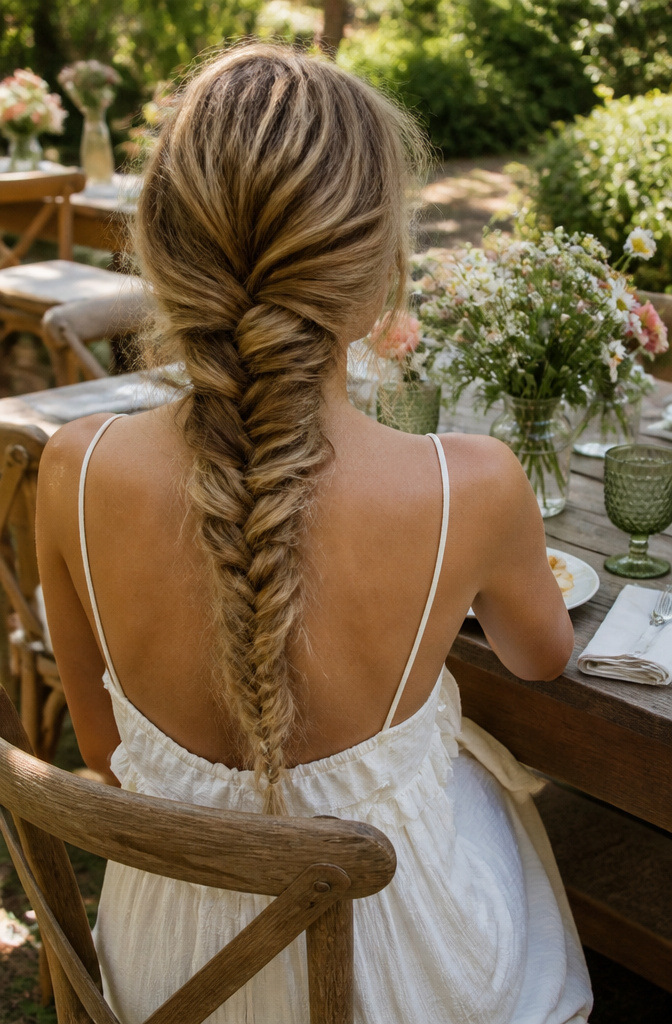
A fishtail braid looks intimidating until you realize the messy version is actually the forgiving one. I start with second-day hair, since the natural oils give the strands enough grip to stay put without slipping loose halfway through the morning. The technique itself is simple: split your hair into two sections, then pull a small piece from the outer edge of one section across to join the other side. Repeat back and forth, working down the length.
Pancaking the braid is where the volume happens. Once the tail is secured, I go back and gently tug the edges outward, working from the bottom up. Each pulled loop widens the braid and softens the silhouette into something that reads intentional rather than sloppy. The whole thing takes about five to eight minutes, and the imperfections you were worried about become the point. Dry shampoo or texturizing spray beforehand adds even more hold if your hair is freshly washed and still too silky to cooperate.


Goody Forever Polybands: These small but mighty elastics provide a secure, all-day hold for any hair type, whether you're styling a sleek ponytail, a messy bun, or a braid. These hair ties allow precision styling for perfect day to night looks
5. Half-Up Braid
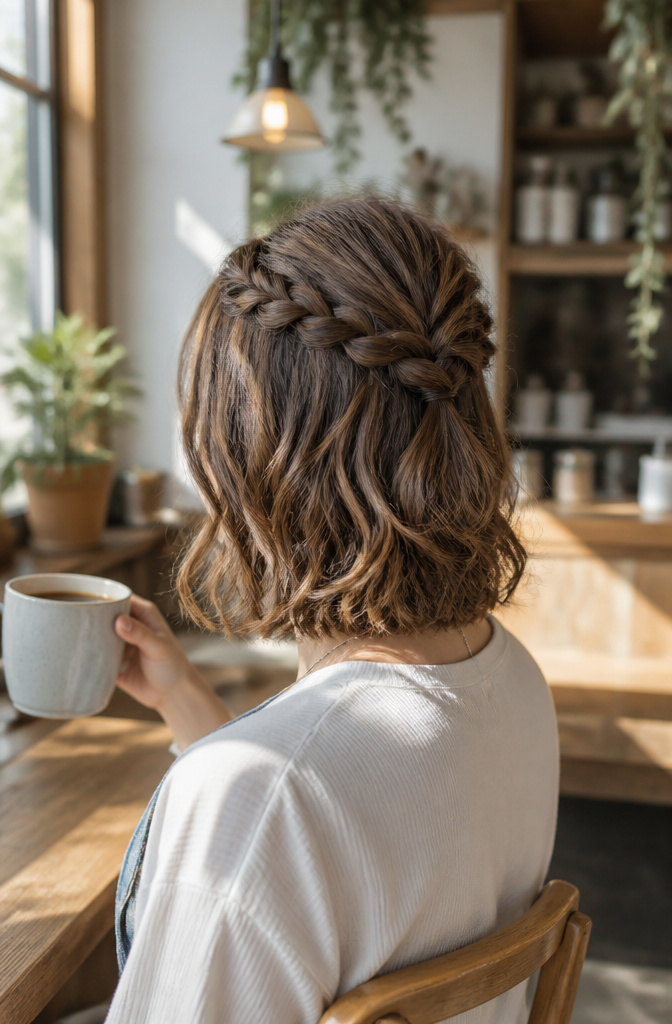
The half-up braid is one of the few quick braided hairstyles that actually works on chin-length hair and growing-out cuts. You just take the top half from the temples back, braid it loosely toward the crown, and secure it with a small elastic or clip. The bottom half stays loose, which hides any awkward length or layers that refuse to stay put.
It is a three- to four-minute style once your hands know the path, and the loose tension is what saves it on shorter hair. Pull too tight and the braid pops out or the ends stick up at odd angles. I usually leave a little face-framing piece on each side, since the strict all-back version can look a bit school-photo on a grown woman.
All textures past the chin can handle this one. If your hair is right at chin length, keep the section small and the braid skinny so you are not fighting to gather enough hair. Longer than shoulder length, the same move still works, though you might coil the tail into a little bun at the crown instead of letting it hang.

Senegalese Twist Hair - Small Senegalese twist crochet hair, This is a brand new hairstyle, It will bring you a new look, 100% Handmade by professional braid stylists, Pre-looped passion twist crochet braids hair for black women, Goddess, Kids.
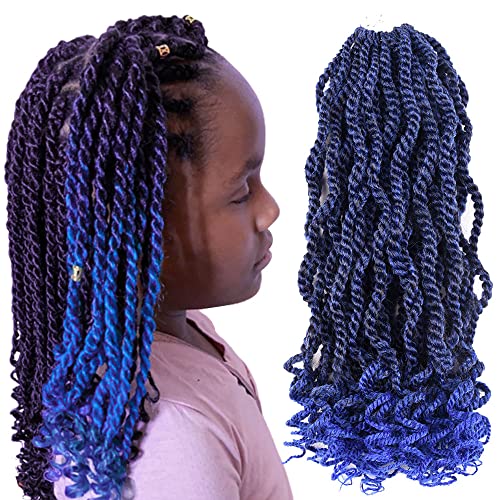
TOZIKA Senegalese Twist Hair - Wavy Senegalese twist crochet hair, This is a brand new hairstyle, It will bring you a new look, 100% Handmade by professional braid stylists, Pre-looped passion twist crochet braids hair for black women, Goddess, Kids.
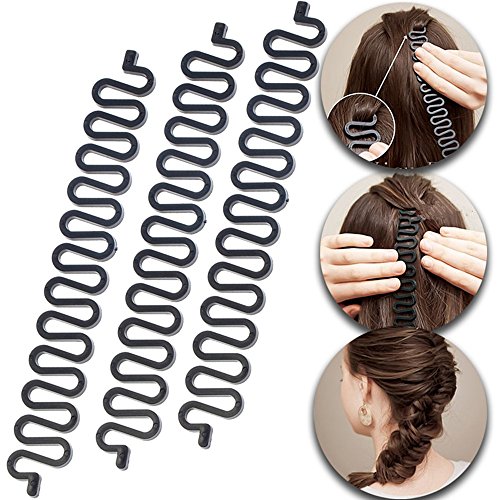
Easy to use (as picture), Suitable for girls or women
6. Braided Crown
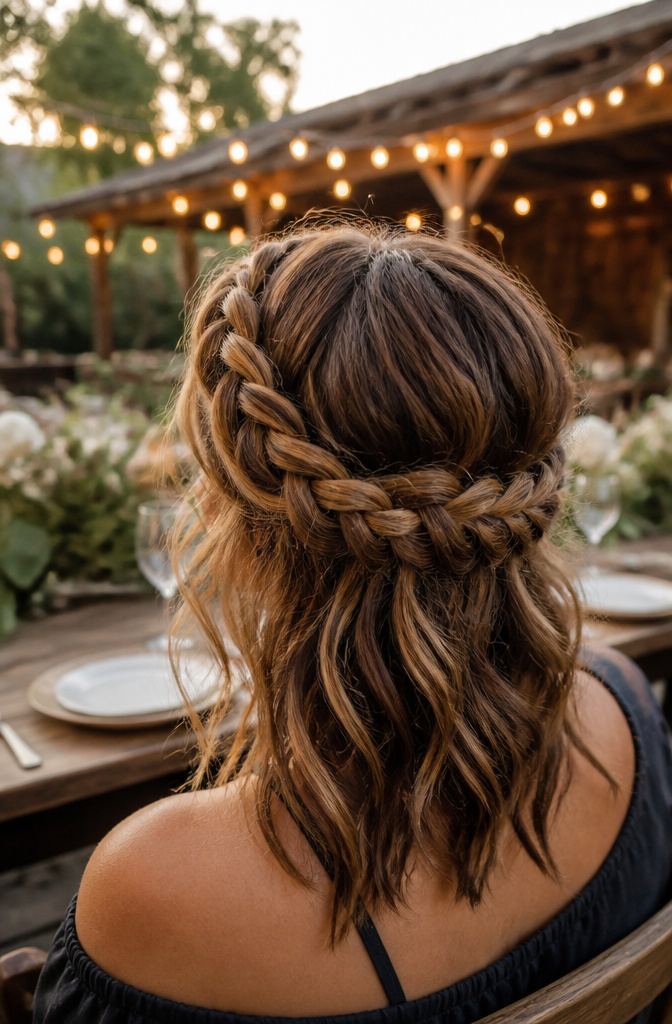
A braided crown builds a halo effect by splitting hair straight down the middle and weaving each side into a simple three-strand braid. The right braid comes up and across the top of the head, pinned in place with bobby pins. The left braid follows, its end tucked neatly under the right to hide the seam.
This style takes about seven to ten minutes and works best on medium to long hair. Fine to medium thickness holds the shape without bulk, though the real trick is texture. Second or third-day hair grips better and stays put, while freshly washed strands tend to slip. A quick mist of texturizing spray or a dab of paste at the roots solves that if you are working with clean hair. The finished look reads polished enough for a dinner out but keeps everything off your face, which is why I reach for it on days when I want to look like I tried harder than I did.

Complete Hair Accessory Set for Braids & Ponytails: This hair jewelry for braids set includes 2 turquoise hair cuffs/pins, plus 200 mini hair elastics. The lightweight metal hair pins for women are designed to adorn braids, ponytails, and buns, adding a pop of color and elegance to any hairstyle.
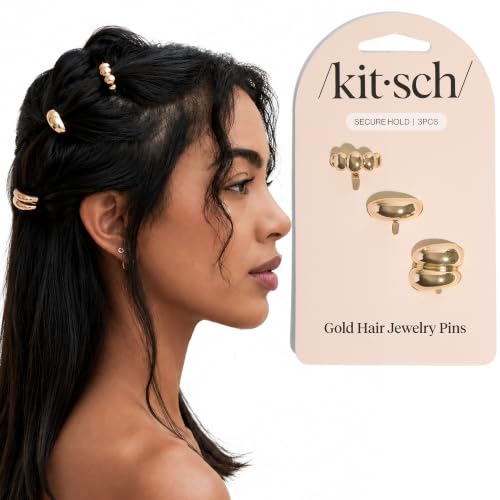
EFFORTLESS STYLE & SECURE HOLD: Elevate your everyday look with the Kitsch Metal Cloud Pins in Gold, beautifully designed hair pins for women that combine durability and lightweight comfort. These stylish pins hold hair securely without slipping, making them ideal for pinning back bangs, smoothing flyaways, or creating polished updos. With a whimsical cloud-inspired design, they’re more than just functional pins—they’re fashionable hair accessories, or ideal gifts for women that bring elegance.

Daily Hair Styling Tool Set: Value hair topsy tail tool set includes a pair of hair loops and a pink rat tail comb. These braiding tools turn messy hair into stylish looks effortlessly, easily show your beauty. Ideal for busy mornings, school, work, or quick touch-ups. Replaces fingers for smooth pull-through styles
7. Upside-Down Braided Bun
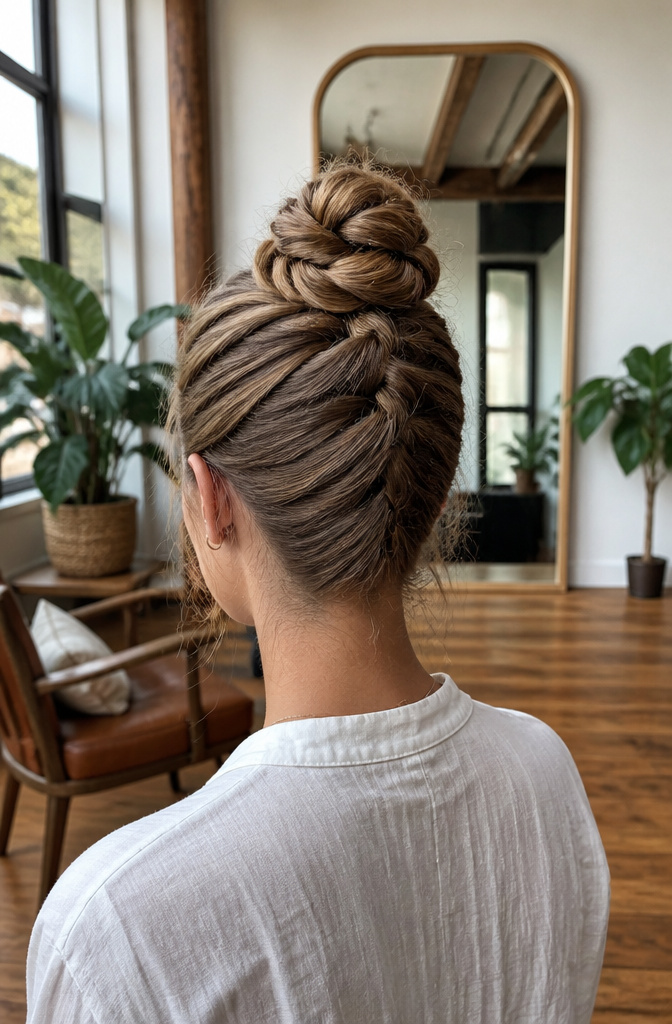
Flip your head over and start a regular three-strand braid at the nape of your neck, working upward toward your crown. The braid itself becomes the anchor, so you’re not relying on a hair tie to grip slick or fine strands that usually slide right out of a standard bun. Once you reach the top, coil the braided length into a bun and pin it. The raised texture from the braid gives pins something to bite into, which is why this stays put through a full day. Fine hair that refuses to hold a regular bun will last until evening with this one. Eight to ten minutes is realistic if your arms are used to the upside-down angle; the first try might run closer to twelve while you figure out the hand positioning.

Instant Elegant Bun Upgrade – Always tossing your hair into a bun? Transform it with this braided bun scrunchie that slips over your messy bun in seconds, turning casual styles into chic, polished looks

Instant Elegant Bun Upgrade – Always tossing your hair into a bun? Transform it with this braided bun scrunchie that slips over your messy bun in seconds, turning casual styles into chic, polished looks

Instant Elegant Bun Upgrade – Always tossing your hair into a bun? Transform it with this braided bun scrunchie that slips over your messy bun in seconds, turning casual styles into chic, polished looks
8. Double Bubble Braids
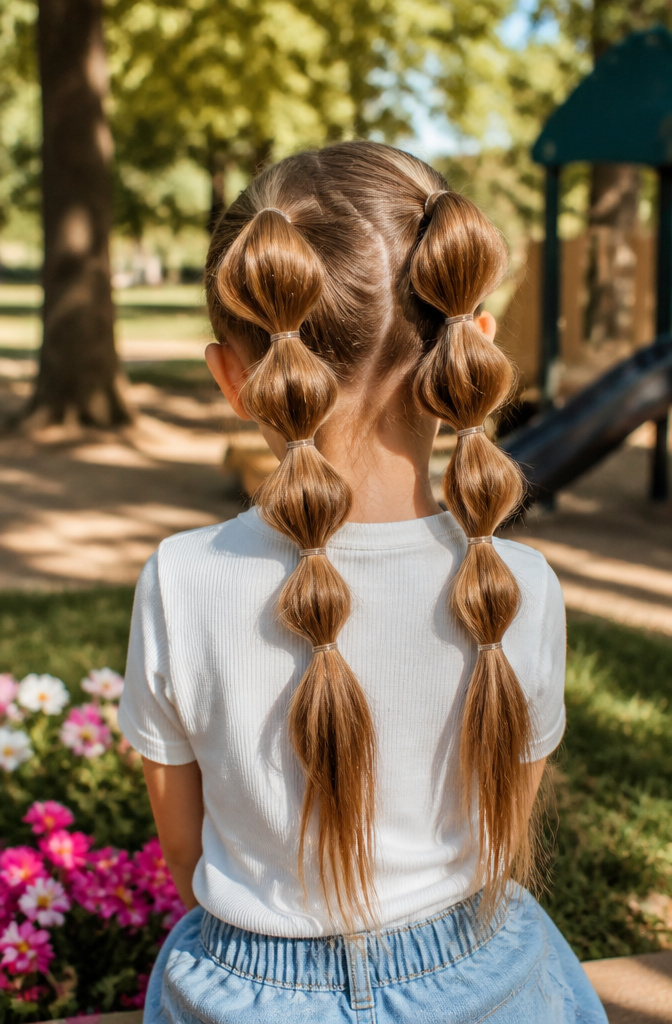
Double bubble braids give you that playful, sectioned look without any actual braiding. You part your hair down the center, then work one side at a time, building a chain of small ponytails from front to back. Each elastic gets placed a few inches down from the last, and you gently tug the hair between them to puff out those rounded bubble shapes. The front pony on each side stays flat against your scalp; the bubbles start after that.
Straight and wavy textures both take to this style well. The smoother your hair, the cleaner the bubbles look, but a little wave adds texture that helps the sections hold their shape without slipping. You do not need to know how to French braid or cornrow. If you can secure a ponytail, you can manage this.
The whole style runs about five to seven minutes, maybe ten if you are fussing with symmetry. Small clear elastics work best since they disappear against your hair. I like to keep a rattail comb nearby for parting and for nudging the bubbles into place without pulling too hard and deflating them. Pigtails read younger and more casual; a single ponytail down the back keeps the same movement but feels a touch more pulled-together.

READY TO USE: Pre looped crochet box braids save time with easy, no-knot installation

ADJUSTABLE NO-SLIP FIT: Elastic band and adjustable tie straps create a secure, customized fit that stays comfortably in place throughout the night

Crochet Box Braid Material: Knotless Box Braids Crochet Hair made of Low Temperature Synthetic Fiber ,heat resistant, Not Shiny , No Smell .
9. Box Braids
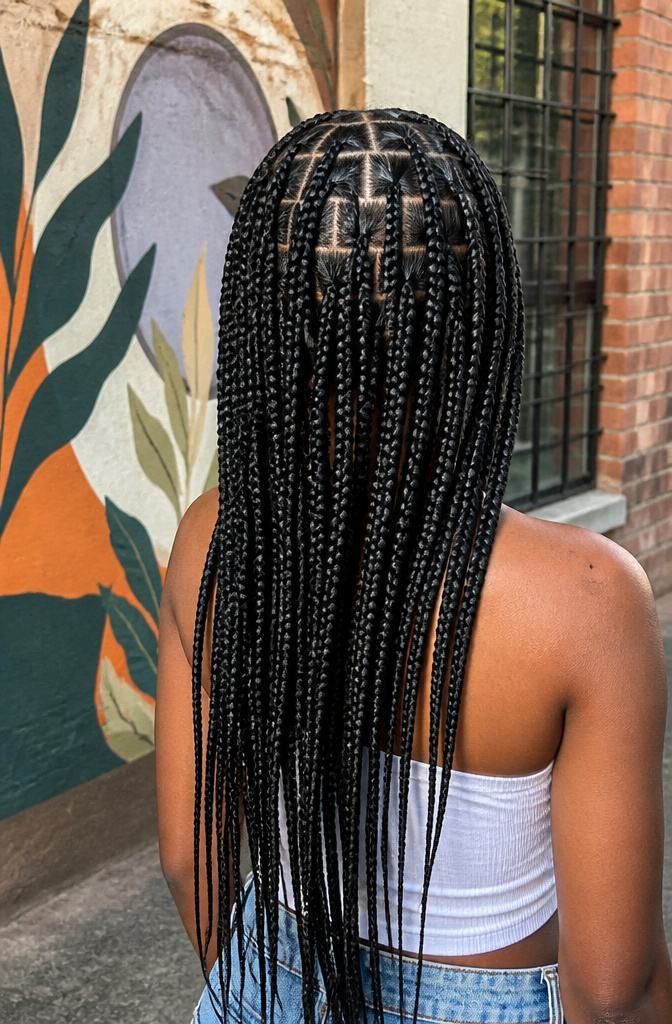
Box braids sit in a different category than the grab-and-go styles on this list, and I want to flag that upfront. You’re looking at 2–4 hours in the chair to get them installed, which is not what anyone means by "quick." What you buy with that time is mornings. For the next 4–6 weeks, you roll out of bed with a finished style. No detangling, no heat tools, no decisions.
The method is straightforward: your hair gets parted into small squares, each section braided from the root with extension hair added in. That grid of parts is what gives the style its name and its structure. Once they’re in, the daily payoff is real. I’ve watched friends go from forty-minute morning routines to literally just tying a silk scarf on at night.
Versatility sticks around too. Wear them loose, pile them into a bun, or pull the top half back when you want your face clear. The limiting factor is weight; long or jumbo braids can tug at the roots after a few weeks. Smaller sections distribute that tension better, though they do take longer to install. For anyone measuring "quick" across a whole month rather than a single morning, this is the trade that usually wins.
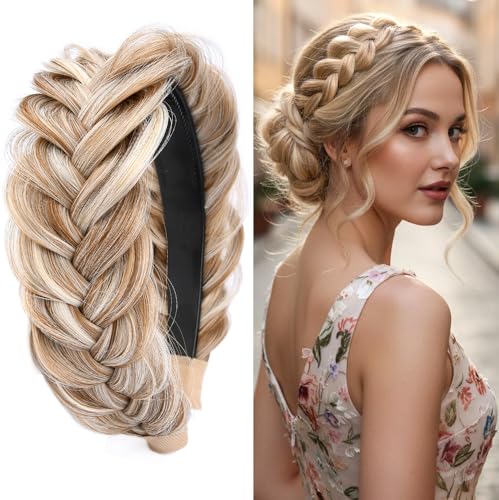
All photos are taken by real hair headband.

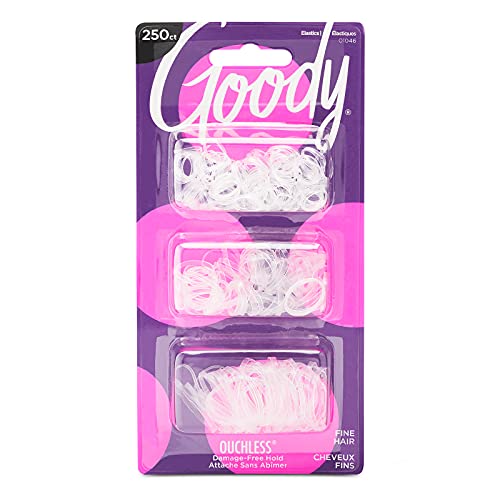
Goody Polyband Elastics: These small But mighty latex elastics let you effortlessly style your hair into cute ponytails, braids, and buns. They hold your hair securely, ensuring all-day wear, and slide right off without any pulling or snagging
10. Dutch Braid
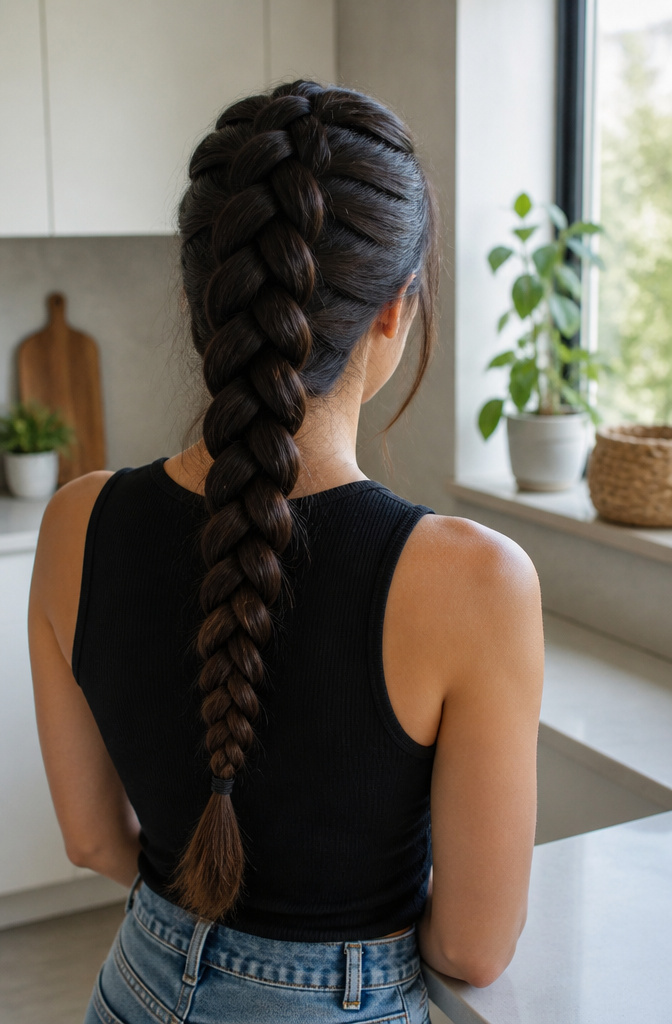
A Dutch braid is the French braid’s cooler cousin. The difference is one simple move: each outer section crosses under the center strand instead of over it. That underhand crossing pushes the braid outward, giving it that raised, three-dimensional look that sits proud against your head.
The technique works on fine hair that needs the illusion of volume, and it works just as well on thick hair that can handle the structure. Hand position feels awkward at first, almost like patting your head and rubbing your stomach, but once the muscle memory clicks, a single Dutch braid takes about 5–8 minutes. Two symmetrical Dutch braids, parted down the center, double the time but also double the impact.

Material: Nylon; Color: Random Color; Quantity: 3 Counts.


Soft and Light Premium Material: Wavy senegalese twist crochet hair for black women is handmade by professional braiders, soft touch, the knotless kinky twists are tight and neat, natural and realistic, looks like your own hair
11. Double Dutch Braid
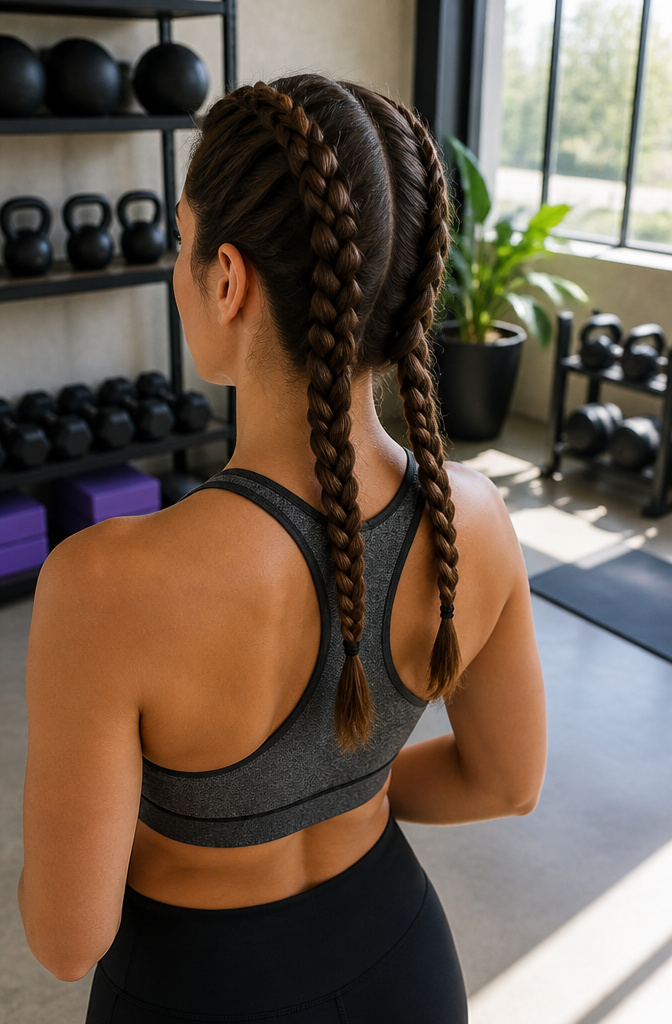
Two Dutch braids parted straight down the middle distribute weight evenly across the scalp, which is why this style stays popular for sports and long active days. The strands are crossed under rather than over as you weave, creating a raised, three-dimensional braid that sits prominent enough to stay put without pins. Most mornings, this takes me about 8 to 10 minutes from part to finish. I start by parting from forehead to nape, clip one side up, and braid the first section all the way back before switching. The symmetry matters less than the tension, keeping each braid snug against the head so nothing shifts during a workout. Clear elastics at the ends keep it simple, though beads or small metallic accents work if you are heading somewhere after the gym.
12. Waterfall Braid
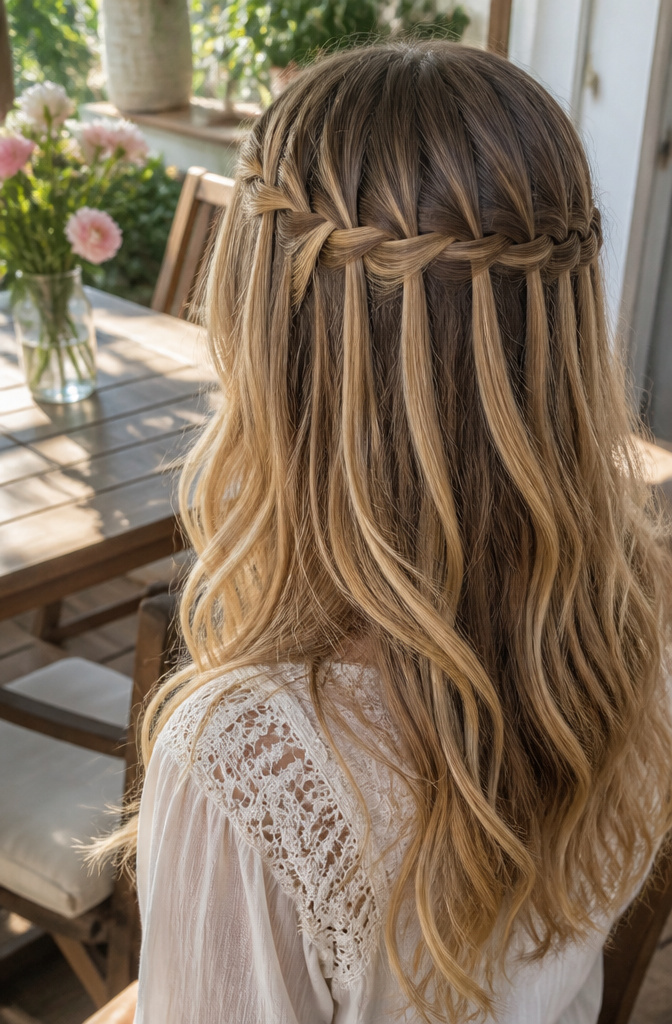
A waterfall braid drops the outer strand as you work, letting it fall free while you pick up fresh hair from underneath. That loose piece threads through the braid like a ribbon, creating the soft cascade that gives this style its name. The effect looks intricate, but the rhythm is simple once your hands learn it: braid, drop, replace, repeat. Medium to long layered hair carries it best, since the layers naturally separate into those falling strands. On blunt cuts the drop can look too heavy, so you may want to skip this one if you just got a straight-across trim. Plan on 7–10 minutes from start to finish, which puts it at the slower end of quick braided hairstyles but still reasonable for a morning when you want something prettier than a basic ponytail. I usually set aside the extra couple of minutes rather than rush the tension, because a loose waterfall looks romantic and a tight one just looks messy.
13. Bohemian Side Braid
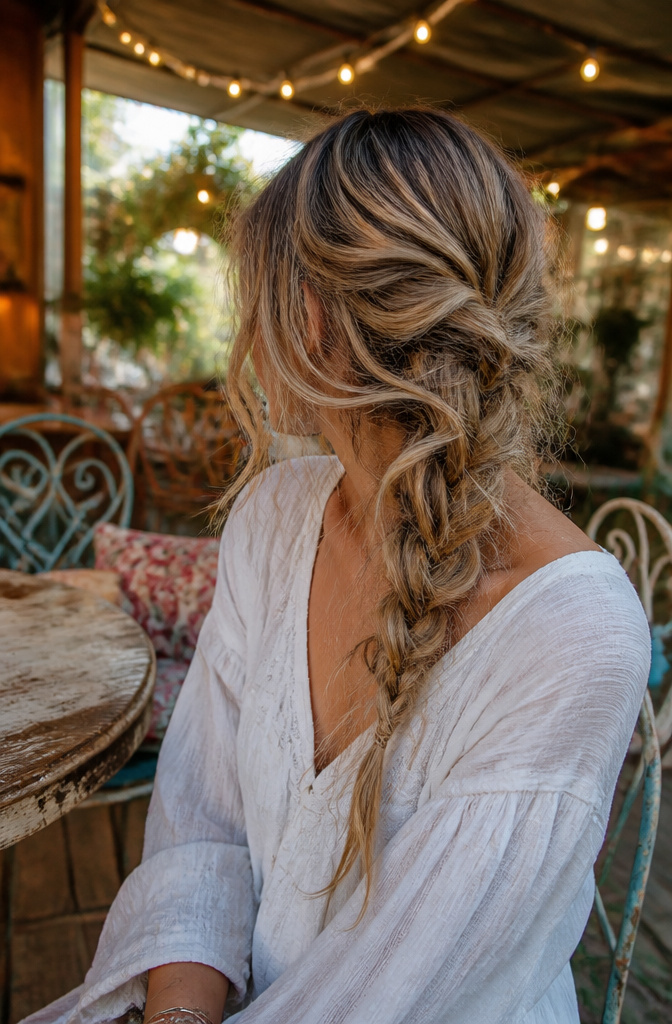
A bohemian side braid lives or dies on texture, and that’s exactly why it is the style I reach for when my hair has gone a day or two past washing. Dry shampoo at the roots beforehand does two jobs: it adds the grip that keeps the braid from slipping loose, and it builds the piece-y, matte volume that reads as intentional rather than slept-on. The style forgives dirty hair because the whole point is a slightly rumpled finish.
Sweep everything to one side and weave a simple three-strand braid from the ear down. Leave out soft pieces around the face before you start, or pull them free after. Once the braid is secured, gently tug the outer edges of each loop outward to loosen and flatten the shape. The pulled-apart sections create that airy, undone effect that keeps the look romantic rather than messy. Five to seven minutes is realistic for this one, even if you pause to pancake the loops for extra width. It works on straight, wavy, or fine hair from collarbone length downward, and the loosened version always reads as deliberate.
14. Criss Cross Braids
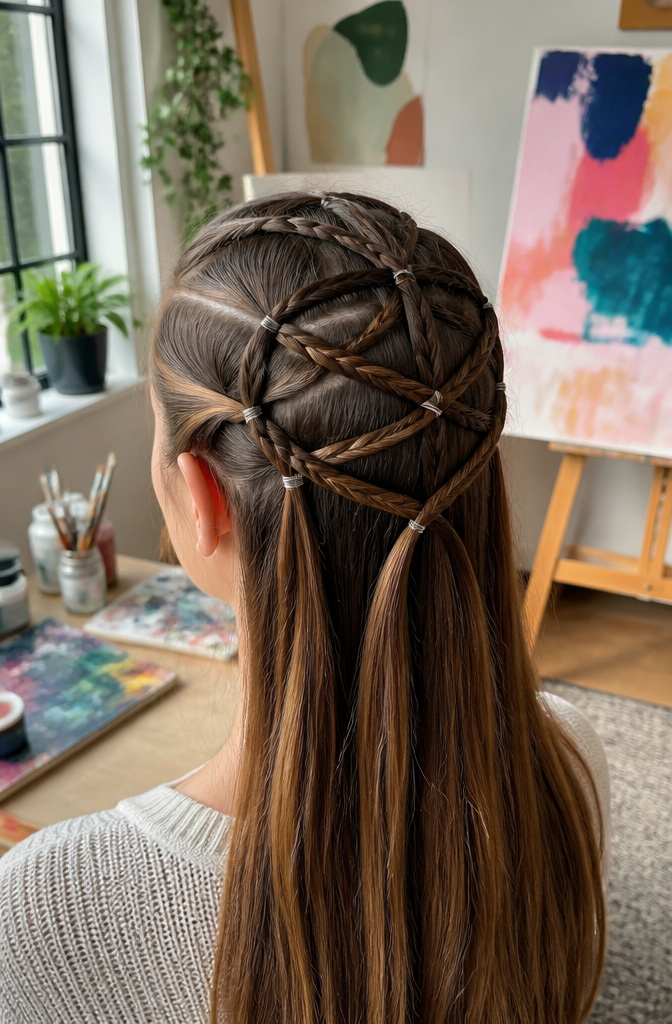
Criss cross braids work best as a quick accent rather than a full style. You section off the top of your hair into four equal parts, braid each section, then secure it to the opposite side with a small elastic. A clear elastic helps the braid look longer than it actually is, which keeps the cross-over effect clean. Once both sides are anchored, you can braid the remaining loose ends down or simply leave the rest of your hair down.
This takes about three to five minutes on its own, and it pairs well with loose waves or straight hair since the braids sit flat against the crown or hairline. The style holds without much fuss, and the small elastics hide easily if you match them to your hair color. I like this one for mornings when I want something that looks intentional but do not have time for a full updo. The braids do the work of a headband without the headache.
15. Rope Twist Braid
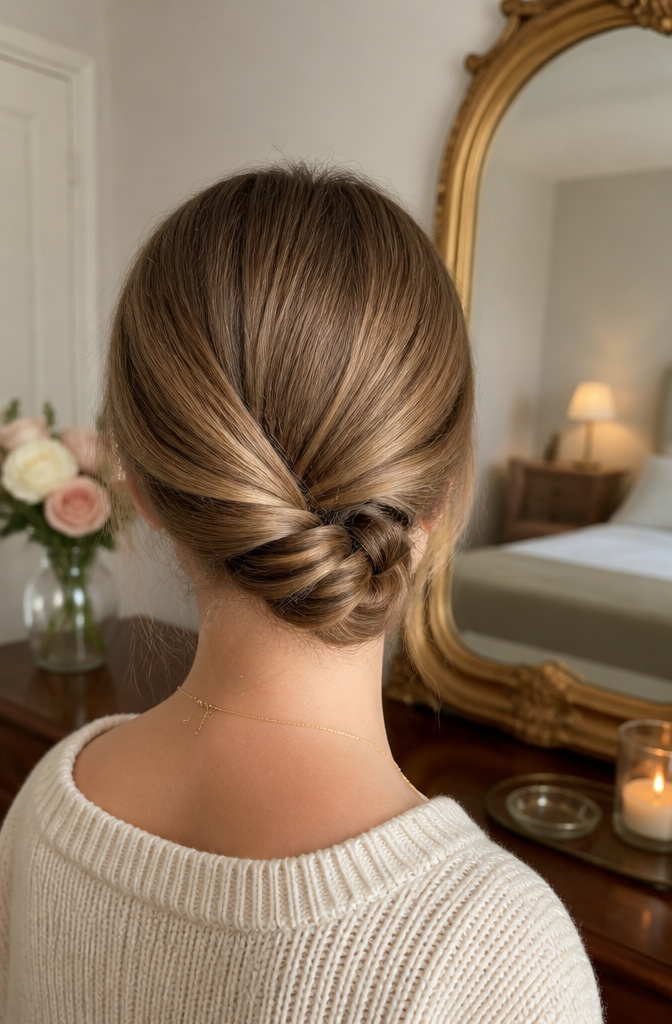
The rope twist braid is the easiest braid for beginners alongside the three-strand, and it takes about two to four minutes once your hands get the rhythm down. You split your hair into two sections, twist each one in the same direction, then wrap them around each other in the opposite direction. That opposite wrapping is what locks the twist in place so it does not unravel.
This style works on short hair, which is not true of every braid out there. Fine, straight, or slippery hair actually behaves well with it because the tension between the two strands creates its own grip. No elastics buried halfway up your head, no complicated sectioning. Just twist, twist the other way, and secure the end.
I like keeping this one low at the nape of my neck for a clean look that still keeps hair off my face. It is the kind of style you can redo in a bathroom mirror without any real setup, and it holds through most of a workday without fuss.
Prep and Product
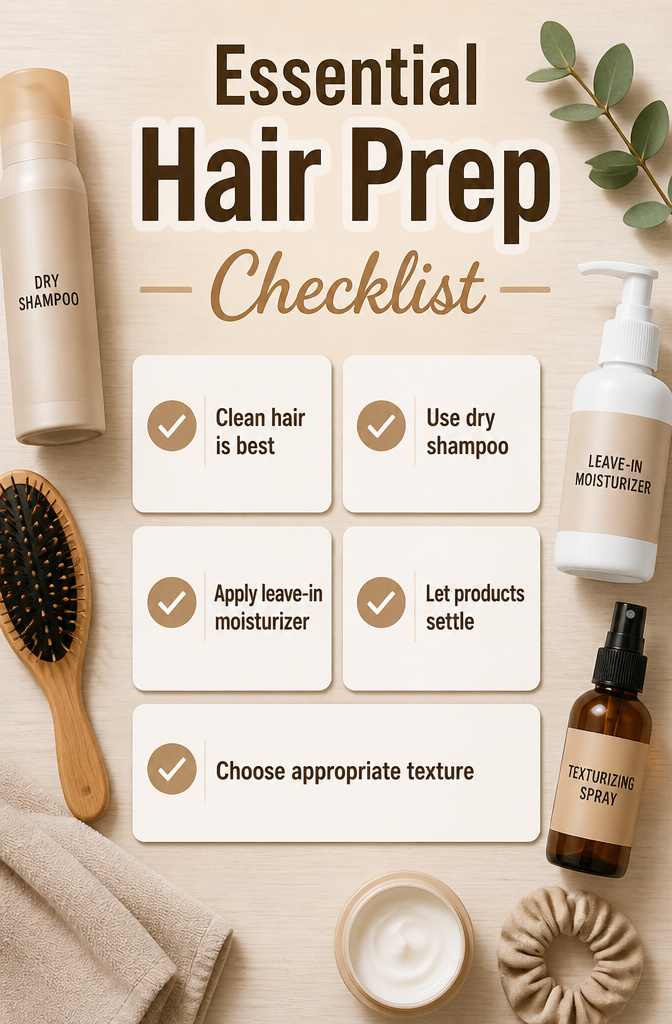
Clean hair sounds like the right starting point, but freshly washed strands are often too slippery to hold a braid. Second or third-day hair has natural grip that keeps sections from sliding apart, which is why most braiders reach for dry shampoo or texturizing spray at the roots before they begin. A thirty-second wait after spraying gives the product time to work.
For fine hair that refuses to cooperate, that added texture is usually the difference between a braid that stays put and one that unravels by lunch. Thicker or curly hair faces the opposite problem: friction and frizz. A leave-in moisturizer applied from roots to tips, about a quarter-sized amount to start, adds the slip needed for detangling without stripping the moisture that keeps curls defined. Work it through with your fingers and add more only where knots persist.
The right prep depends on what your hair naturally does. Slippery strands need grip; dry or textured strands need moisture and manageability first. Get that balance wrong and the braid fights you the whole way.
Braiding by Hair Type
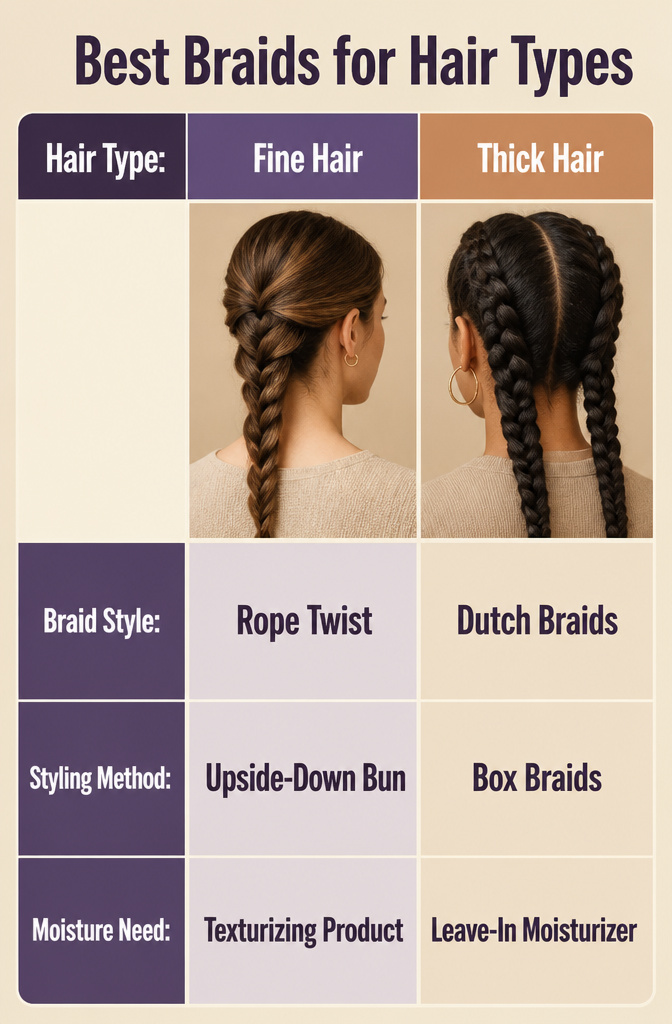
Fine hair has a mind of its own, and braids that work with its slipperiness rather than against it tend to last the day. A rope twist grips itself tight enough to stay put, and an upside-down braided bun gives the style enough structure that a few escaping strands look intentional rather than sloppy. Thicker hair carries weight that can pull a delicate braid apart before lunch, so Dutch braids and box braids built in thicker sections hold their shape without constant touch-ups.
Curly and coily textures braid beautifully, but the sectioning matters more than the pattern. Clean, even parts keep the finished style neat, and working with well-moisturized hair keeps the strands from tangling mid-braid. The sources suggest knowing your curl type before you start, since the right prep product changes how the hair behaves once it is woven together.
Box braids in particular stand out for natural hair because they function as a protective style. L’Oréal Paris USA notes that this method helps reduce breakage by limiting daily manipulation and heat use, while also offering versatility in length and styling options. For anyone braiding their own hair at home, that tradeoff matters: less daily handling means more growth retention over time, and the option to wear the braids down, up, or half-up keeps the look from going stale before the take-down date.
Edge Care and Accessories
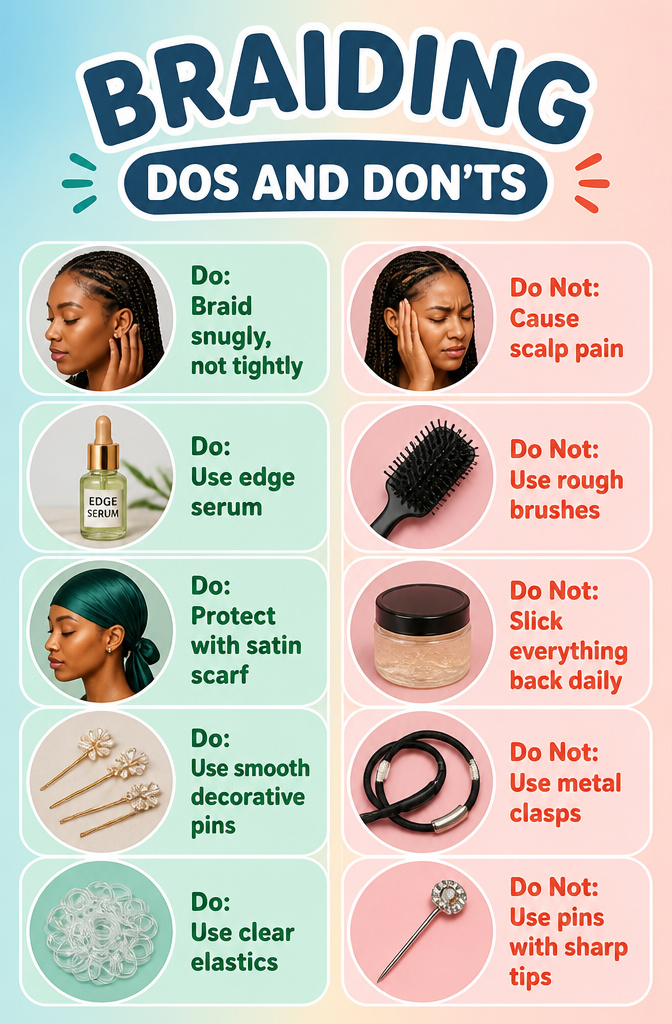
Tight braids can feel satisfyingly secure, but snug should never mean painful. If your scalp still aches a day after braiding, the tension is high enough to risk traction alopecia, which can permanently thin your edges. I lay down my baby hairs with a soft toothbrush and a light edge serum or gel, not by brushing aggressively. A strong-hold gel works well for sleek finishes on styles like Fulani braids, though I would not slick everything back daily.
For overnight protection, a satin scarf cuts friction that roughens braids and stresses the hairline. Decorative pins dress up a crown braid nicely, but I check that the tips are smooth so they do not snag strands. Small clear elastics, the kind that disappear into bubble braids, should grip without metal clasps that catch and break hair.
Frequently Asked Questions
What is the easiest braid for beginners?
The classic three-strand side braid and the rope twist braid are the easiest starting points. The three-strand braid takes about two minutes once your hands know the motion, and the rope twist takes about two to four minutes. Both need no special technique beyond dividing hair into sections, and both hold well on most hair types.
How do you keep a braid in place all day?
Braid on second or third-day hair, since natural oils give strands enough grip to stay put. Before you start, mist dry shampoo or texturizing spray at the roots and wait about thirty seconds for it to work. A light-hold hairspray after finishing keeps flyaways down without stiffening the braid.
Which braids work on short hair?
The half-up braid works on chin-length hair and growing-out cuts if you keep the section small and the braid skinny. The rope twist braid also works on short hair, which is not true of every braid out there. Small braided accents like criss cross braids can work too, since they use only the top section rather than all your length.