These styles range from a 2-hour cornrow session to a half-day install for stitch braids or heart designs, with some you can twist yourself at home and others that demand a specialist’s chair.
Stitch braids are the one style where I would definitely book a specialist; those horizontal lines need consistent spacing or the whole look falls apart.
1. Box Braids
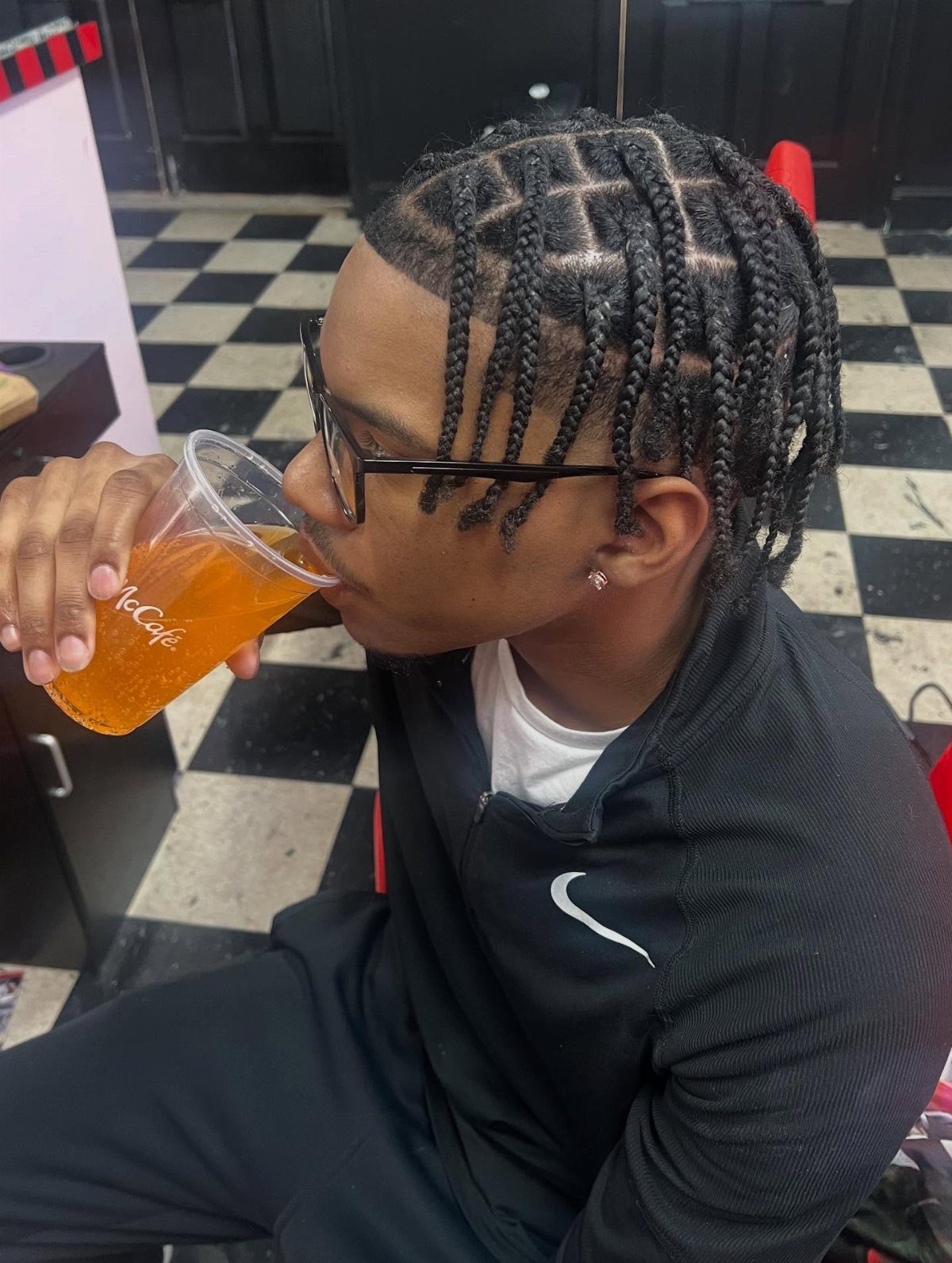
Square parts give these braids their clean geometry, and that structure makes them easy to maintain for a good stretch before you need a redo.
I like how the uniform size lets you play with length without the style looking messy: shoulder-length keeps it professional, while longer braids read more casual.
Your stylist sections the hair in boxes before braiding, which takes a long appointment depending on thickness.
Synthetic hair is usually added for length and volume. Ask for medium-sized parts; too small and the install drags on, too large and the scalp shows.
2. Cornrows
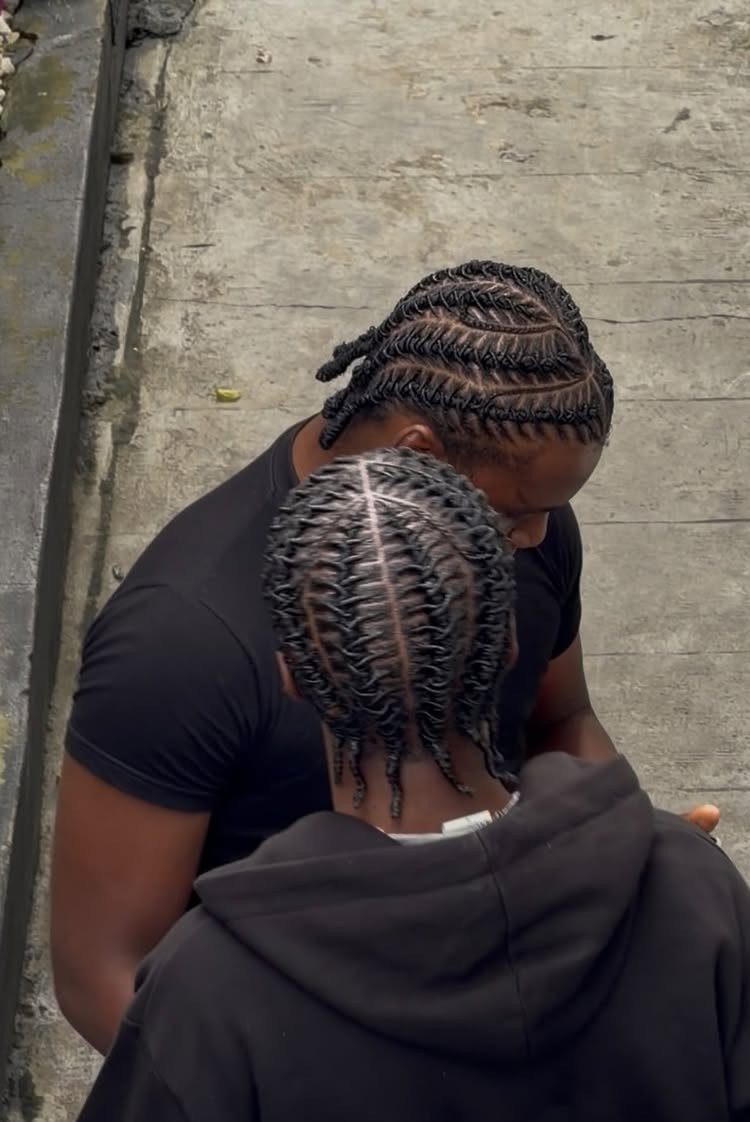
Rows braided flat against the scalp have been a baseline style for decades because they stay neat under hats, helmets, or durags.
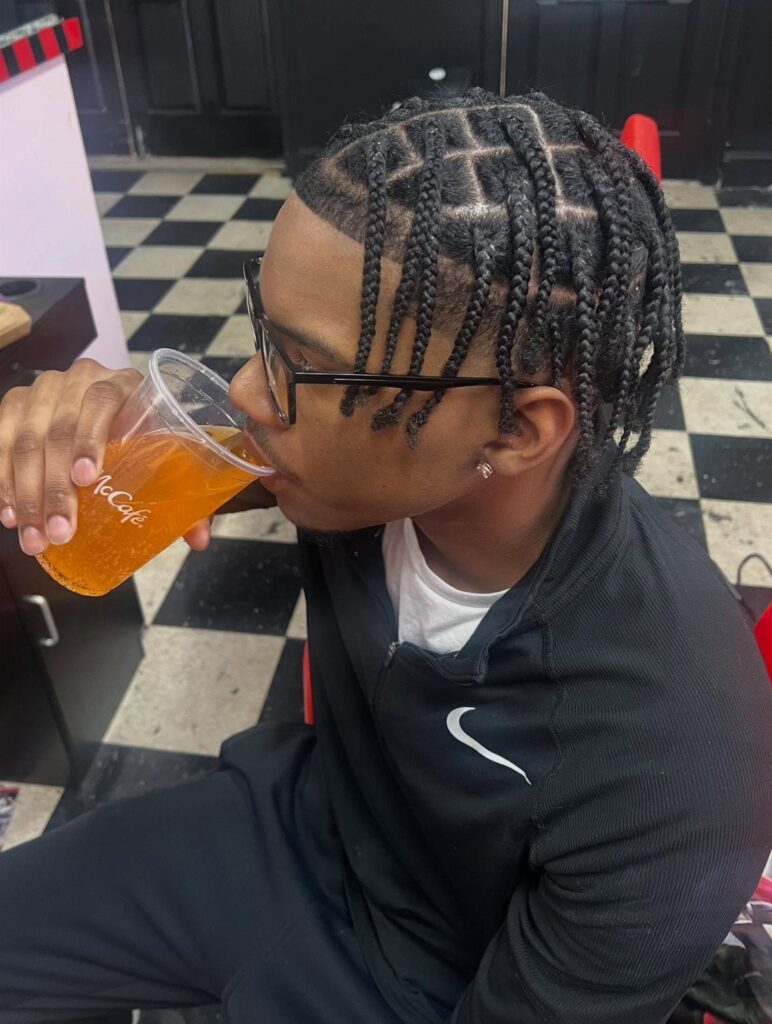
This is the fastest braided option, often under 2 hours, and it grows out gracefully since the braid starts at the root.
You will need to sleep with a silk or satin covering to keep the edges smooth. I find cornrows work best when the rows follow the head’s natural curve rather than forcing a grid pattern.
3. Stitch Braids
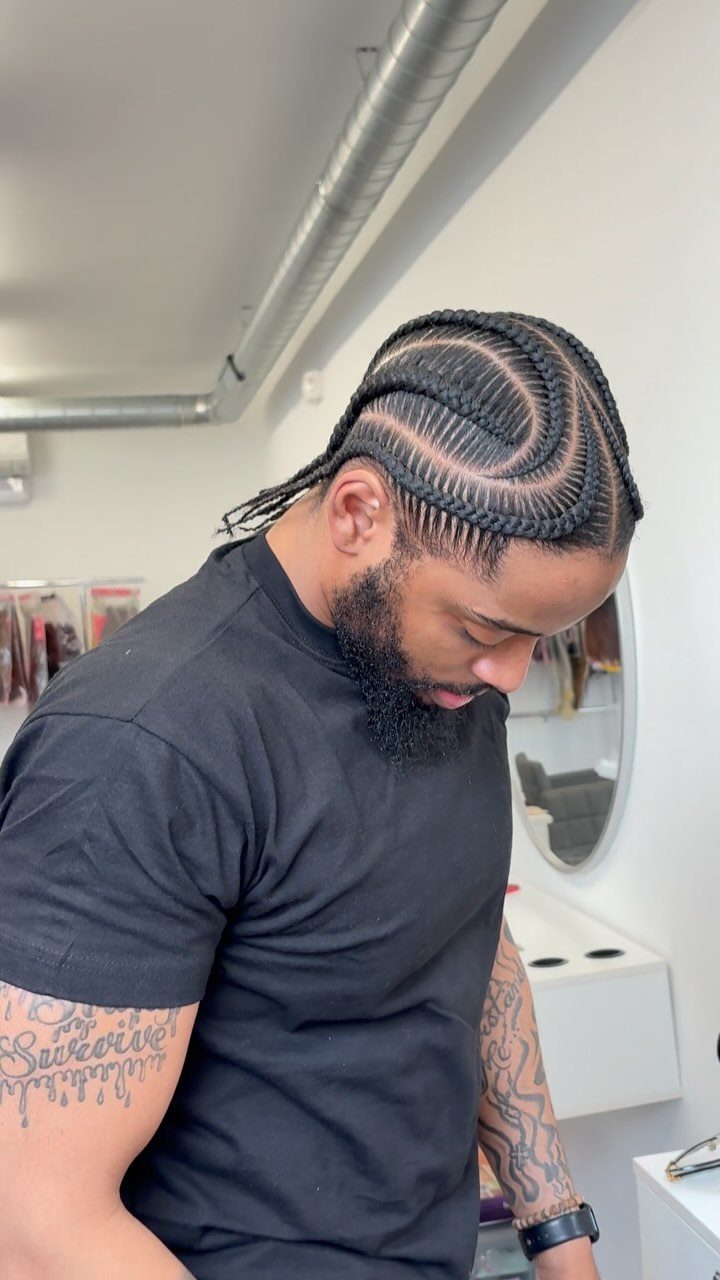
The visible horizontal lines running across each braid are what give stitch braids their name, and they require more precision than standard cornrows.
Your braider uses a comb to create clean, curved parts, then weaves in small sections of extension hair at regular intervals.
That extra labor means a longer appointment, but the result holds sharper definition for weeks.
I would book someone who specializes in this technique; the stitch spacing needs to stay consistent or the whole look falls off. Curved parts frame the face better than straight rows, in my opinion.
4. Braids Twist Hairstyles Men
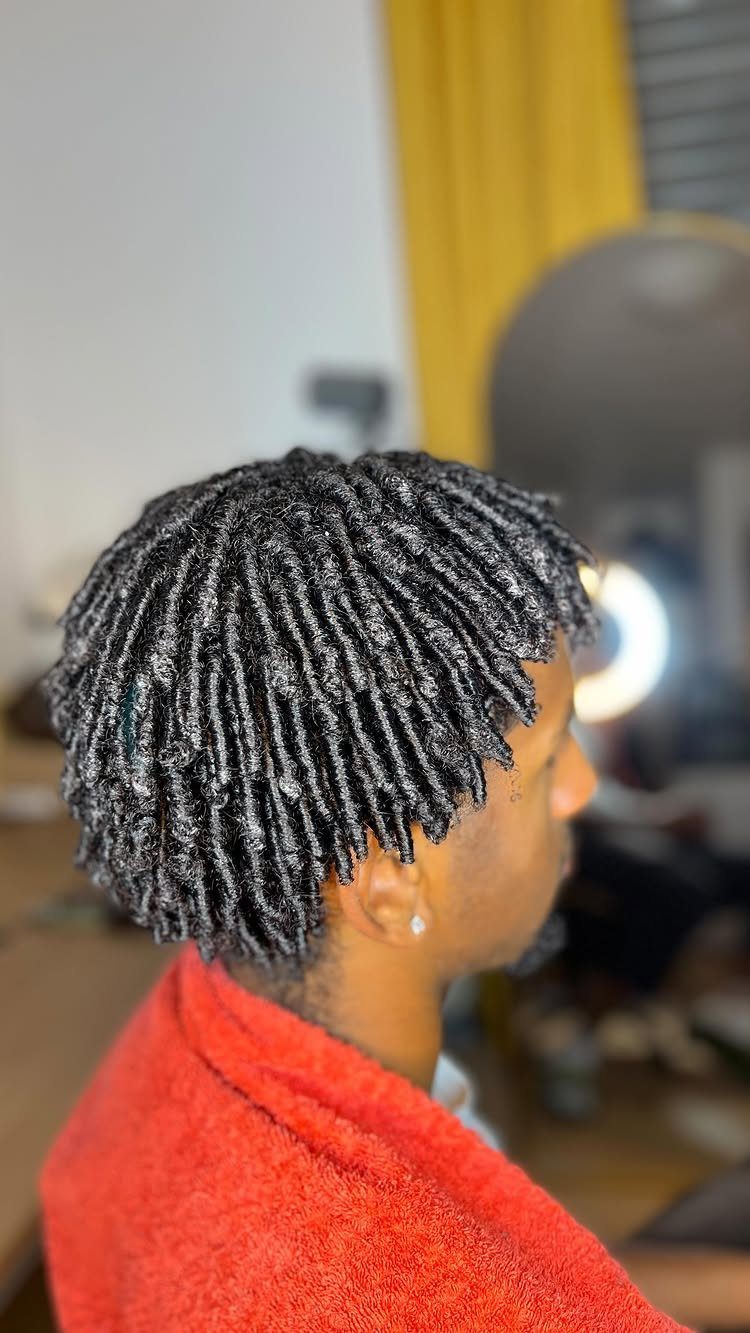
Two-strand twists work on hair as short as 2 inches, which makes them one of the few braided styles that do not need length to start.
Short twists with a defined curl at the end are achieved by letting the twist set and then unraveling slightly or leaving them coiled.
You can do these yourself in under an hour once you get the motion down: divide a section in two, twist around each other all the way to the end, and let them set overnight.
I prefer twists to single braids for short hair because they lie flatter and do not pull at the scalp as much.
5. Triangle Part Box Braids
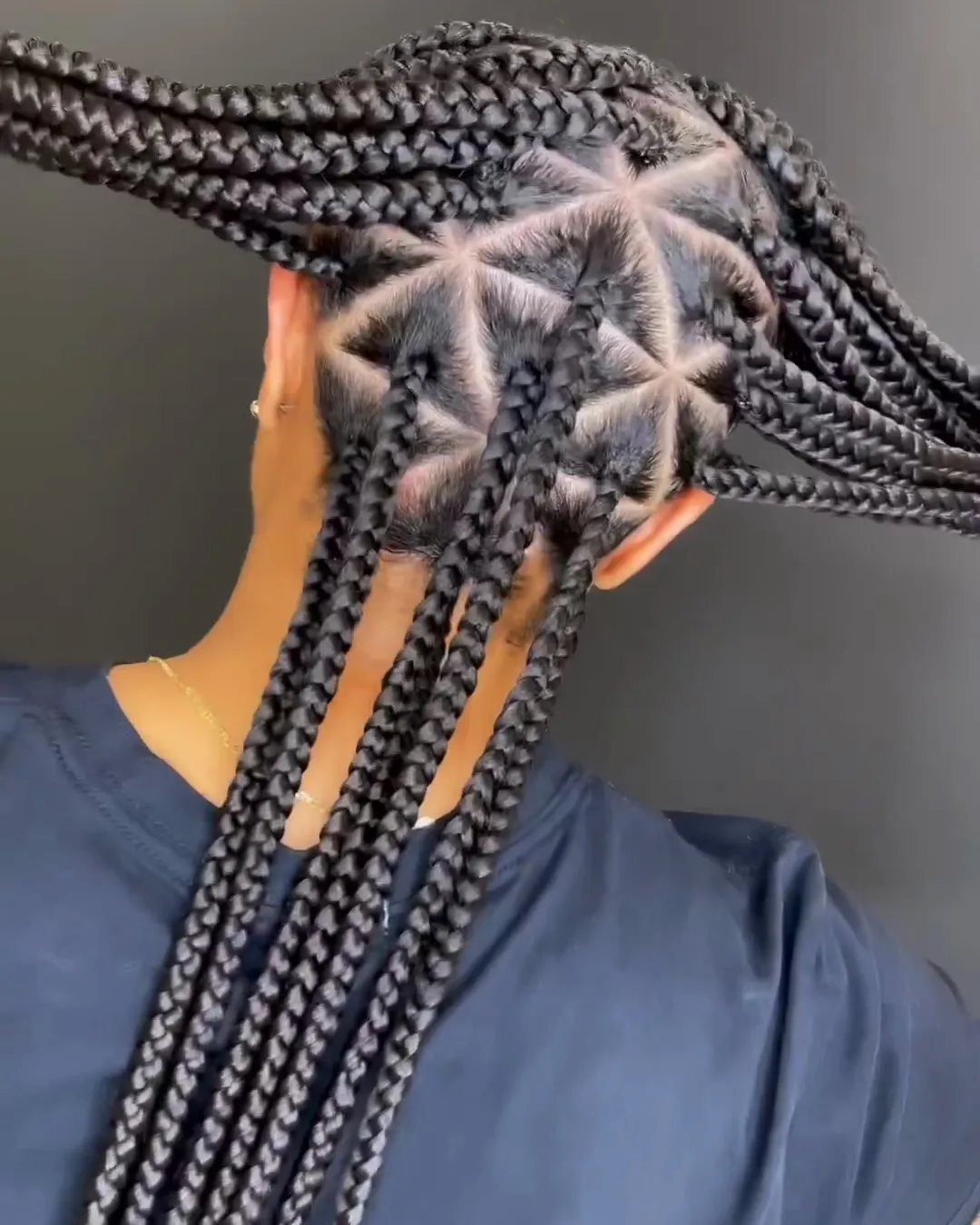
Switching from squares to triangles changes the silhouette without changing the braid itself.
The points of each triangle create a diamond effect between braids that reads as more dynamic from behind, which is why I think this variation photographs so well.
Your stylist needs a steady hand with the comb; uneven triangles are obvious. The install time runs about the same as standard box braids, and maintenance is identical.
I would choose this if I wanted something that stands out in a crowd but still works in conservative settings, since the shape is subtle from the front.
6. Zig-Zag Cornrows
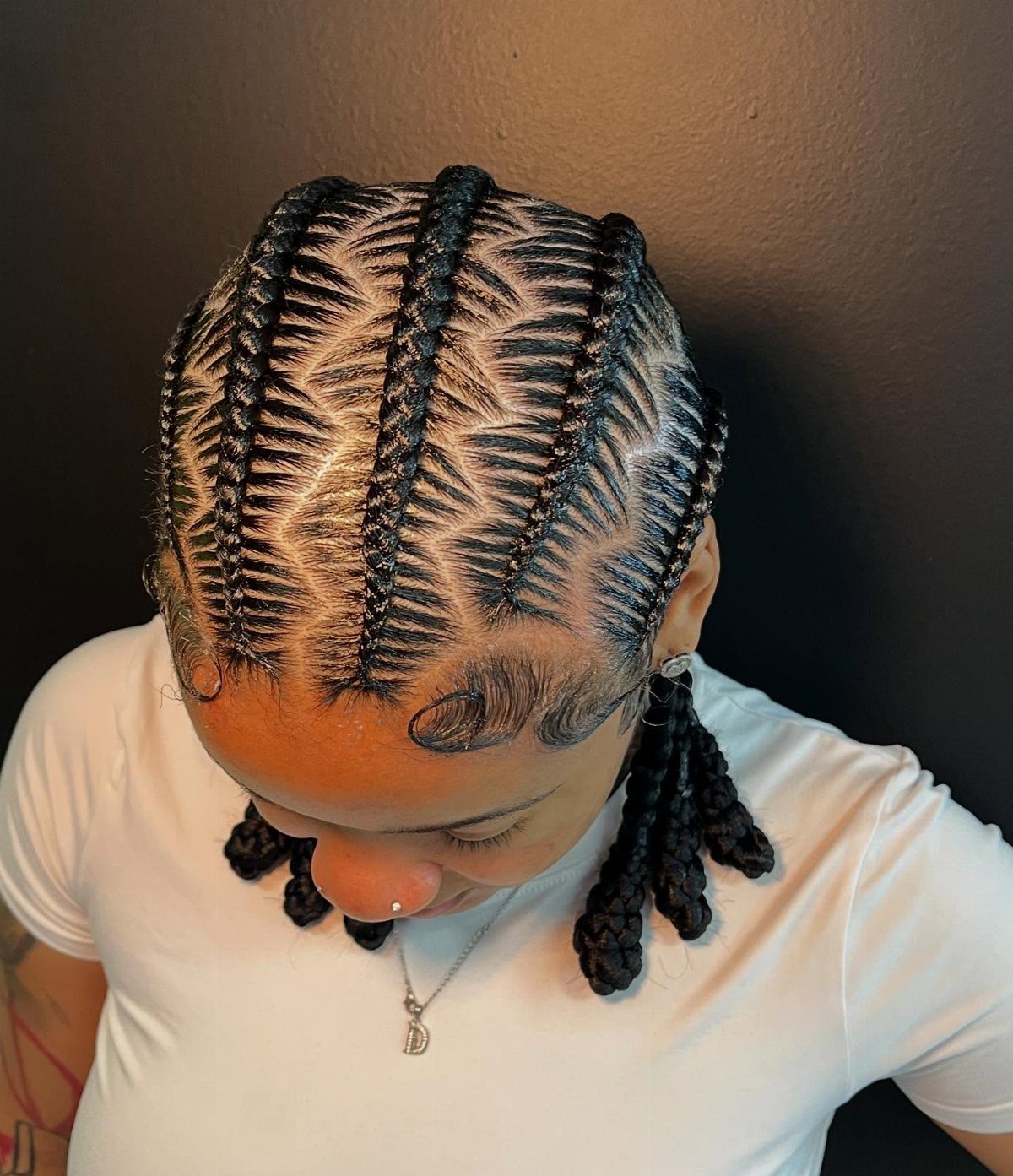
The part pattern does the heavy lifting here.
Zig-zag cornrows take a basic row style and make it look intentional, almost graphic, without adding time or cost. Sharp angles are created with a tail comb and clips to hold each section before braiding.
This is a good middle ground if you want something bolder than straight-back cornrows but cannot commit to a half-day appointment.
The pattern shows best on darker hair against a lighter scalp, so I would ask my braider to keep the parts extra clean. Plan on a shorter session than box braids and the same brief lifespan as standard cornrows.
7. Viking Braid
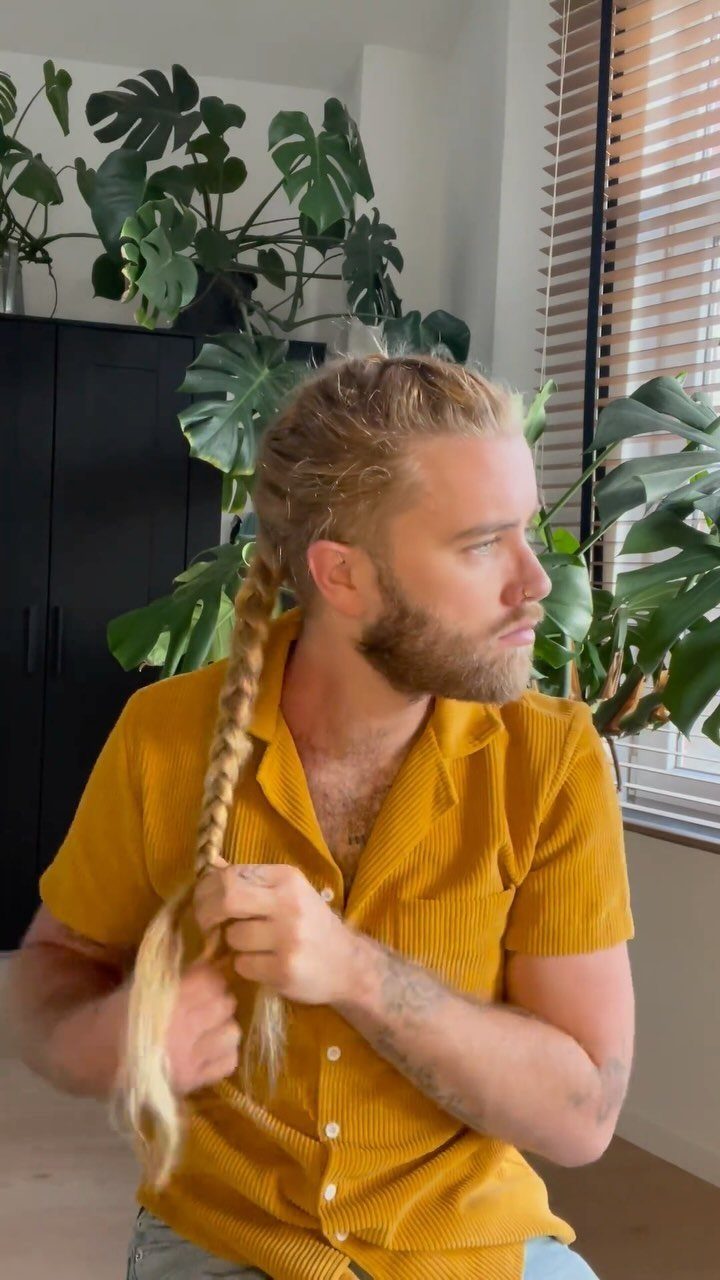
A single thick braid worn long down the back carries more drama than multiple small ones because the eye goes straight to the weight and length.
I think this style suits men who already have some length to work with, since the braid needs bulk to look intentional rather than like a ponytail that got away.
A full beard balances long braided hair well if you are building a whole look. Maintenance is simple: re-braid every few days and oil the length to prevent fraying.
8. Heart Design Braids
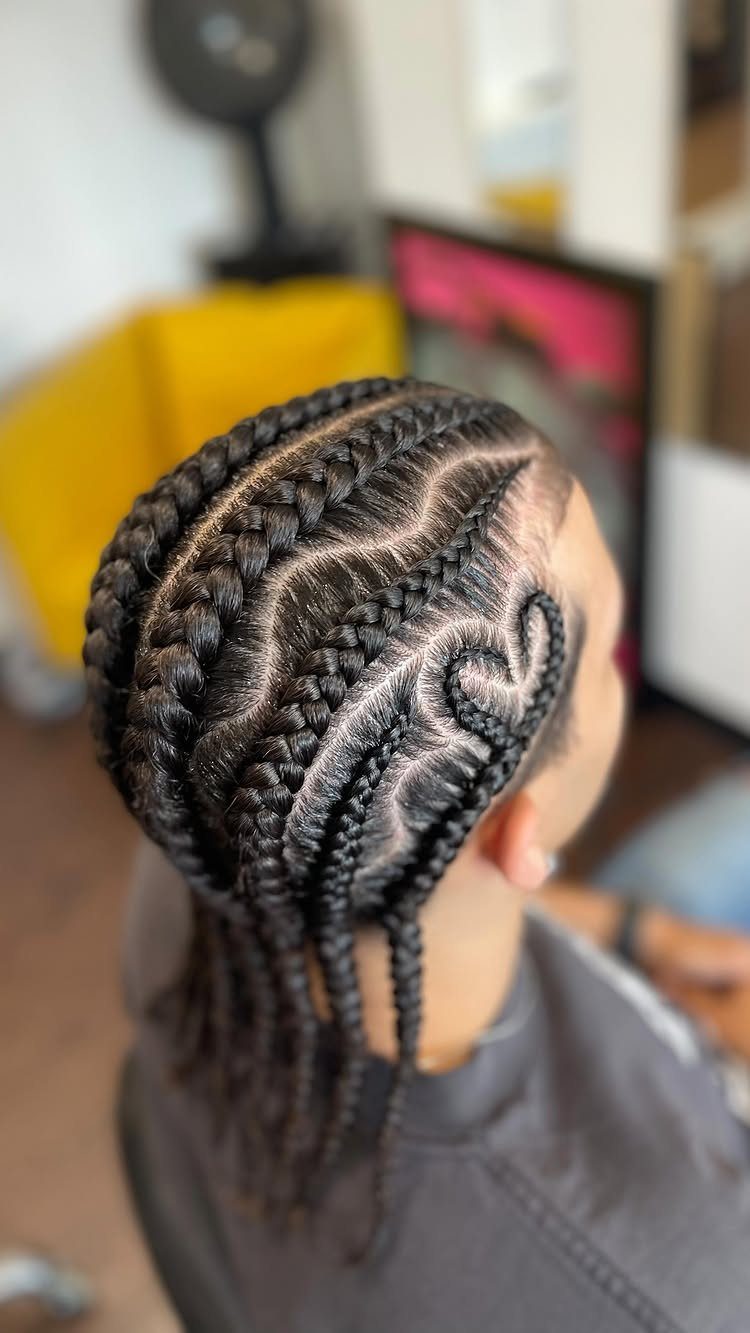
Shaping a part into a heart takes a braider with real precision, and the result reads as personal without being flashy.
I would reserve this for someone who wants a detail that shows up in photos or close conversation, not something visible from across a room.
The curved lines around the heart soften the geometry, which keeps the style from looking too literal or cartoonish.
Plan on a longer session than standard cornrows; mapping the design before braiding adds time. Ask your braider to sketch the part first so you can adjust the size and placement.
9. Braids with Fade
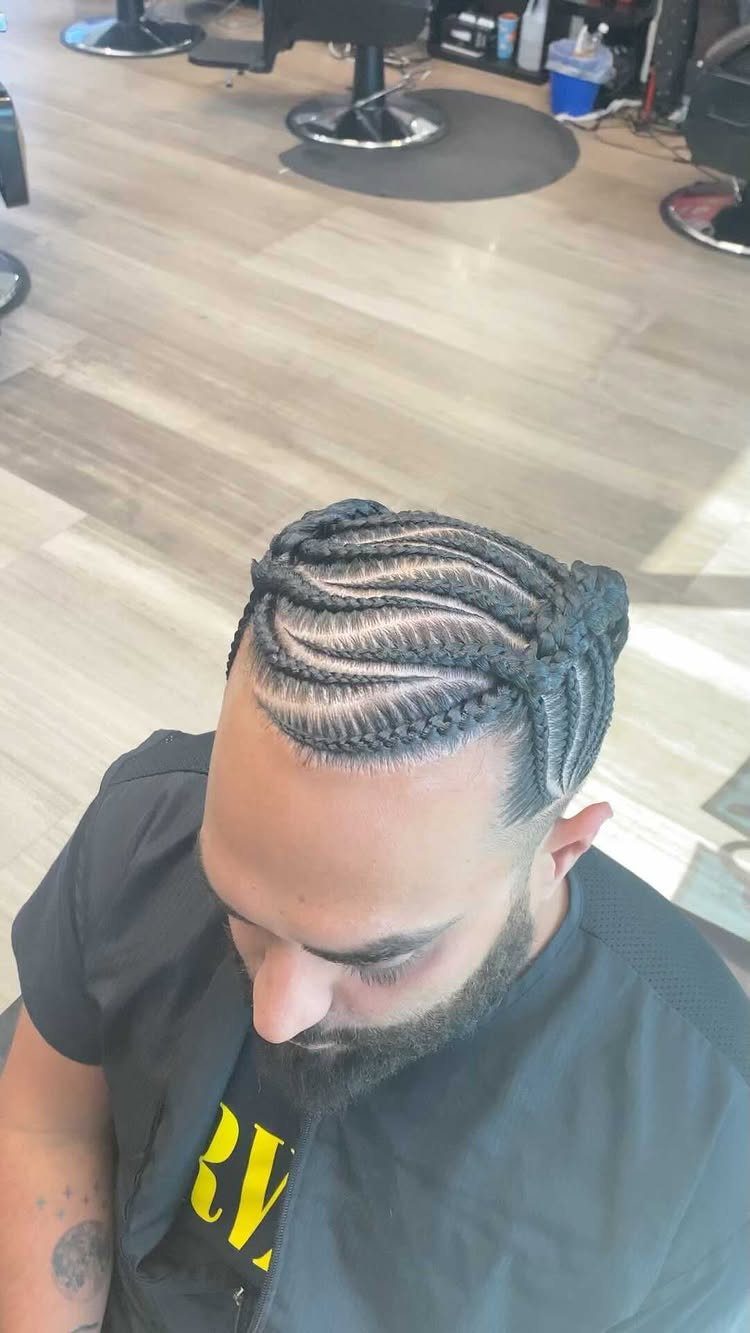
Pairing braids on top with a faded undercut splits the difference between groomed and expressive, and the contrast draws the eye upward.
The fade needs regular upkeep to stay sharp, so this style works best if you already visit a barber regularly.
I like that the braids stay protected while the sides breathe, which matters in summer or for active jobs.
The top can be cornrows, twists, or even loose with the right length; the fade does the structural work of framing the face.
How to Maintain Braids
A durag or silk pillowcase is the simplest overnight protection, and it matters more than most products. The fabric keeps friction and moisture loss low, so braids stay neat instead of turning frizzy while you sleep.
I apply jojoba or tea tree oil directly to my scalp every few days, not to the braids themselves. Lightweight oils keep the skin beneath from drying out without building up on the synthetic hair.
Wash with diluted shampoo, working only the scalp and letting the rinse run through the length. Clean braids last longer, but overwashing lifts the cuticle and speeds frizz.
Fuzzy, lifted roots mean takedown time.
Keeping braids in too long risks matting and breakage where the new growth meets the braid. I always schedule a deep conditioning treatment after removal; the hairline and ends need recovery before the next install.
Considerations Before Braiding
A skilled braider reads this automatically, but knowing your own shape helps you ask for what flatters.
Thicker, denser hair handles intricate styles like stitch braids or micro box braids. Finer hair or a delicate hairline needs larger sections and simpler patterns to look full and balanced.
Coarser, curlier textures grip braids naturally and hold longer.
Traction alopecia from excessive tension is real, and it shows up along the hairline first. Speak up during the install; an experienced braider adjusts tension without sacrificing neatness.
Take the skills you applied to creating a braided ponytail and work your magic on two strands. The key here is starting with a perfectly even part, so grab a long-tailed comb and run it down from hairline to neck.
— Hair.com
Braiding Techniques
Dutch braids and fishtail braids sit outside the standard lineup but reward the effort of learning them. A Dutch braid is a cornrow that crosses under rather than over, which raises the ridge so it pops against shorter sides.
The fishtail braid works with two strands instead of three, which sounds simpler but demands more coordination.
Smaller strands pulled from each side create a tighter, more intricate pattern. I would practice at home before wearing this one out; the first few attempts tend to look uneven or loose.
The undercut also removes bulk that can make a full-head fishtail look heavy.
Frequently Asked Questions
Which face shape is best suited for all types of braided styles?
No single face shape suits every braided style, but oval and diamond shapes carry the widest range because their balanced proportions handle both sharp geometric parts and softer curves.
Round faces gain structure from vertical styles like Viking braids or long box braids that draw the eye downward. Square faces soften with curved stitch braids or heart designs that break up strong jawlines.
Do guys find braids attractive?
Braided styles like cornrows, box braids, and two-strand twists rank among the looks men request most often in barbershops and braiding salons.
The appeal depends on execution: clean parts, even tension, and a shape that flatters the wearer’s features matter more than the specific braid type.
Personal taste still drives individual preference, but braids have moved well past niche status into mainstream men’s grooming.
What is the best braided hairstyle for men?
The best choice hinges on hair length and how much time you want to spend in the chair.
Cornrows work for almost any length and finish in under 2 hours. Box braids or stitch braids need more length and a longer appointment but hold neat for weeks.
The most accessible braided style for short hair starts at just 2 inches: two-strand twists, which you can learn to do at home once you get the motion down.
Which braid is best for curls?
For the most defined curls, I go with two-strand twists; you can unravel the set twist slightly or leave it coiled for a springy finish.
The twist itself trains the hair into a uniform spiral pattern that holds shape better than three-strand braids.
Short twists with curled ends lie flatter against the scalp than single braids, so they work especially well on shorter hair that wants curl without bulk.