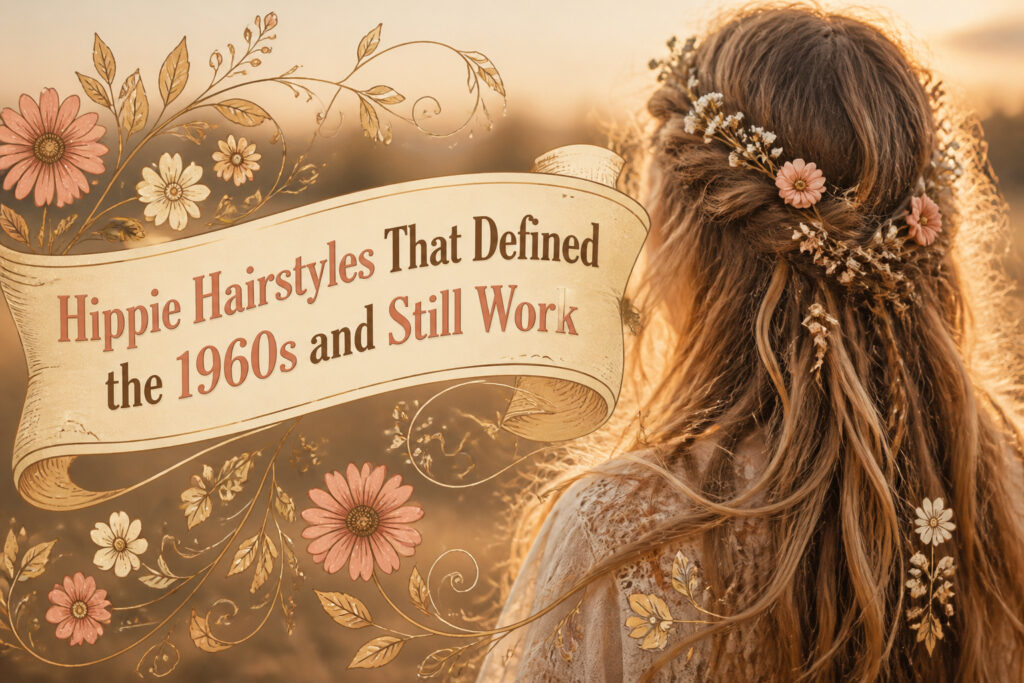
The 1960s counterculture produced a wide range of hippie hairstyles, from quick messy buns to dreadlocks that demand months of patience. Which one works for you depends almost entirely on how much time you’re willing to invest and whether your hair can skip the shampoo for a day or two. Second- or third-day hair actually holds beach waves and braids better than fresh-washed strands; the natural oils give your texture the grip it needs so the style doesn’t fall flat by noon.
1. Beach Waves
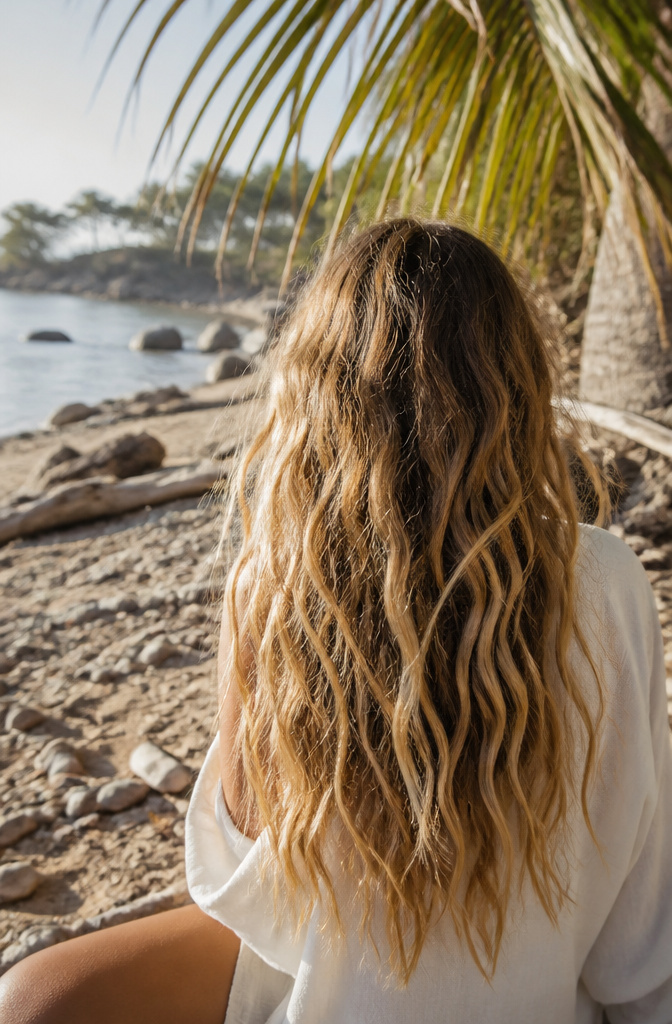
Soft, tousled waves that look like you just left the ocean sit at the heart of hippie style. The goal is lived-in texture, not polished perfection, and that starts with skipping the heavy heat tools.
Second- or third-day hair holds this look better than freshly washed strands. The natural oils give your hair the grip it needs so the waves don’t fall flat by noon. When you’re ready to style, mist damp hair with a texturizing or sea salt spray, then twist sections loosely and let them air dry. For tighter waves, braid your hair before bed and undo the braids in the morning. You’ll get that effortless, slept-in texture that defines the whole hippie aesthetic.
The beauty of this approach is how forgiving it is. A little frizz, uneven sections, waves that fall differently on each side, it all reads as intentional rather than sloppy. That is the point: looking like you didn’t try too hard, because you really didn’t.

MAKE WAVES - Beach waves and laid back curly hair are all time in fashion hair styles and our Level 3 sea salt hair spray can give you just that with some extra hair volume that is super soft and easy to put the hair brush on.

MAKE WAVES - Beach waves and laid back curly hair are all time in fashion hair styles and our Level 3 sea salt hair spray can give you just that with some extra hair volume that is super soft and easy to put the hair brush on.

EFFORTLESS BEACH WAVES & NATURAL TEXTURE – Looking for that perfectly undone beach hair look? This sea salt spray instantly adds texture, definition, and movement to flat or lifeless hair, helping create effortless beach waves with a natural matte finish. The lightweight formula enhances your hair's natural texture without stickiness or crunch, making it ideal for everyday styling. Perfect as a texturizing spray for men and women who want fuller-looking, naturally tousled hair with minimal effort.
2. Messy Bun
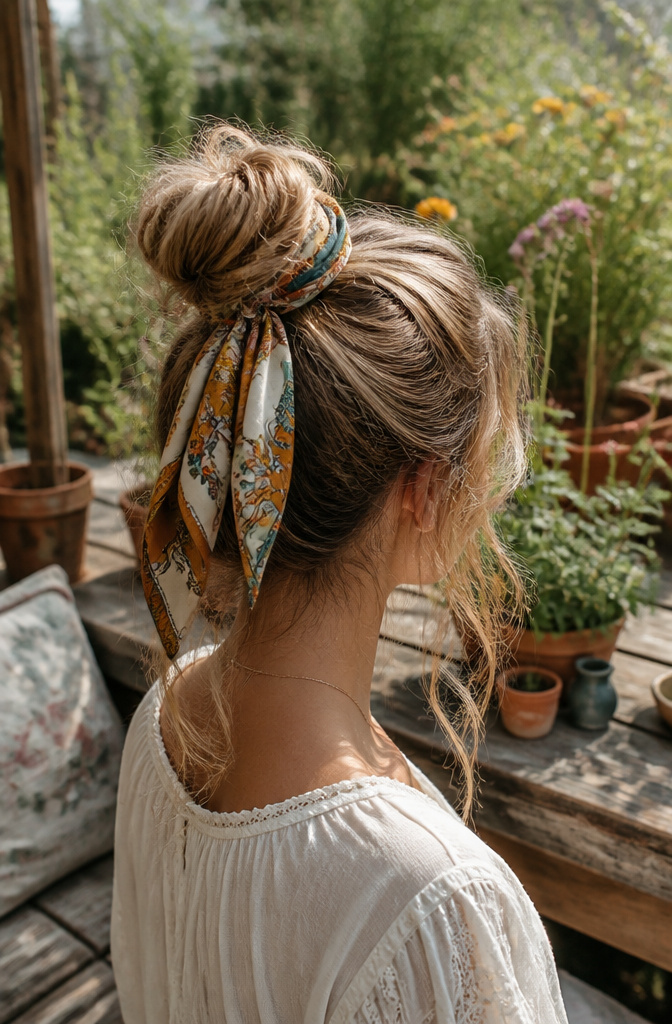
The messy bun is the quintessential low-effort hippie updo, and it works because it refuses to try too hard. Gather your hair loosely at the crown or nape, leave pieces falling around the face, and secure it with a scrunchie or a hair stick rather than a tight elastic that fights your natural texture. Dry shampoo at the roots adds volume and grip if your hair is clean and slippery, which helps the bun hold without looking stiff.
This style celebrates imperfection. A few escaped strands aren’t a flaw; they’re the whole point. The bohemian feel comes through even more when you pair it with a scarf or headband, though the bun alone does plenty of work. I reach for this when I want to look like I made an effort without actually making one, and it never fails to read as intentional rather than lazy. The 1960s got this right: hair that moves and breathes beats hair that doesn’t.

Hair Bun Extension Set for Thin Hair Women: The package includes 2 × dark brown messy bun hair piece for women and 6 × bobby pins. Shaking the hair bun or combing it with your hands makes it fuller. Using 1-2 bobby pins for extra security during wear

【5/Pack】Each pack comes with 5 different styles of messy hair buns. The hair buns scrunchies are perfect for adding volume and fullness to a bun or ponytail, allowing you to change your hairstyle to match your daily attire
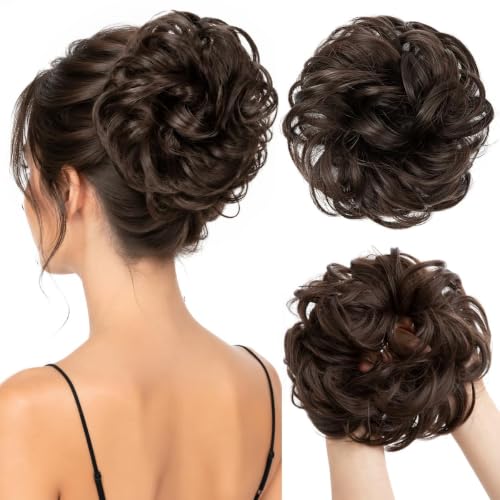
【Large Size】: Large size bun hairpiece weight about 1.94 oz( 55 gram ), perfect for enriching the volume of hair and fullness to a bun or a ponytail, comfortable and easy to use, elegant and lovely.
3. Fishtail Braid
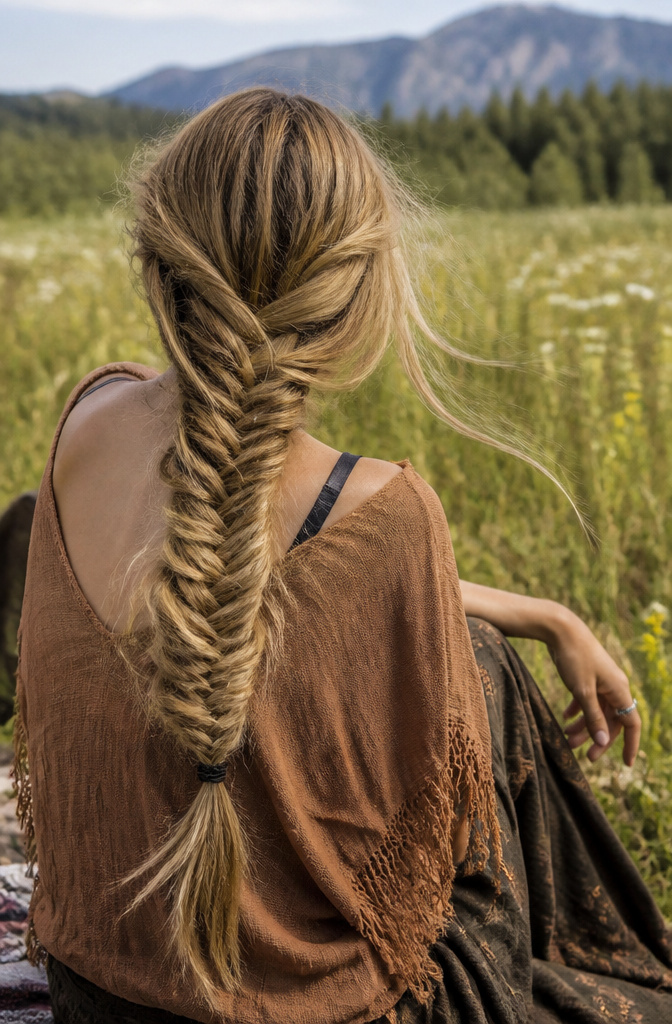
The fishtail braid only looks complicated. Once the pattern clicks, it is just two sections of hair trading small outer pieces back and forth. Split everything in half, take a thin strand from the outside edge of one section, and cross it over to join the opposite side. Repeat on the other side, working down until the braid finishes. The motion itself is simple; the result reads as intricate, which is why it still shows up on festival grounds sixty years after the Summer of Love.
A tight fishtail can look fussy and finished, almost school-uniform neat. Pancaking the braid fixes that. After securing the end, gently tug the outer edges of each crossover to loosen and flatten them. The braid widens, softens, and picks up the slightly undone texture that reads as genuinely bohemian rather than costume. This disheveled finish is what separates a hippie hairstyle from a gymnastics meet style. The looseness also adds volume for anyone working with fine or shorter hair, since the flattened strands create the illusion of thickness without extra product.

Dreadlock Crochet Hook Kit:This hair crochet hook set includes 4 pieces dreadlock crochet needle in 2 models, 0.75mm and 0.5mm, 0.75mm contains 1 hook, 2 hooks and 3 hooks,0.5mm contains 1hook.5 interlocking tool for locs ,2 latch hook crochet needle for micro braid,2 pink clips,3 piece pink tail comb set,200 black rubber band.In addition, our set also provides pink felt bag for your convenience to store.Our crochet needle kit meeting your different needs


Package Include: 3 pieces dreadlocks crochet with different hooks, and 2 pieces hair locking tool, enough quantity for you to design your own hairstyle,interlocking tool for locs is lightweight and easy to carry
4. Dutch Braids
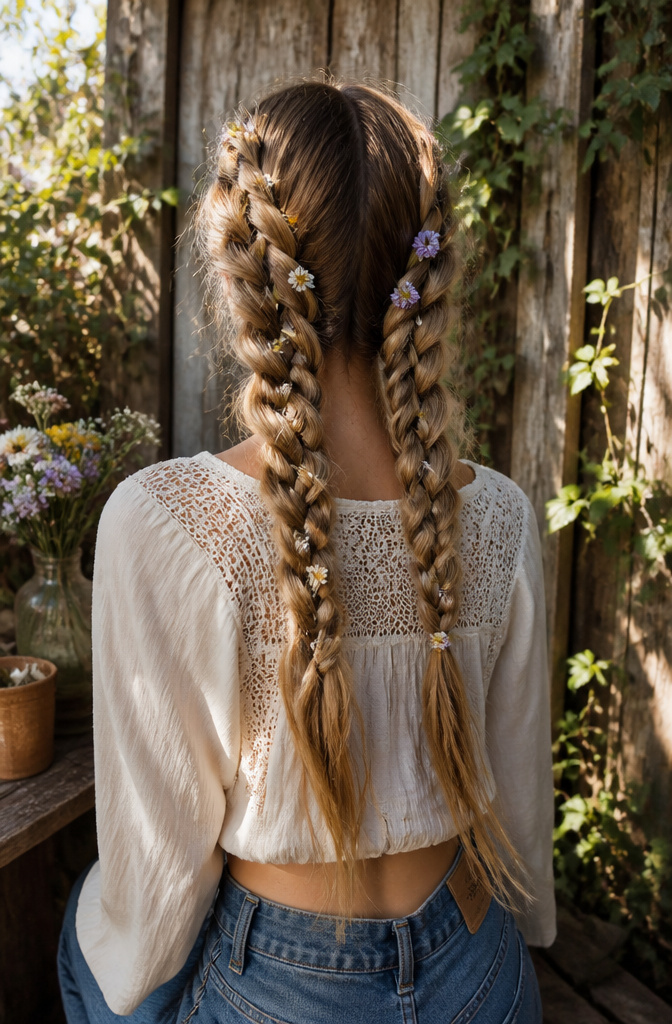
Dutch braids are reverse French braids, with each section crossing under instead of over so the braid sits raised and three-dimensional against the scalp. That bolder, almost sculptural look is exactly why they fit hippie style so well: they read as intentional but not fussy, structured without looking salon-stiff.
You can wear one down the back, part hair down the middle for two braids, or weave several small ones throughout. The raised texture shows up beautifully in all of these arrangements, and pancaking the braid (gently tugging the loops outward after braiding) softens the whole thing into something fuller and more lived-in. It is the same trick that works on regular braids, but on a Dutch braid the effect is even more dramatic because you are starting from that built-in height.
Medium to long hair carries the style best, and the actual braiding does not take much time once your hands know the motion. I have found that the underhand crossing feels awkward for maybe the first two attempts, then it clicks and becomes faster than a standard French braid because the raised structure gives your fingers more to grip.

DESIGNED FOR: Braids, twists, locs, and protective styles
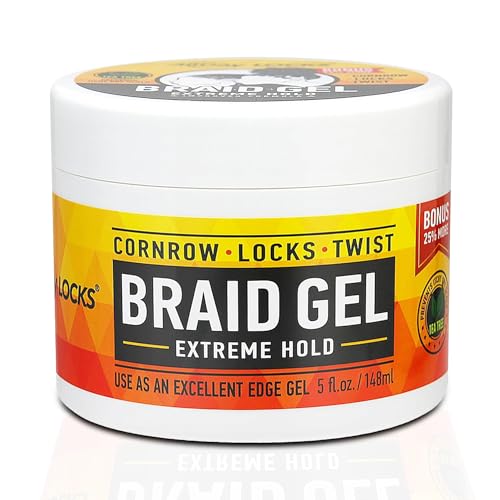
EXTREME HOLD BRAID GEL - Designed to provide strong, long-lasting hold for braids, locs, twists, cornrows, and more. Keeps styling slick, extra defined, frizz- and flake-free all day!
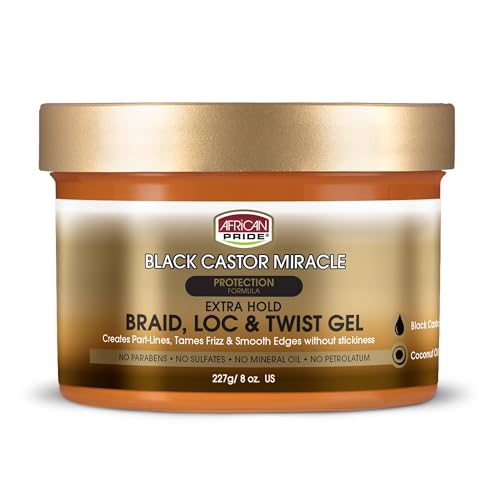
Smooths Frizz & Boosts Shine - Our professional braiding gel smooths away frizz and flyaways while enhancing shine for a sleek, long-lasting finish. Whether you're styling braids, locs, or twists, it keeps your look fresh, neat, and polished with minimal effort.
5. Side Braid
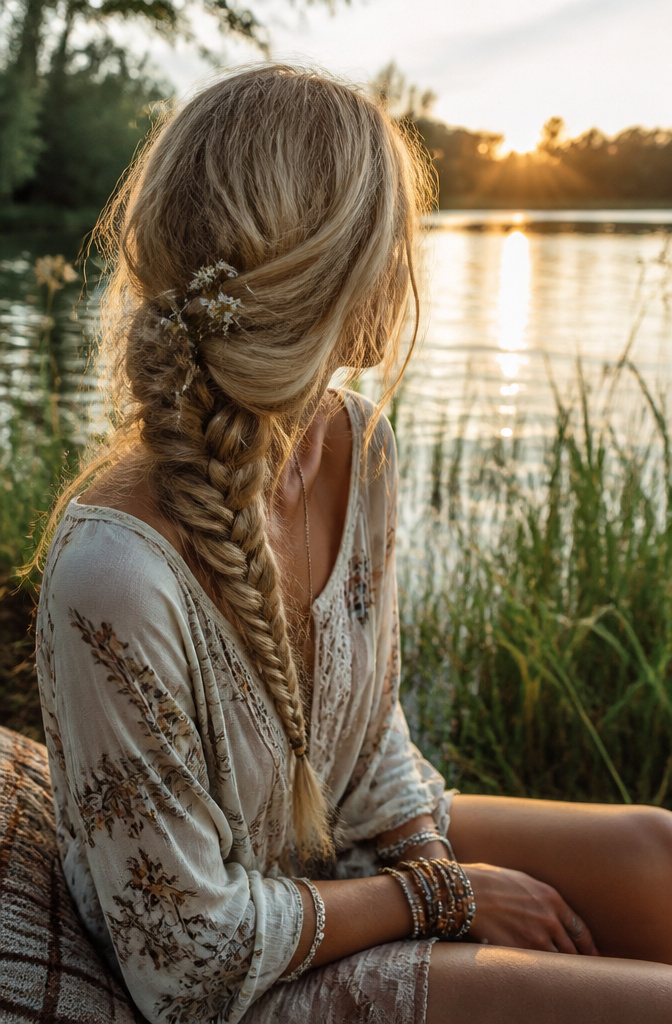
A loose side braid draped over one shoulder carries that easy, wandering spirit without trying too hard. Sweeping the hair low and to one side creates an asymmetrical frame that softens the jawline and draws attention upward, which is why a narrow headband or a few small flowers tucked along the hairline finish it so naturally. The placement matters more than the weave itself; pulling the braid slightly apart after securing it gives the fullness that keeps the look from going too polished. Keep it slightly undone rather than salon-smooth. That texture is what carries the boho feel from a casual morning into an evening out without needing to be rebuilt. The style works on hair that reaches at least past the shoulder, letting the braid hang with enough weight to stay put while still moving when you do.

Multicolor: You will receive three different colors of bandanas for women for you to choose from. No matter what hairstyle, clothing style or occasion it is, you can always find the perfect matching color. Enhance your fashion style and personality, making you look more attractive.

Package Includes: this boho knit headbands set includes 6 knitted headbands in total; The package contains 6 classic colors including black, sand, khaki, coffee, beige, and grey; Different color options make it easy to match various outfits, hairstyles, and seasonal looks; The simple and versatile design suits both casual and everyday wear

Comfortable and Soft: Our boho hair scarf headbands feature a triangular scarf design and are crafted with a blend of cotton and polyester.ensuring a comfortable, soft, non-slip, and stretchy fit. They are gentle on your head, even during extended wear, ensuring a pleasant experience throughout the day.
6. Bubble Braid
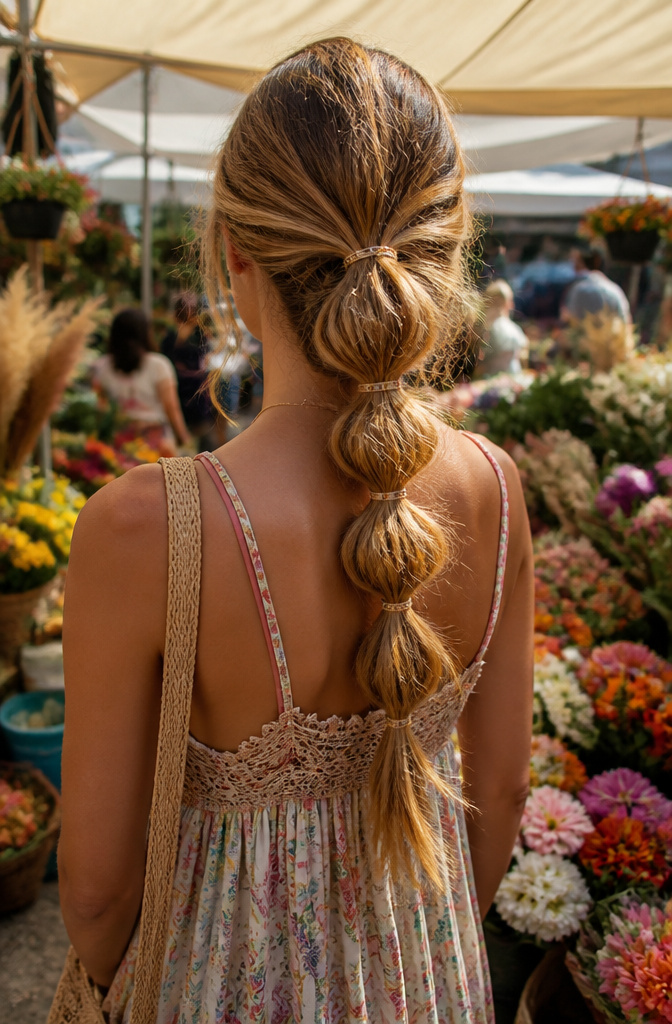
A bubble braid builds its shape from small elastics spaced every few inches down a ponytail or braid, each one pinching the hair into a soft, rounded section. The effect reads as sculptural without being rigid, which is exactly where it connects back to sixties hippie style. Keep the tension loose and the surface slightly fuzzy; a slick, gym-ready finish kills the whole mood.
Texture matters more than precision here. I like to start with second-day hair or a light mist of dry shampoo so the sections have something to grip against. The bubbles sit better when they are not fighting slipperiness.
Ribbons threaded between the elastics, or tiny dried flowers tucked into the gaps, push the look fully into bohemian territory. A narrow velvet ribbon in a muted earth tone works without looking costume-y. If you are adding flowers, secure them with the same elastics rather than extra pins; the less hardware showing, the cleaner the line stays.

Volume & Texture: Natural sea salt spray for hair men adds incredible volume and texture in a jiffy to take your hairstyling game to the next level. It also adds amazing richness and fullness to thinning or fine hair.

CLEAN FORMULA: Made with mineral-rich sea salt, soothing aloe, and nutrient-packed kelp, safe for daily use and all hair types, without sulfates or parabens

Instant Beachy Waves: Get that carefree, surfer-girl hair in seconds! This Salty Waves sea salt spray adds piecey texture and body to straight or wavy hair, creating natural-looking beach waves without any heat tools. Just spritz on and scrunch – watch your hair transform with sexy, tousled volume as if you spent a day in the ocean breeze. It’s your go-to for an effortless, windswept style year-round.
7. Afro Mane
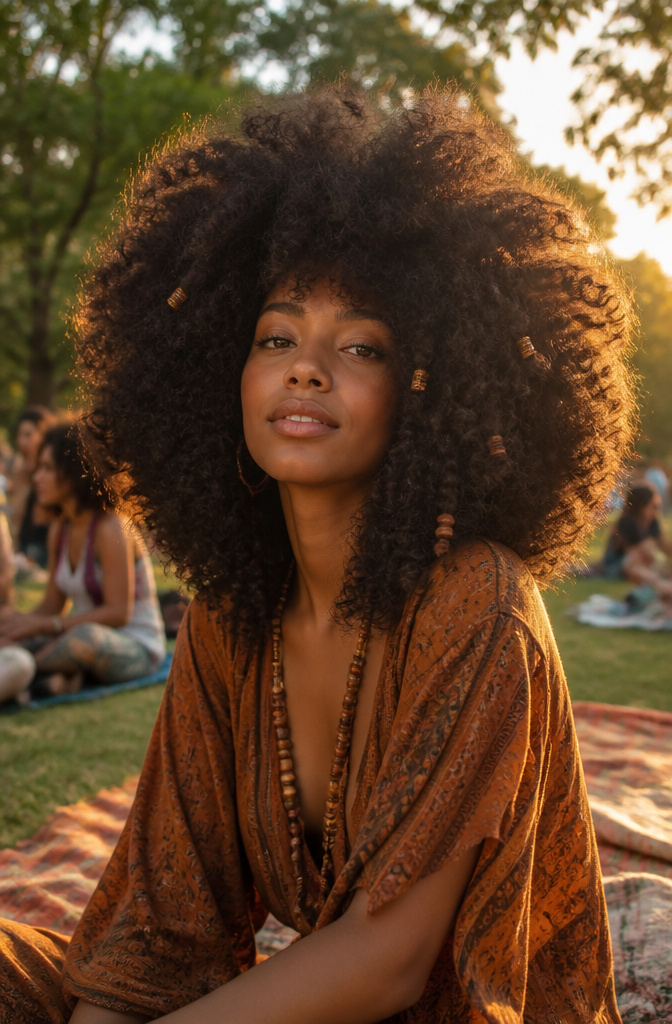
The Afro mane sits at the center of Black hippie identity from the 1960s and 70s, and it carries weight that goes well past fashion. Wearing natural volume full and free meant rejecting the straightening combs and chemical processing that had been standard for generations. That choice was personal, and it was political: natural curl pattern became a visible statement that Black beauty needed no alteration to be valid.
Picking out the hair with a wide-tooth comb or afro pick built the rounded shape, while regular moisturizing kept the strands healthy rather than forcing them into submission. The era’s broader embrace of natural beauty found its most powerful expression here, where "effortless" meant stepping away from damage, not stepping away from care. Beads, flowers, or a simple headband could decorate the style, but the texture itself was the point.
What strikes me reading back through accounts of the period is how much maintenance the "undone" look actually required. Air-dried finishes and defined natural curls needed attention to moisture and shape, just not the kind that erased what the hair wanted to do on its own. That tension between looking free and working to stay healthy still shapes how I think about natural texture today.

Two-Piece Value Pack: This set includes two hair buns, offering better value and greater versatility. Use one piece for a simple daily look, or combine both to create layered or more creative hairstyles. Perfect for double buns, updos, or as a backup option. You can also share one with a friend or gift it as a thoughtful present

【Large Size】: Large size bun hairpiece weight about 1.94 oz( 55 gram ), perfect for enriching the volume of hair and fullness to a bun or a ponytail, comfortable and easy to use, elegant and lovely.

Black Hair Bun Extension Set: The package includes 1 × black large messy bun hair piece and 6 × bobby pins. Shaking the bun hair or combing it with your hands makes it fuller. Using 1-2 bobby pins for extra security during wear
8. Flower Crown
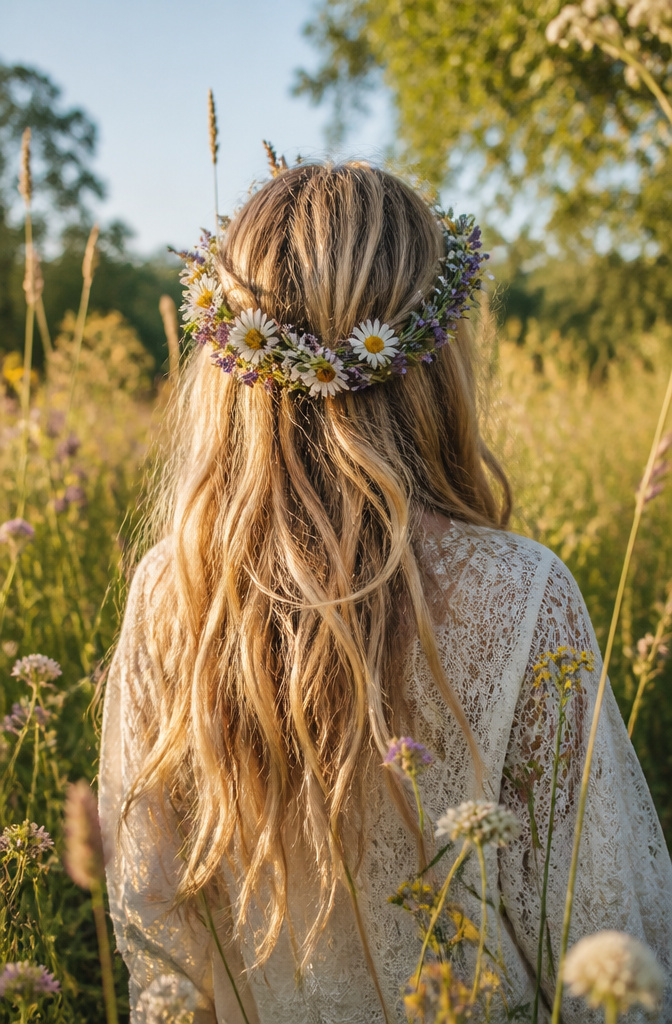
A flower crown turns whatever you have going on underneath into something intentional. Loose waves, straight hair pulled back, even a messy bun you’ve been wearing for two days: the crown does the styling for you. Fresh daisies, baby’s breath, and wildflowers are the classic choices, the ones that show up in every photograph from 1967 and still read as genuinely bohemian rather than costume.
Real flowers give you that slightly imperfect, just-picked look, but they wilt within a day, sometimes hours in summer heat. Silk or dried versions solve that problem completely. I’ve had a dried lavender and baby’s breath circlet sitting in a drawer for two years that still looks the same as when I bought it. It takes thirty seconds to put on, and suddenly the ponytail I didn’t feel like washing looks like a deliberate choice. The hair underneath matters less than you’d think. The crown is what people see.

【Using A Dreadlock Crochet Tool】Our 0.75mm middle size loc tools for dreads works well for most people, just pulling the loose hairs back into the inside of the dread. Do not worry it will hurt your head skin when use in a long time

Crochet Needle for Locs: The braid hair tool set includes 3 bamboo handle Dreadlock Crochet Hook Tools(0.75mm), 5 Latch Hooks, 2 double ended crochet hooks (1.9mm+1.0mm, 1.0mm+2.0mm), 5 hair locking tools and 40 rhinestone dreadlock hair rings (20 silver + 20 gold). All essential tools you need to create, tighten and decorate your dreadlocks.

Package Include: 3 pieces dreadlocks crochet with different hooks, and 3 pieces hair locking tool, enough quantity for you to design your own hairstyle,interlocking tool for locs is lightweight and easy to carry
9. Half-Up Braids
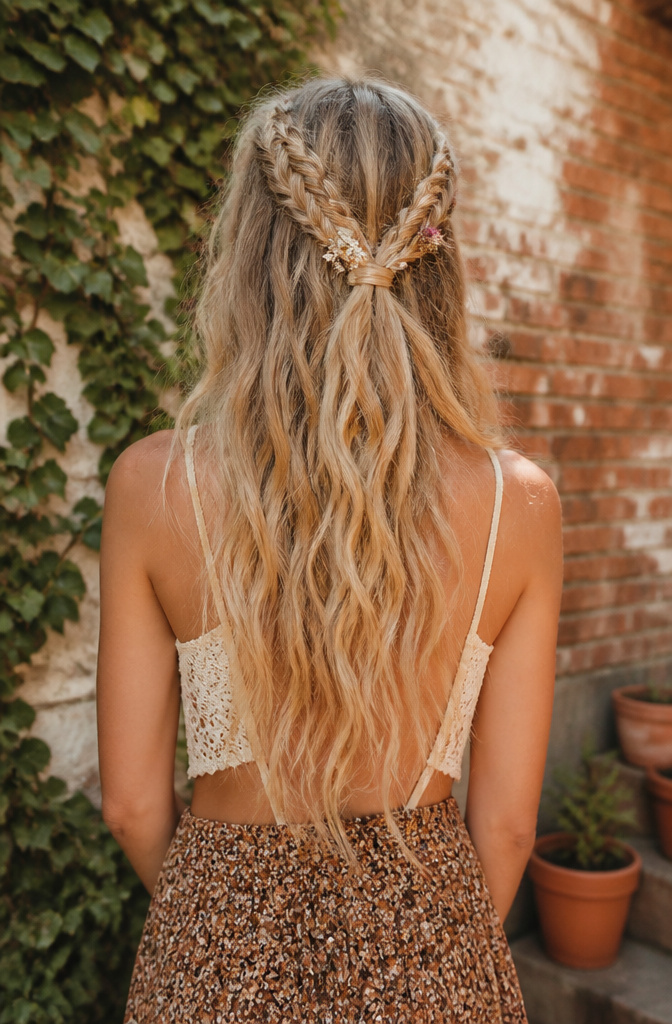
Small braids woven from the crown or temples and secured at the back give you the practical side of an updo without looking like you tried too hard. The rest of the hair hangs loose, which keeps the whole feeling soft and lived-in rather than pinned-back severe. I’ve always liked this balance for exactly that reason: hair stays out of your face, but you don’t lose the movement and texture that makes hippie hairstyles feel approachable in the first place.
What happens below the braid matters. Pair it with waves or curls underneath and the style gains dimension instead of reading as half-finished. The braids provide structure while the loose section does the romantic work. This combination showed up constantly in 1960s hippie styling, and it translates cleanly to now because the elements are so adaptable.
The real strength here is how forgiving it is across lengths and textures. Shorter cuts can braid just the front sections above the ears. Longer hair allows for thicker crown braids or multiple smaller ones. Tighter curl patterns, straight fine hair, anything in between, the principle holds: secure the top, let the bottom move. You adjust the braid size and placement to what your hair actually does, not fight it into something else.
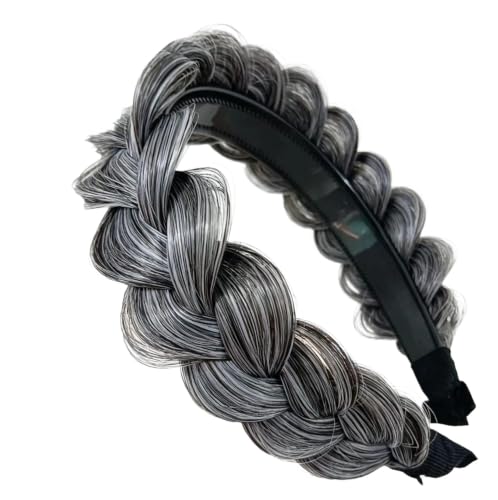
PRESTYLED BRAID DETAIL — This wide braid headband for women carries a ready made fishtail plait across the crown, giving everyday hair styling a complete braided focal point without building the shape from loose strands

4-in-1 Results, One Tube — Defines curls, smooths strands, adds healthy shine, and tames frizz with flexible, touchable hold for everyday styles.

Extra Hold Hair Gel: This hair gel features micro-emulsion technology for great extra hold, shine and conditioning with up to 3X less breakage and with no wax, no flaking, and no drying alcohol
10. Dreadlocks
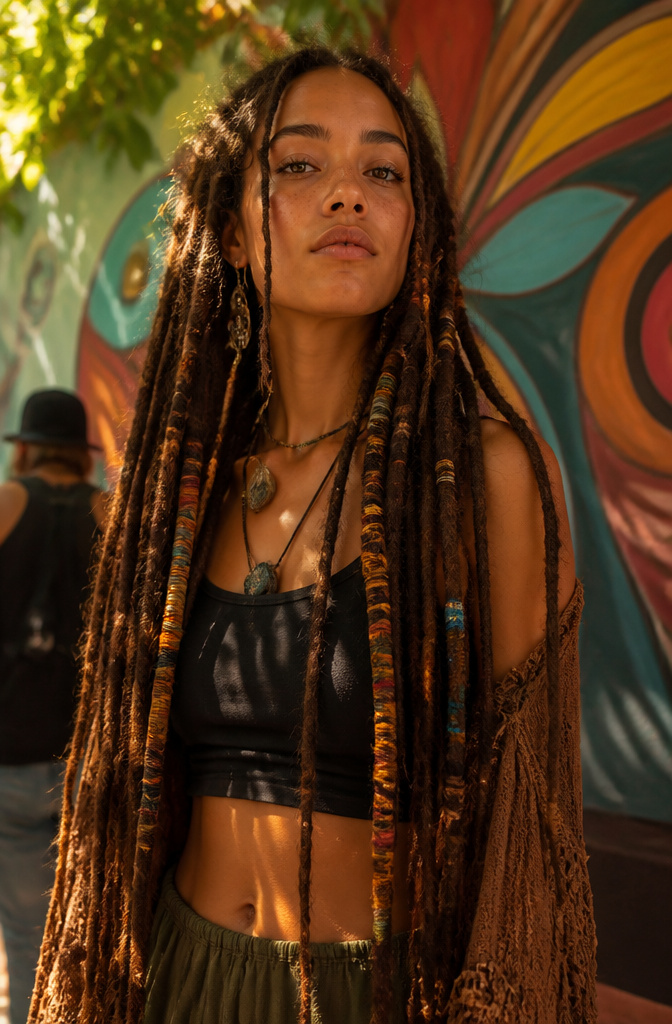
Dreadlocks are roped sections of hair formed through matting or twisting, a style with deep roots in Rastafarian culture that crossed into the broader hippie movement during the 1960s. This is not a look you throw together for a weekend festival. Forming real dreads takes months of patience, and the maintenance never really stops. You can start them a few different ways, backcombing or the twist-and-rip method being the most common approaches people still use. Once established, they wear loose, tied back, or decorated with wooden beads and colorful wraps threaded through the length. Both men and women in the hippie scene embraced this style, and that gender-neutral appeal has held steady into 2026.

【Soft and Breathable Material】This crochet hair bandana is made of high-quality pure cotton crocheted fabric, making it lightweight, breathable, and comfortable against the skin. Unlike rigid headbands, it won't constrict your head or leave unsightly marks, ensuring all-day comfort in cool seasons like spring, autumn, and summer.

【MATERIAL】- Our holiday headbands are made of fabrics and lace material, comfortable to wear, no worries about slipping or pulling, they can stay securely in your hair and fix your hair in place.

Boho headbands for women are made of polyester and spandex blend, the fabric is soft and skin-friendly, suitable for delicate skin, the size is about 9.8*5.9 inches (25*15 cm), wide hair bands width can completely cover the head, leopard hair bands can be folded for use, creating a more hairstyle
Hair Accessories That Complete the Look
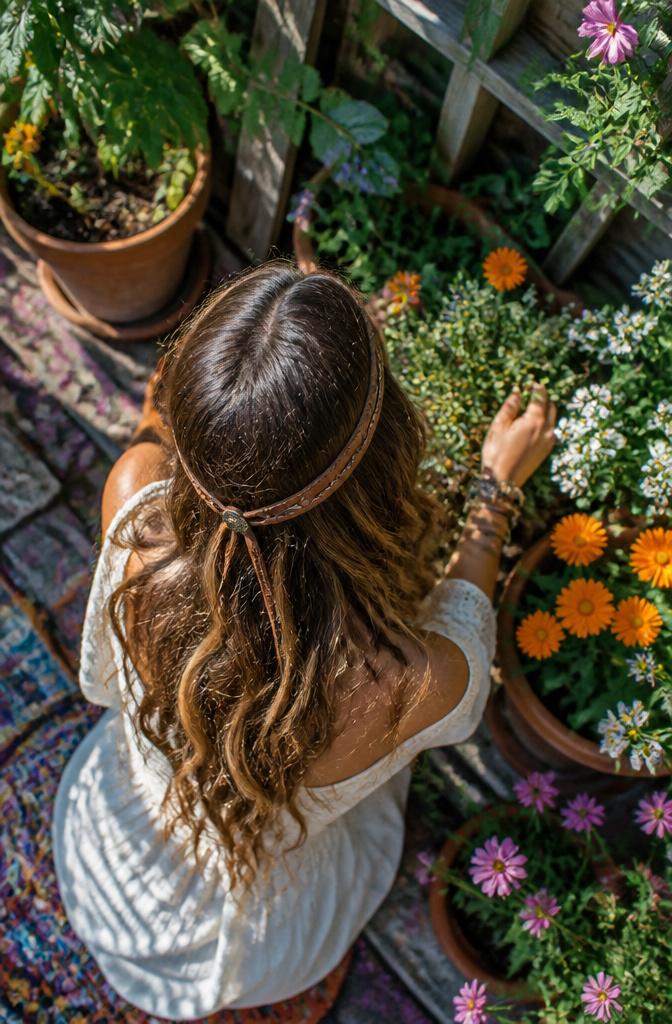
The right accessory can turn a plain ponytail or loose waves into something that reads as hippie style before anyone notices the hair itself. A leather headband carries a tougher, festival-ground mood, while a silk scarf knotted at the nape feels softer and more pulled-together for everyday wear. Fresh or silk flowers threaded through a braid signal the free-spirited philosophy most immediately; that daisy-chain look is what people picture first when they hear the era mentioned. Feathers, ribbons, and beaded strands add movement and color, and they work whether your base style is a classic shag, long flowing waves, or even a simple afro with a band across the forehead. Colorful accessories were central to the look when the style peaked in the 1970s, and they still do the heaviest lifting today. You don’t need an elaborate cut. A basic long style with the right scarf or a few wooden beads at the ends of a braid communicates the same idea with almost no effort.
Working With Your Natural Texture
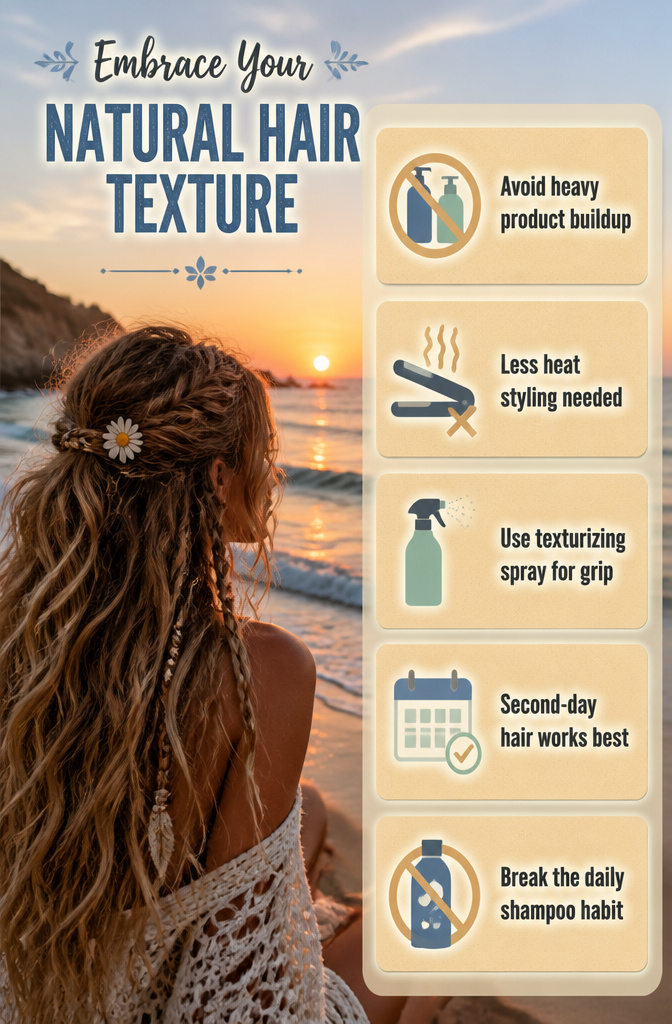
Hippie hairstyles start from the assumption that your hair already knows what it wants to do. The look depends on strands that appear to have grown in exactly the configuration you’re wearing, which means heavy product buildup and heat styling are working against you instead of with you. That polished, shellacked finish reads as effort, and effort is the opposite of the point.
What actually supports this aesthetic is a much lighter hand. Texturizing spray gives limp sections the grip they need without coating them. Dry shampoo at the root buys you another day of volume and absorbs oil that would otherwise flatten everything out. Sea salt spray does the heavy lifting for wave patterns, encouraging what your hair already does rather than forcing it into submission.
Second or even third-day hair often cooperates better than freshly washed strands. The natural oil distribution gives braids and twists something to hold onto, and the slight grit keeps pieces from sliding loose ten minutes after you finish. If you’re someone who shampoos daily out of habit, this is the place to break it.
From the Sixties to Now
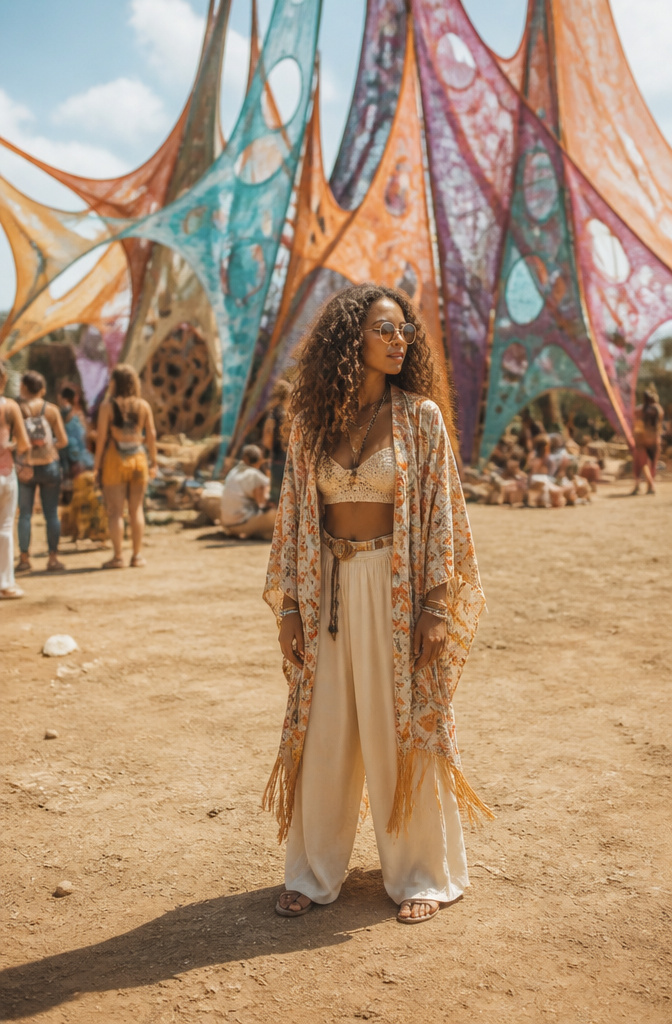
The hippie hairstyles we talk about today started as something bigger than fashion. In the 1960s and 1970s, long hair on men and natural texture on everyone carried real political weight. Letting your hair grow out or refusing to straighten it was a quiet act of rebellion against mainstream expectations, tied directly to the counterculture movement’s push for peace, freedom, and social change.
These styles echoed a natural, unrefined aesthetic that rejected the polished looks of the previous decade. The generation wearing them wanted to look like themselves, not like something manufactured.
Modern versions keep that same spirit but update the execution. Today’s braids, waves, and flowing lengths borrow the effortless, undone finish while welcoming hair of every type and length, from short cuts to long manes. The techniques have evolved, and the inclusivity has expanded, but the core idea remains: hair that moves freely and looks like it belongs to a real person, not a magazine spread.
Frequently Asked Questions
What hair accessories were popular among hippies?
Hippies wore leather headbands, silk scarves, feathers, ribbons, beads, and fresh or dried flowers in their hair. Shell clips and charms also fit the beach-inspired side of the look. These pieces did the styling work so the hair underneath could stay simple and natural.
Can hippie hairstyles be worn by both men and women?
Yes. Men in the 1960s grew their hair long and loose, and both men and women wore dreadlocks. The style was never limited by gender, and that openness still holds in 2026.
What hair products should I use to achieve a hippie hairstyle?
Reach for texturizing spray, dry shampoo, and sea salt spray. These add grip and volume without the polished finish that fights the whole point of the look. Second- or third-day hair often cooperates better than freshly washed strands because the natural oils give braids and twists something to hold.