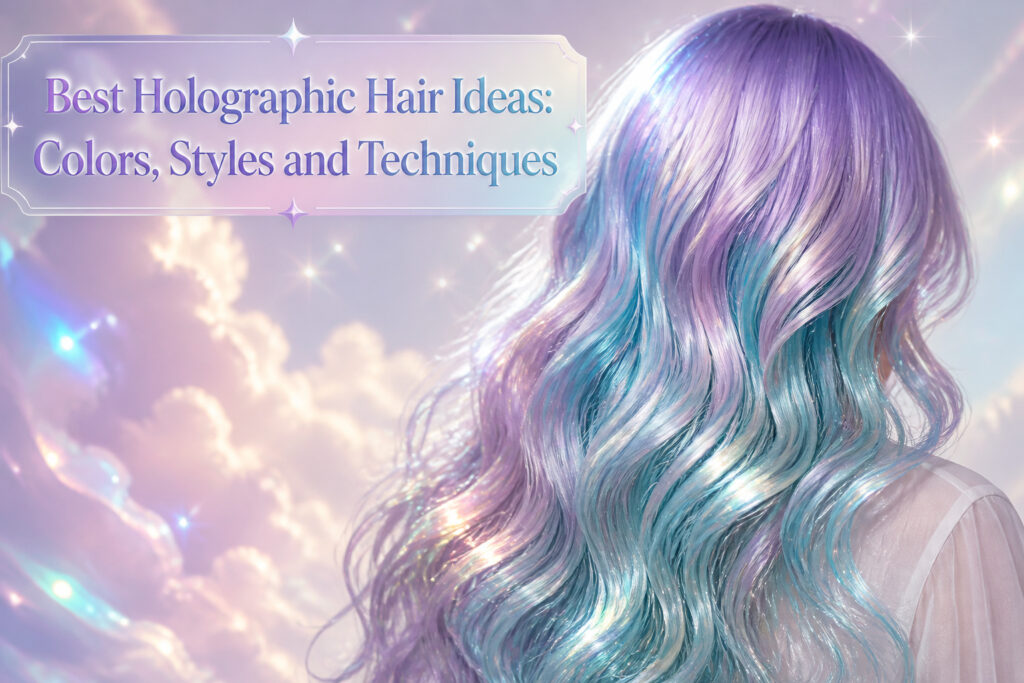
Holographic hair is the iridescent color trend that shifts between pastel and metallic tones as light moves across each strand. The catch is that almost every look demands lifting your natural color to level 9 or platinum blonde first, which means multiple bleaching sessions and real strand damage before a single opal or unicorn tone can take. If you are starting from dark hair, balayage placement buys you the longest grow-out window, since the hand-painted roots let you push closer to 10 weeks between appointments while the pastel shift lives only on your ends. Sulfate-free shampoo and cold rinses are not optional here; without them, the direct dyes that create that light-catching dimension wash down the drain in weeks, not months.
Unicorn Hair
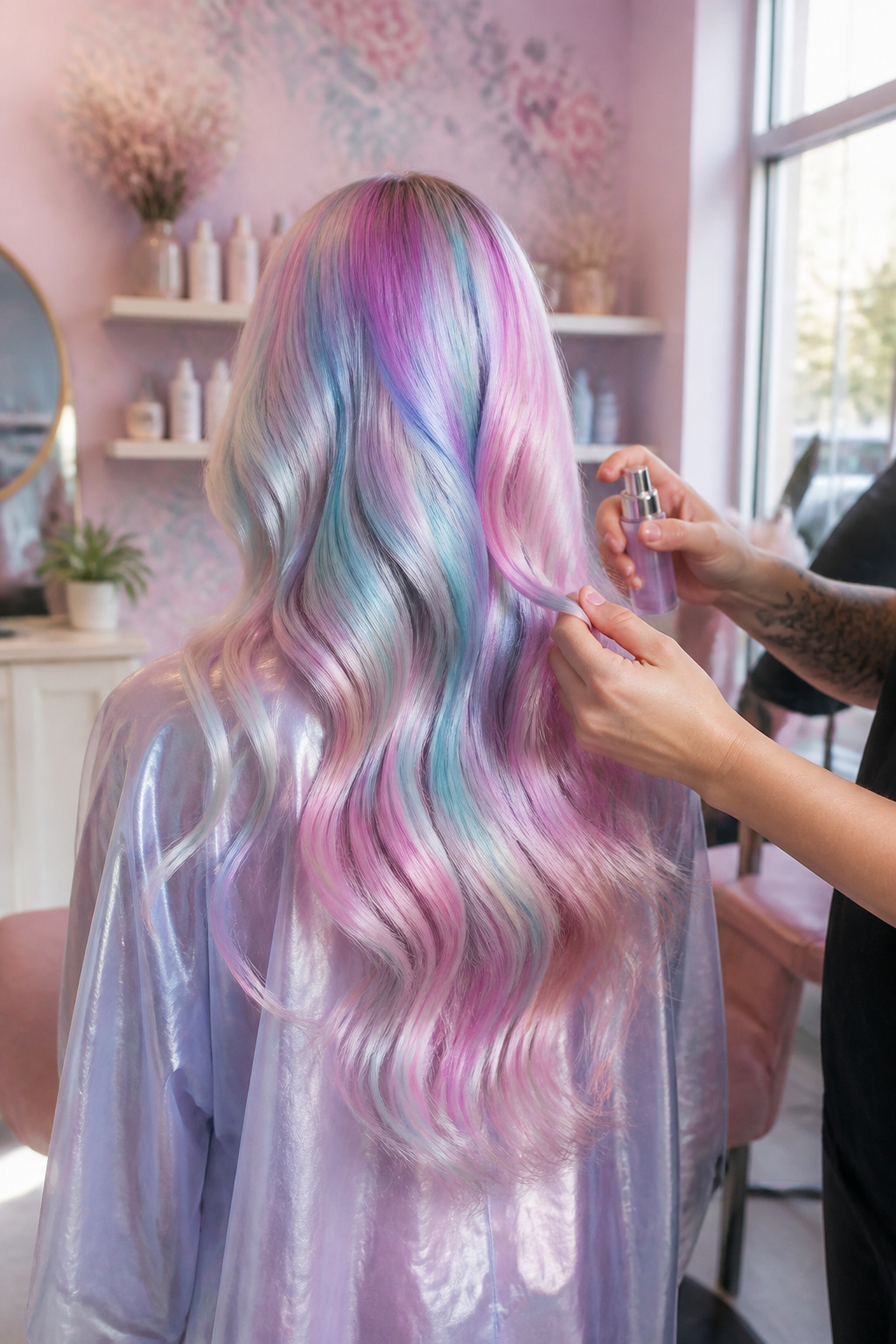
Unicorn hair still sits at the top of the request list when clients walk into salons asking for holographic color. The combination of lavender, pink, mint, and silver creates that pastel shift people picture when they imagine something magical, and it is the original look that kicked off the whole holographic trend. Fair to medium skin tones carry it best, though the full bleach requirement means commitment from the start.
What keeps this style in demand is the deliberate blending at the roots. Colorists section the hair and melt those four tones together so the strands read as one shifting color in motion rather than stripes. Ask for maximum color shift with blended root sections, not blocky panels, or the effect falls flat under daylight. The iridescent quality comes from that high-shine finish, almost like the reflective glow of a translucent highlighter catching different angles.
Compared to the quieter opal looks, unicorn hair demands to be noticed. It reads bold from across a room rather than revealing itself only up close. For anyone choosing between the two, the deciding factor is usually how much daily attention the color should draw.

Feria Is Multi-Faceted Permanent Hair Color: Known for shimmering color and edgy colors, Feria permanent hair dye kits transform hair from blah to brilliant; Our multi-faceted shimmering hair dye with 3X highlights delivers intensified, brilliant results

VIBRANT COTTON CANDY HAIR DYE: Achieve a bold, rich, and natural finish with our high-pigment Pink hair dye. Designed for exceptional coverage, this formula lasts up to 4 weeks or approximately 20 washes, keeping your hair looking freshly dyed and salon-radiant.

Semi Permanent Conditioning Hair Dye: Perfectly pastel! Punky Cotton Candy Semi Permanent Conditioning Hair Color is a dazzling pale pink shade to transform and condition your hair for a soft & silky brand new look with zero commitments. Go for an ultra-feminine hairstyle!
Holographic Highlights
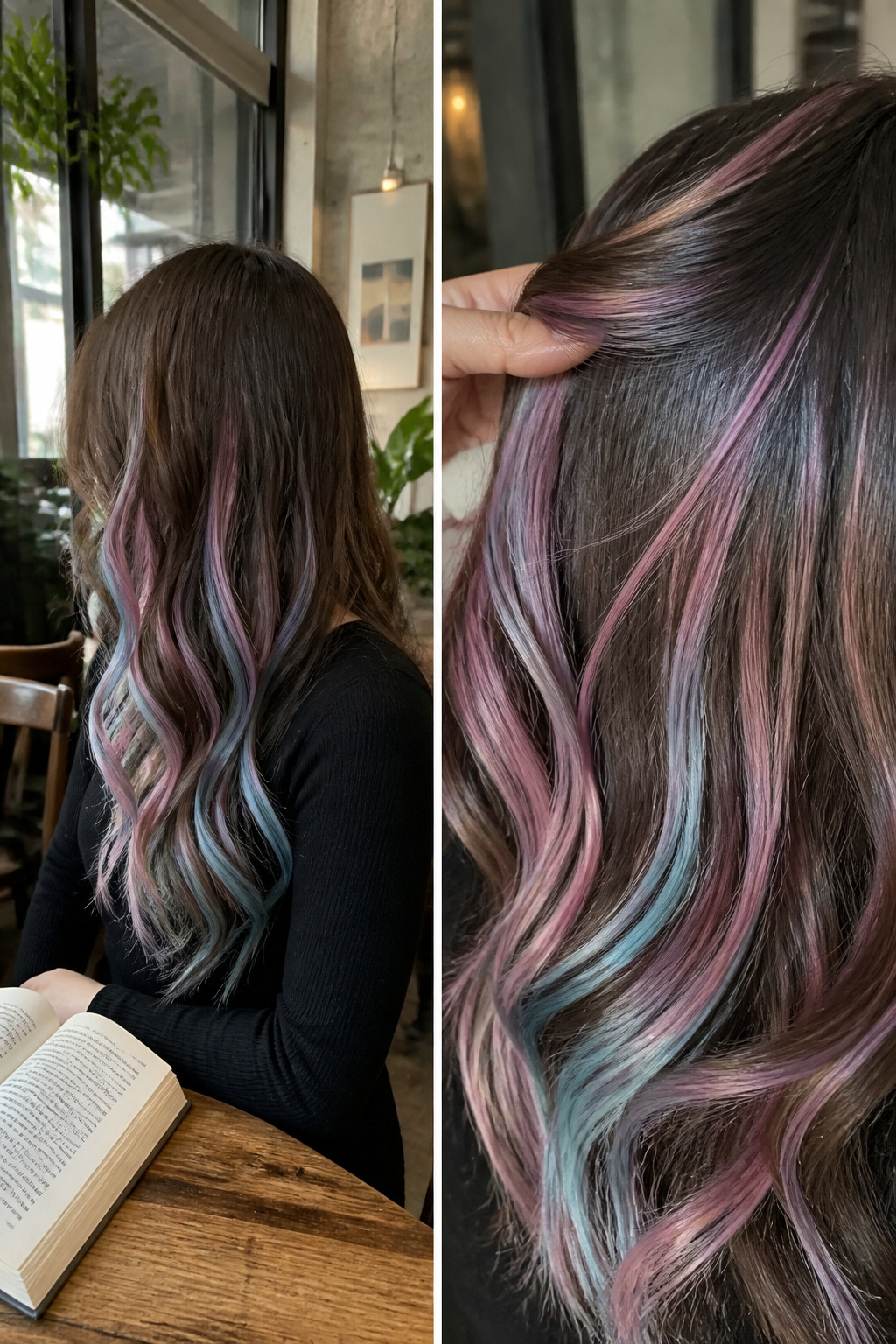
A full head of holographic color is not the only way in, and for most people it probably should not be the first way. Holographic highlights on a neutral base give you the iridescent flash without the heavy upkeep cycle. The pastels sit in foiled ribbons rather than coating every strand, so regrowth stays forgiving and the commitment drops sharply.
The base color matters more than you might expect. Dark brown or black hair carries silver and blue highlights with real dimension; the contrast does the work for you. On dark blonde or dirty blonde, the same pastels read softer and closer to a true holographic sheen, almost like light catching oil on water. Colorists often reach for soft sky blue, luminous lilac, and candy floss pink in these lighter bases, sometimes cutting them with a clear mixer to keep the tone translucent rather than opaque.
If you are naturally blonde, the fade is especially gentle. The pastels wash down to a whisper rather than a brassy reminder, which makes this route practical for a first try. Ask for foiled placement and a gloss finish rather than all-over saturation. You get the trend, your mornings stay simple, and you can decide later whether you want more.

COLOR PROTECTING: Our shampoo for color treated hair offers a gentle, balanced formula that helps lock in pigments and shields hair from fade inducing UV rays.

Deep Moisture For Dry Hair: EverPure Moisture Shampoo and Conditioner delivers 2X more moisture vs. non-conditioning shampoo, replenishing color-treated and dry hair without weigh-down for soft, luminous results

Shampoo For Our Deepest Hair Repair: EverPure Bond Repair+ Shampoo strengthens weak hair bonds, reduces breakage, and provide intense hydration and lasting silky smoothness plus color protection
Opal Blonde
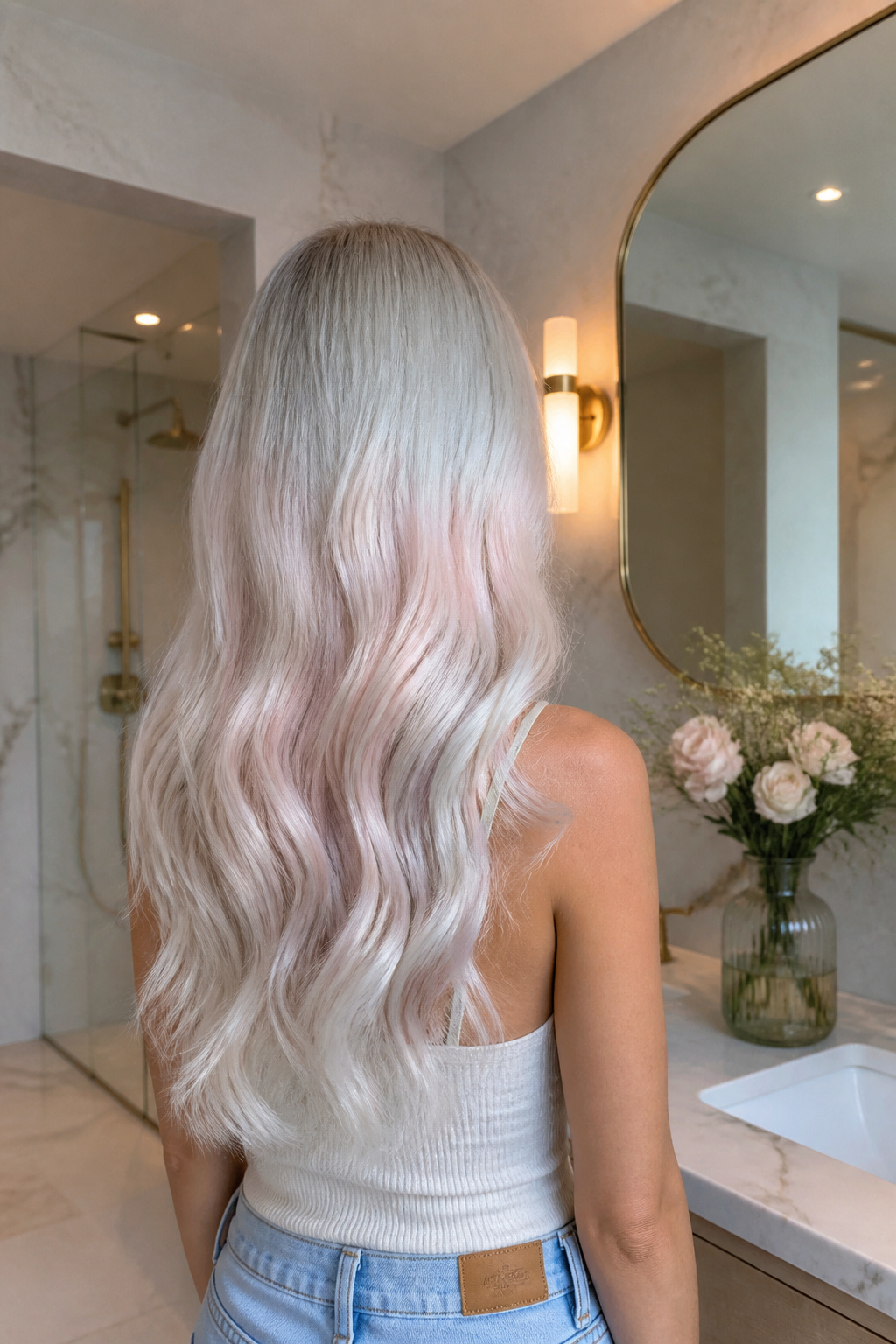
Opal blonde sits at the quiet end of the holographic spectrum, a platinum base so pale it reads almost white until the light catches it. The shift happens through a pearl toner layered over the blonde, and that layering is what separates this from plain platinum. Done right, you get movement between white, pink, and silver without any single tone announcing itself.
The specific combination starts with a cool blonde base bleached to near-white, then an opal toner applied over top. Some colorists build it with Platinum Lily and Silver Mauve in chunky highlights that melt together, though a single all-over opal toner gives the same iridescence with less maintenance. Either way, the pastel notes stay barely there, blush and lavender and sometimes a whisper of mint, so the effect reads natural from across the room and only reveals itself up close.
This one flatters fair skin tones most directly. The cool base can pull pink on warmer complexions, so if your skin runs golden, you will likely need the colorist to adjust the toner mix away from the pinker notes. Darker than platinum blonde, and the pastel simply will not show, so the bleaching step is non-negotiable.

Built-In Bonding Technology: Protects and strengthens hair during and after lightening process

We’ve upgraded our look, without changing our essential formulas, to reflect our long-standing mission to deliver authentic, natural, and professional results through our full portfolio of products for every hair type.

Delivers up to 9 levels of lift while helping protect hair bonds.
Mermaid Hair
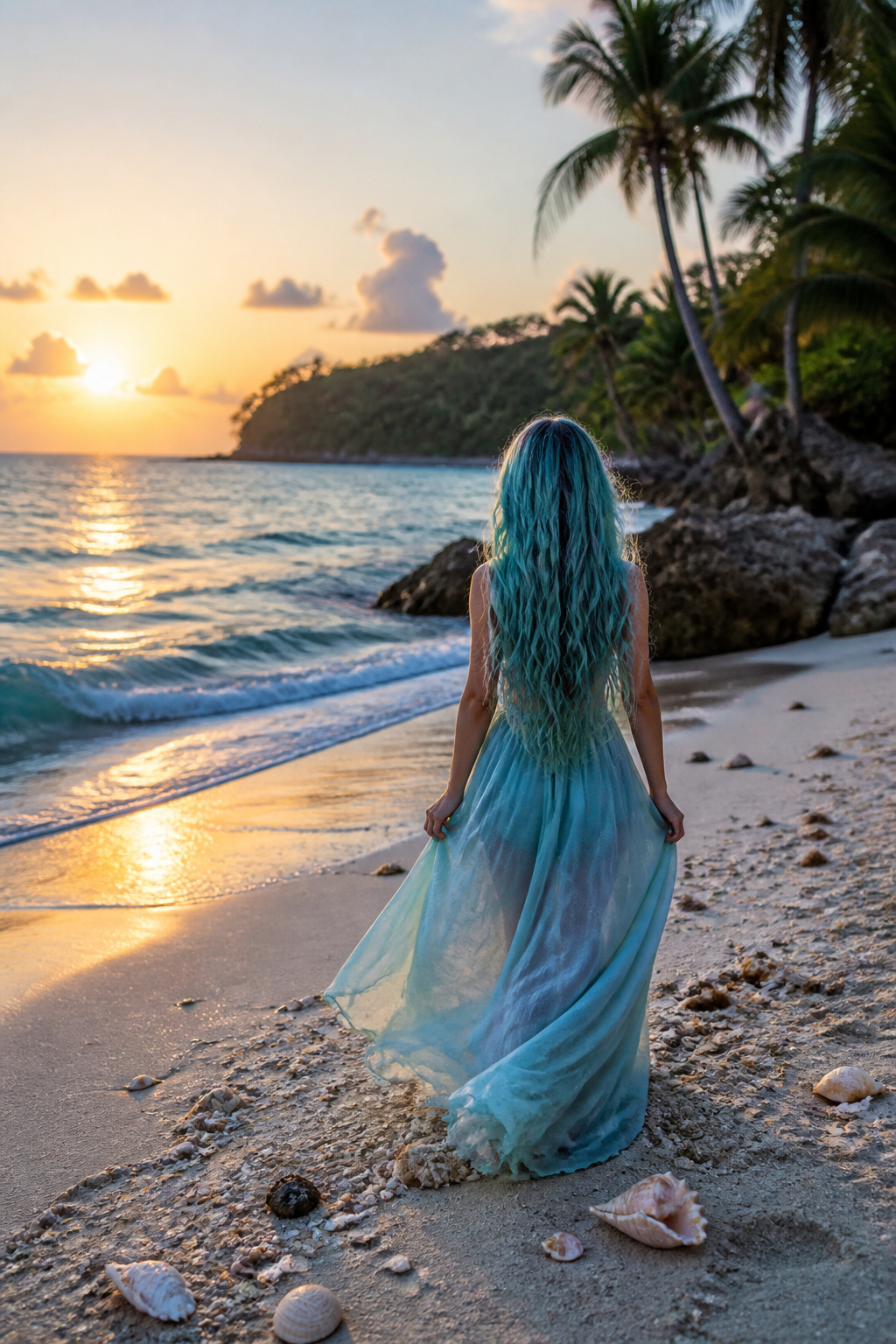
Mermaid hair keeps the holographic effect but pulls it in a cooler direction. Where unicorn hair spreads soft pinks and lavenders evenly from root to tip, mermaid work concentrates blue, teal, and seafoam green with a metallic gloss on top. The color reads wet, not airy, and the placement follows the way light actually behaves underwater: darker at the roots, brighter where the sun would hit.
The distinction is mostly tone. Unicorn hair wants fantasy; mermaid hair wants the ocean. I think of it as sunset hair’s cool-toned answer, the same shift from warm reds and oranges into blues and greens you’d see flipping from a beach sunset to the water below it. That iridescent gloss layer matters here more than in other holographic styles, because without it the blues go flat and costume-y instead of almost liquid.
Length helps. The sources keep pairing this with super long hair, and I get why: the color needs enough real estate to shift between those three tones without turning muddy. On shorter cuts the sections blur together and you lose the dimension that makes it read as holographic rather than just dyed.
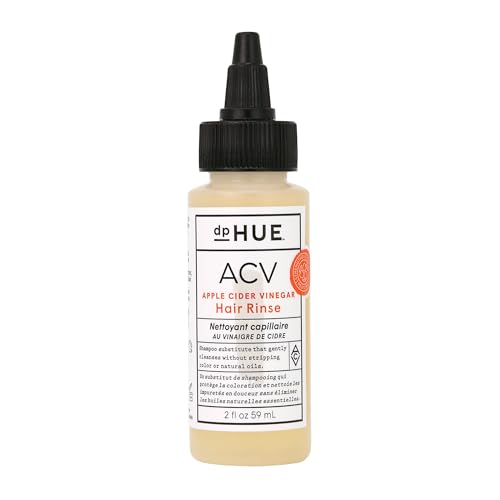
Don't Over Shampoo; Apple Cider Vinegar Hair Rinse removes impurities without stripping the natural oils that are essential to the health of your scalp and hair. Perfect for reducing shampoo use, it leaves your hair clean and soft.

Pure Silver Purple Toning Formula – Helps neutralize yellow and brassy tones in blonde, bleached, white, highlighted, and gray hair, promoting a cooler, brighter appearance with regular use.

Hair Material:100% Remy Human Hair Loc Extensions,They Can Be Tested By Burning Test ,Soft, Light Weight And Natural, Can Be Bleached,
Holographic Sunset
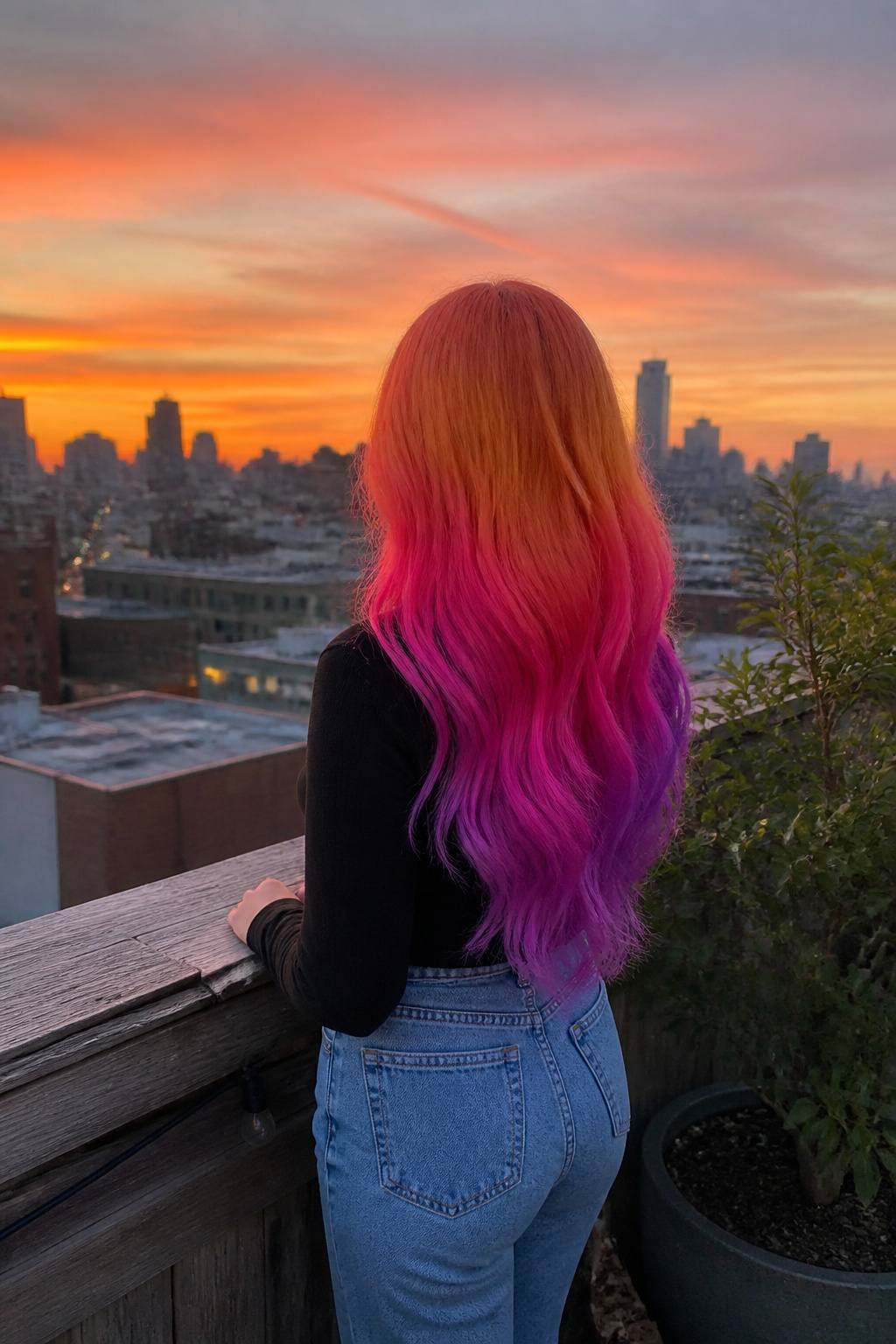
Neon orange melting into hot pink and then violet creates the closest thing to an actual sunset on your head, but the lightest possible base is non-negotiable here. Anything darker than a clean level 10 blonde dulls that orange into rust and turns the violet muddy. I have watched enough salon reveals gone wrong to know this is where people cut corners and regret it.
The progression matters too. Orange wants to sit at the root or midshaft, not the ends, because it is the heaviest pigment and fades fastest. Pink bridges the two cooler tones, and violet anchors the bottom. Without that deliberate order, you get a traffic-cone situation instead of a glow.
Maintenance is the real cost. These neons are direct dyes on porous, bleached hair, so they wash down the drain in vivid streaks every time. Cool water helps, sulfate-free buys you a few extra days, but plan on refreshing the pink and violet every two to three weeks if you want that gradient to stay readable.

Neutralize brass with up to 90% less breakage**

Neutralize brass with up to 90% less breakage**

Specialty Toners for Silver and Gray Hair: Designed to help brighten, blend and enhance silver or gray hair in 5 minutes
Mother of Pearl
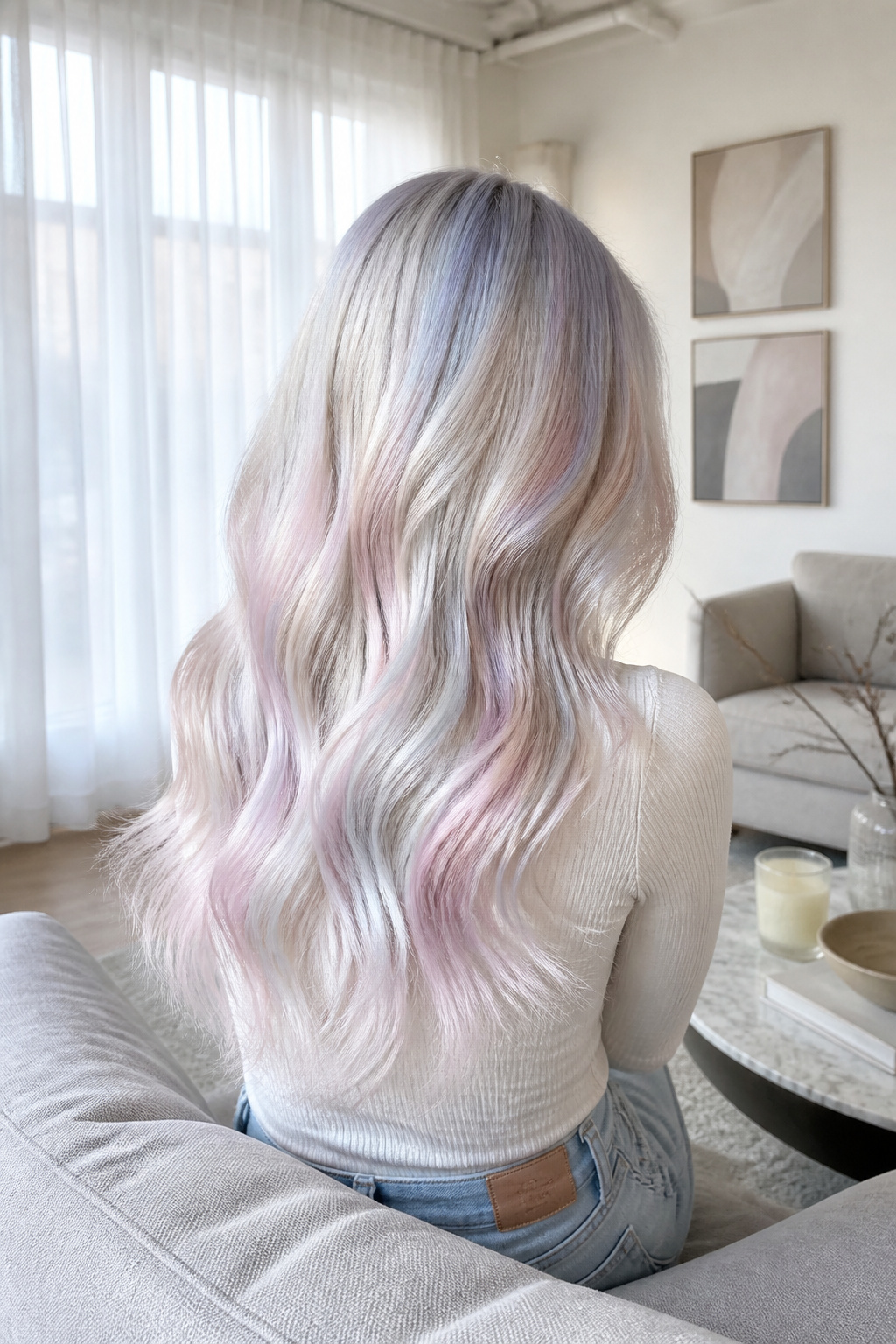
Mother of pearl keeps the same iridescent idea as opal blonde, but the resemblance stops there. Where opal tends toward a warmer, creamier base with colors pooling in soft bands, mother of pearl sits on a cool platinum foundation with pastel notes scattered more loosely through the hair. The effect is less gemstone and more seashell: blush pink, periwinkle, and lavender catching light at different angles without ever clustering into obvious stripes.
This cooler base makes it a natural fit for fair to medium skin tones, and the scattered placement means the color shifts as you move without demanding constant attention. For the salon, ask for a mother of pearl toner over platinum, with soft pink, blue, and lavender notes that shift in different light. The result reads elegant enough for a Tuesday meeting and striking enough to stop someone mid-conversation when you step outside.

VIBRANT PASTEL PINK COLOR: Achieve a beautiful pastel pink shade that appears brightest on platinum hair and transforms into a dusty rose on yellow-toned blonde. Results vary by hair level.

VIBRANT PASTEL COLOR: Create a dreamy periwinkle hair color with soft lavender undertones. This semi permanent periwinkle hair dye delivers true pastel results on level nine or lighter pre lightened strands.

VIBRANT PASTEL BLUE SHADE: Create a cotton candy blue hair dye look with this semi permanent pastel blue hair dye. Delivers an ice blue hair dye tone with soft neon undertones on platinum or pre lightened strands.
Oil Slick
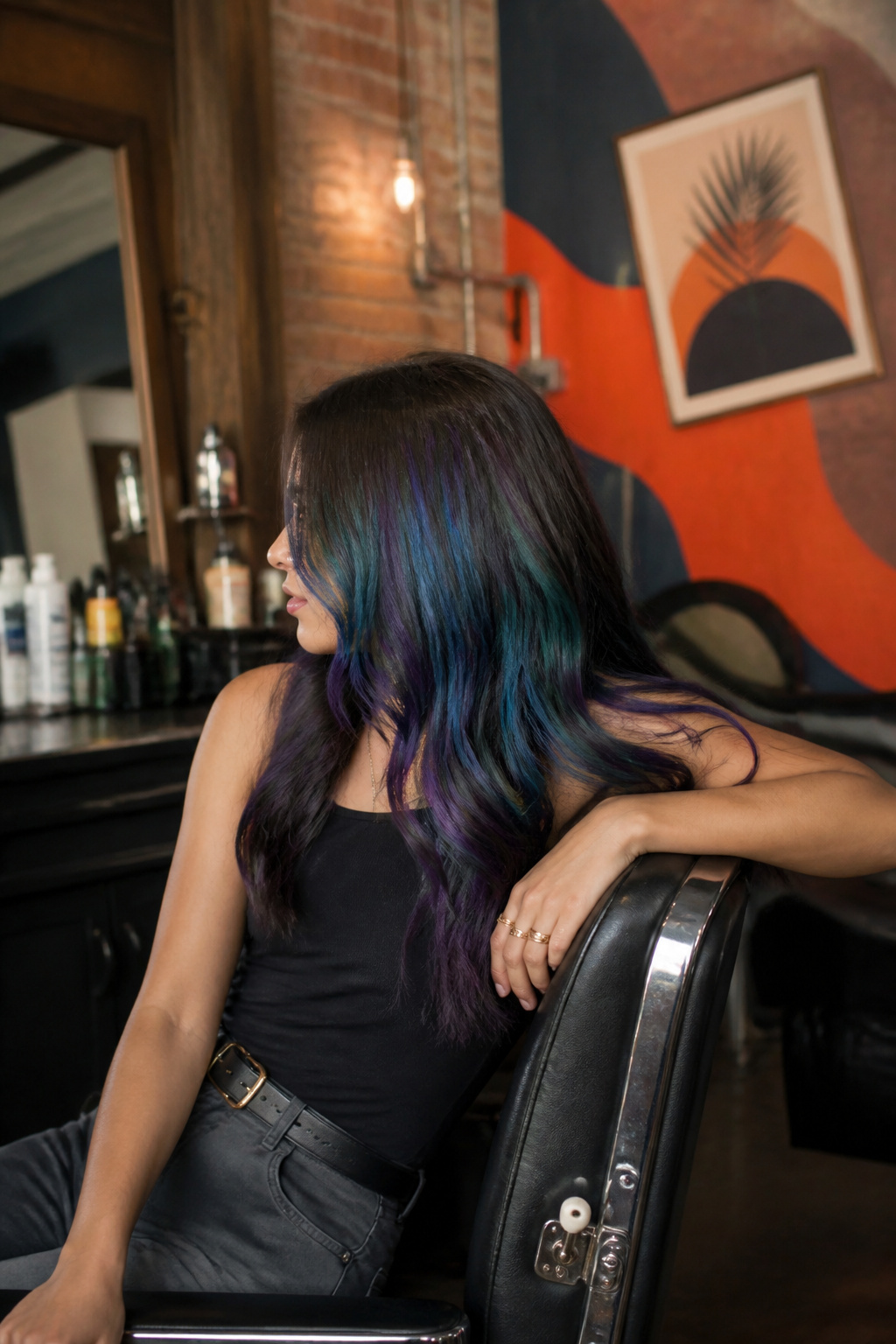
Oil slick color sits on a dark brown or black base without asking you to bleach your whole head. The blue, green, and purple tones are woven through as foiled highlights or balayage panels, so your natural depth stays intact and the iridescence catches light only where it was placed.
That dark foundation is why these colors read as jewel-toned rather than washed-out pastel. The pigments sit against deep brown or near-black, so they stay saturated and shifting, more beetle wing than cotton candy. I have seen this go wrong when someone insists on lifting the base too light; the magic depends on contrast, and the darkness underneath is doing half the work.
For placement, ask your colorist for dimension rather than full coverage. Foiled holographic highlights in silver and blue through dark hair give you that dimensional, light-catching effect without the commitment of a global color change. Medium to deep skin tones carry this especially well, since the cool jewel notes play against warmth in the complexion instead of competing with it.

Redken Color Extend Magnetics Shampoo is a sulfate-free and paraben-free professional shampoo for color treated hair. Leaves hair feeling softer, smoother, and helps prevent hair color fade.

Moisturizing & Hydrating Shampoo – Delivers intense hydration for dry or color-treated hair, improving softness & shine.

Balayage
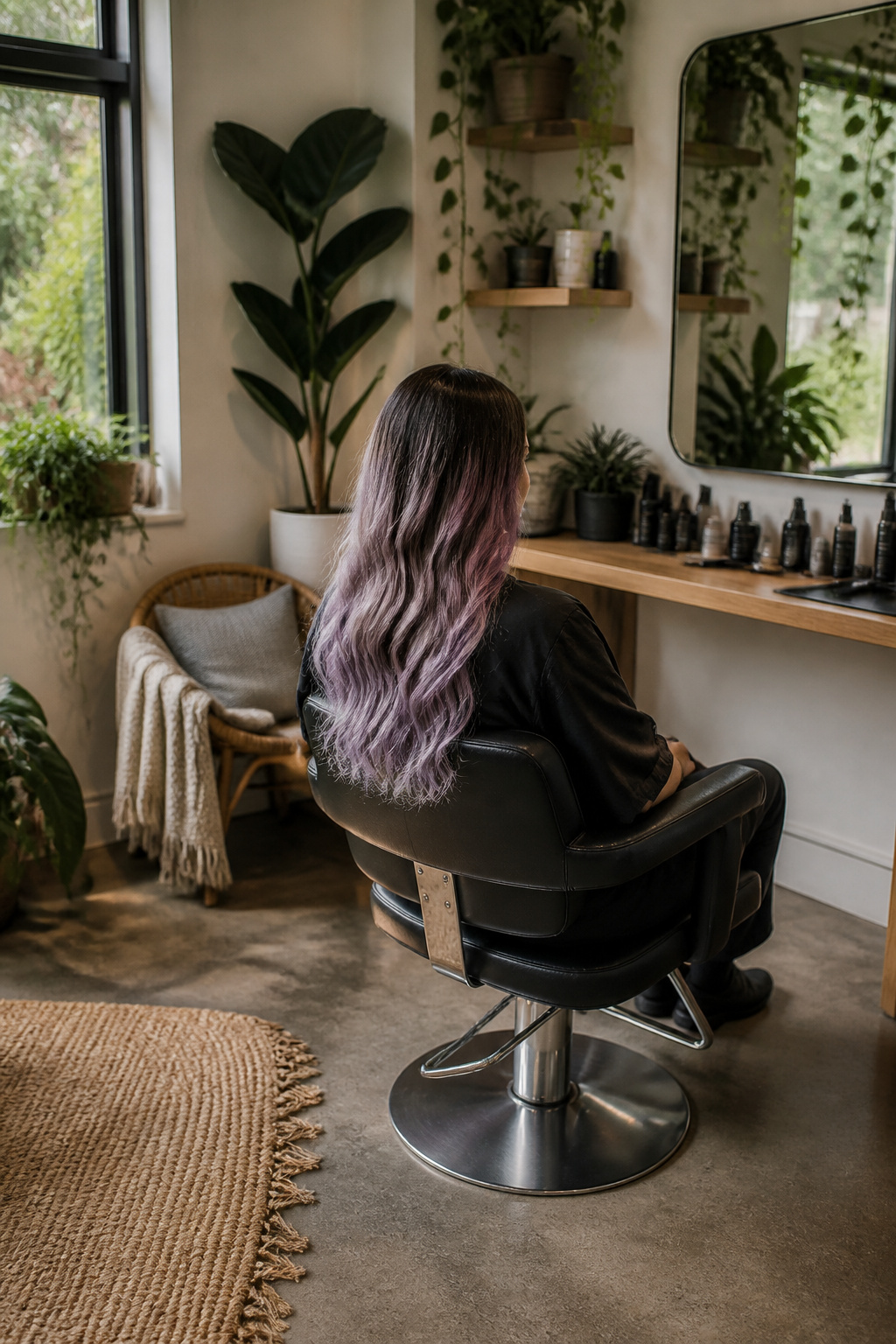
Balayage is the hand-painted technique that makes holographic color feel possible for people who do not want to live at the salon. Instead of foils pressed to the scalp, your colorist paints the dye directly onto the hair in sweeping strokes, leaving your natural roots untouched. The result is a gradual melt from dark base to silver, lavender, or blue ends, with no harsh line where the color begins.
That soft transition is what stretches your maintenance window. A traditional all-over holographic color usually demands attention every 4 to 8 weeks as roots march down the scalp. With balayage, the blended regrowth lets you push closer to 10 weeks between appointments before the grow-out starts to bother you. The tradeoff is that your mid-lengths and ends still need their own care to stay vibrant, but you are not chasing roots every month.
If you are coming from dark hair, this is the most forgiving entry point. The untouched roots keep dimension and depth, while the hand-painted ends carry the prism effect without requiring your entire head to lift to pale blonde in one traumatic session. Most first-timers need 2 to 3 sessions to reach the full holographic shift anyway, so starting with balayage buys you time to adjust to the maintenance while the color builds.

We’ve upgraded our look, without changing our essential formulas, to reflect our long-standing mission to deliver authentic, natural, and professional results through our full portfolio of products for every hair type.

High Lift Performance: Achieve up to 9 levels of lift for stunning, clean blonde results.

Up to 9 Levels of Lift – High-performance lightening powder designed to deliver powerful, consistent lift for bright, clean blonde results on all hair types
Periwinkle
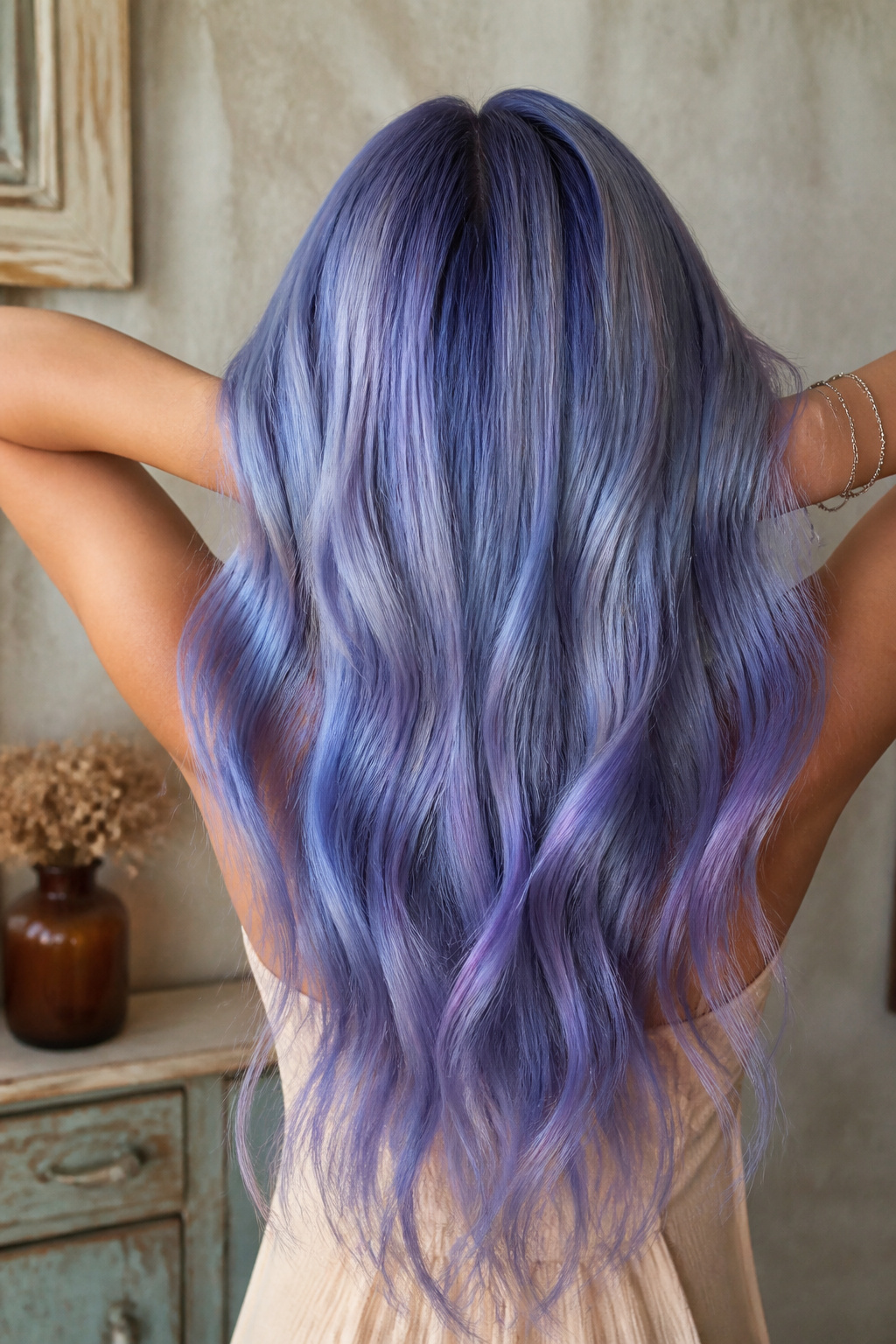
Periwinkle blue-violet is one of the most universally flattering holographic shades, and it pairs especially well with deeper skin tones. The blue-violet shift reads as sophisticated rather than costume-like, which is why it works so differently across skin depths.
On lighter bases, this pastel can wash out or read as purely decorative. Against deep skin, the same hue gains dimension because the natural warmth underneath keeps the blue from turning flat or chalky. The violet notes pick up richer undertones instead of competing with them.
If you are bringing this to your colorist, ask for a periwinkle blue-violet toner over bleached hair with the blue shifting into violet in sunlight. The key adjustment is saturation: deeper skin can handle a slightly more saturated mix than the palest versions you will see online, but it still needs to stay in the pastel family to keep that holographic effect. Too much pigment and you lose the shift; too little and it goes muddy against your skin.

No-Rinse Formula – Cleans and refreshes hair without requiring water or rinsing

Top Quality Material: Our Afro Kinky Bulk Human Hair is 100% Human Hair, giving you a natural look and feel that is soft and skin-friendly. It behaves just like your own hair's texture, and can be bleached and dyed to match any style.

Don't Over Shampoo; ACV Hair Rinse Lite is formulated for fine hair to help remove impurities without stripping the natural oils that are essential to the health of your scalp & hair. Perfect for reducing shampoo use, it leaves hair clean & soft.
Vibrant Roots
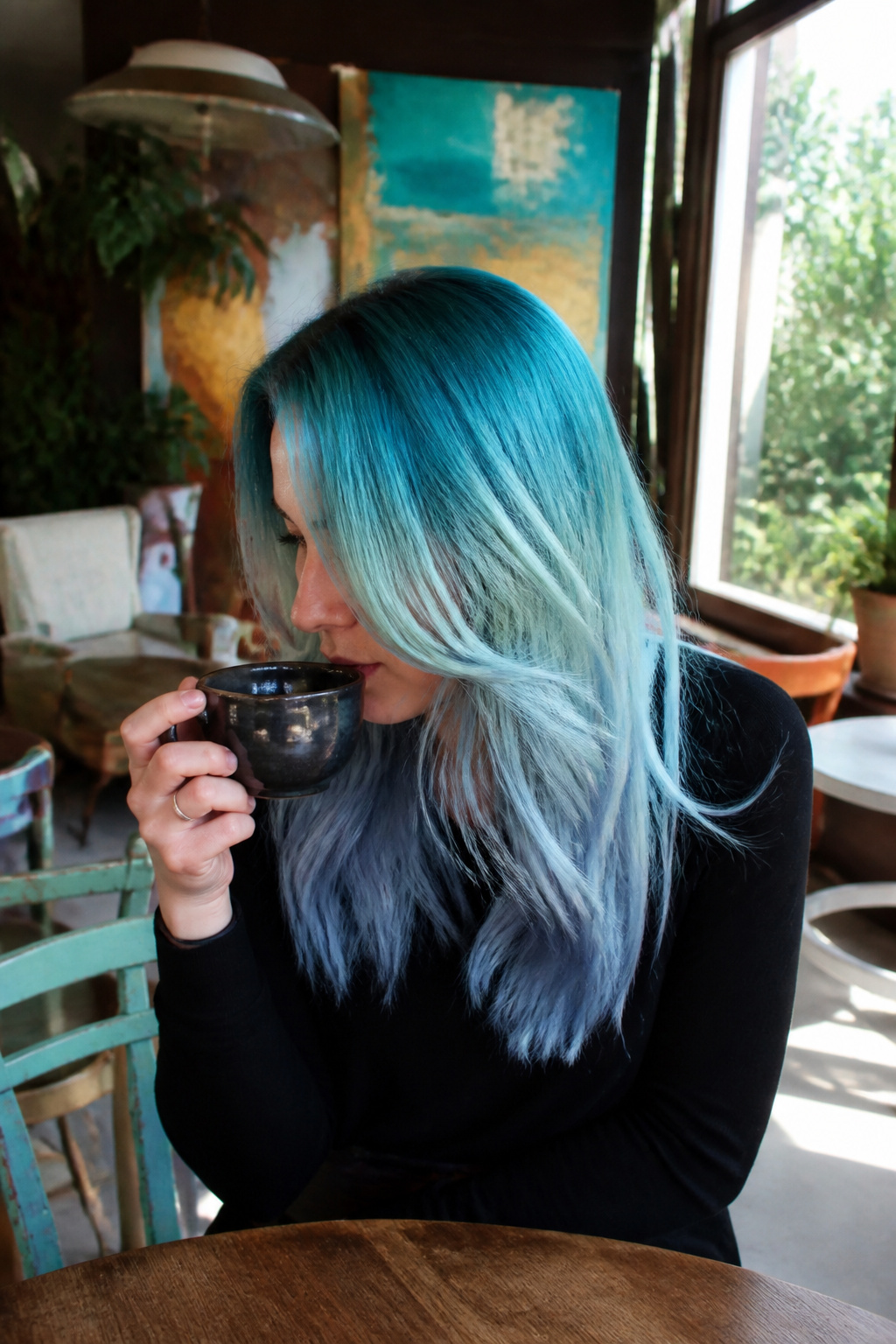
Dark roots usually fade down into lighter ends, but flipping that logic is what makes this one of the best holographic hair ideas for anyone who wants something less predictable. A saturated root color, something like a deep violet or teal, can melt into silver-lavender or pale blue lengths without the harsh line you’d expect. The trick is letting the mid-lengths act as a bridge. A cool-toned root fades more gracefully into holographic pastels than warm ones do; the transition reads as intentional rather than grown-out. I have seen colorists spend the most time on that middle zone, hand-painting the overlap so the root color doesn’t muddy the lighter shade underneath. If your natural base is dark, the deeper root actually buys you time between appointments. The fantasy color sits where it shows off, and the regrowth blends instead of screaming for a touch-up. Cold water rinses keep the shift clean longer, since hot water lifts the cuticle and dumps pigment fast. Two to three sessions is typical if you’re starting from dark hair, so book a consultation first and let your colorist map the fade before any bleach hits your head.

VIBRANT SOFT LAVENDER HAIR DYE: Achieve a bold, rich, and natural finish with our high-pigment Pink hair dye. Designed for exceptional coverage, this formula lasts up to 4 weeks or approximately 20 washes, keeping your hair looking freshly dyed and salon-radiant.

Product Type:Beauty

Triple-Action Formula: This color depositing conditioner acts as a cleanser, color booster, and moisturizer in one. It refreshes, hydrates, and tones color-treated hair while improving softness and shine with every wash.
Holographic Bob
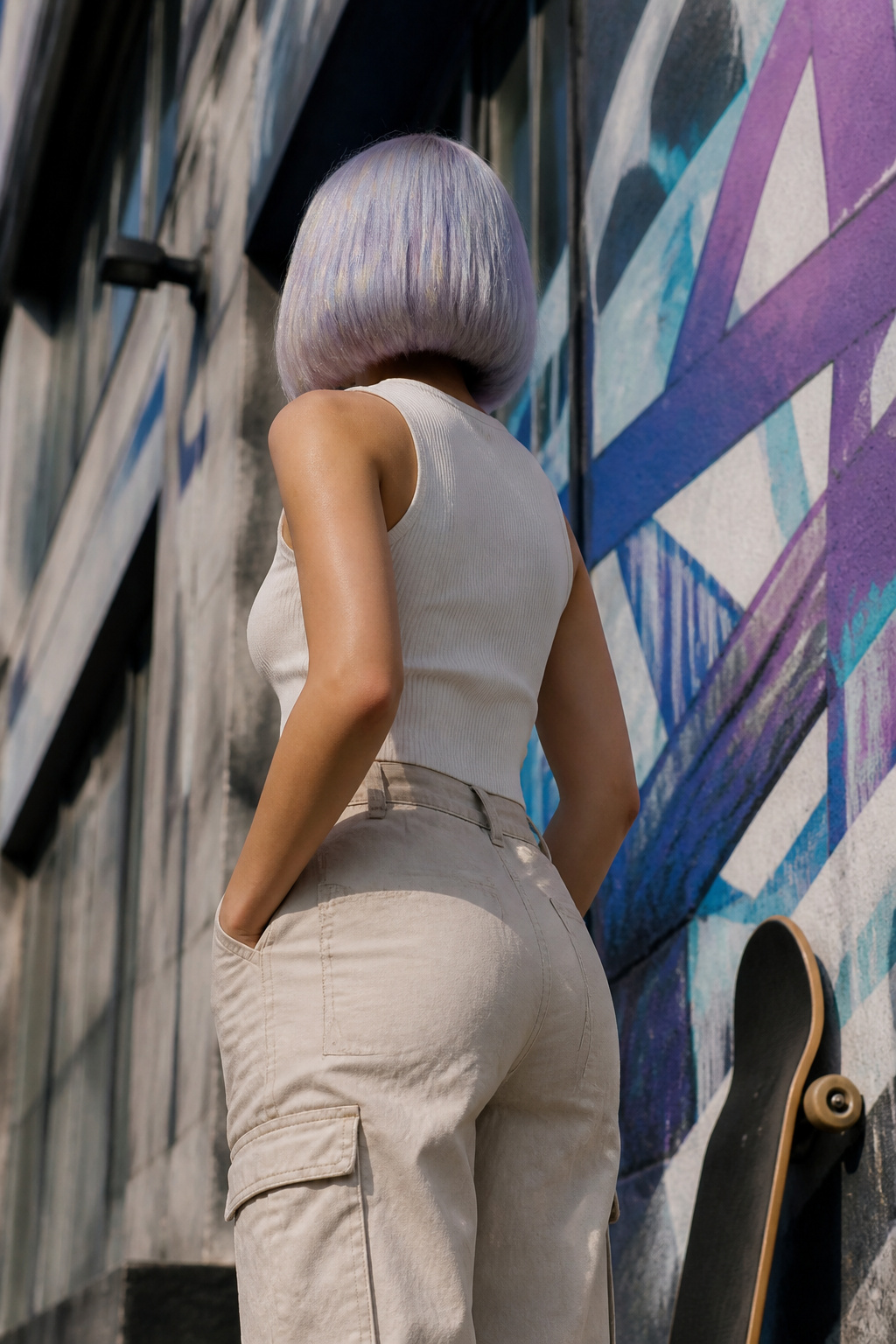
A chin-length bob is where holographic color gets loud. Shorter hair means less surface to work with, so every shift between silver and lavender, or pink and violet, sits in full view instead of hiding down a long ponytail. There is nowhere for a muddy blend to hide, which is why the cut itself has to be clean.
Precision matters here. A blunt line gives the color a frame; any unevenness turns into a distraction once the iridescence catches light. The colorist has to place those multi-dimensional hues knowing exactly where the hair falls at chin length, because a bob does not move the way longer layers do. There is no cascading fade to soften a rough transition.
Most of these shades need lifting to at least a level 9 before the shift shows properly. Skip that step and the result goes flat, nothing like the holographic hair ideas saved for inspiration. On a bob, that failure sits right at jaw level, impossible to miss.
Dimensional Rainbow
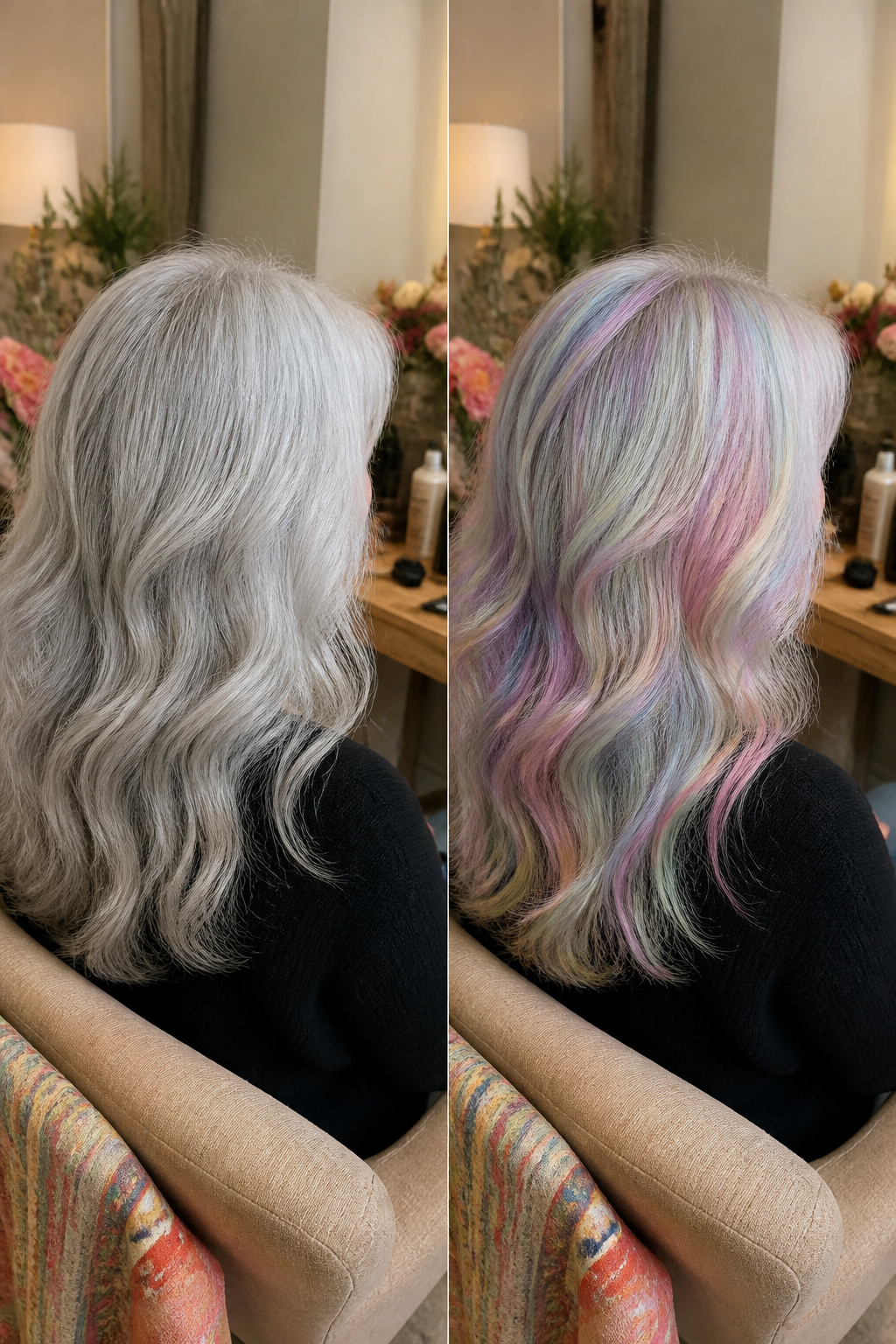
Natural gray hair gives you a ready-made platinum base that most people have to bleach for hours to reach. The shift in who’s asking for holographic color has been striking: women who spent decades covering their silver are now the ones driving demand for iridescent tones. A pearl or chrome gloss treatment on natural gray creates that dimensional, color-shifting effect without any lifting at all. The gray catches metallic toner the way a blank canvas catches light, and the result reads as luminous rather than loud. I’ve noticed colorists now frame this specifically as age-appropriate fantasy color, which is a real change from even five years ago when bold dye on older women carried a different kind of social weight. Ask your colorist for a gloss that keeps your base intact while adding that iridescent shift. The maintenance is gentler than bleached alternatives, and the grow-out is essentially invisible.
Holographic Ombre
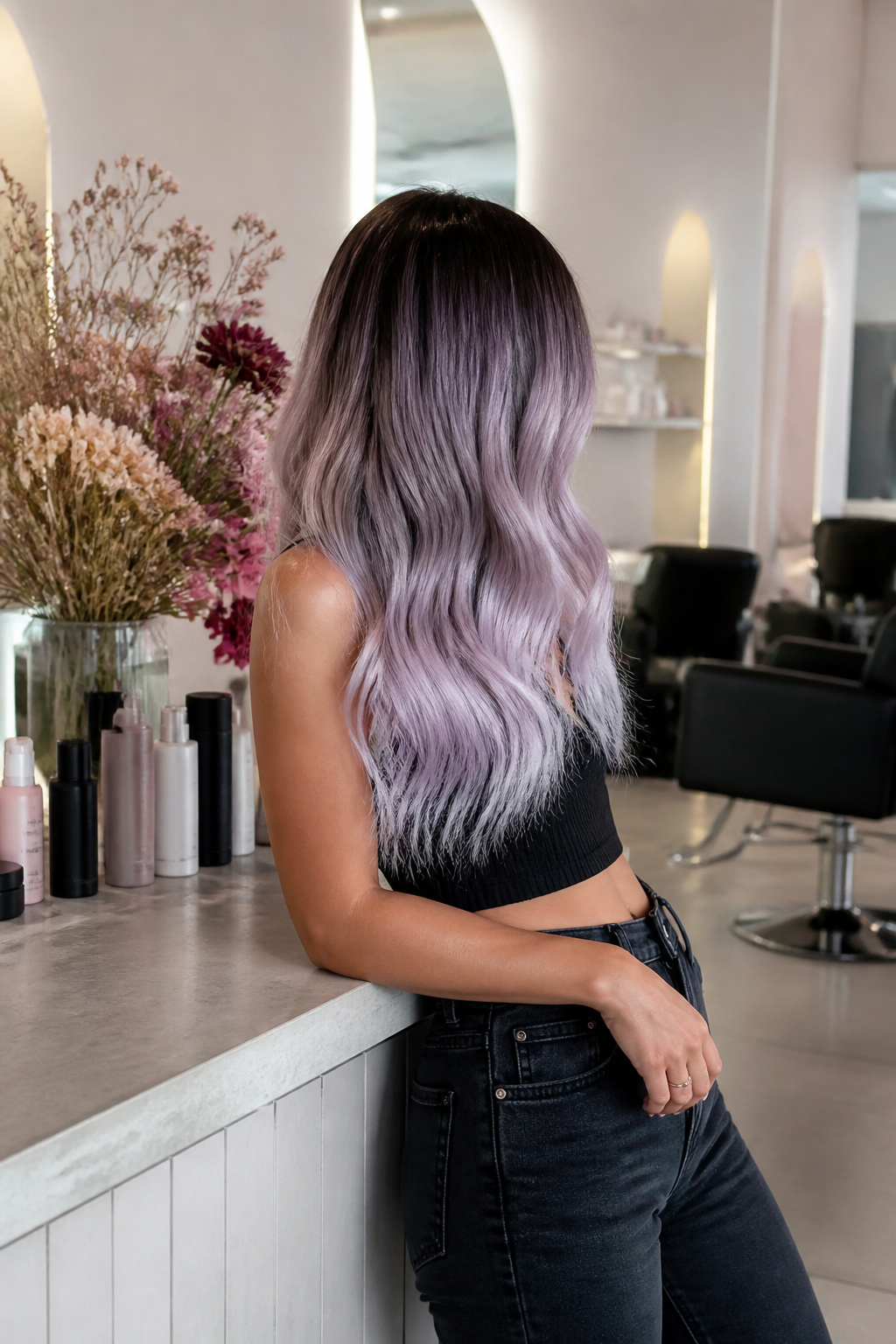
Dark roots give holographic ombre its staying power, but the shift point matters more than most people expect. The color break should sit about two inches below the jawline on most face shapes; any higher and you risk a stripe effect that drags the eye down rather than framing it. Your colorist can soften the transition by hand-painting the mid-lengths so the root color melts through silver, lavender, or blue instead of stopping at a hard line.
I like this style for anyone nervous about fantasy color because the darker base keeps it grounded. The roots grow out naturally, so you are not back in the chair every four weeks touching up a scalp line. That said, going from natural dark hair to these pastel ends is not a single-afternoon project; most first-timers need two to three sessions to lift safely without wrecking the strand. Book the consultation first and let your colorist map the timeline. Cold water rinses will stretch the life of the color once you are there, since hot water opens the cuticle and washes the pigment straight down the drain.
Holographic Babylights
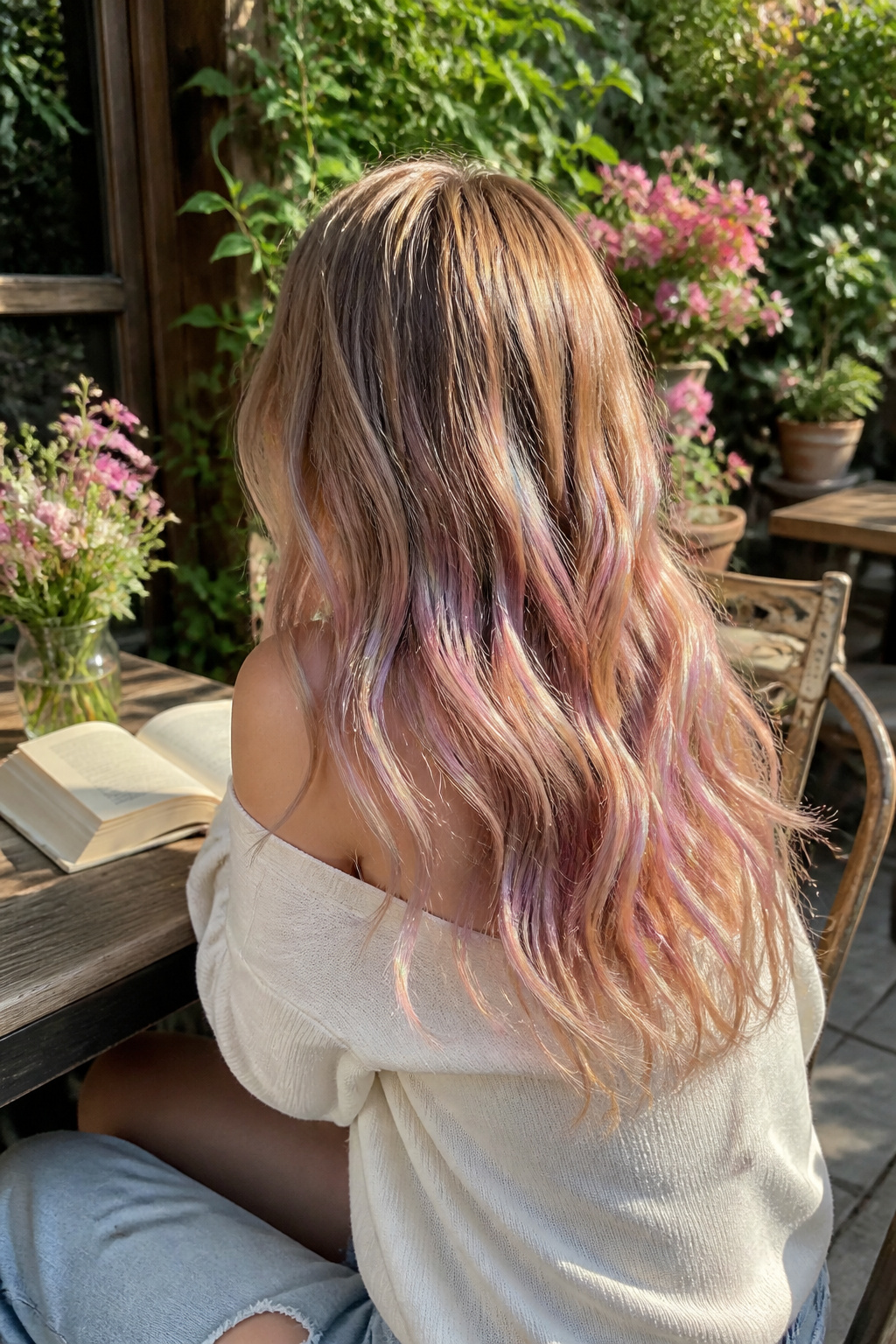
Holographic babylights take the trend and dial it way down. Instead of full streaks, your colorist paints whisper-thin ribbons of violet, lavender, and soft blue through a neutral base, just enough to catch light the way childhood summer hair used to after weeks outside. The effect reads as movement and shine rather than a declared color choice, which makes it the safest entry point if you work somewhere that notices hair but does not celebrate it.
Maintenance stays lighter too. Because the pastels are woven in so finely, they fade into the surrounding tone rather than growing out in obvious bands. Olaplex during the initial lift protects the strand integrity, so the hair keeps the glassy finish that sells the whole look. For a first try at holographic color, this is the version that lets you test whether you want more without committing to the full statement.
Electric Blue
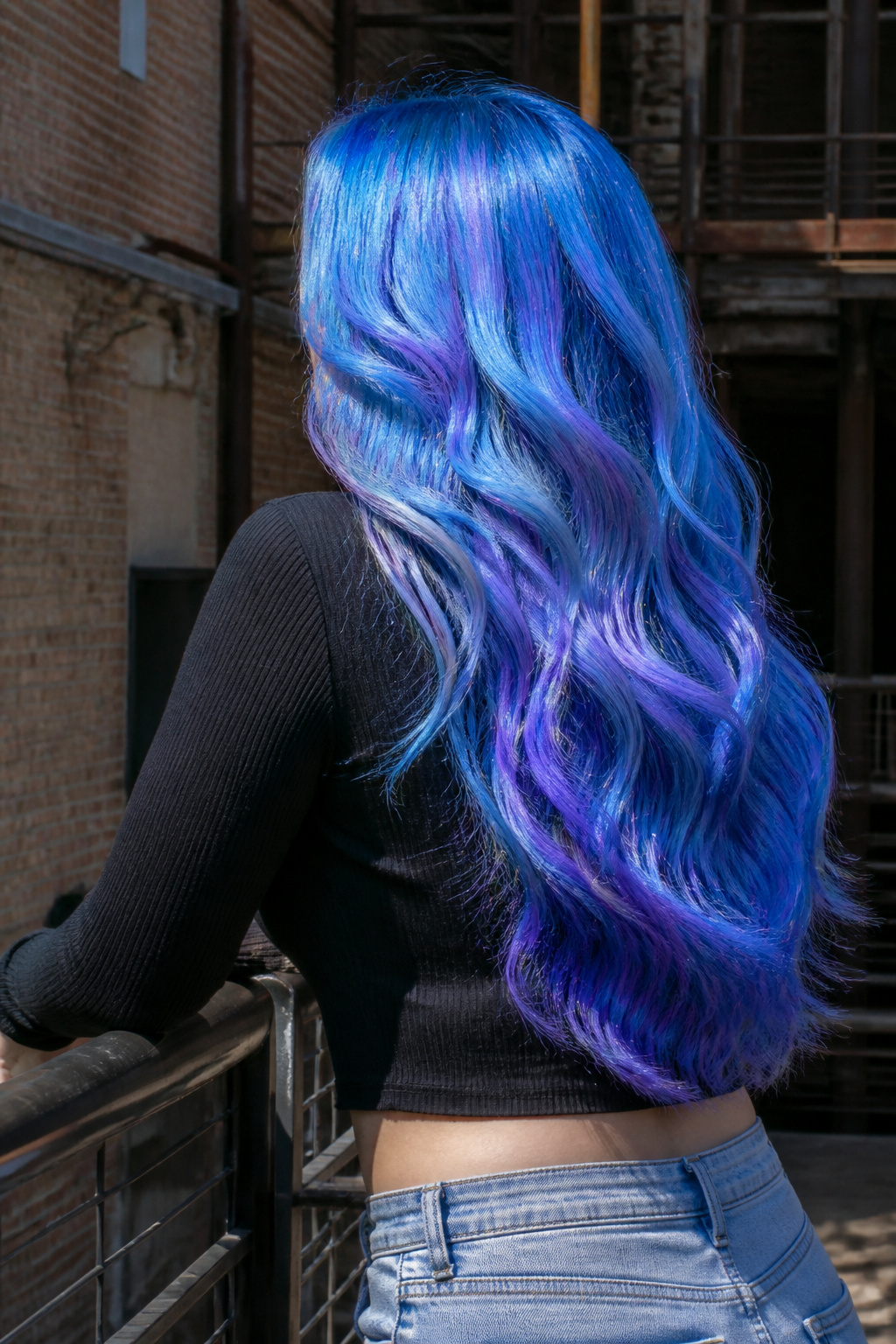
Electric blue reads as holographic because of the violet shift that lives inside the same dye, not layered on top of it. Light catches the blue at one angle and the violet at another, so the color moves without your colorist ever switching bowls. That single-process approach is what keeps this bold without turning it into a maintenance marathon.
The shift works best on pre-lightened hair, and it flatters medium to deep skin tones especially well. Ask your colorist for electric blue with violet and silver shifts, vivid holographic rather than pastel. The silver keeps it from tipping into costume territory, and the violet gives it the dimension that plain neon blue never manages. Full bleach is non-negotiable here; anything less and the violet reflection turns muddy instead of dimensional.
Holographic Gloss
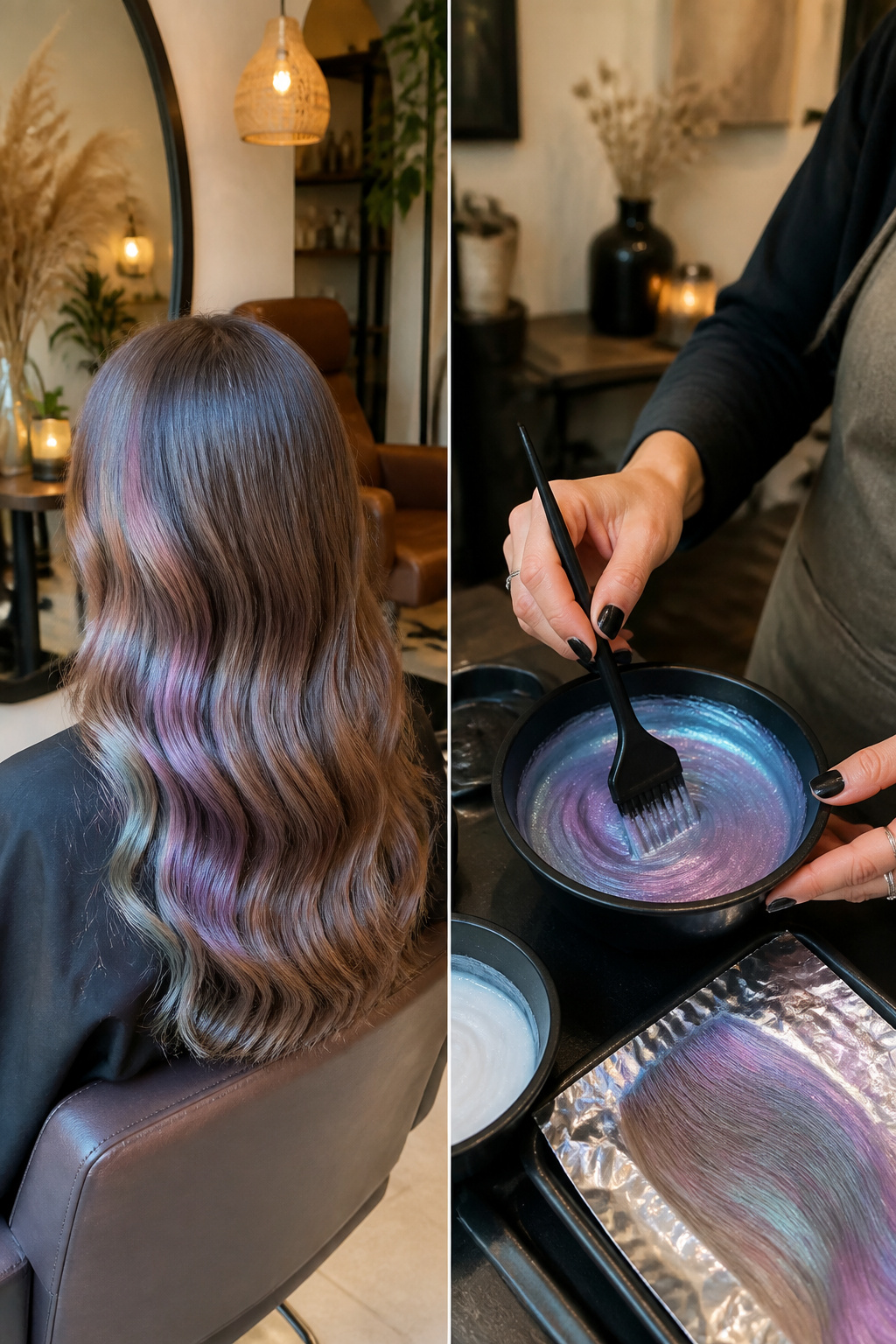
A holographic gloss is the safest way to test the trend without touching bleach. Your colorist applies a clear or tinted iridescent treatment over your natural base, so the light catches multi-colored shine while your actual shade stays put. It works best on natural gray or very light blonde hair, where the reflective finish has enough brightness to bounce against. On darker bases, the effect goes muddy fast, and I would not bother spending the money.
The downside is built right in. Because the gloss sits on the surface rather than lifting and depositing inside the strand, it fades in 6 to 10 washes. For me, that is the selling point, not a flaw. You get two weeks of playing with the trend, and if you hate it, shampoo fixes the mistake for free.
Bleaching to Level 9
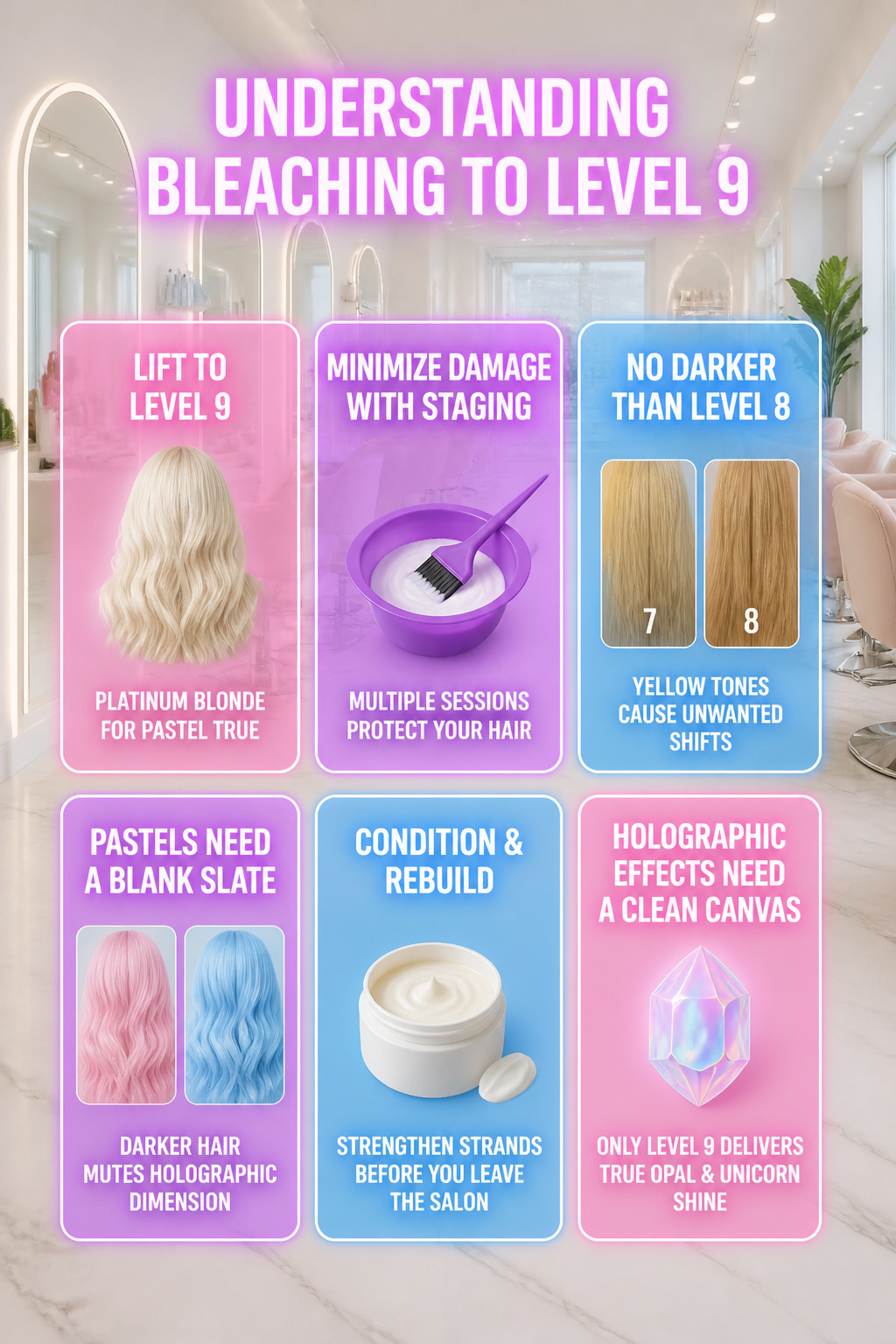
Holographic hair starts with a blank slate, and that means lifting your natural color to level 9 or platinum blonde before any pastel dye touches your strands. The pastels and iridescent tones that create that shifting, light-catching effect simply do not read true on anything darker. Stop at level 7 or 8 and you will see the problem immediately: yellow undertones left in the hair turn baby pink into peach, and light blue into green. The holographic dimension disappears into muddy, unintended hues.
Bleach always causes some damage, no way around it. A skilled colorist minimizes this by working in careful stages, sometimes spacing lightening sessions across multiple appointments rather than forcing the lift in one marathon day. They will also rebuild the look and feel of your strands with conditioning treatments before you leave the salon. The canvas has to be almost void of color for those opal and unicorn-inspired effects to show up at their brightest.
Color Placement Techniques
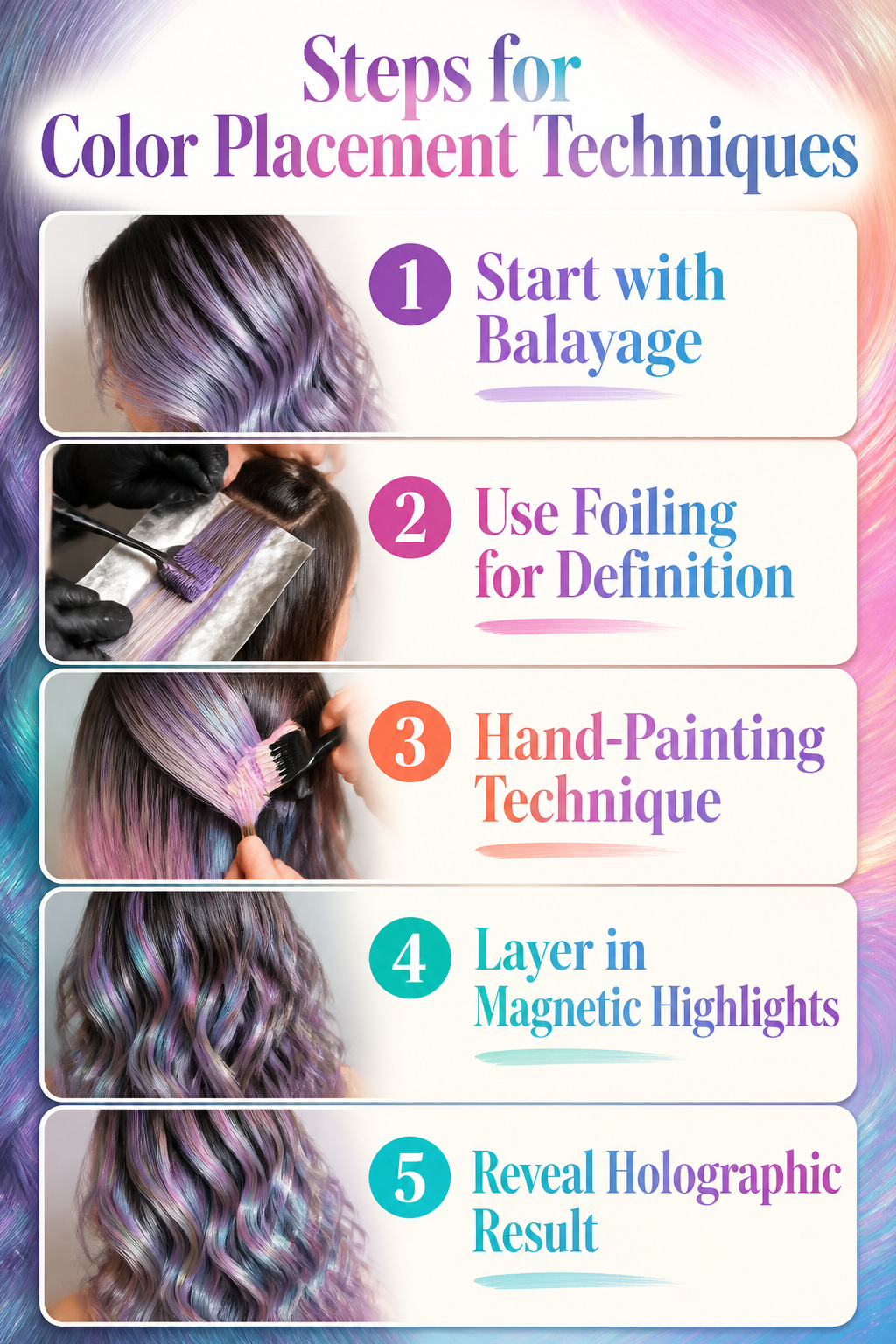
Balayage gives holographic color its most natural shift, since the hand-painted sections melt from dark roots into silver-lavender or blue ends with no harsh lines. That gradual transition means the iridescent tones catch light differently along each strand, so the hair appears to actually gleam and change color as you move.
Foiling, on the other hand, isolates each ribbon of color and processes it separately. The result is sharper definition between your base and your holographic highlights, which some colorists layer almost magnetically to build that dimensional, prismatic effect. The tighter the sectioning, the more points of light the color has to bounce from.
Hand-painting without foils sits somewhere between the two. It leaves the color more diffused, which can look softer but also fades faster because the dye sits more on the surface. For a first holographic application, especially on darker hair, balayage tends to win: the grow-out is forgiving, and the 2 to 3 session timeline most colorists need feels less drastic when the placement itself is already blended.
Products That Hold the Color
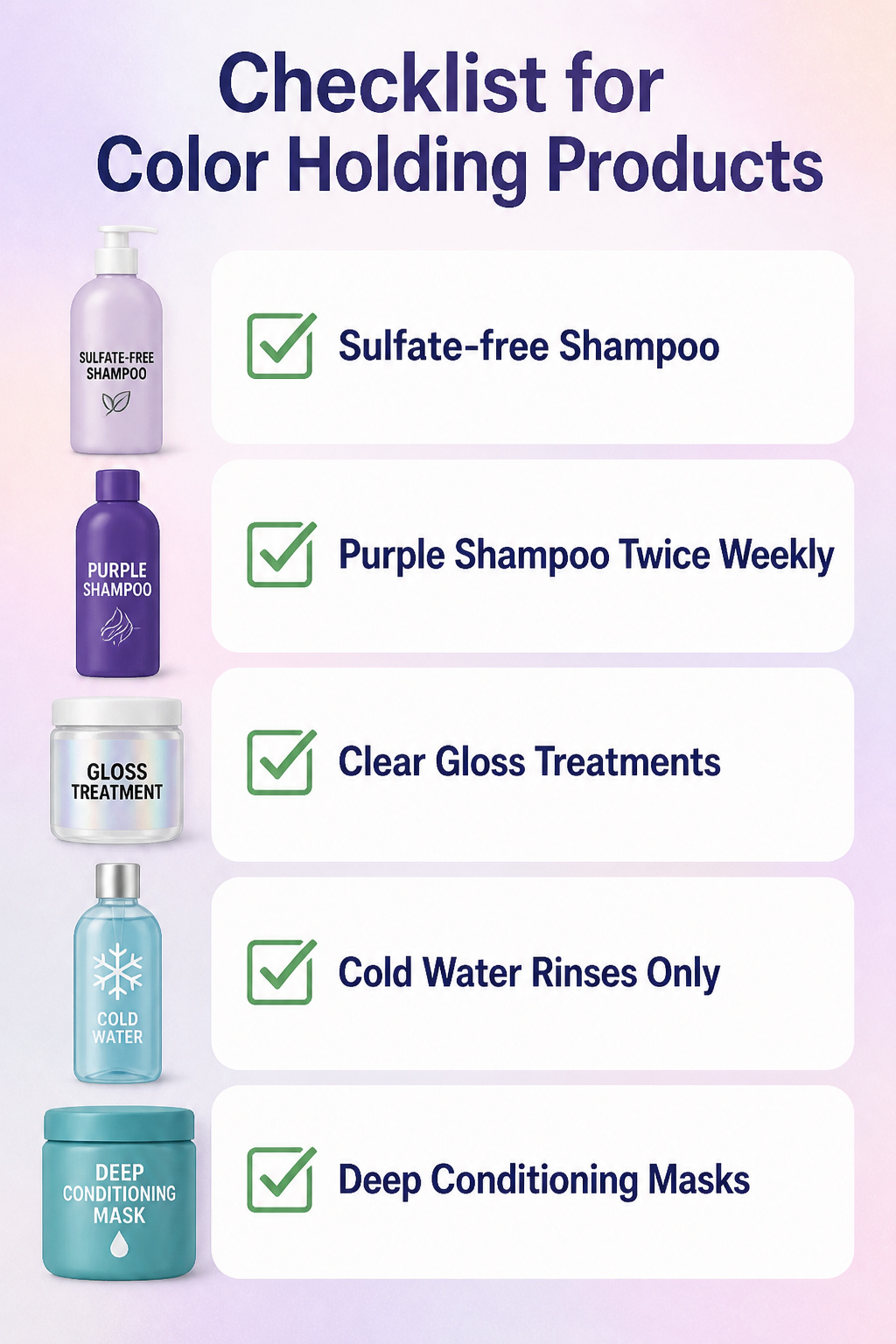
Sulfate-free shampoo isn’t a preference for holographic color; it’s the single biggest factor in how long the shift stays vivid. Regular formulas strip the pigment within weeks.
Here’s what actually belongs in your shower and routine:
- Sulfate-free, color-safe shampoo – the non-negotiable base. Anything with sulfates or sodium will pull the color fast.
- Purple shampoo twice a week – cool-toned holographic shades like silver, lavender, and periwinkle turn brassy without it. This keeps the iridescence clean between appointments.
- Clear or tinted gloss treatments every 4–6 weeks – these refresh the dimensional shift even as the underlying color fades. Without gloss, the look goes flat.
- Cold water rinses only – hot water opens the cuticle and accelerates fade. Cool water extends vibrancy by weeks.
- Deep conditioning masks and bond builders like Olaplex or K18 – bleached hair needs protein support before and after lifting. A keratin or protein treatment one week prior to your appointment makes a visible difference in how the color takes.
- Professional color lines built for longevity – Pravana shades like Violet, Luscious Lavender, and Blissful Blue are formulated specifically for these high-maintenance tones.
Chlorine, salt water, and hot showers are the fastest ways to dull the finish. Skip them, and the color holds.
Maintenance Schedule and Cost
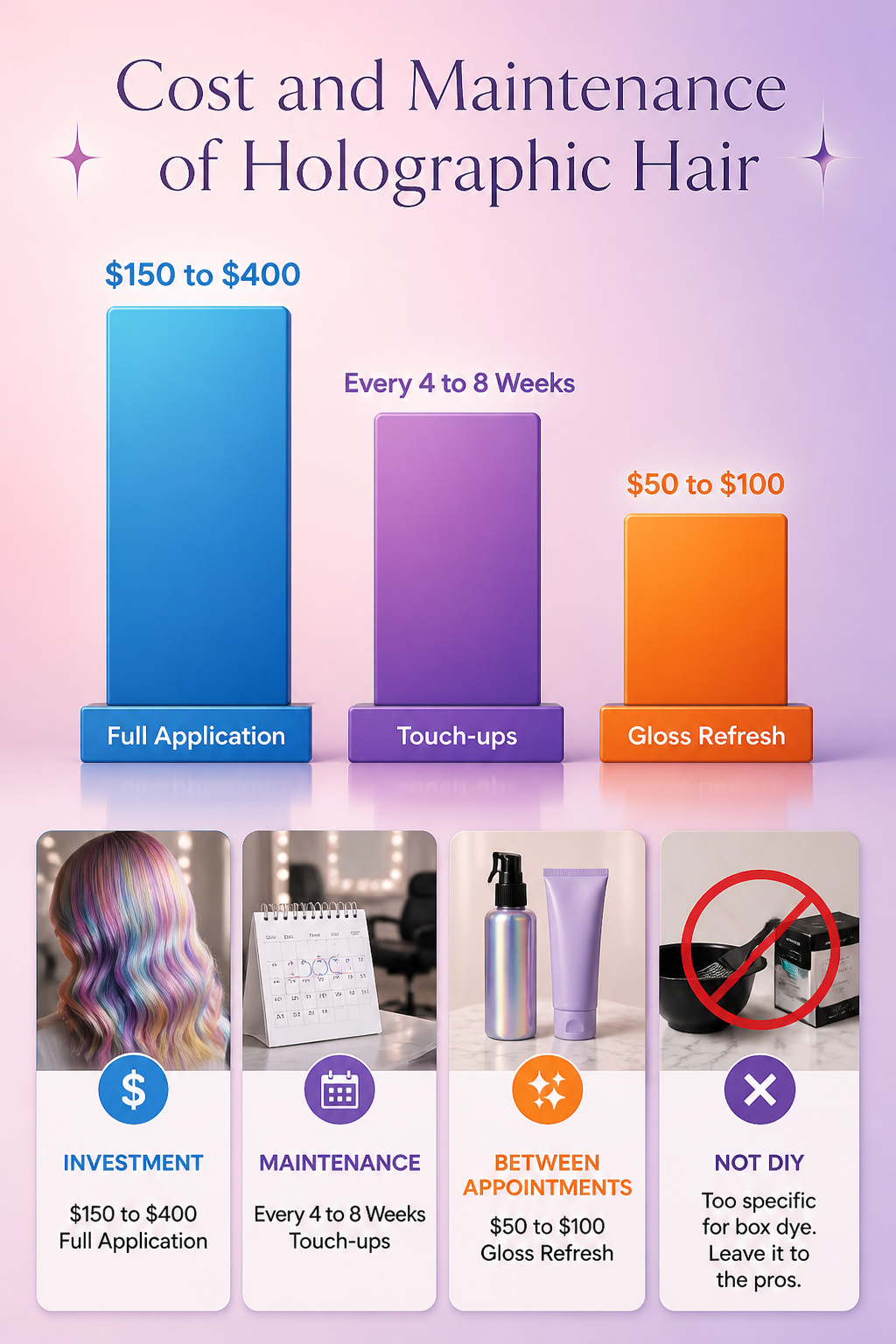
A full holographic application runs $150 to $400, with the spread coming down to your city and how experienced your colorist is. The more intricate rainbow or unicorn placements that need multiple sessions sit at the top of that range or push past it.
Touch-ups land every four to eight weeks. What shortens the cycle is pastel-heavy color, since those tones fade fastest. What stretches it is a balayage placement that keeps roots from screaming for attention the way an all-over color would.
Between those full appointments, a gloss or toner refresh keeps the shift from turning muddy. Budget another $50 to $100 for that, and treat it as non-negotiable if you want the prismatic effect to read in daylight rather than just under salon lamps. At home, gloss serums and sprays buy you a little extra radiance, but they do not replace the professional refresh. The placement and the spectrum of tones are too specific to replicate with a box dye, so I would not try.
Temporary Alternatives
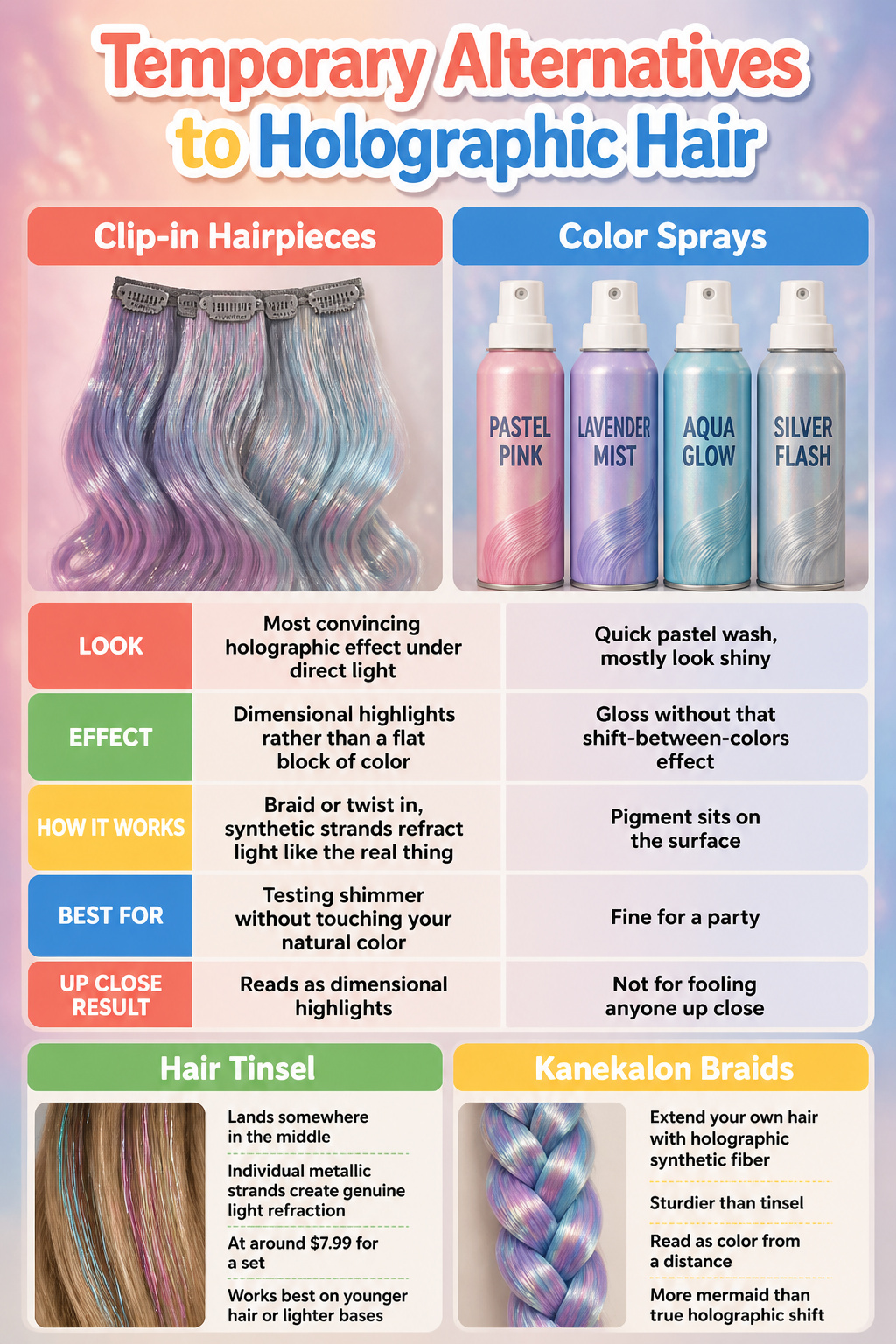
Not every holographic look requires bleach and a six-month commitment. A few temporary options let you test the shimmer without touching your natural color.
- Clip-in hairpieces give the most convincing holographic effect under direct light, especially when you braid or twist them into your own hair so the synthetic strands catch and refract light like the real thing. They read as dimensional highlights rather than a flat block of color.
- Color sprays add a quick pastel wash, but they mostly look shiny rather than truly holographic. The pigment sits on the surface, so you get gloss without that shift-between-colors effect that makes holographic hair distinctive. Fine for a party, not for fooling anyone up close.
- Hair tinsel lands somewhere in the middle. Individual metallic strands tied into your hair create genuine light refraction, and at around $7.99 for a set, it is cheap enough to treat as a weekend experiment. It works best on younger hair or lighter bases where the strands can actually glint.
- Kanekalon braids extend your own hair with holographic synthetic fiber. They are sturdier than tinsel and read as color from a distance, though the effect is more mermaid than true holographic shift.
Frequently Asked Questions
What is holographic hair?
Holographic hair is a multi-dimensional color that shifts and reflects light as your strands move, built from metallic or pastel highlights placed so the tone appears to change under different lighting. Colorists bleach the hair to a near-white base first, then layer translucent dyes that catch the light the way a highlighter does on skin. The effect reads as iridescent rather than striped, with the color seeming to float and gleam rather than sit flat on the strand.
How long does holographic hair last?
Most holographic colors fade gradually over 6 to 10 weeks, with vivid pastel looks needing refreshment closer to 6 to 8 weeks. Metallic toner-based styles on natural gray can stretch to about 12 weeks. Your wash frequency and whether you use sulfate-free products and cold water rinses move that number up or down by a noticeable margin.
Can I try holographic hair without bleaching?
Yes, but only for certain starting points. Holographic gloss treatments and metallic toners work on natural gray or very light blonde hair without lifting. Most vivid holographic looks, including rainbow pastels, mermaid tones, and periwinkle, still require lightening to at least a level 9 blonde first; anything darker and the pastel shifts turn muddy or invisible.
How do I maintain my holographic hair?
Wash with sulfate-free shampoo only, rinse with cold water to keep the cuticle closed, and use purple shampoo twice weekly on cool-toned shades to prevent brassiness. Schedule a clear or tinted gloss every 4 to 6 weeks to refresh the dimensional shift, and work deep conditioning masks or bond builders like Olaplex into your routine to protect bleached strands. Hot water and regular shampoo strip pigment fast enough to shorten your color life by weeks.
Is holographic hair damaging?
The bleaching required for most holographic looks does cause some damage; there is no way around that chemical reality. A skilled colorist minimizes the impact by spacing heavy lifting across multiple sessions rather than forcing it in one day, and by rebuilding the strand with conditioning treatments before you leave the salon. The finished color itself, once applied, does not add further stress.