The styles here range from a bubble braid you can do yourself to a mermaid braid that needs time in the chair.
Your own hair length and how much tension your scalp can handle are what narrow the field; knotless braids distribute weight evenly for long-term wear, while a fishtail braid needs enough length for the crossover to show.
Every photo below comes straight from the stylist or creator who posted it, credited under each image.
1. Knotless Braids
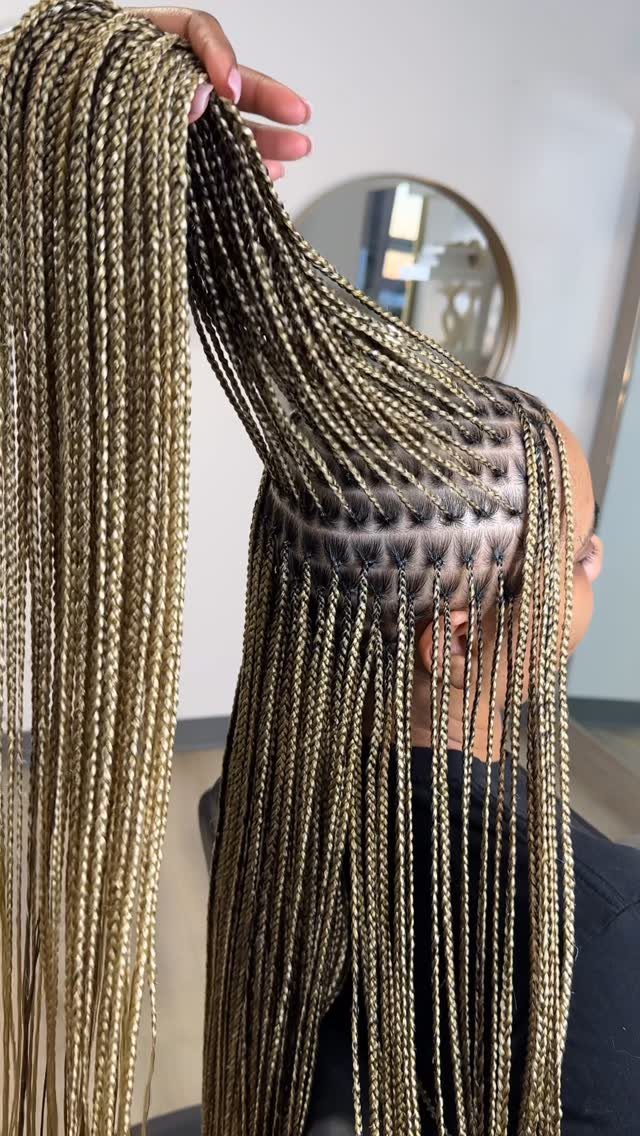
Knotless braids start with your own hair and feed in extensions gradually, so there’s no tight knot pressing against your scalp.
I like this method for anyone who keeps braids in for several weeks; the tension is distributed more evenly, which means less pulling at the roots and fewer headaches during the first few days.
The visible section at the root shows exactly how it works: your natural hair blends straight into the braid without that bump you see with traditional box braids.
Honey-blonde extensions like these need a color match that works with your tone, not against it.
Plan on a long session in the chair if you want real length or thickness; bring a book and snacks. They’ll cost more than basic braids in most cities, but the reduced tension on your scalp is worth budgeting for.
2. Dutch Braid
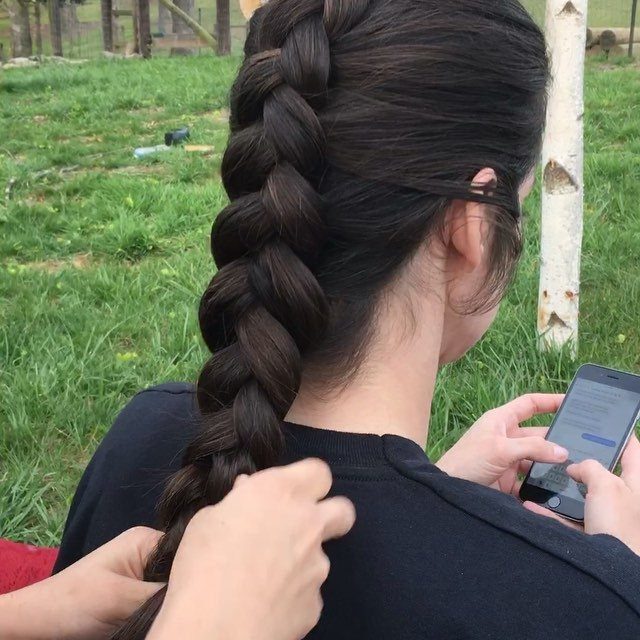
A Dutch braid weaves the outside section under the middle one instead of over, which pushes the whole braid outward so it sits raised from your head.
That 3D effect photographs well and holds up through a full day outside, which matters if you are pulling your hair back for something active.
I find it easier to learn on someone else’s hair first; the hand position feels backward until muscle memory kicks in. Take uniform sections and keep tension steady as you go; that’s what builds this kind of thickness.
Dark hair shows the dimension particularly well, but this braid works on any color. It is sturdy enough to last through sleep if you do not want to restyle every morning.
3. Braided Ponytail
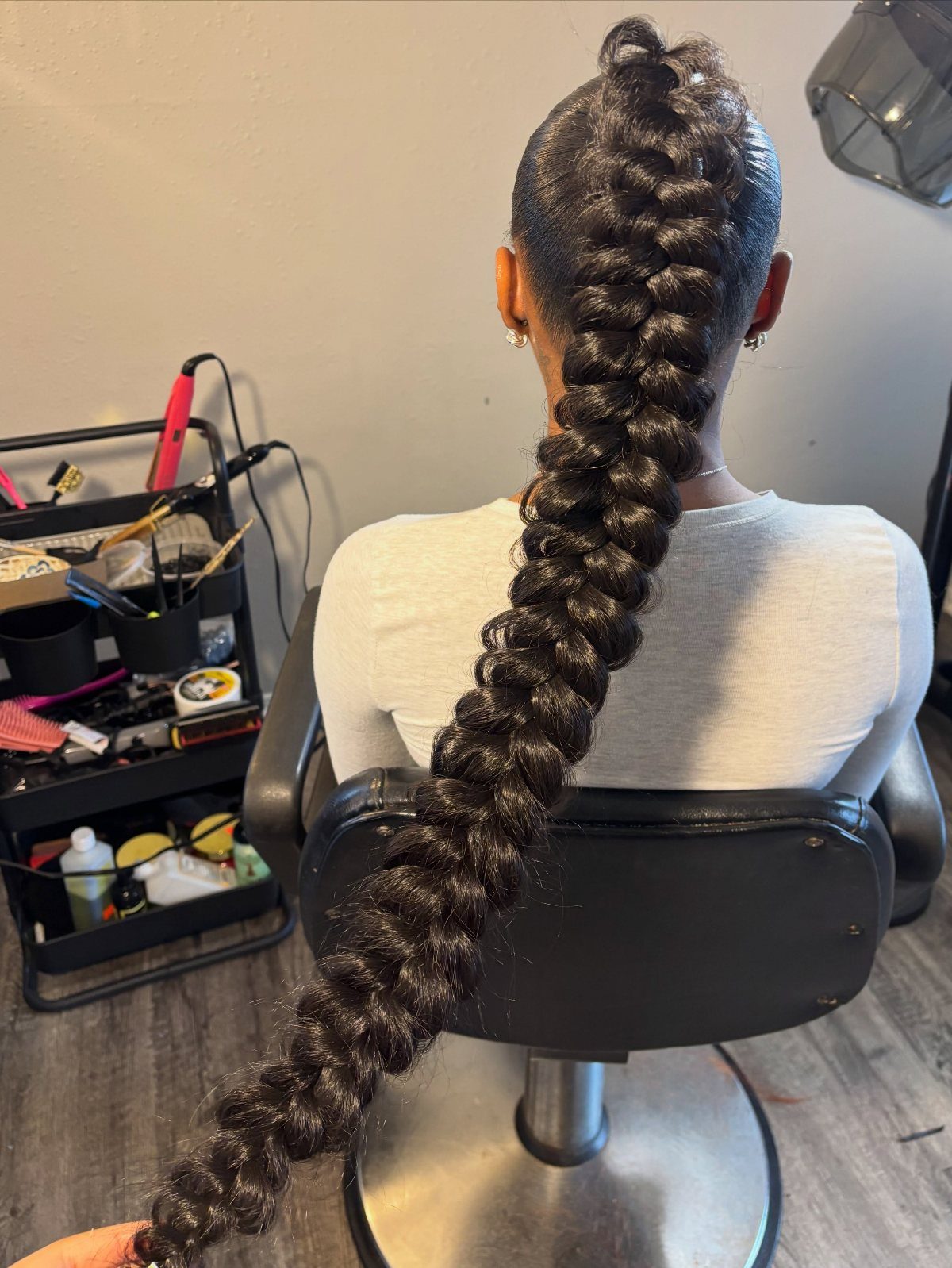
A braided ponytail takes the security of a braid and keeps it simple: one gathering point, one tail, no loose ends to manage.
I reach for this when I need something that stays neat through a commute and still looks intentional for dinner after.
The salon finish visible here comes from smoothing the crown before you braid and using a small section wrapped around the base to hide the elastic.
Length is the variable; the braid itself can stop at shoulder blade or keep going to waist, though longer means heavier.
This version works on hair that is already braided or natural; either way, the ponytail shape draws the eye up, which I find flattering on most necklines.
4. Cornrows
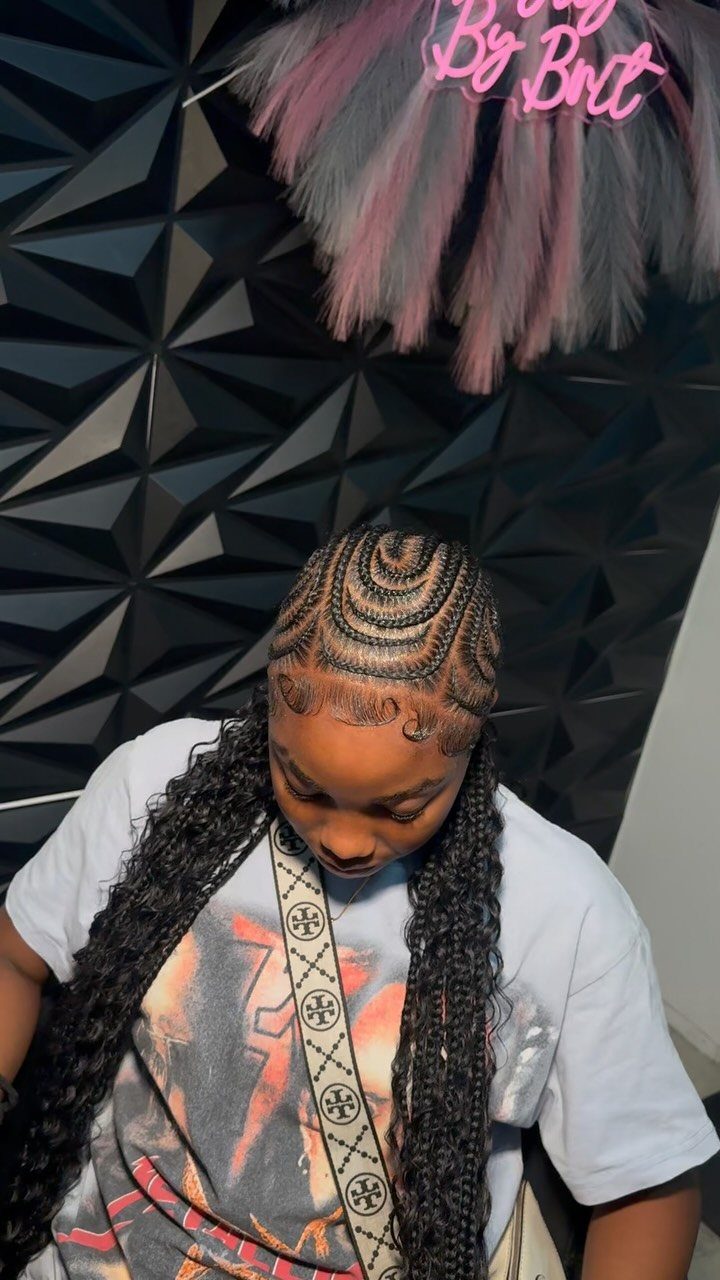
Cornrows follow the scalp in straight paths or curves, lying flat so they work under hats, headwraps, or nothing at all.
The curved sections visible here follow the head’s natural shape rather than forcing a grid, which I think looks more organic and wears better as hair grows out.
These transition into hanging braids at the nape, giving you two textures in one style.
That combination takes longer to install than straight-back rows alone; plan the parting pattern with your braider before they start, since the curves set the whole look.
I would wear this with the graphic tee and minimal jewelry shown; the braids are already doing the visual work.
5. Fishtail Braid
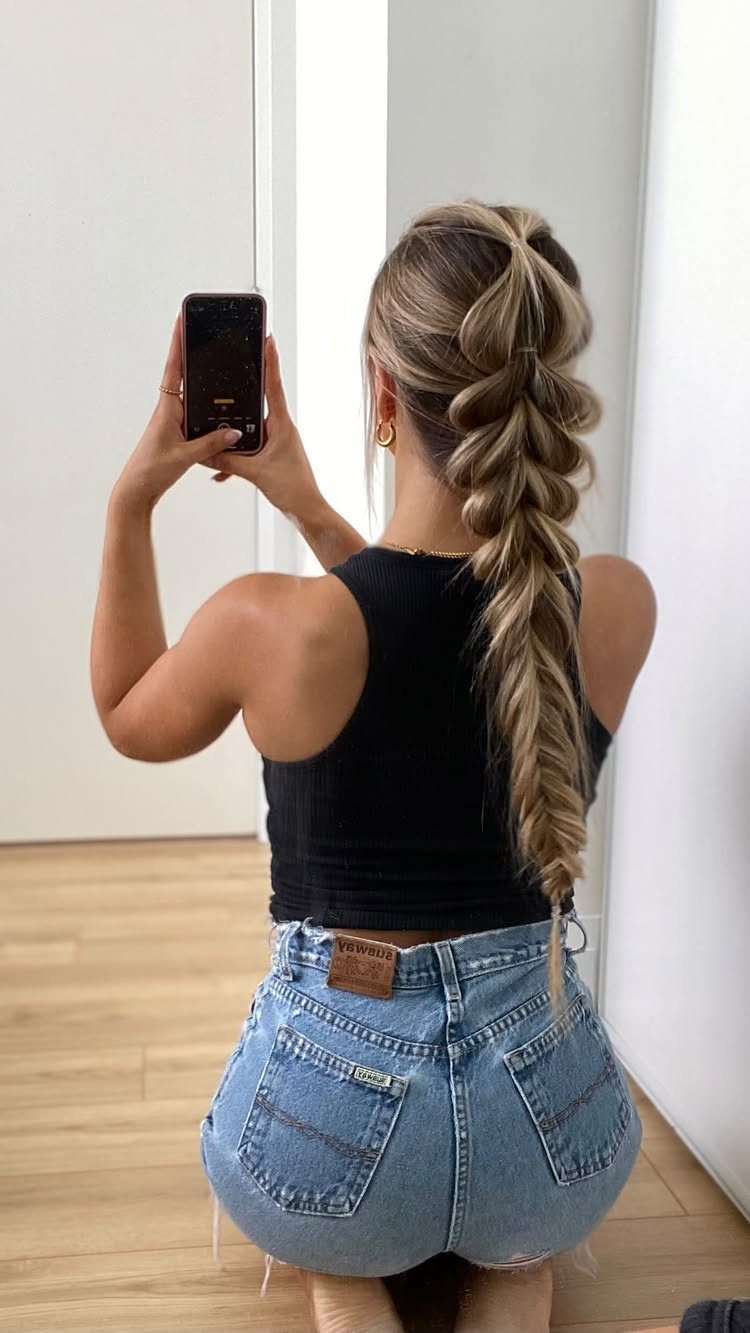
A fishtail braid splits your hair into two sections, not three, and passes a thin strand from the outer edge of one side across to the inside of the other.
The result looks woven and intricate, though the motion itself becomes automatic after a few tries.
I like this braid best on hair with some length; the pattern needs room to repeat before it reads as anything more than a thick rope.
The blonde here shows off the crossover clearly, but the structure matters more than color.
It loosens faster than a three-strand braid, so I secure the end with a small clear elastic and pull the edges slightly for width before I leave the house. Denim and a simple top let the texture hold attention.
6. Box Braids
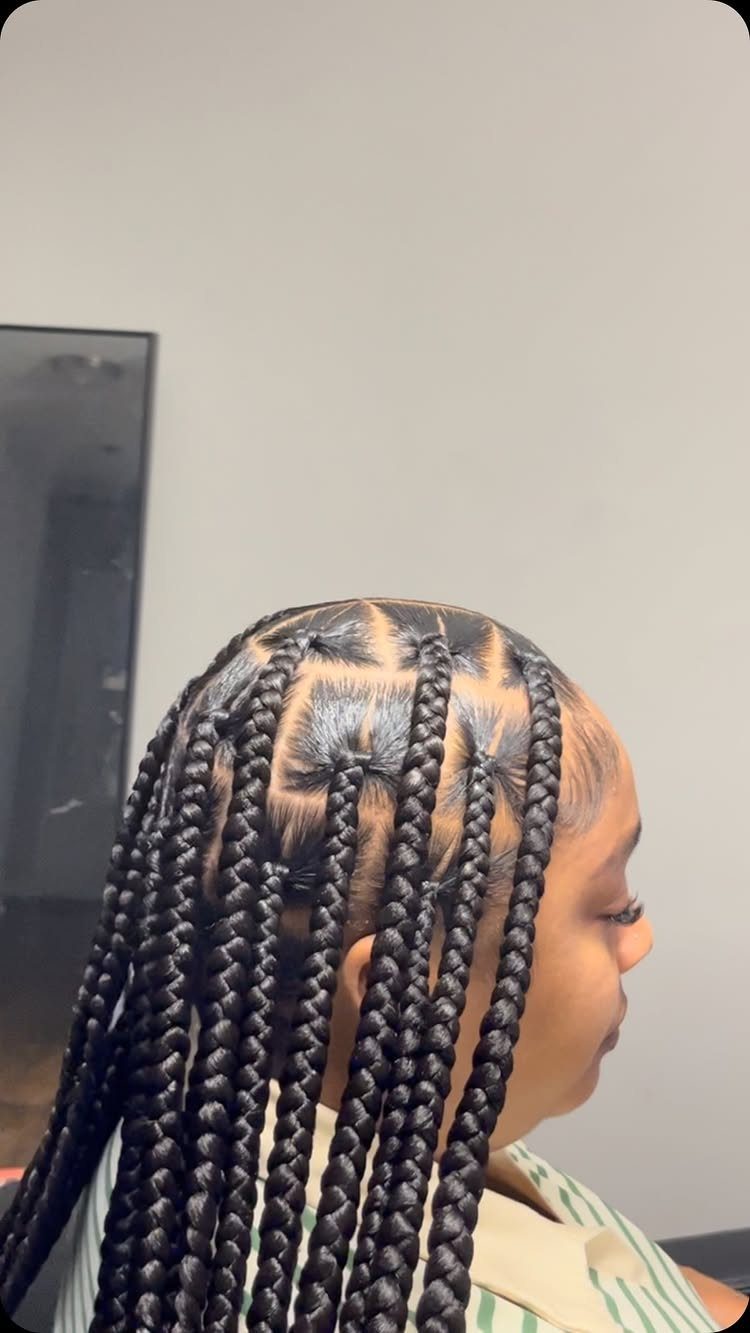
Box braids section the scalp into squares, with each plait hanging individually from its own part. Neat sections make the whole style look intentional even as it ages.
I prefer this density, neither too thin nor jumbo, for everyday wear; it moves well and does not overwhelm smaller frames.
Green and white stripes work against black braids because the contrast is clean, not competing.
These last a solid stretch with proper care; I moisturize the scalp with a light oil every few days and sleep with a satin wrap to reduce frizz at the roots.
7. Goddess Braids
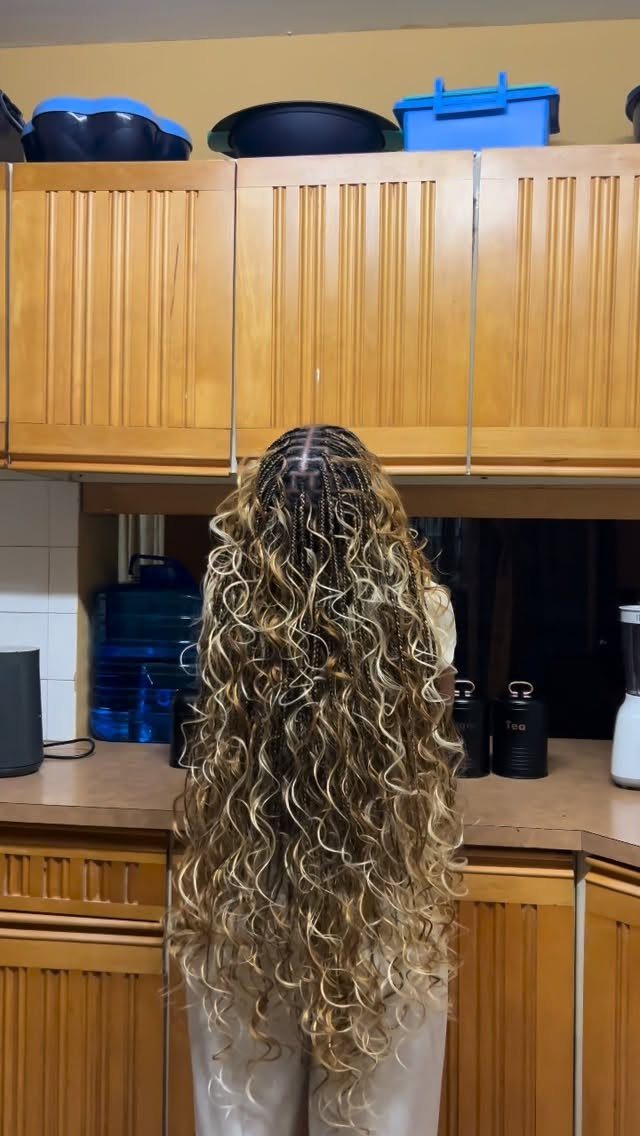
Goddess braids take the cornrow base and leave the ends loose in curls, so you get structure at the root and movement at the bottom.
I like this combination for anyone who wants the low maintenance of braids without giving up softness entirely.
The size matters; these are chunky, which means fewer rows and less time in the chair than micro braids. Blonde and brown mixed like this needs a skilled color hand on the extensions, or the transition looks muddy.
Plan on the same scalp care as any braided style; oil the parts every few days and keep the curls moisturized so they do not tangle into frizz.
8. Boho Braids
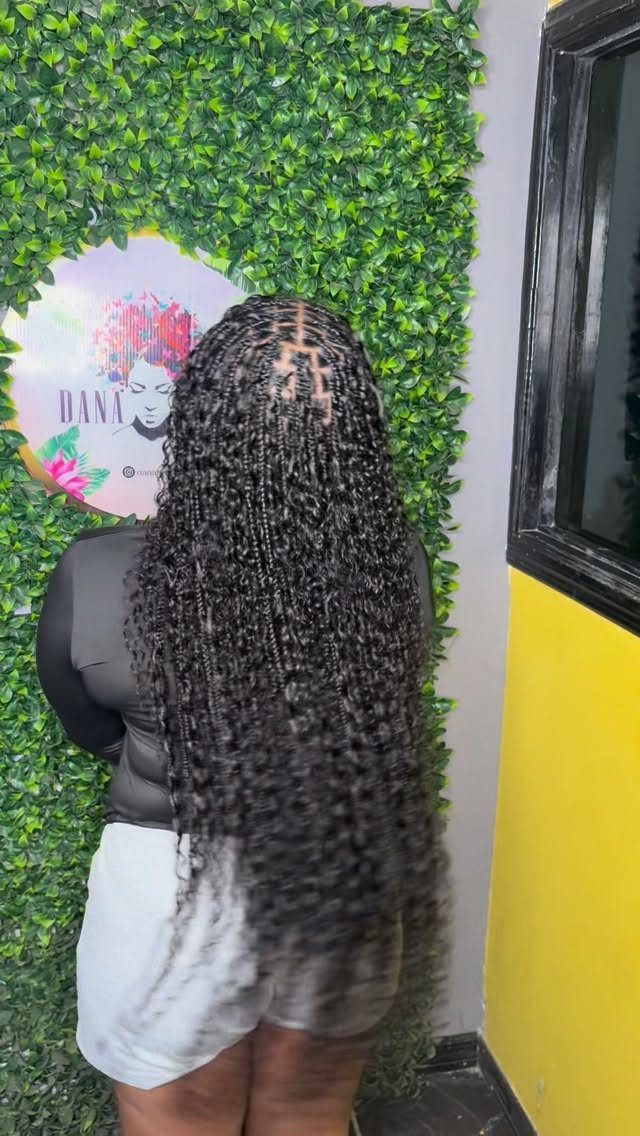
Boho braids leave strands loose throughout the length, not just at the ends, which breaks up the uniformity and gives a softer outline.
This works well on hair that already has some wave; the loose pieces blend instead of sticking out.
I would ask for the wavy pieces to be distributed randomly rather than in a pattern, which keeps the effect casual rather than staged.
The dark color here lets the texture variation read as shadow and light instead of obvious gaps.
These need more detangling attention than fully sealed braids; work a light serum through the loose sections every morning to keep them from matting.
According to Charles, boho and knotless box braids with added pieces of curly hair are some of the most popular hairstyles of the year.
9. Waterfall Braid
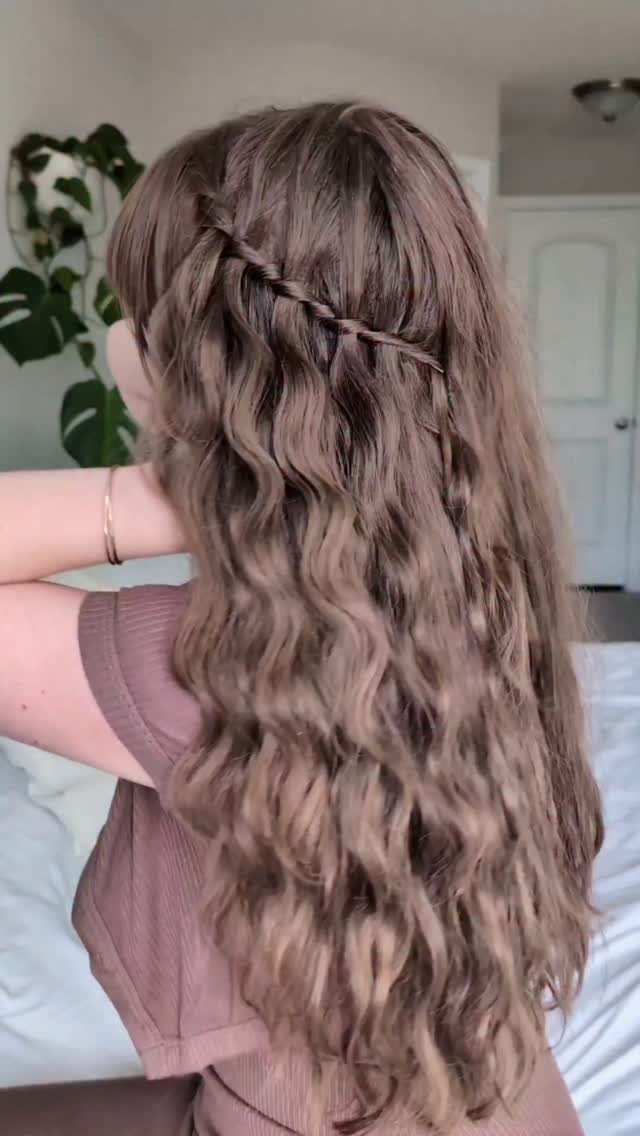
A waterfall braid drops a section of hair at each crossover so strands fall free beneath the braid line, creating a half-up effect that looks woven and airy.
I find this most useful when I want my hair back from my face but still showing length.
The horizontal placement across the back here keeps the braid visible from the front and the side, which a vertical placement would not. It works on wavy or straight hair; curls fight the clean drop of the released strands.
Secure each dropped section with a small pin at first if your layers are short; once the braid sets, you can remove them.
10. Halo Braid
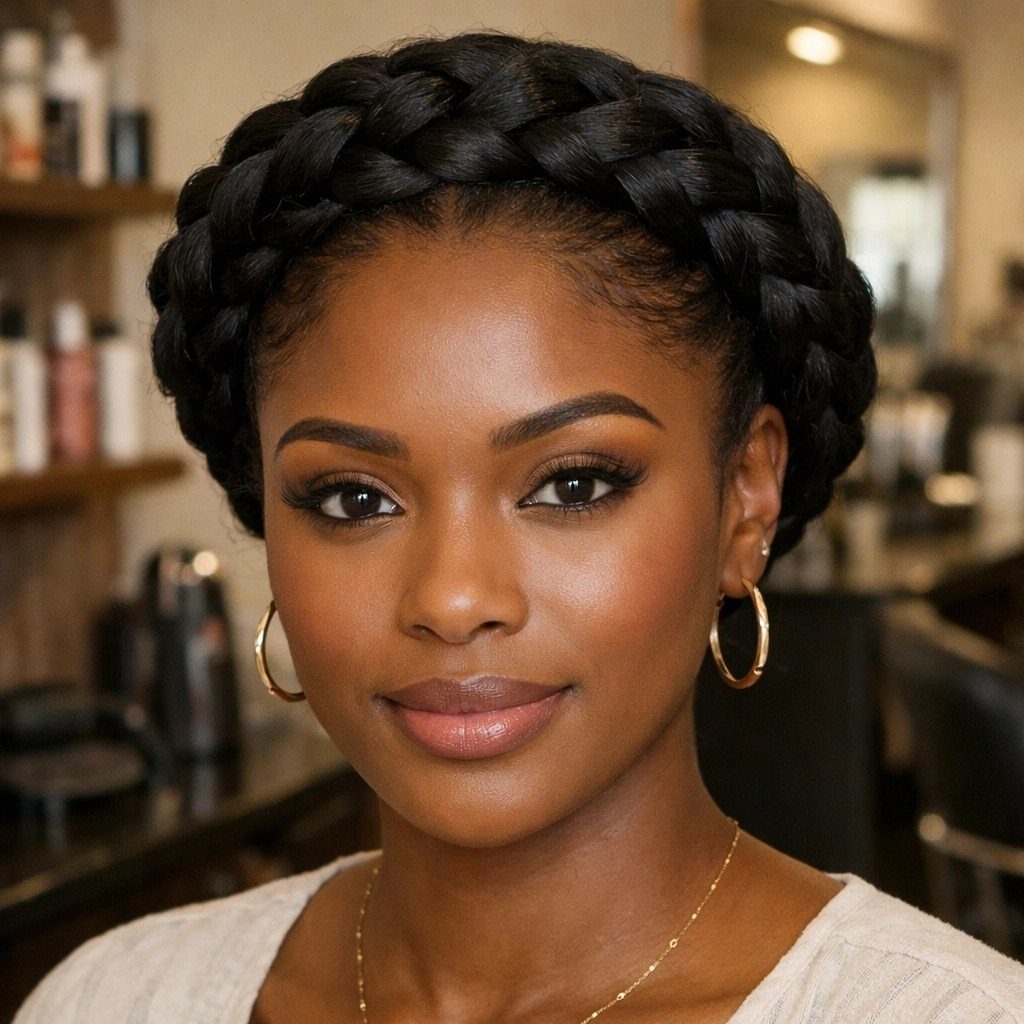
A halo braid circles the head like a crown, sitting high and visible from every angle. The thickness here is the key; a thin version disappears into the hair, but this width reads as deliberate architecture.
I think this shape suits anyone who wants height at the crown without teasing or padding. The braiding direction matters; work from one side around to the other so the overlap sits at the back, not the front.
Gold jewelry pairs naturally with the warm tone of the style itself. Sleep with a silk wrap to keep the raised sections smooth; the crown shape shows every bit of frizz.
11. French Curl Braids
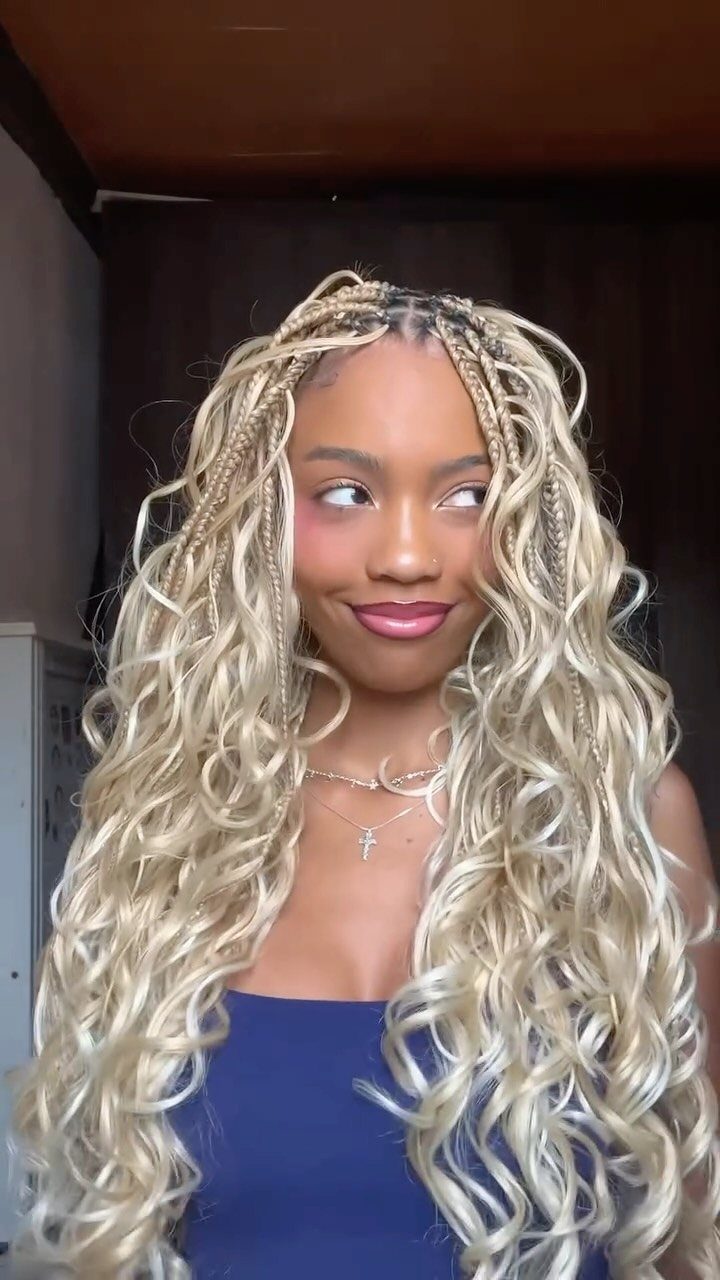
French curl braids keep the length plaited tight and release into loose curls only at the ends, which gives you the swing of curls without the tangle of full loose hair.
The blonde here shows off the curl pattern clearly, but the structure works on any color.
I would ask for the curl to start a few inches from the end, not right at the braid’s close; that transition looks more natural and moves better.
These need the same extension quality as any long braid, but the curled ends mean you will use slightly less length overall.
Wrap the curls in a silk scarf at night to keep their shape; re-curling with heat daily would defeat the point of a protective style.
12. Fulani Braids
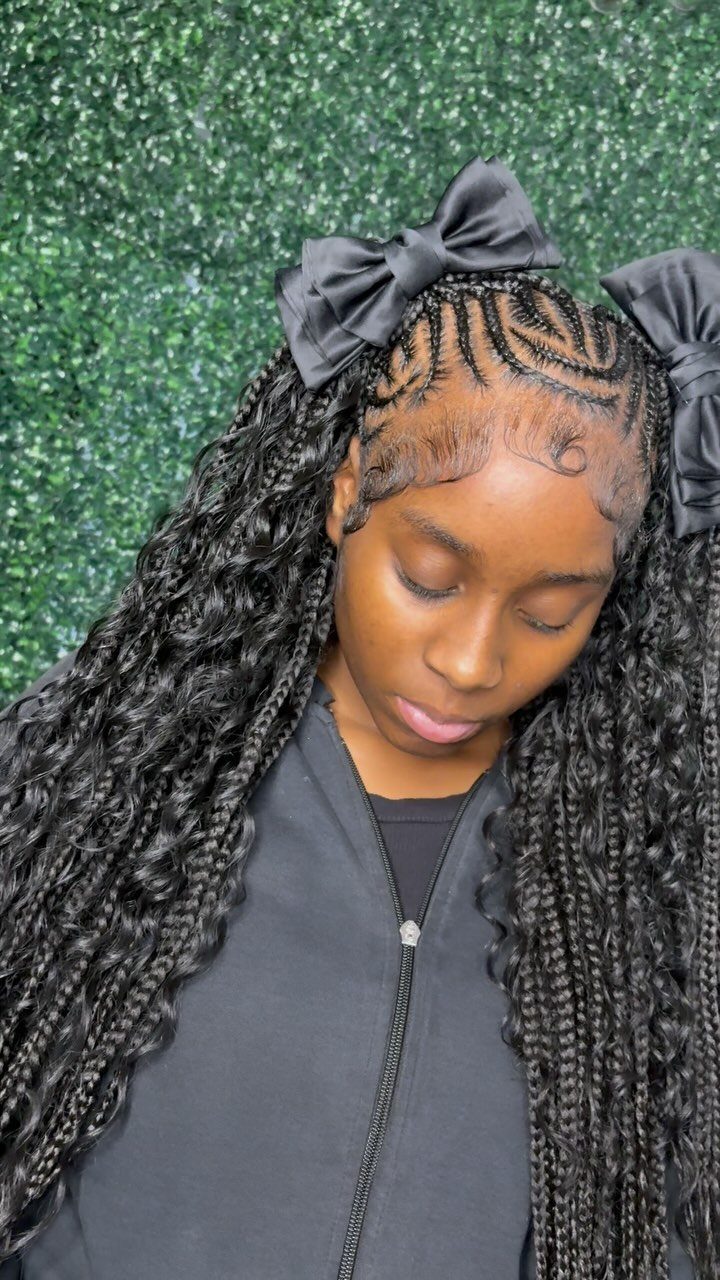
Fulani braids combine cornrows at the front with individual plaits hanging at the back, often with beads or bows threaded at intervals.
The black satin bows here sit at the ends and at points along the length, which breaks up the vertical line.
I like this style for its flexibility; the front stays neat for weeks while the back moves freely.
The parting pattern at the crown is usually symmetrical, which frames the face and works well with the center or side placement of the cornrows.
Ask your braider to plan the bow placement before starting; threading them after means opening the braid and weakening it.
A zip-front jacket like this one slips on without disturbing the back, which matters more than you would think with long braids.
13. Mermaid Braid
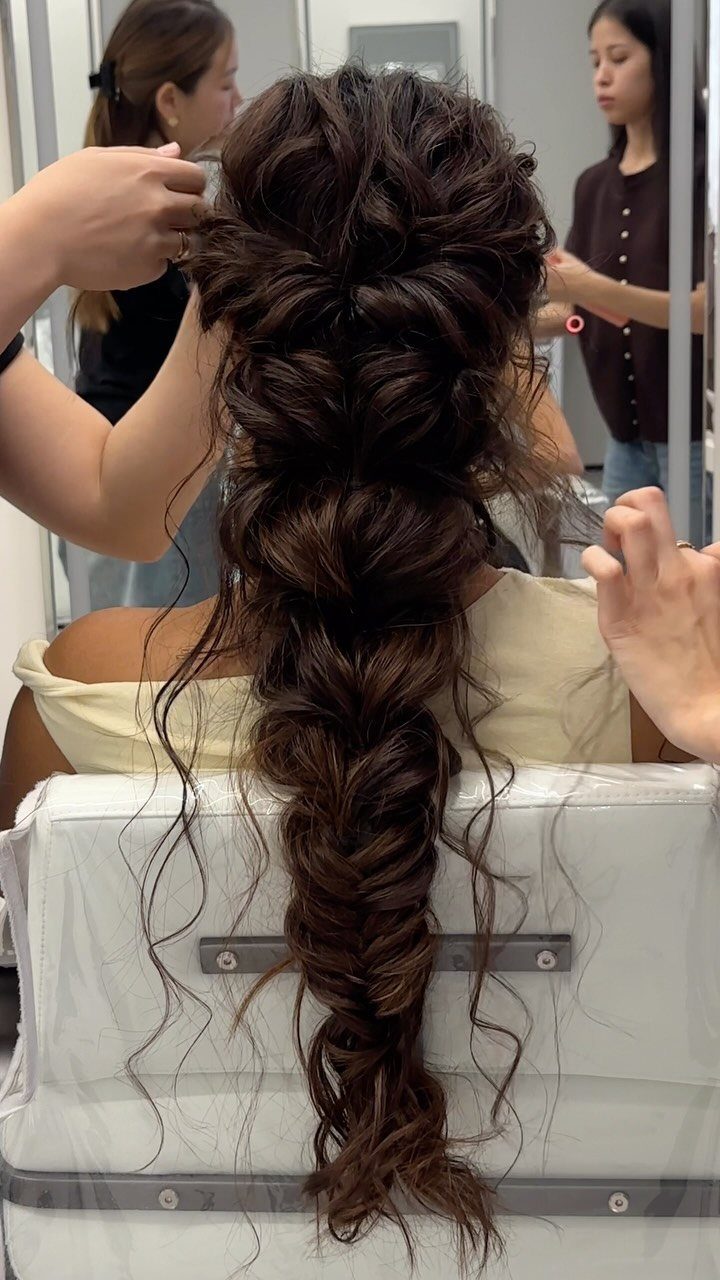
A mermaid braid builds volume by pulling loops outward from a standard three-strand braid, which gives it that undulating, full shape.
Two stylists working together makes sense; one holds the base while the other tugs and sets the width, which is hard to do alone with this much length.
I would ask for the pull to start high, near the crown, so the volume carries through the whole braid rather than clustering at the bottom.
The brown color shows depth well because the loops catch light differently than the recessed sections.
This needs thick hair or extensions to support the width without looking stringy. Plan on extra time in the chair; the braiding itself is standard, but the shaping and pinning of each loop is not.
14. Two-Strand Twist
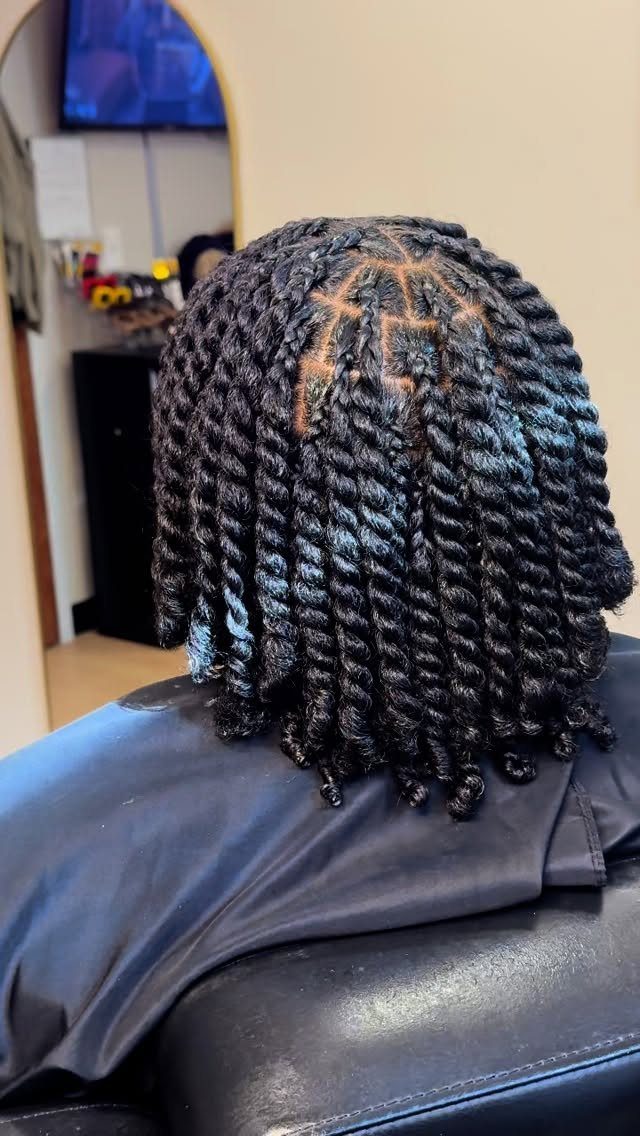
Two-strand twists divide hair into sections and wrap each pair around itself, which is simpler than three-strand braiding and puts less tension on the scalp.
The geometric parts visible here, straight lines forming triangles at the crown, are what make the style look deliberate rather than casual.
I like this density for everyday wear; thick twists like these install faster than micro versions and take down without the frizz that comes from over-manipulation. The black color lets the parting pattern do the visual work.
These work as a finished style or as a base for a twist-out later. Sleep with a satin bonnet to keep the definition; cotton pillowcases unravel the ends overnight.
15. Rope Braids
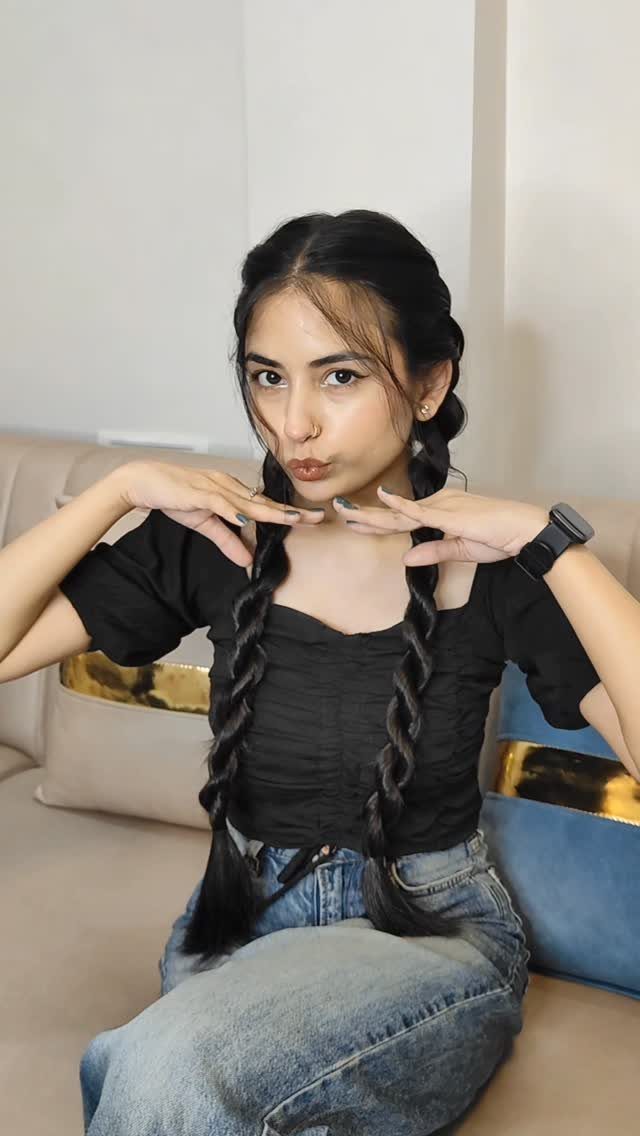
Rope braids are just 2 strands twisted in the same direction, then wrapped around each other in the opposite direction, which locks them into a cord that does not unravel.
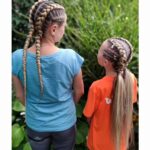
The pair sitting forward over her shoulders here is the classic way to wear them, symmetrical and out of the way.
I find these faster than three-strand braids once the motion clicks; keeping tension even keeps the rope from corkscrewing or loosening.
They work best on hair with some length; short layers pop out where the twist grips. A casual top and jeans, like she is wearing, suit the unfussy feel.
16. Side Braids
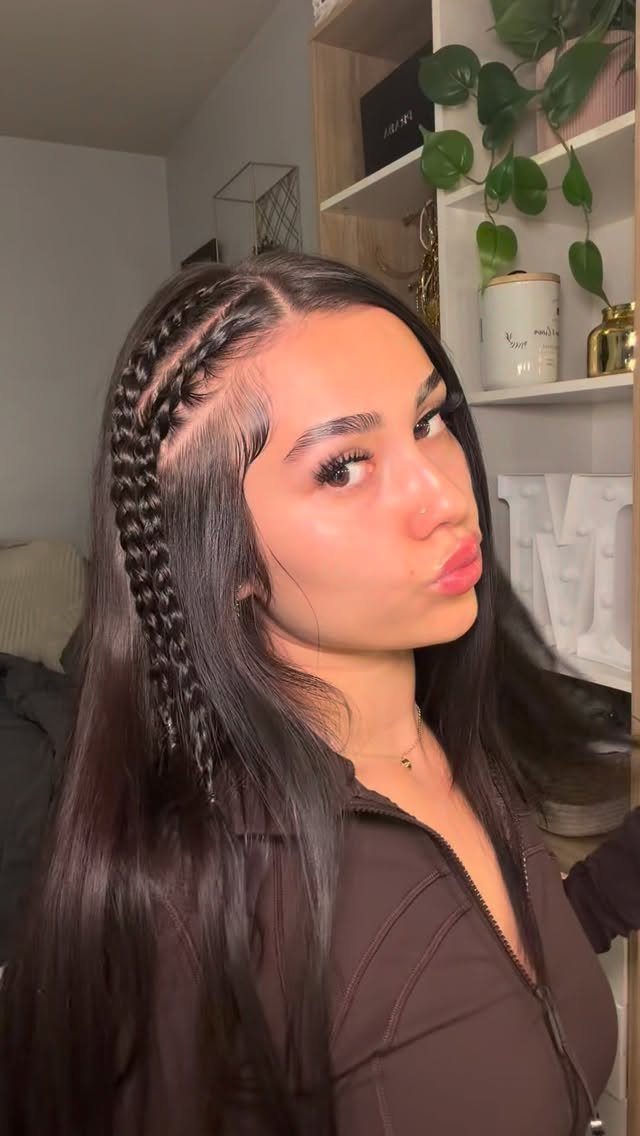
A side braid gathers everything to one side, which changes the silhouette and draws attention to the shoulder and neckline on that half. The thick version, with edges smoothed down, reads as polished rather than thrown-together.
I would place the start lower than a center braid, just above the ear, so the weight does not pull the face shape off balance.
The dark color keeps it simple; a side braid is already doing the asymmetry, it does not need contrast too.
This suits anyone who wants the security of a braid without the severity of hair pulled straight back. A zip-front top layers well without catching on the length.
17. Bubble Braid
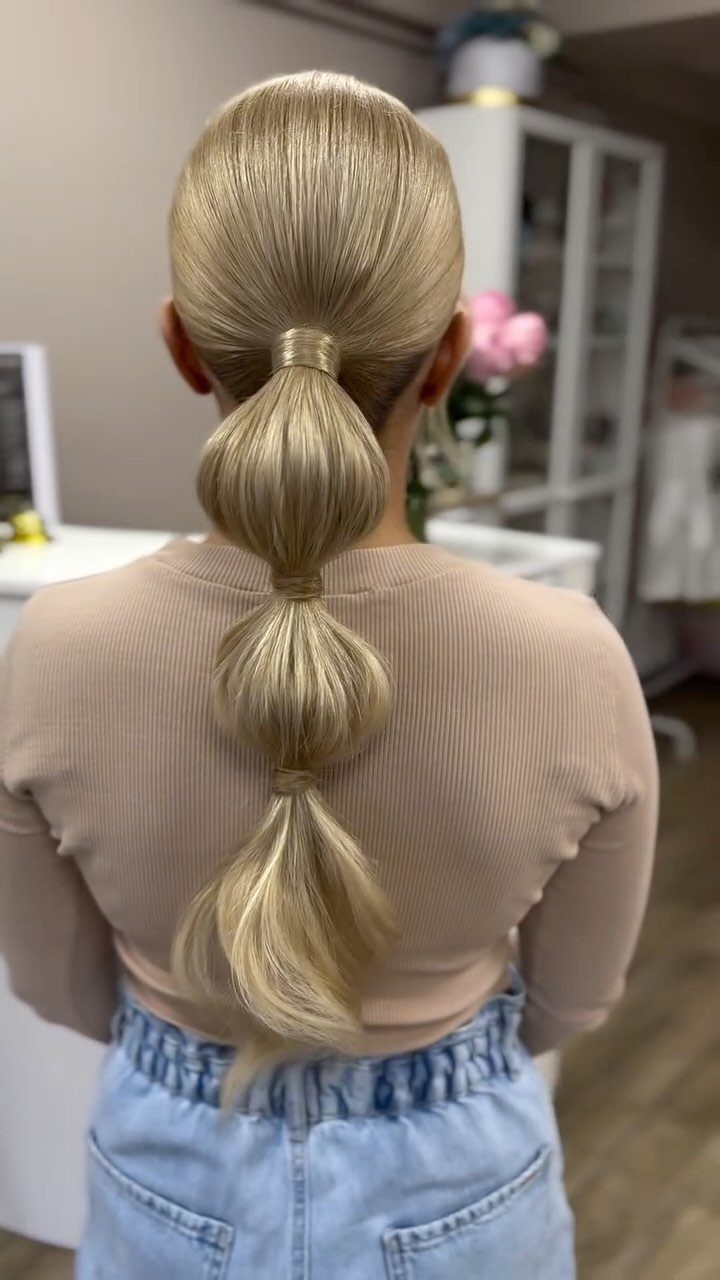
A bubble braid secures hair at intervals with small elastics, then pulls the sections between them into rounded loops that look like, well, bubbles.
The ponytail base here keeps it off the neck, which I appreciate on warmer days or when I am tired of hair on my shoulders.
The spacing controls the look; closer elastics make smaller, tighter bubbles, while wider gaps give the looser shape visible in this blonde version.
I would match the elastic to the hair color or go clear; dark bands against light hair read as too deliberate.
Once you have the elastic placement down, this is fast enough for a rushed morning.
18. Stitch Braids
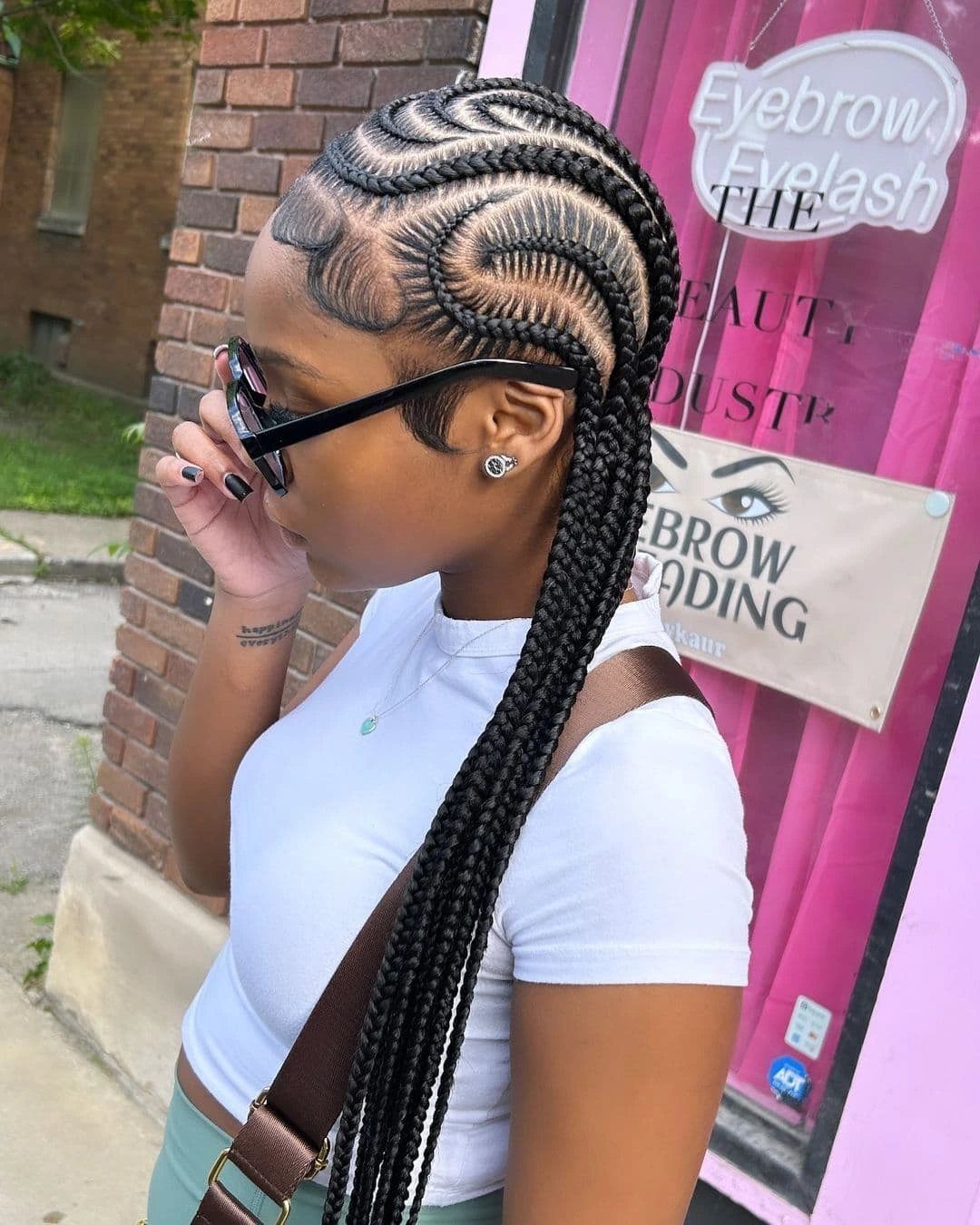
Stitch braids use a comb to create horizontal partings within each cornrow, which gives that segmented, ladder-like appearance along the length.
The curved rows here follow the head shape and gather into long extensions, which adds movement to a style that can otherwise look rigid.
I would ask for the stitch spacing to stay consistent; uneven gaps read as a mistake, not a choice. The black color keeps the focus on the technique itself, which is the point.
This takes longer than standard cornrows because of the precision each stitch requires.
A skilled braider matters more than usual here; the comb work is specific and hard to correct once the row is set. Sunglasses and a plain white tee, like she is wearing, let the braids hold all the attention.
19. Jumbo Braids
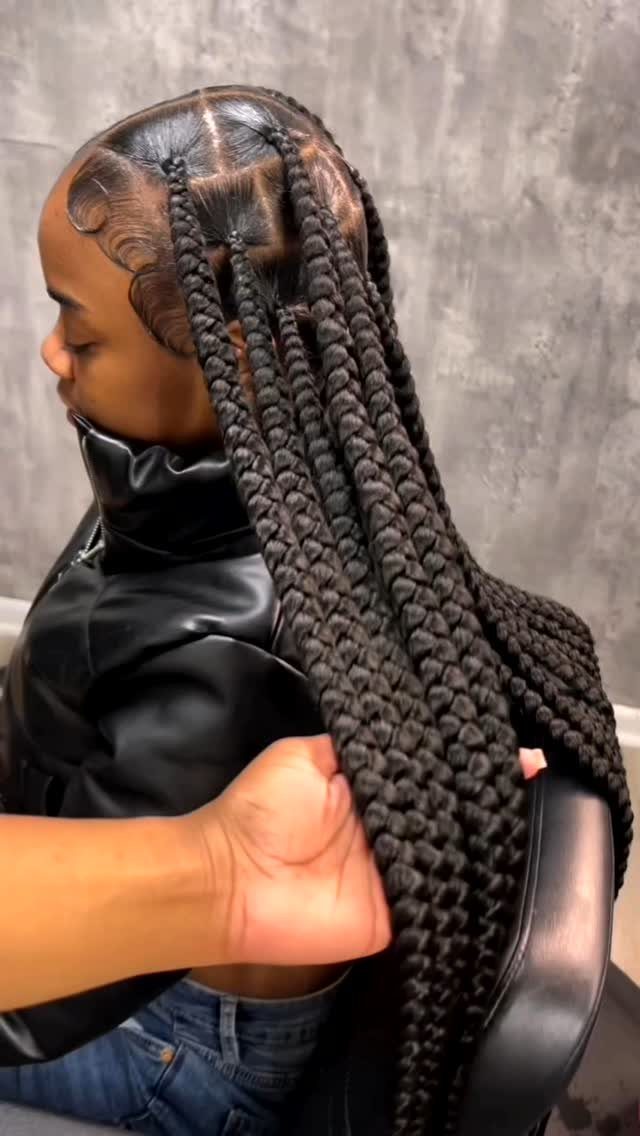
Jumbo braids use fewer, thicker plaits to build volume fast, which means less time in the chair and a bolder silhouette.
The black leather jacket here frames them well; the sleekness of the jacket balances the texture rather than competing with it.
I like this scale on taller frames or anyone who wants presence without complexity. Fewer braids also means lighter weight overall, though each individual plait carries more.
These last a good while with care, and the thickness makes scalp access easier for oiling between washes.
20. Braided Bob
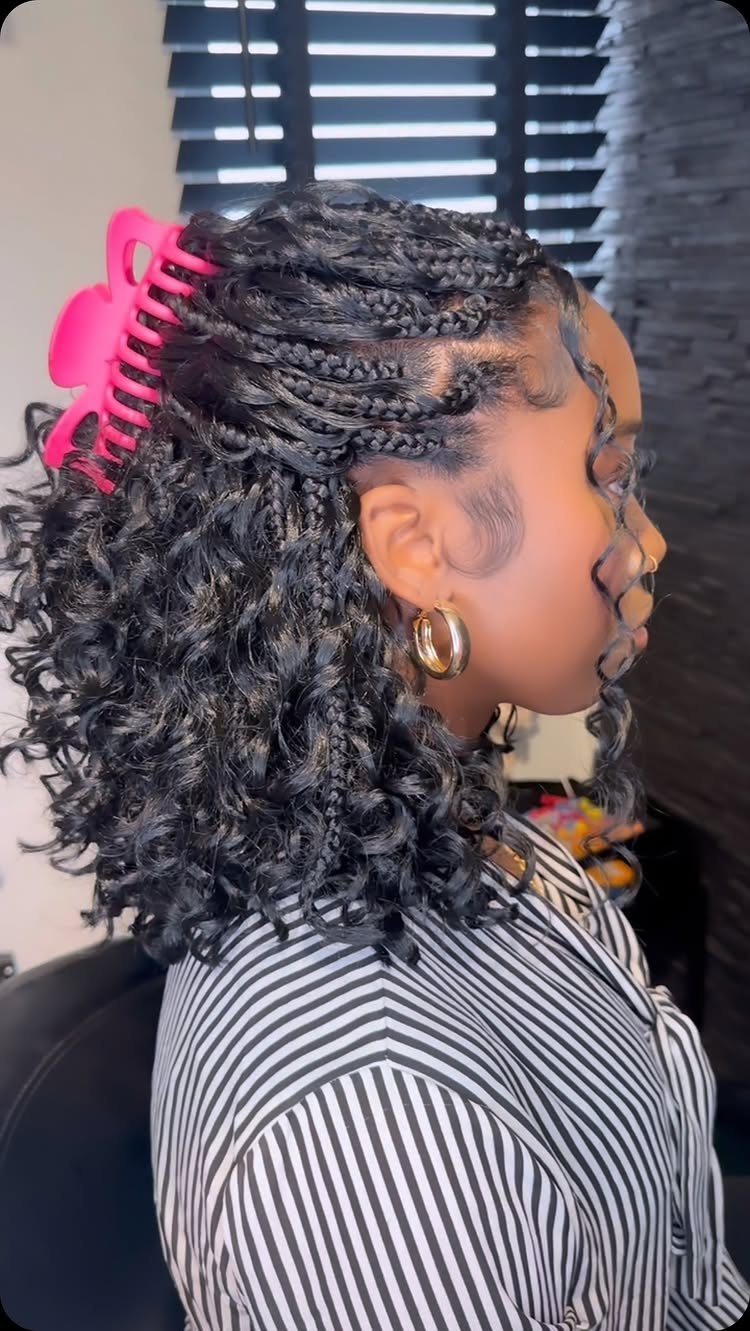
A braided bob cuts the length at the jaw or just below, which keeps the style light and shows off the neck and shoulders.
Curly ends soften the line so it does not read as severe; a bright clip adds a point of interest without overwhelming the shape.
I would ask for the curls to start at chin level, not higher, so the transition looks deliberate. This length works well for anyone who wants braids without the maintenance of long extensions; washing and drying are far quicker.
The bob shape suits oval and longer faces especially, since the width at the jaw adds balance.
21. Ghana Braids
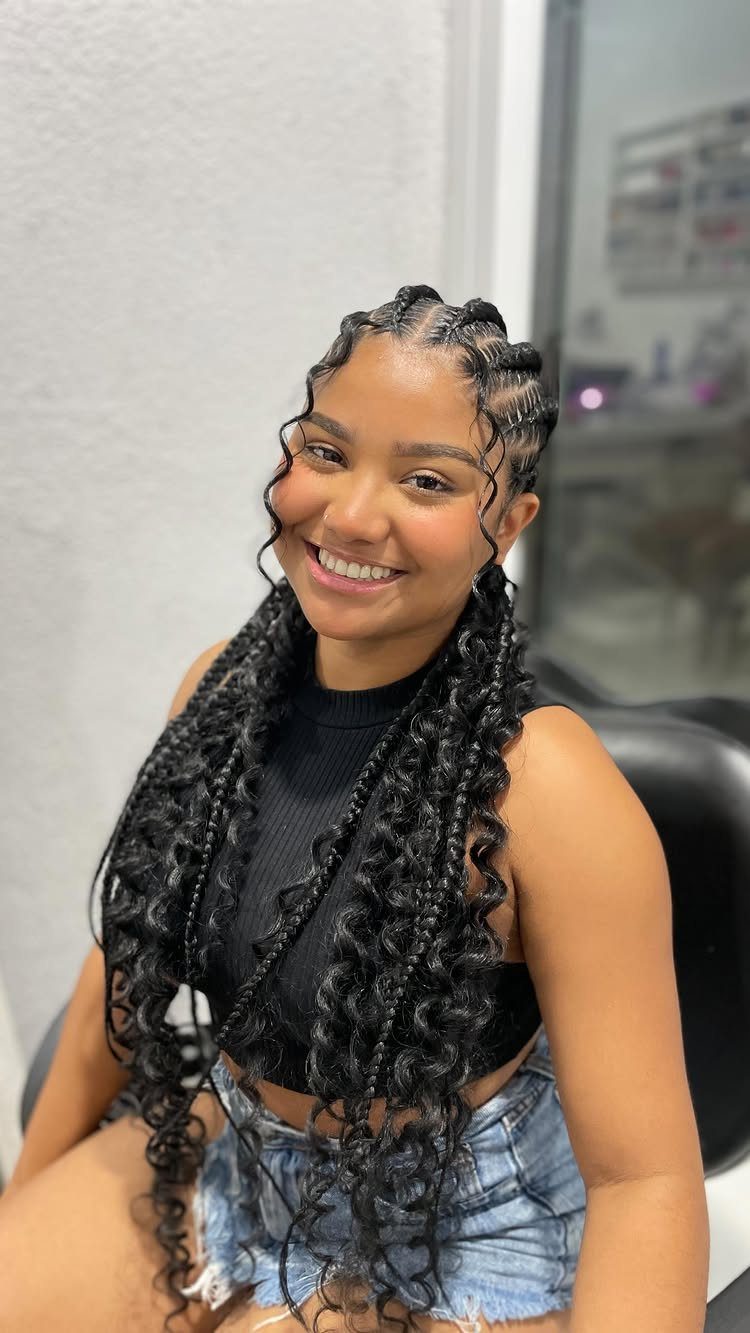
Ghana braids are cornrows that run straight back or curve with the head, sized from medium to jumbo depending on the look you want.
These install faster than micro cornrows and hold well with regular scalp moisturizing.
22. Lemonade Braids
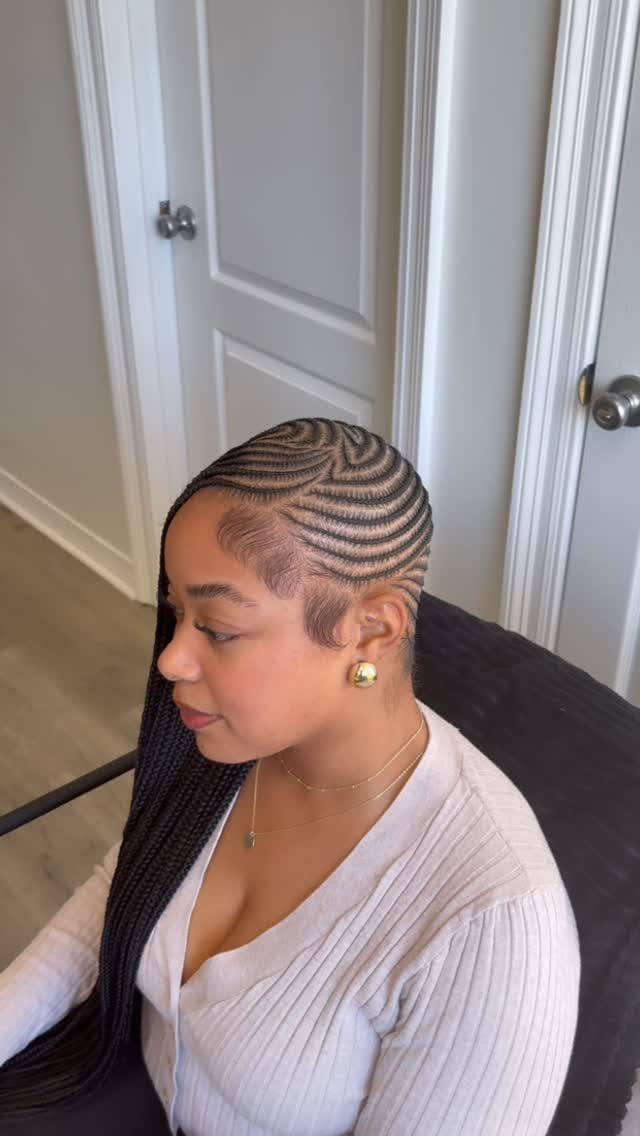
Lemonade braids sweep all the cornrows to one side in a deep part, which creates asymmetry and draws the eye across the face.
The white ribbed top here keeps the palette simple; with this much visual movement in the hair, the outfit should stay quiet.
I would place the part lower than a standard side part, almost at the temple, so the sweep carries real weight. Gold earrings work because they echo the warmth of the style without adding another competing line.
The side placement means you will favor one shoulder; plan necklines accordingly.
23. Feed-In Braids
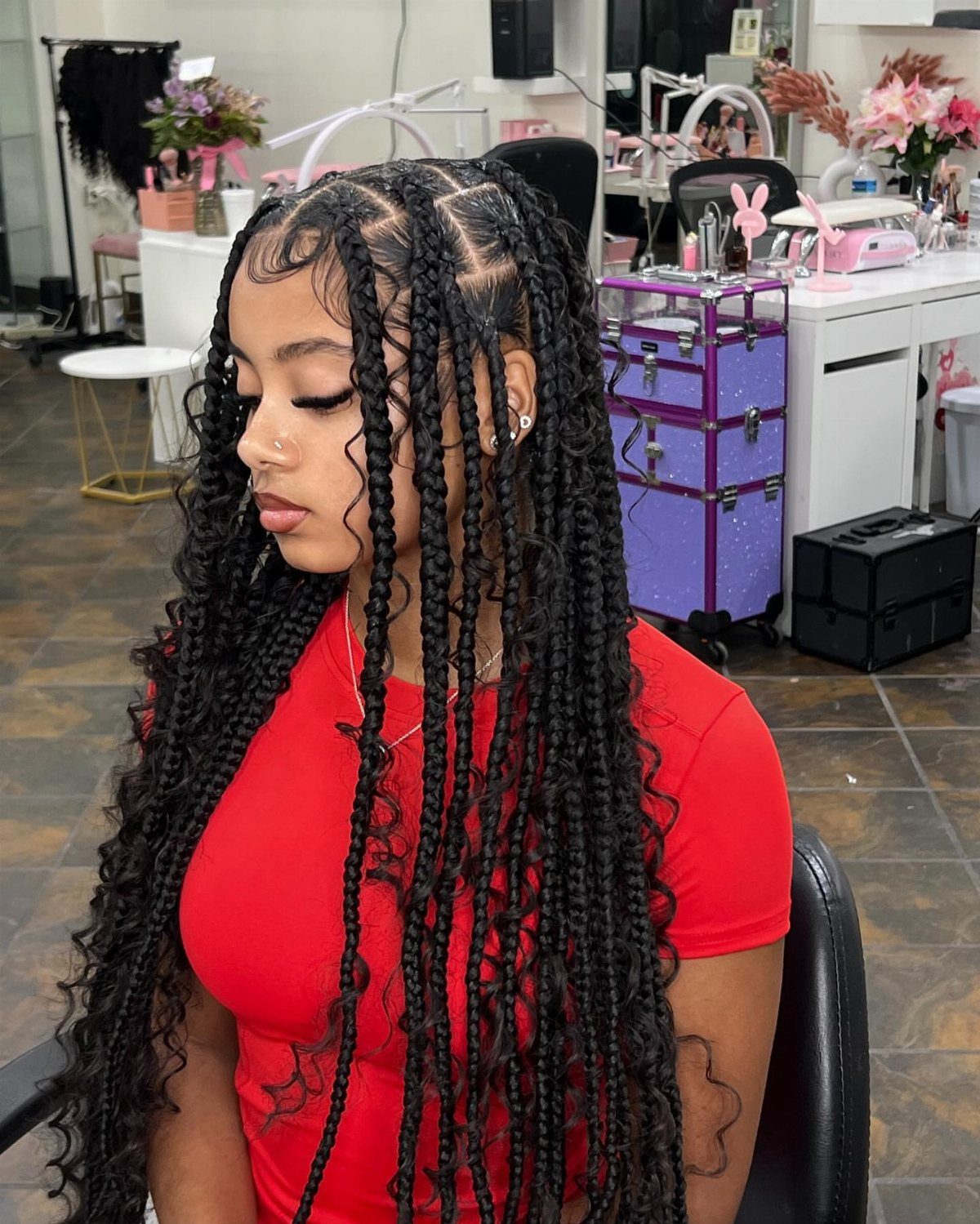
Feed-in braids start with your own hair and add extension pieces gradually, so the base looks natural and the tension stays lighter at the scalp.
The curly ends here are optional; some wear them straight, but the curl gives a finished feel without extra length.
I would ask for the feed to start small and build slowly; too much extension too soon creates a bump at the root.
These suit anyone whose edges need protection or who wants a less obvious extension line. The time in the chair depends on the number of braids, so bring something to read.
24. Braided Updo
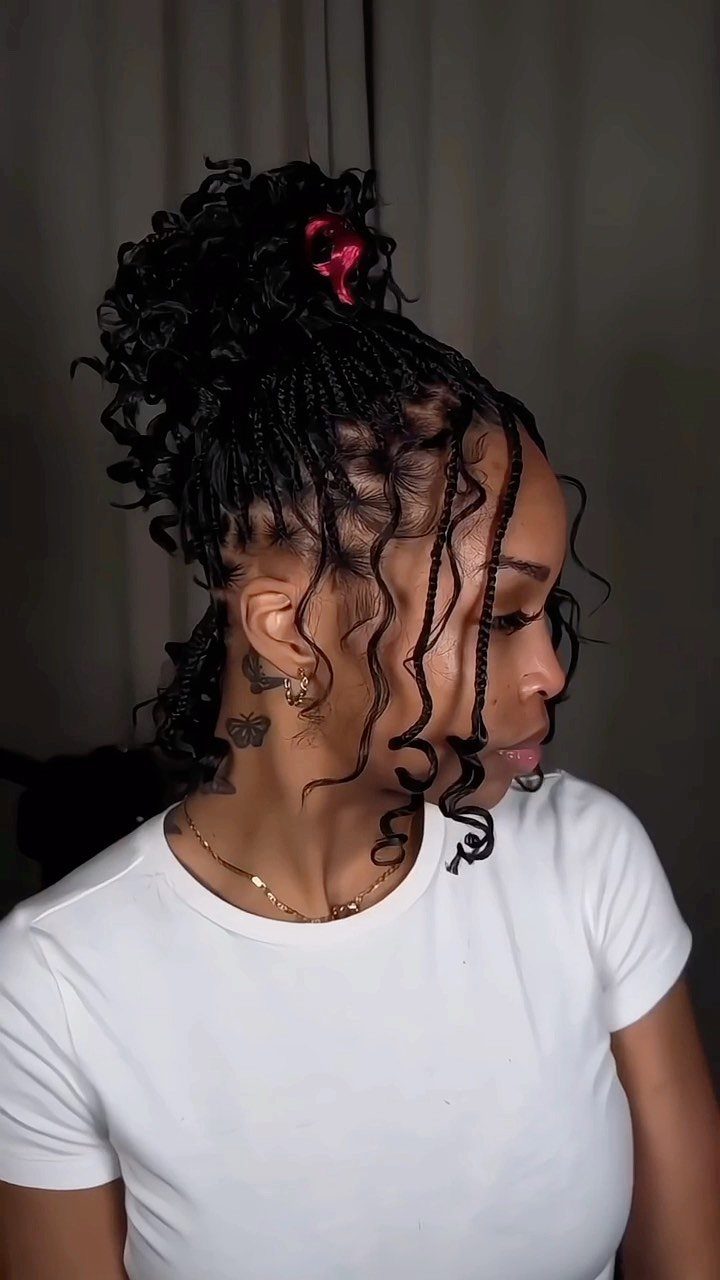
A braided updo gathers plaits into a high bun or crown shape, which lifts the face and keeps every strand off the neck.
The curly tendrils left loose here soften the height so it does not read as too formal; the tattoo visible at the neck is part of the look, not hidden by it.
I like this for events where you need polish without the fragility of loose styling; braids hold through heat and dancing. The bun placement should sit at the crown, not the back, to get the lifting effect.
A white tee dresses it down for day; swap to something structured for evening and the same updo shifts with you.
25. Freestyle Cornrows
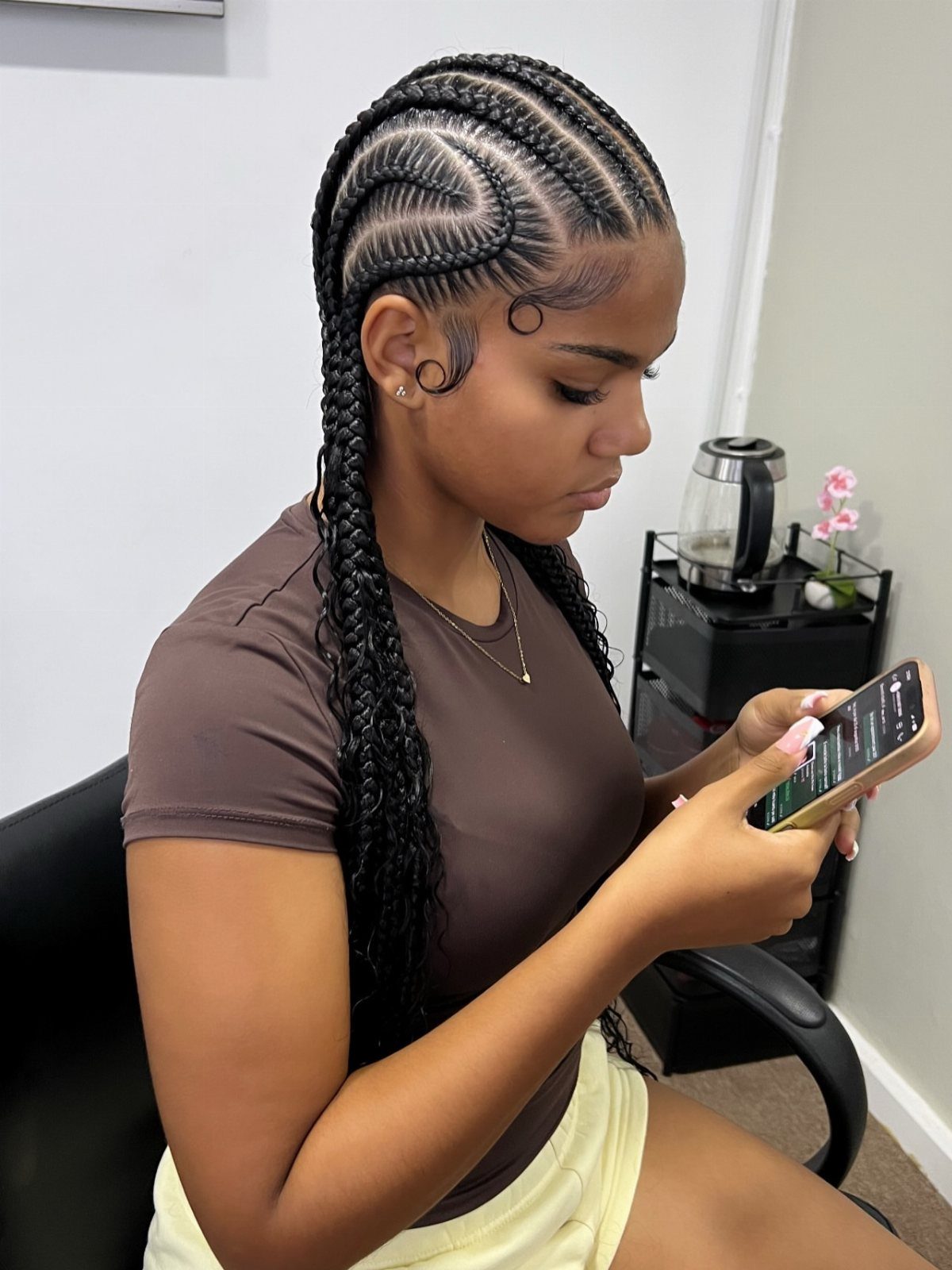
Freestyle cornrows break from straight-back rows into curves, angles, and shapes that follow the braider’s eye rather than a fixed pattern.
The arcs here sweep from the temple and converge into long hanging braids, which gives the scalp the visual interest usually saved for the ends.
A plain brown tee and shorts keeps the focus where it belongs, on the braids themselves.
The style takes longer than standard cornrows because the braider is designing as she goes, so book extra time and bring clear reference photos if you have a specific pattern in mind.
26. Braided Space Buns
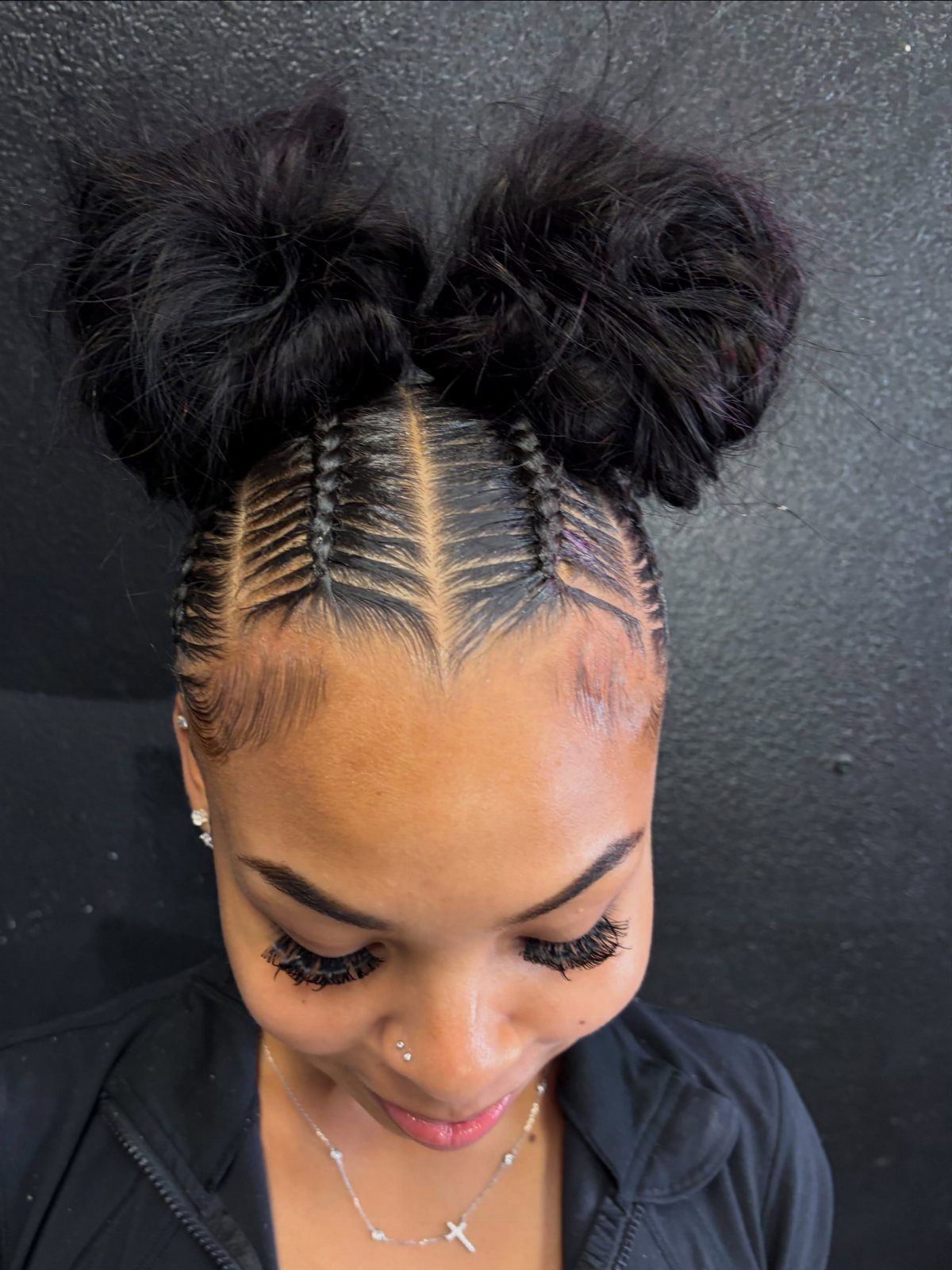
Braided space buns gather cornrows into two high, rounded shapes that sit like earmuffs at the crown.
The fluff here comes from pulling the bun slightly loose after securing it, which gives volume without looking messy against the black wall behind her.
I like this for days when you want the polish of braids but something playful in the silhouette.
The parting between the 2 buns matters; a clean center divide keeps the symmetry sharp, while a zigzag or curved part softens it.
These stay put well but can feel heavy by evening if the buns are dense. A lightweight leave-in at the roots helps with comfort.
How to Care for Braids
I dilute my shampoo and work it only into the scalp, then rinse without touching the braids themselves; a light conditioner on the lengths finishes the job.
I pat my braids dry with a towel instead of rubbing, since friction at the roots is what turns smooth edges fuzzy. A leave-in treatment goes on sparingly, both at the scalp and down the braid.
Sleep with silk or satin against your hair, not cotton.
The friction from a standard pillowcase breaks down the cuticle and fuzzes the parting lines. A wrap or a bonnet works; a silk pillowcase is enough if you move around too much for either to stay put.
Oil your scalp every few days with something light, not heavy grease that will travel down and collect dust. Braid sprays and a small amount of edge gel keep the perimeter neat between washes.
Starting with clean hair buys me more wear before the takedown; oil and product buildup from day one shortens the lifespan before the first braid is even finished.
Choosing the Right Braid Style
Your hair type and length set the real limits on what will hold and what will strain.
Fine or short hair will not hold the weight of jumbo braids or extreme length without stress at the root; denser hair can carry more.
The occasion matters too. A style that photographs well for one event may be too much maintenance for daily wear, and a protective style meant to last weeks makes no sense if you need something for a single weekend.
Moisture retention and scalp tension are the health factors to weigh, not just how the braid looks in the mirror.
A 360° video preview from a selfie can show you how a style sits on your face before you commit to hours in the chair; it is a practical filter when you are deciding between several options.
Braid Longevity Tips
The tension your braider uses is a balance you need to feel out.
Too loose and the style slips within days; too tight and you risk traction alopecia. Ask for the middle ground, and speak up if you feel pulling during the install.
Clean hair beforehand extends wear; dirty hair forces an early takedown. Afterward, silk or satin at night protects against the friction that frays your parting lines.
Hydration matters for the scalp specifically, not just the braid itself. Oil every few days, keep a light braid spray on hand, and touch the edges with pomade or gel as needed.
Most professional braids last 2–8 weeks. Pushing past that range strains the scalp and the hairline; plan the take-down as part of the style, not as an afterthought.
Frequently Asked Questions
What are the braid trends for 2026?
Knotless braids and boho styles are leading the way, with comfort and wearability driving most of what’s popular.
Knotless braids distribute tension evenly across the scalp, which makes them easier to keep in for several weeks without the headaches that tighter styles cause.
Boho braids break up uniformity with loose strands throughout, giving a softer outline that works especially well on hair with some natural wave.
What is the prettiest type of braid?
That depends on what you are drawn to, though waterfall and fishtail braids tend to get mentioned most for their romantic look.
A waterfall braid works like a French braid that lets go: at each crossover you drop one section so hair falls through, giving you a half-up style that keeps your face clear while the rest hangs loose.
A fishtail braid splits hair into 2 sections and weaves thin strands across, which reads as intricate and woven once the pattern has room to repeat on longer hair.
What are goddess braids?
These are oversized cornrows, thick and raised close to the scalp, with the ends left out in curls or waves instead of braided to the tip.
You get the low maintenance of a protective style at the root with softness and movement at the bottom.
Thicker rows mean fewer of them, so you are not sitting half a day like you would for micro braids. The real skill is in matching the extension color to your own so the blend stays clean, not murky.