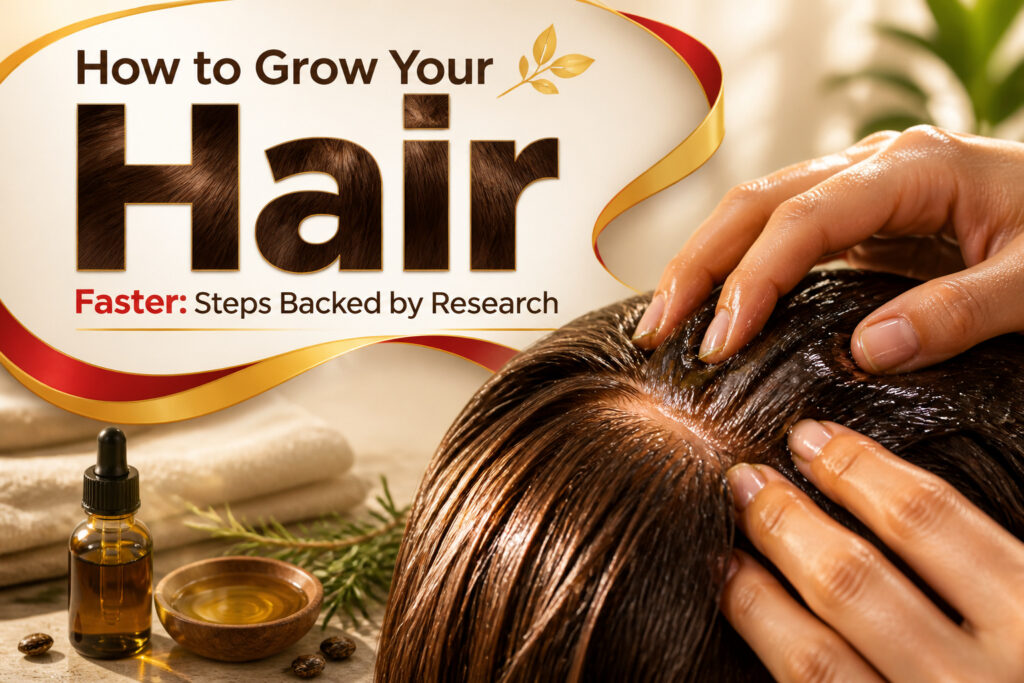
Growing your hair faster takes about six months of daily effort before you’ll know if anything is working. The real problem is not the waiting; it is that most people spend that time protecting the length at the ends while ignoring what actually determines how long a strand survives: the two-to-seven-year growth window locked in by genetics, and whether it reaches its full span before breaking. One study tracked men who massaged their scalps for four minutes daily and found their hair grew thicker after 24 weeks, but only after many of them panicked and quit at week 12 when shedding temporarily increased. That is the stage people get wrong.
1. Trim Your Hair Regularly
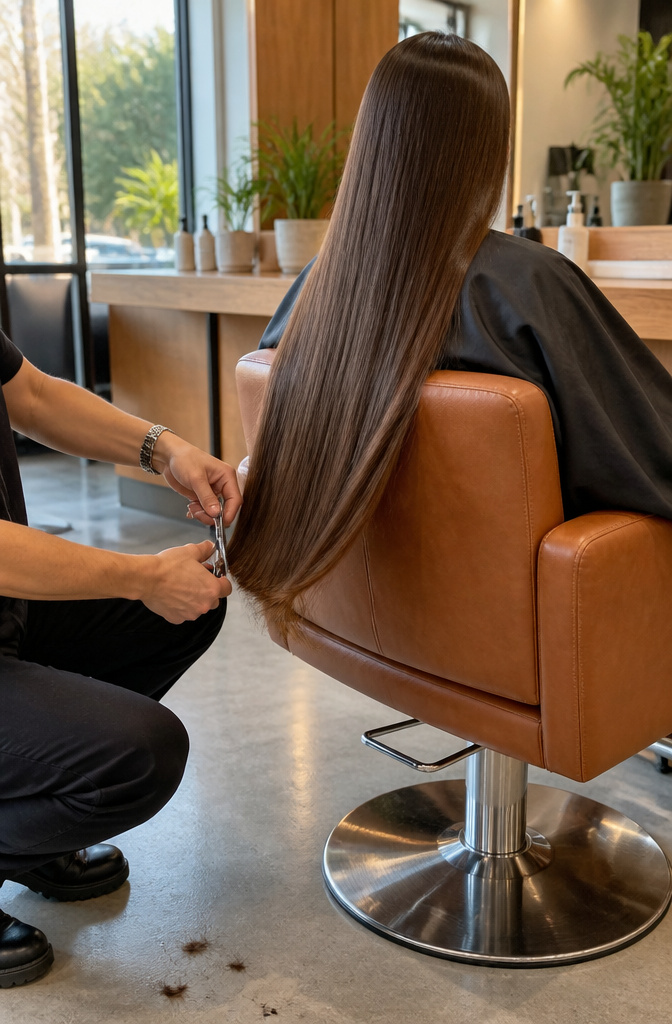
Split ends do not stay put. Once a strand frays at the tip, the damage can travel up the shaft, weakening the hair and causing breakage that quietly erases the length you have already grown. A trim every eight to twelve weeks stops that climb before it starts.
At the salon, ask for a micro-trim or a dusting, where the stylist removes only the frayed ends, sometimes barely an eighth of an inch. You will see almost no hair on the floor, but you will preserve the healthy length above it. Wait too long, and those splits demand a far more aggressive cut.
A trim will not speed up your biological growth rate. Hair grows about half an inch per month on average, and genetics set that pace. What regular trims do is protect the inches you already have, so the growth actually shows up instead of breaking off at the ends.

【Double-Headed Design】: The hair comb is designed with double-ended, one side is equipped with a pointed blade, which is convenient for trimming, cutting, thinning and styling, and the other side is a normal comb, which is practical for combing and breaking hair, making your hair smooth soft. The haircut razor comb helps you cut, perm, color, straighten and style with greater precision.

Professional split end removal: Specially developed to solve the split end problem and uses precision trimming technology to quickly remove split ends and damaged hair ends while protecting healthy hair, maintaining the shine and suppleness of the hair and promoting overall hair health with long-term use
2. Eat a Balanced Diet
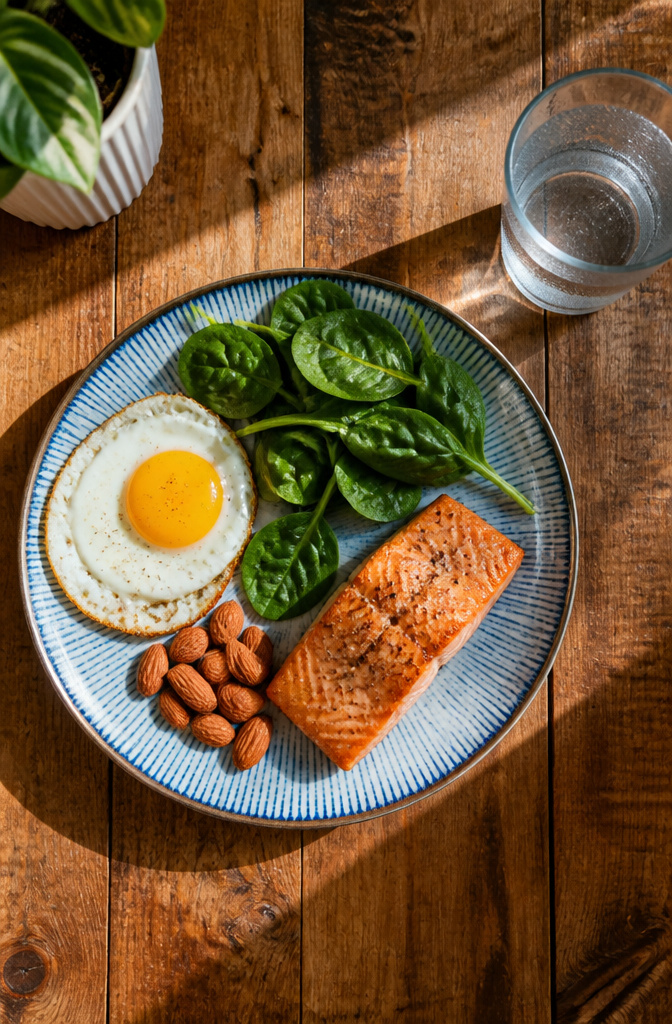
Hair is built almost entirely from protein, so the follicle needs a steady supply of it to keep the growth cycle moving. Eggs are my go-to here: they deliver both protein and biotin, which the follicle uses to produce keratin. Without enough protein coming in, your body will redirect what it has to more critical systems, and hair growth slows down first.
The follicle also runs on micronutrients to cycle properly. Leafy greens like spinach bring iron plus vitamins A and C; vitamin A specifically helps the scalp’s oil glands produce sebum, which keeps the growth environment from drying out. Nuts add vitamin E and zinc, and fish contributes protein alongside omega-3 fatty acids. A plate with eggs, spinach, salmon, and a handful of almonds covers the full set: protein, A, C, D, E, zinc, and iron. That combination shows up across almost every credible source on how to grow your hair faster, and for good reason: the research consistently ties these nutrients to follicle function rather than just general health.

Hair Growth & Relaxation: This scalp massager refreshes the scalp for stronger and better-conditioned hair over time. Regular use also promotes relaxation, making it an ideal part of your daily self-care routine

COMPACT PALM FIT DESIGN: Designed with a comfortable hand held shape for better control, this wooden scalp massager is easy to guide across the scalp during daily routines, helping make scalp massage feel simple, relaxing, and easy to enjoy at home or while traveling

ENHANCES BLOOD CIRCULATION AND HAIR GROWTH: Our Scalp Brush enhances blood circulation to the scalp, ensuring nutrients reach hair follicles by gently massaging and stimulating hair follicles for healthy hair growth.
3. Use Hair Growth Products
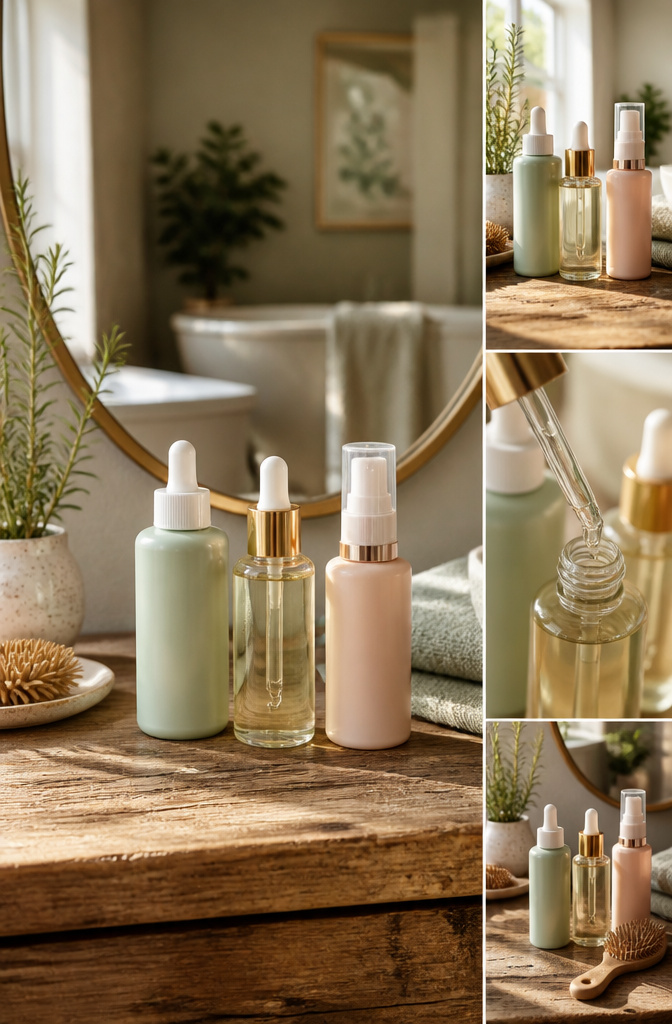
Minoxidil is the only over-the-counter hair growth medication approved by the FDA, and it comes in both 2% and 5% strengths as a liquid or foam. It will not fix a receding hairline, but it can stimulate growth, reduce shedding, and thicken existing strands when applied to the scalp daily. The catch is commitment: stop using it and the shedding resumes, sometimes faster than before.
Beyond minoxidil, hair growth serums with rosemary oil or peptides have gained traction. One peptide-based serum is clinically shown to improve visible growth by 30% in four weeks and reduce visible hair loss by 50% over twelve weeks when applied nightly. Rosemary oil treatments, used as a pre-wash scalp soak, are another route some people take.
Whatever you choose, budget for at least six months of consistent use before judging results. Hair grows slowly, and these products work with that timeline, not against it. Match the serum to your concern: thinning at the crown, overall density loss, or a stressed hairline each point toward different formulas, but the common thread is patience and daily application.

Promotes Stronger Hair & Nails-Formulated with 6,000 mcg of biotin, zinc, and folic acid to support healthy hair growth and reduce nail breakage.

SUPPORTS HEALTHY HAIR (1): Biotin helps maintain healthy hair; providing essential nutrients crucial for beautiful hair (1)

5,000 MCG BIOTIN – STRONGER, LONGER, HEALTHIER HAIR: Power your beauty routine with 5,000 mcg of biotin to support healthy hair growth, stronger nails, and glowing skin.
4. Avoid Heat and Chemical Damage
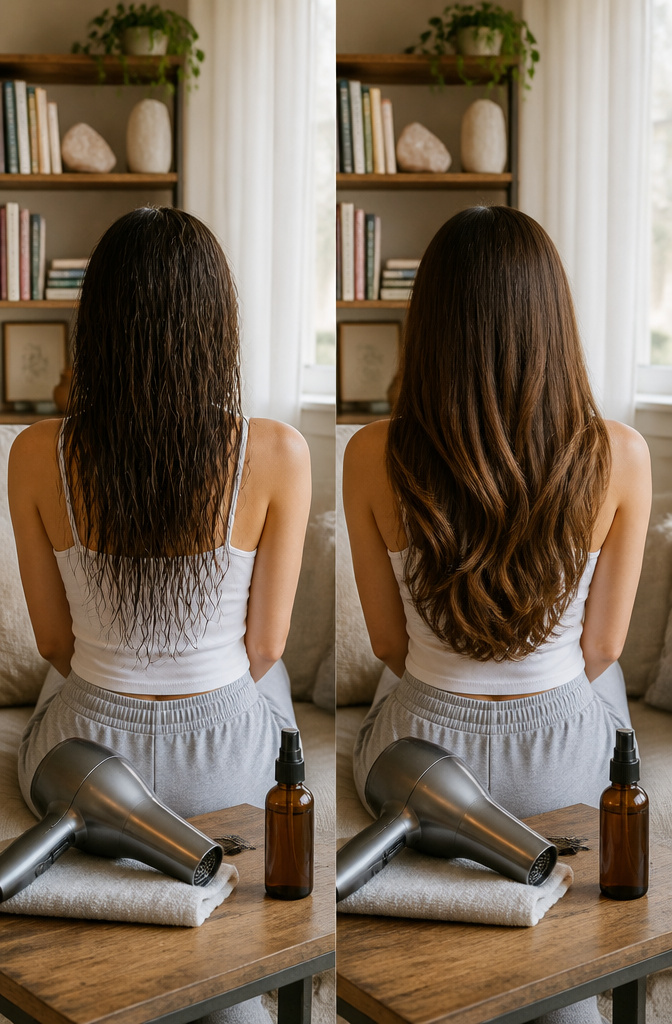
Heat styling tools and chemical treatments are two of the fastest ways to stall your progress when you’re trying to grow your hair out. Blow-dryers, curling irons, and straighteners weaken the cuticle over time, which means strands snap before they ever reach your shoulders. The same goes for bleach and permanents. They strip protein from the hair shaft, so breakage becomes the norm rather than the exception.
Cutting back is the move that matters most. Air-dry when you can, or stop blow-drying when your hair is about 80% dry and let it finish on its own. On days when heat is non-negotiable, drop your tool to its lowest setting and work fast so the heat contact stays brief. A heat protectant spray or cream is worth using too, though it is harm reduction, not harm elimination. Products that shield against temperatures up to 450°F exist, and they help, but they do not undo the stress entirely.
Color is another place to be strategic. Staying within three shades of your natural tone cuts down on the peroxide damage. If you are set on a bigger change, spot-test any store-bought dye first and space out chemical sessions as far as your roots will let you. The goal is keeping the hair you have on your head long enough to actually see the length add up.

✅ Advanced Hair Regrowth for Women & Men – Clinically Proven Hair Regrowth Formula, powered by 5% Minoxidil, Biotin, Caffeine, Castor Oil, and Rosemary Oil, this extra-strength formula is dermatologist-recommended to combat hair thinning and loss. It deeply penetrates the scalp to nourish follicles, stimulate regrowth, and promote thicker, fuller-looking hair for both men and women.
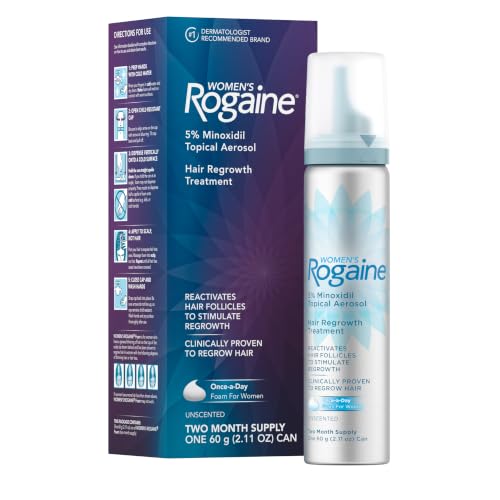
REGROW THINNING HAIR: 2-month supply (2.11-ounce bottle) of Women's Rogaine 5% Minoxidil Foam, once-a-day hair loss treatment to help treat hereditary hair loss and hair thinning, maintain hair density & allow for the regrowth of fuller hair

Clinically Proven to Stimulate Hair Growth: Our 5% Minoxidil and Rosemary formula is clinically proven to reactivate hair follicles, encouraging denser and healthier hair growth in men and women. 5% Minoxidil remains the #1 dermatologist-recommended ingredient against hair loss
5. Massage Your Scalp
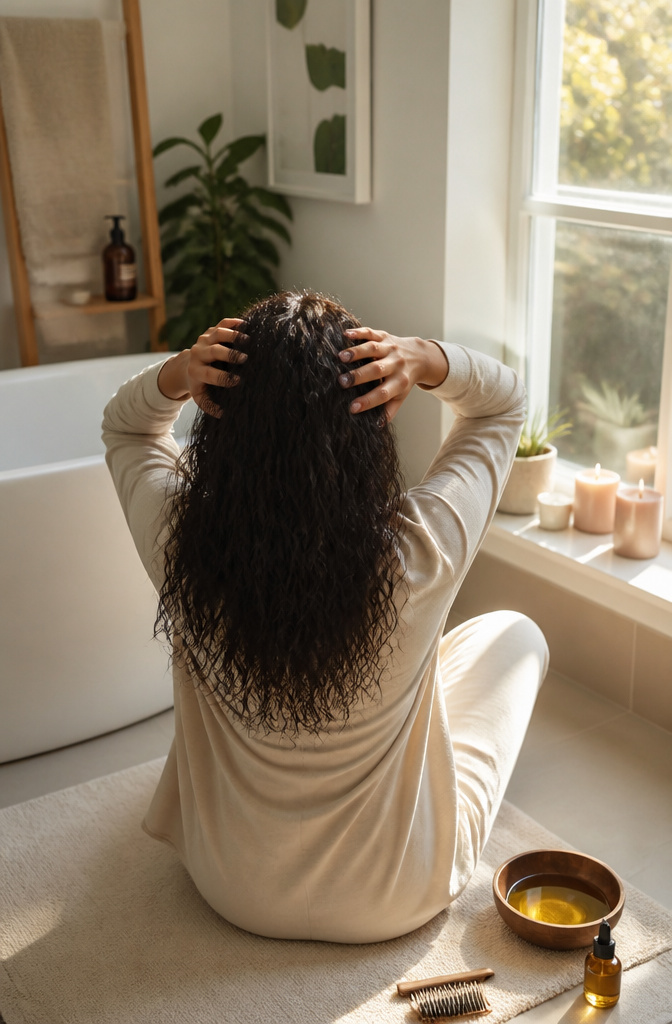
Scalp massage sends more blood to your follicles, and that extra circulation delivers the oxygen and nutrients your roots need to do their job. The technique is simple: use your fingertips, never your nails, and work in gentle pressure for a few minutes. You can do this daily, or fold it in while you shampoo or apply products.
One study tracked men who used a massage device for four minutes every day. After 24 weeks, their hair had grown thicker, not longer. There is a catch worth knowing: some participants saw temporary shedding around the 12-week mark before the thickening showed up. That early loss can be alarming if you are not expecting it.
You do not need a device to try this. Your fingers work fine, though you will want to keep the pressure moderate. Think of it as a routine you stack onto something you already do, not a separate appointment. The real payoff is thickness over time, not a sudden growth spurt.
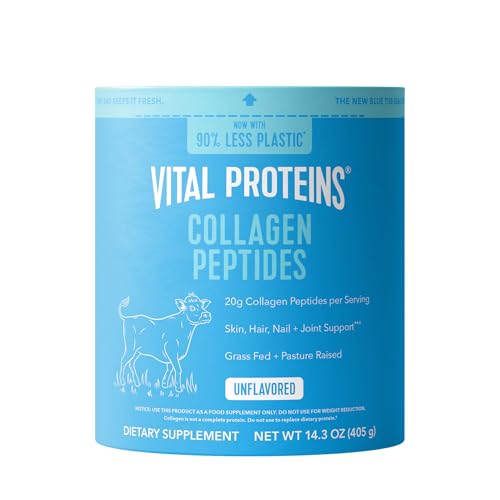
FORMULA: Enjoy a supplement perfect for wellness regimens, Vital Proteins collagen peptides is made without gluten or dairy

Irresistible Flavor Combination: Our Havenfly Beef Wrapped Egg Yolk Dog Snacks blend the savory goodness of premium beef with the rich taste of natural egg yolk. This mouth - watering combination is sure to make your dog's tail wag with excitement, turning every treat time into a special moment.

Boost Metabolism & Support Weight Loss Naturally This collagen-powered coffee blend helps support a healthy metabolism, fat burning, appetite control, and sustained energy—making it easier to reach your weight-loss goals without extreme dieting.
6. Get Enough Sleep and Manage Stress

Adults need seven to nine hours of sleep each night for healthy hair growth. During sleep, growth hormones kick in and speed up cell reproduction, which feeds into the follicles’ work below the surface. I treat this as maintenance, not magic: it keeps the growth environment running smoothly rather than directly speeding things up.
Stress is where things get more direct. High stress disrupts the hair growth cycle and can push follicles into a resting phase, which means shedding instead of lengthening. I’ve read enough on this to take it seriously; chronic stress has been tied to actual hair loss conditions, including alopecia areata and the urge to pull hair.
Yoga and meditation are the two stress-relief practices most often cited for this purpose. A weekly session of either, or both, fits into a routine without becoming another source of pressure. The goal is keeping stress low enough that your body isn’t redirecting resources away from growth.

The comb includes 2 blades, plus 5 additional replacement blades, for total of 7 blades. For More Replacement Blades available to search "BANGMENG RAZOR BLADES" in Amazon.

[Easy to Use] Remove split ends faster and safer in just a few minutes. No conditioner, hair cream, or shampoo can prevent split ends. For smoother, healthier, and more beautiful hair, use our tool to trim damaged and split ends and enjoy softer, more natural shine. This is the perfect tool for repairing hair breakage and damage caused by blow dryers, flat irons, chemical treatments, and hair dye.

【Easy to Use】Eliminate split ends more quickly and safely in just minutes. No conditioner, hair cream, or shampoo can truly prevent split ends. For smoother, healthier, and more gorgeous hair, simply use our tool to trim away damaged and split ends, and enjoy softer, more naturally radiant shine. It’s the ideal solution for repairing breakage and damage from blow dryers, flat irons, chemical services, and hair coloring.
7. Protect Your Hair From Environmental Stressors

Sun and pollution wear hair down in ways you don’t notice day to day, but the damage stacks up. UV rays break down the protein structure that keeps strands strong, while airborne grit roughs up the cuticle and invites tangles that snap off ends later. A UV-filtering leave-in or heat protectant closes that gap. The IGK Good Behavior 4-in-1 Prep Spray and Pantene Miracle Rescue 10-in-1 both block sun alongside hot-tool heat; Briogeo’s Farewell Frizz Blow Dry Perfection Cream works well for natural hair textures.
Protective hairstyles buy you time away from that exposure. Loose plaits suit finer, straighter hair, and two-strand twists or box braids work for natural textures. Keep them genuinely loose. Tension that pulls at the follicle does the opposite of protecting it, and the American Academy of Dermatology links tight styles to traction loss. Think of this as your outer defense layer: you’ve already cut back on heat and handled your ends directly, and now you’re shielding what’s left from the air and light that hit it every time you step outside.

Advanced Follicle Activation with NAADP & cADPR: Powered by Refilled’s exclusive NAADP and cADPR cytokine complex, this hair growth serum energizes follicles and enhances cellular communication. Salicylic Acid and Dexpanthenol help reduce shedding, while L-Menthol creates a cooling effect—an ideal refresh for a healthier scalp environment.

GENTLE EXFOLIATION: Thin, flexible bristles work as an exfoliating comb and scalp brush for dandruff removal, gently lifting buildup, flakes, and excess oil. This hair scrubber for scalp care boosts circulation and helps maintain a refreshed, balanced scalp without irritation for daily or weekly use.

Fortifiant Hair Serum: A daily strengthening serum designed to prevent hair fall due to breakage from brushing. Enriched with ginger and caffeine treatment improves resistance in weak brittle hair
The Hair Growth Cycle
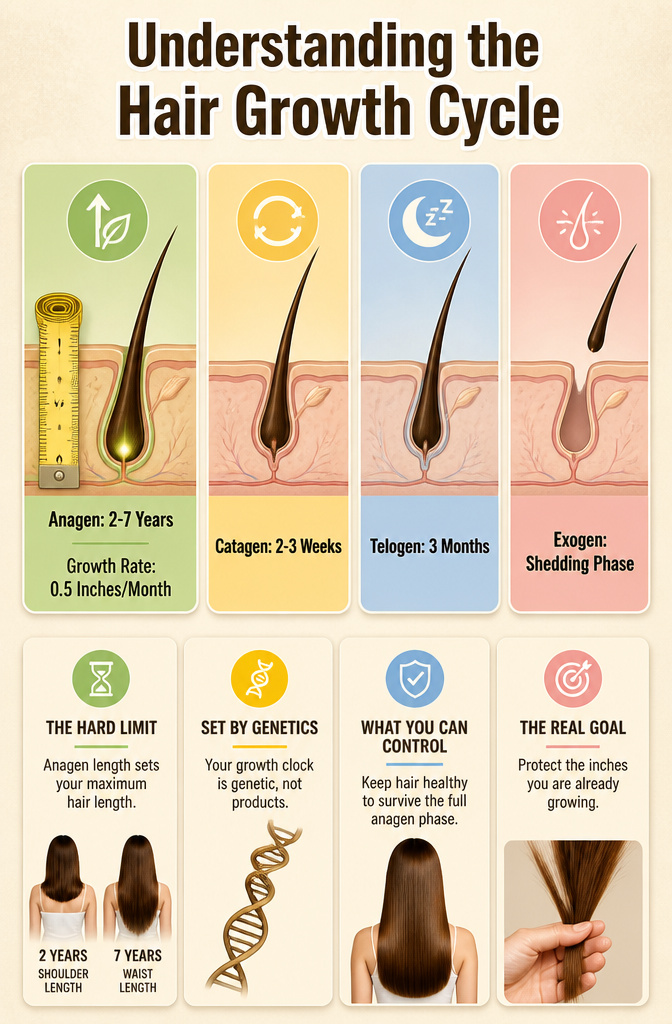
Hair grows in a four-stage cycle that explains why "faster" only goes so far. The anagen phase is the real workhorse: this active growth period lasts two to seven years, and during it, your hair adds about half an inch per month, or roughly four to six inches per year. Catagen comes next, a short two-to-three-week transition where the follicle shrinks and growth stops. Then telogen keeps the strand in place for about three months while the follicle rests. Finally, exogen is the shedding phase that lets the cycle start fresh.
That anagen window is the hard limit. Someone whose growth phase runs closer to two years will max out at shoulder length, while a seven-year span can reach the waist. Genetics set that clock, not products or routines. What you can actually influence is keeping each strand healthy enough to survive its full anagen stretch without breaking off early. The real goal is not speeding up biology, but protecting the inches you are already growing.

Biotin, Collagen & Keratin — a beauty multicomplex featuring Biotin, Collagen, Keratin, Hyaluronic Acid, Vitamin B-complex, Vitamins A & E, and natural botanical extracts. Each serving is designed to provide well-rounded nutritional support to complement your beauty routine.
WHAT IS BIOTIN (VITAMIN B7) – Biotin is a water-soluble B vitamin that contributes to the maintenance of normal hair and skin, as well as the normal functioning of the nervous system. Commonly included in beauty supplements, biotin supports healthy hair and helps maintain strong nails as part of a balanced daily routine.

Supports Healthy Hair, Skin, and Nails* – Formulated with biotin to help support the health of hair, skin, and nails as part of a daily wellness routine.*
What Changes Your Hair Growth
Hair grows from the root at roughly the same pace for most textures, though straight hair often looks like it’s growing faster because it lies flat while curls coil up and hide the length. What actually shifts your growth cycle falls into three categories: what you eat, how you treat your strands, and how much stress you’re carrying.
Diet quality matters first. A balanced intake with enough vitamins and minerals keeps the follicle in its active phase longer, while shortfalls can push hair into shedding earlier than it should. Stress does the opposite: high cortisol has been linked to hair loss repeatedly, which is why managing it through walks, yoga, or whatever actually calms you down isn’t just self-care fluff.
Hair care practices split cleanly into gentle versus harsh. Frequent tight braids, chemical straightening, bleaching, and hot tools all cause breakage that makes growth seem stalled, even when the root is doing its job. Being gentle when brushing and avoiding styles that pull gives you the length you’re already growing.
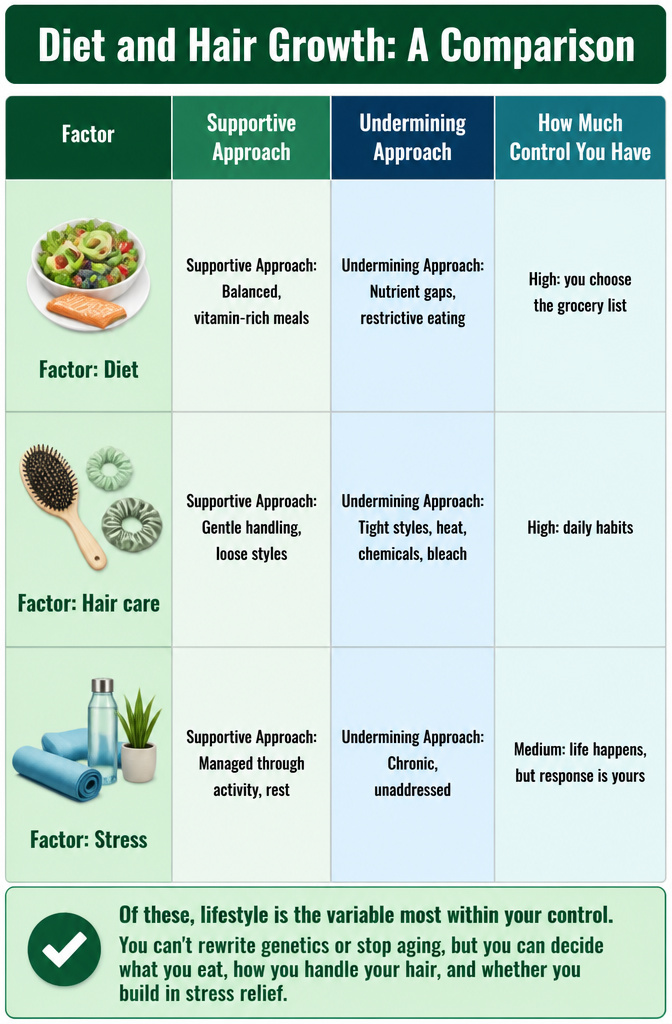
Here’s how the two sides of each factor compare:
| Factor | Supportive Approach | Undermining Approach | How Much Control You Have |
|---|---|---|---|
| Diet | Balanced, vitamin-rich meals | Nutrient gaps, restrictive eating | High: you choose the grocery list |
| Hair care | Gentle handling, loose styles | Tight styles, heat, chemicals, bleach | High: daily habits |
| Stress | Managed through activity, rest | Chronic, unaddressed | Medium: life happens, but response is yours |
Of these, lifestyle is the variable most within your control. You can’t rewrite genetics or stop aging, but you can decide what you eat, how you handle your hair, and whether you build in stress relief.

Women’s Rogaine: Hair growth foam clinically proven to regrow hair that is 61% thicker*; specially formulated with 5% Minoxidil for women; easily maintain a daily hair care routine for 4 months with two, 2.11-ounce aerosol canisters

Hair growth for men: Minoxidil 5% foam is designed for those who want a naturally strong scalp and hair. 5% minoxidil hair growth products is designed to help improve the scalp environment and promote scalp health. Hair growth foam gives you a fuller, more vibrant hair experience. Minoxidil 5% foam hair growth is for everyone who cares about scalp care and wants to improve the quality of their hair.Minoxidil 5% foam enhances hair vitality and regenerates hair

3-month supply: This men's hair regrowth product is a hair growth foam that slows hair loss and promotes regrowth; increases fullness and hair count on top of your scalp; 3-month supply is 3 aerosol canisters that are 2.11 ounces each
Scalp Health Habits
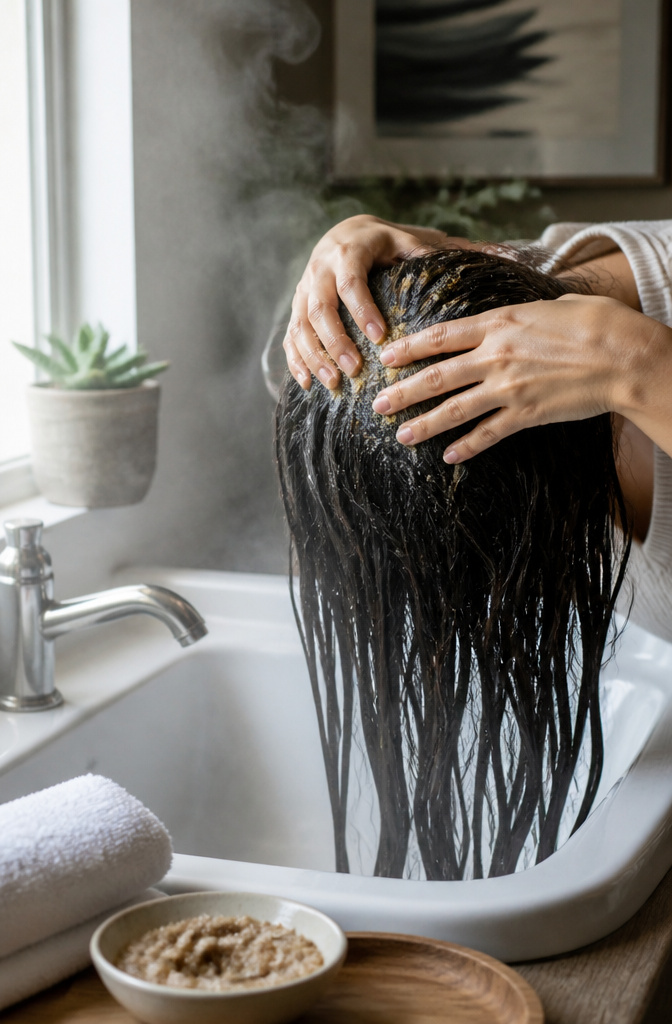
A clean scalp is where faster growth actually starts. Dead skin, oil, sweat, and product residue accumulate fast, and that buildup doesn’t just sit there looking greasy. It blocks follicles and triggers inflammation, which shortens the anagen phase, the active growth window you want to protect.
Exfoliating once a week keeps the surface clear. A scalp scrub or a serum with salicylic acid breaks down residue without stripping everything away. Massage it in for about five minutes, then let it work another fifteen minutes before you rinse and shampoo. That motion matters: the rubbing itself boosts circulation, carrying oxygen and nutrients to the root.
Daily scalp massage is worth adding too. One small study had men use a massage device for four minutes a day, and after 24 weeks their hair grew thicker. There was a temporary shedding phase around week 12, which sounds alarming but is fairly common when follicles shift into a stronger growth cycle. If you use your fingers instead of a device, keep the pressure gentle. Vigorous rubbing with fingertips can stress the follicle and contribute to loss rather than prevent it.
I keep my scrub on the shower ledge and treat it like flossing: not exciting, but skipping it costs more than the two minutes.

Boost Metabolism & Support Weight Loss Naturally This collagen-powered coffee blend helps support a healthy metabolism, fat burning, appetite control, and sustained energy—making it easier to reach your weight-loss goals without extreme dieting.

Boost Metabolism & Support Weight Loss Naturally This collagen-powered coffee blend helps support a healthy metabolism, fat burning, appetite control, and sustained energy—making it easier to reach your weight-loss goals without extreme dieting.

Purina Pro Plan LiveClear Dry Kitten food is the first and only kitten food that reduces cat allergens by safely neutralizing Fel d 1, a common allergen in cat saliva, with a key protein from eggs
My Go-To Growth Tools
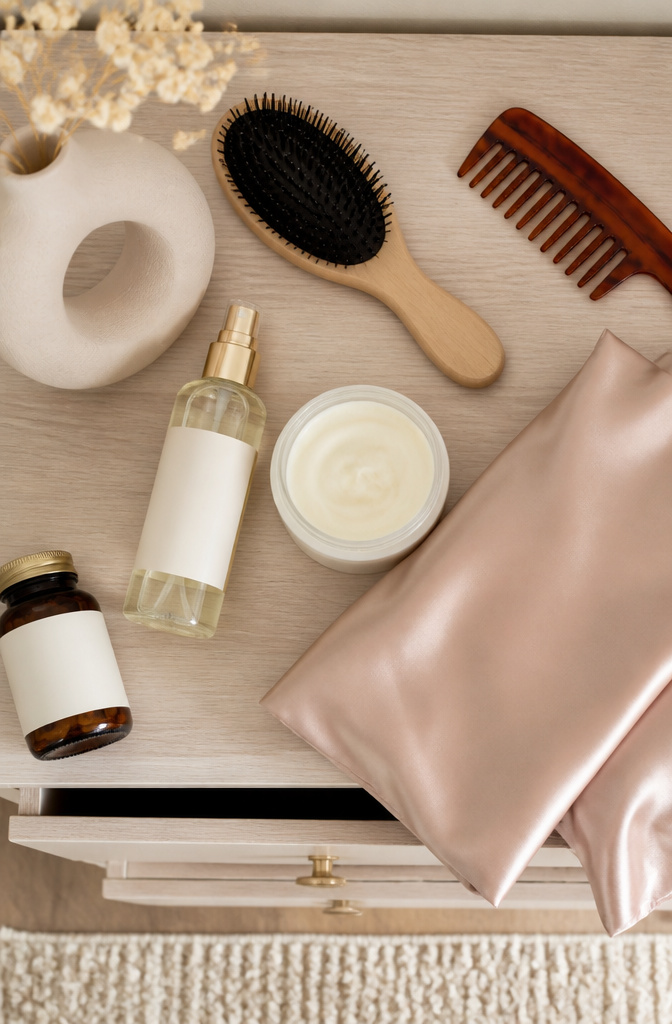
You don’t need to spend a fortune, but a few targeted tools make the actual work of growing hair easier to stick with.
- Biotin or iron supplements only help if you’re actually running low. A doctor can check that, and the fix is cheap once you know what you need.
- A heat protectant spray is non-negotiable on days you blow-dry or flat-iron. I skip the hot tools most mornings, but when I do style, the spray goes on damp hair and again right before heat.
- A moisturizing mask once a week repairs the damage that snaps ends before they grow long enough to trim.
- Scalp exfoliant, used gently, lifts the buildup that blocks follicles. I use mine before shampooing, not after.
- Silk pillowcases cut down on the friction that frays hair while you sleep. Cotton pulls; silk lets hair slide.
Pick two or three that match your actual routine. The best tool is the one you’ll use consistently.
Frequently Asked Questions
How can I make my hair grow faster?
You can’t speed up your biological growth rate, which is about half an inch per month on average. What you can do is protect the length you already have by getting regular trims every eight to twelve weeks, eating a balanced diet with enough protein and micronutrients, and avoiding heat and chemical damage that causes breakage.
What foods promote hair growth?
Eggs, leafy greens like spinach, salmon, nuts, and lean meats all support follicle function. Hair is built from protein, so without enough of it your body redirects protein to more critical systems and growth slows. A single plate with eggs, spinach, salmon, and almonds covers protein, vitamins A, C, D, E, zinc, and iron, the nutrients research most consistently ties to healthy follicles.
Does stress affect hair growth?
Yes. High stress pushes follicles into a resting phase, which leads to shedding instead of lengthening. Chronic stress has been tied to actual hair loss conditions including alopecia areata. Yoga or meditation once a week fits into most routines and helps keep cortisol low enough that your body doesn’t redirect resources away from growth.
How often should I trim my hair for growth?
Every eight to twelve weeks. A trim won’t make hair grow faster, but split ends travel up the shaft and break off length you’ve already grown. Ask for a micro-trim or dusting that removes barely an eighth of an inch; you’ll preserve healthy length without losing noticeable ground.