The right hair clips hairstyle depends almost entirely on your hair type and how much time you actually have. Thick hair demands a large claw clip that can swallow the full twist in one bite, while fine hair slips out unless you mist roots with texturizing spray first. A French twist holds all day on almost any texture once you match the clip size to your density, but a mini claw clip will only frustrate you if you’re trying to corral a full updo.
1. Classic French Twist
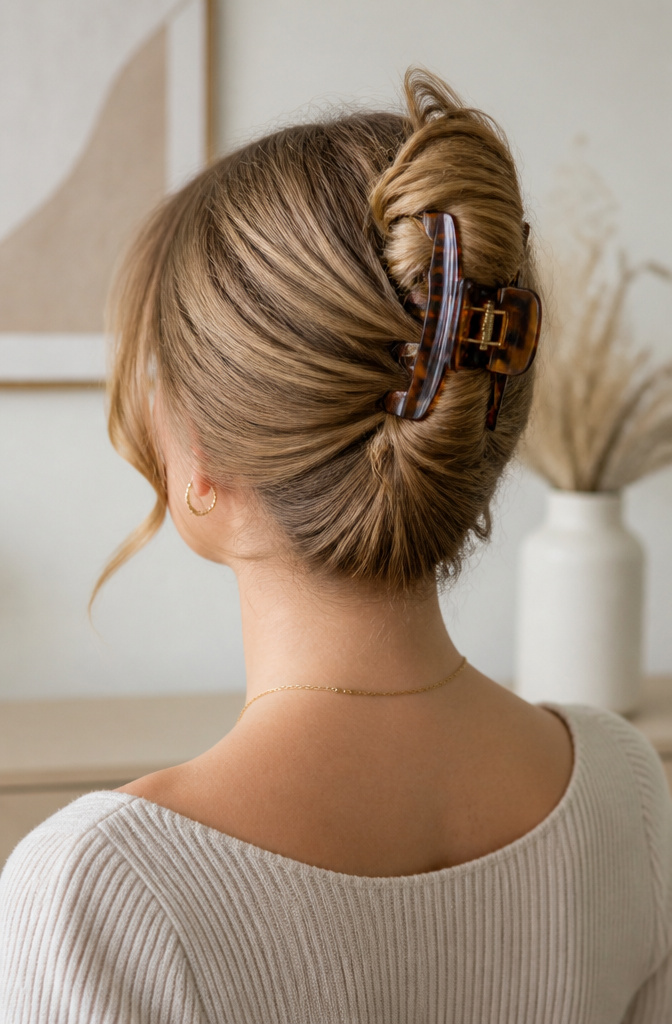
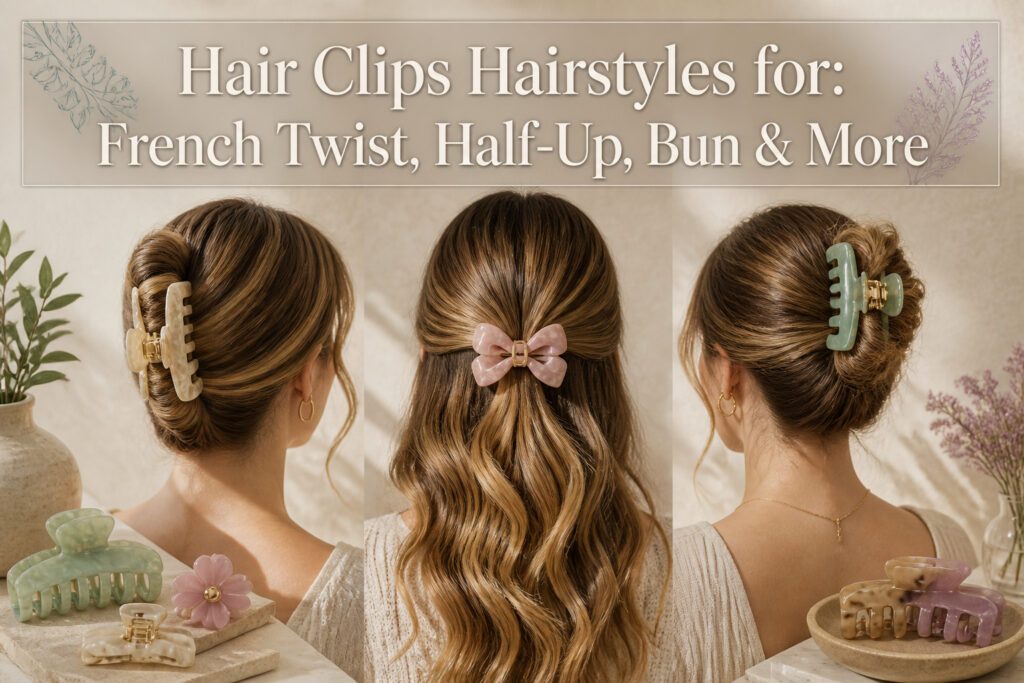
The French twist is probably the most popular of the hair clips hairstyles out there, and it’s what stylists see most often for good reason. It works on almost any hair type, takes about thirty seconds once you get the motion down, and reads polished without feeling fussy.
Start by gathering everything at the nape of your neck. Twist the length upward, folding the ends into the roll as you go, then clamp the whole thing with a large claw clip. The clip has to be big enough to swallow all your hair in one bite, or you’ll feel it loosening by lunchtime.
For a softer look, pull a few face-framing strands loose before you finish. You can also tuck the ends in clean for something more office-appropriate. Either way, the shape does the work; you are not pinning and spraying and hoping it holds.

OCTOPUS DESIGN HAIR CLIP - MAXIMUM GRIP FOR THICK, CURLY & WAVY HAIR Multiple jaw prongs large octopus hair clip lock thick, curly, and wavy hair all day without slipping, denting, or breakage. This cute large octopus claw clips for thick hair creates clean buns, messy updos, and half-up styles instantly — even on extra-long, heavy hair. These big hair clip for thick hair works on all hair types

FRENCH HAIR PIN FOR SECURE ELEGANT STYLING: Create polished updos effortlessly with this French hair pin. Perfect for buns, twists, chignons, half-up styles or as hair jewelry, it provides a secure, no-slip hold on thick, thin, curly, or straight hair. Lightweight and comfortable, it keeps hair in place all day, allowing women to achieve quick, stylish, and polished hairstyles without pulling or damage.
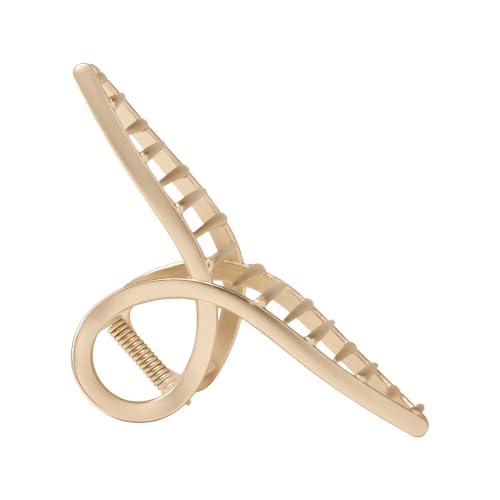
CHIC EVERYDAY HAIR CLIP: The French Twist Clip is a classic clip that never goes out of style, featuring a unique and sophisticated soft gold finish. It's the ideal hair styling accessory for creating both casual and dressy looks. Measuring 4.5" x 2", this chic claw clip is perfect for fine, medium and medium-thick hair types.
2. Half-Up, Half-Down
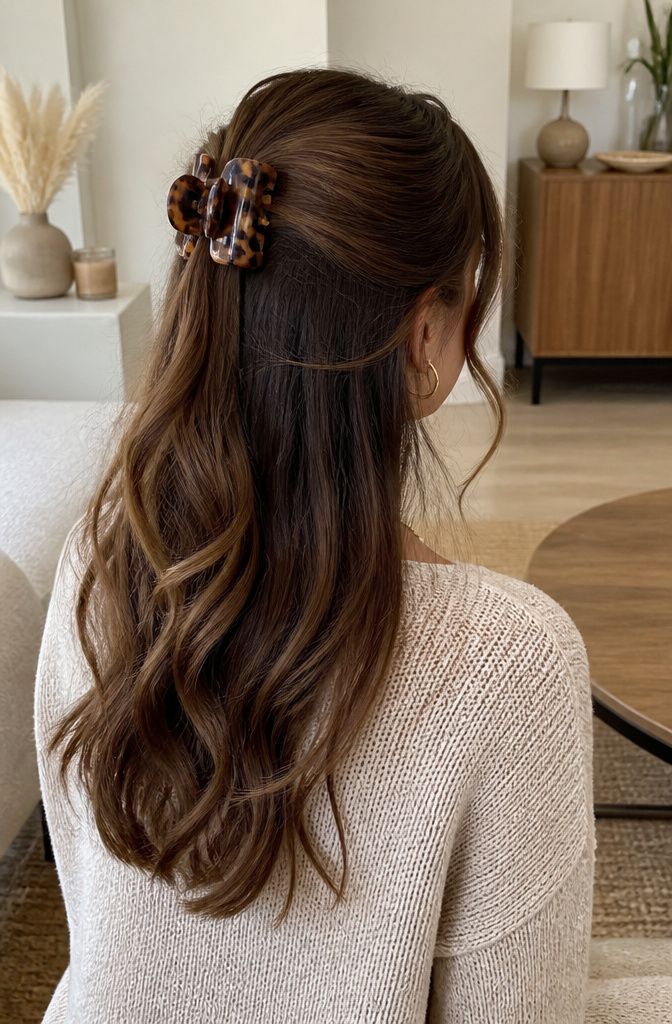
A half-up, half-down style with a claw clip is the easiest way to look like you tried when you barely did. Pull back the top section starting from behind your ears, secure it with the clip, and let the rest fall loose. Position the clip slightly above the crown, not right at the back of your head, so it stays comfortable all day and gives the pulled-back section a gentle lift.
This works on pretty much every length and texture. Shorter hair keeps it from falling in your face; thicker hair just needs a bigger clip. For finer hair, that clipped-up top adds volume you would not get with everything down.
Leaving two slim face-framing pieces untwisted softens the whole look. If your face is wider, those loose strands angle in more flatteringly than pulling every hair straight back. On windy days, the style keeps your eyes clear while the rest of your hair still moves. Want a little polish? Run a curling iron through the loose sections first for soft waves that look intentional rather than leftover.

Instant Volume and Length: Add instant volume and length to your hairstyle with this elegant hair extension claw clip.this fake bun will transform your look instantly. perfect for anyone looking to add volume and style without the hassle of styling their own hair.

Best Fit for Thin to Medium Hair : This fluffy and glossy messybun hair piece in Light Brown mix Blonde shades is soft to the touchlooks natural, and stays secure all day. Designed for women with thin or medium hair volume, it addsfullness effortlessly without discomfort

❃ DIY Claw Clip Ponytail ❃ Claw clip hair bun with bendable metal sections,sturdy, invisible and comfortable,There are 4 strands wired up so you can move it around and shape it in different ways,super easy to clip in and offers a fun updo, messy bun, or ponytail.The bendable wires work great to shape the ponytail exactly how you want it to look,just enjoy variable hairstyle.
3. Loose Bun
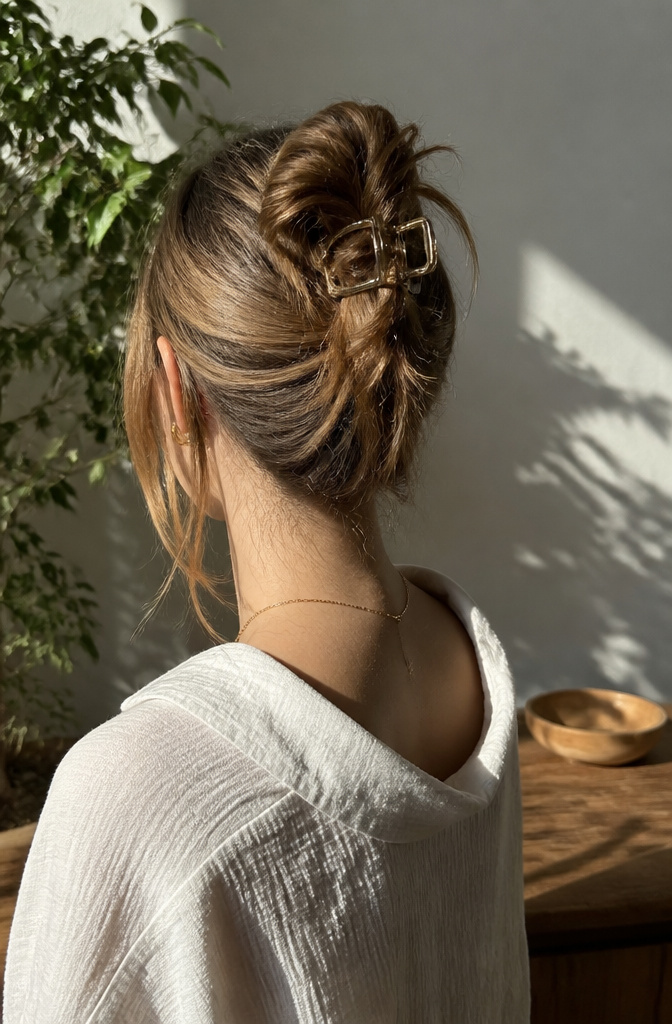
A loose bun with a claw clip is the style that looks like you spent twenty minutes when it really took ten seconds. Gather everything back, twist it loosely at the crown or nape, and secure it with the clip so extra hair hangs over and pieces fall where they want. The messier, the better.
Blow-drying first keeps frizz from fighting the shape, so the bun stays smooth rather than fuzzy. If your hair slips out of clips easily, texturizing spray at the roots gives the twist something to grip without making it stiff. I like to pull a few face-framing strands free after the clip is in, since the soft pieces around the jaw are what sell the whole undone look.

SMALL BUT RELIABLE HOLD: Don’t underestimate the strength of these small hair clips. It secures bangs, shorter layers, or flyaways, they grip comfortably without snagging or pulling. These tiny hair clips design makes them a go-to for quick fixes and polished finishes, offering functionality you can rely on daily while adding subtle style to your look.
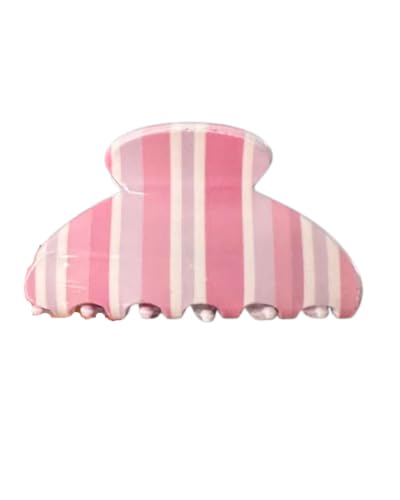
MINI SIZE: At 2.75 inches, this claw clip is smaller than a standard 4-inch clip, making it ideal for casual styles.
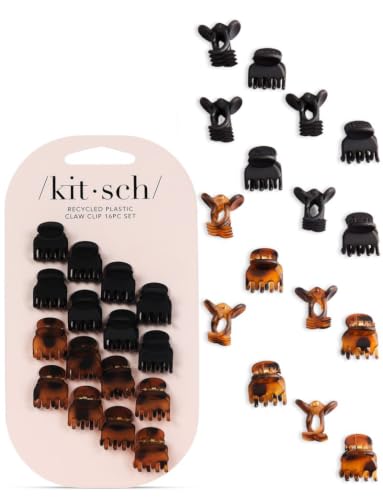
SMALL BUT RELIABLE HOLD: Don’t underestimate the strength of these small hair clips. It secures bangs, shorter layers, or flyaways, they grip comfortably without snagging or pulling. These tiny hair clips design makes them a go-to for quick fixes and polished finishes, offering functionality you can rely on daily while adding subtle style to your look.
4. Twisted Half-Up
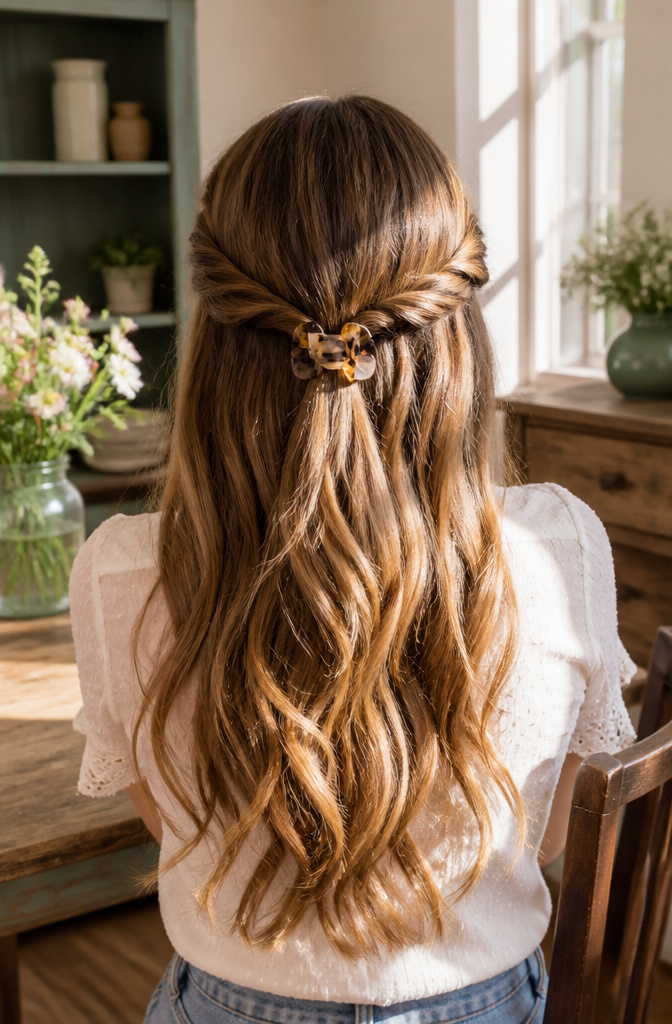
A twisted half-up takes the basic half-up style and adds structure by twisting sections back from each temple before meeting them in the center with a clip. The twist itself becomes the detail that elevates the look from something thrown together to something intentional.
Medium to long hair carries this best, since shorter layers can slip free of the twist before you reach the clip. I have found that starting the twist right at the hairline, not an inch back, keeps the front pieces from falling forward within the hour. For the clip itself, a small claw clip disappears neatly into the twist and holds without bulk.
What makes this style practical is its range. The same twisted half-up with a matte black clip reads office-appropriate, while swapping in a butterfly or flower claw clip shifts it toward brunch or an evening out. A stylist I trust runs a curling iron through the loose sections first if the goal is soft movement in the hair that stays down, which adds maybe three minutes but changes the finished impression entirely. On windy days, the twist keeps hair out of your face without sacrificing the look entirely, which is why I come back to it more often than a simple pulled-back half-up.


TEXTURE HAIR SPRAY FOR WOMEN - The Hairitage Magic Spell Texturizing Spray includes a lightweight, buildable formula that adds texture and volume to any hair type, giving you the perfect foundation for all your hairstyles.

MAKE WAVES - Beach waves and laid back curly hair are all time in fashion hair styles and our Level 3 sea salt hair spray can give you just that with some extra hair volume that is super soft and easy to put the hair brush on.
5. Side-Swept Twist
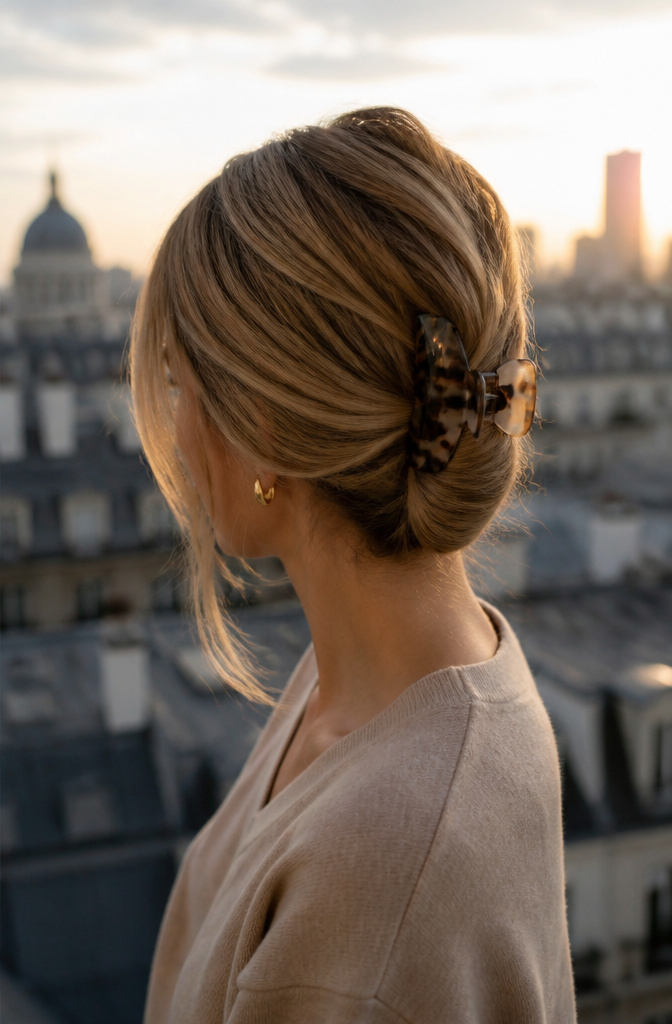
The side-swept twist works best when you want something that feels intentional without looking like you tried too hard. All the hair is swept to one side, twisted loosely, and clipped above the ear. That placement is what makes the look asymmetrical and a little romantic; the twist sits off-center so your face isn’t framed the usual way.
A full blowout underneath helps here. The twist needs volume at the root to grab onto, otherwise it can flatten against your head and lose the soft shape you’re after. Once the hair is gathered and twisted, the clip does most of the work, but the looseness matters. Too tight and you lose the softness; too loose and it unravels.
This one photographs well from the front, and it leaves your neck and shoulder clear if you’re wearing something strapless or want your earrings to show. I like it for events where a full updo feels like too much, but wearing everything down would read too casual. The single clip keeps it simple, and the asymmetry does the visual interest for you.

CLAW HAIR CLIP SET: This set of 2 octopus-style medium sized claw hair clips is perfect for securing easy updos or sectioning hair for heat styling. Strong, interlocking teeth hold even thick hair in place without snagging.
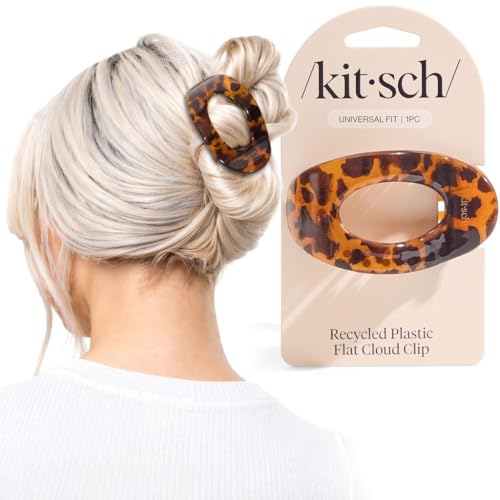
SLEEK FLAT DESIGN: This medium flat claw clip for women sits comfortably against your head for a seamless, stylish look. Perfect for effortless updos, half-up styles, and securing loose strands while keeping your hairstyle smooth and polished.

MADE WITH HIGH-QUALITY MATERIALS: Our hair clips are expertly crafted from durable recycled materials and professional-strength springs, making them the perfect eco-friendly choice for all your hairstyling needs!
6. Slicked-Back Updo
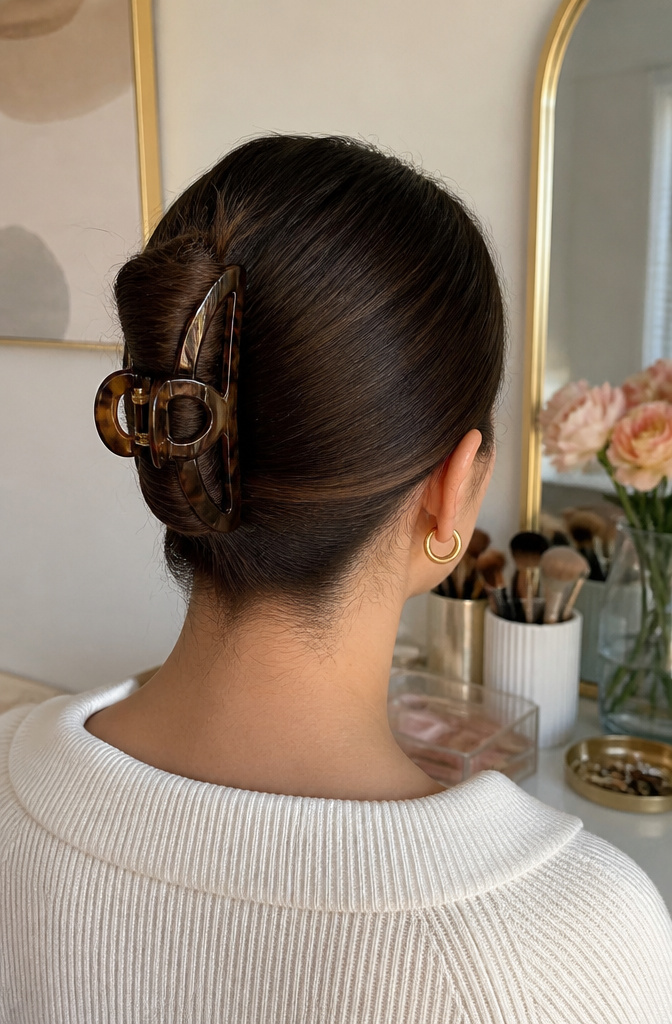
A slicked-back updo reads polished without trying too hard. Gather hair at the nape of the neck and secure it high on the crown with a medium claw clip. The placement matters: sitting the clip up high keeps the line taut and gives the back of your head that clean, lifted shape.
Smoothing is where the finish lives. Run a flat iron over the front sections first if your hair has any wave or frizz, then brush everything back with a boar-bristle brush. A light layer of hairspray or gel tames flyaways without turning the look helmet-stiff.
This style earns its keep on days when you need your hair completely off your face: presentations, humid commutes, or anytime you want the focus on your shoulders and neckline. It pairs better with earrings than with a high collar, since the clip itself sits at the crown and competes for attention up there.
Medium claw clip is the right size here; anything smaller slips under the weight, and anything oversized throws off the proportions.

EVERYDAY CHIC: The French Twist Clip is a large loop claw clip with a unique and sophisticated matte blue finish.

ELEGANT BEADED DESIGN: Features decorative resin beads in a rich tortoise brown finish, accented with a sparkling rhinestone center detail for a polished, sophisticated look.

【French Hair Pin Claw Clips】You will get 3 french hair pin claw clips, these elegant french twist hair clips with pearl have a strong grip that will hold your hair securely while maintaining your elegance.
7. Braided Styles
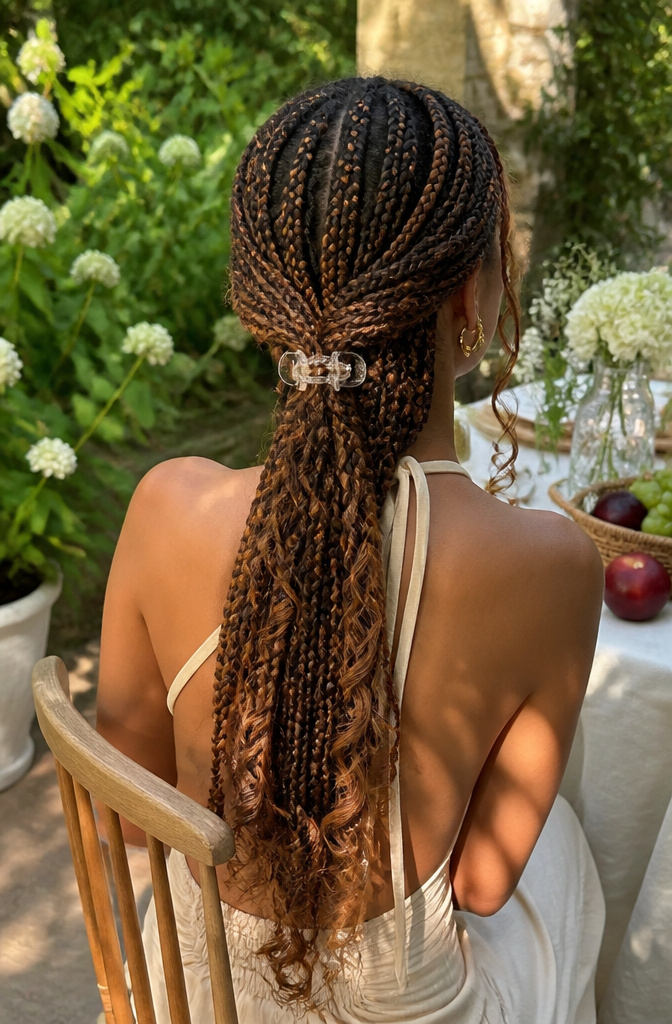
Braids and claw clips are a natural pairing because the texture of a plait gives the teeth something to grab. A single braid pinned up at the nape with a clip stays put far better than smooth hair would, and you skip the tension headaches that come from pulling everything into an elastic. I like to leave a few wisps loose around the face so the look does not feel too finished.
Smaller braids work just as well. Two slim plaits pulled back from the temples and clipped together at the crown create a half-up style that holds all day. The braids themselves become the detail, so a simple clip in a neutral tone does the job without competing. For those with protective styles like box braids, the same logic applies: section off the top half, twist or cross a few braids over each other, and secure with a clip. The multilayered effect adds depth without extra product or heat.
The grip is the real advantage here. Braided hair does not slip against a clip the way straight hair does, which means you can use a lighter hold and still feel secure. That matters if you are trying to avoid breakage at the crown or along the hairline.

[Product material]: Lommel Messy Bun Hair Piece is made of imported Japanese synthetic fiber hair and high-temperature imitation human hair fiber, which gives it a natural and personal hair effect.

[Product material]: Lommel Messy Bun Hair Piece is made of imported Japanese synthetic fiber hair and high-temperature imitation human hair fiber, which gives it a natural and personal hair effect.

Modern Chignon Color R1416T BUTTERED TOAST - Hairdo Extensions Claw Clip Loose Hair Bun Tru2Life Heat Friendly Synthetic Soft Waves Hairpiece
8. Mini Claw Clip Styles
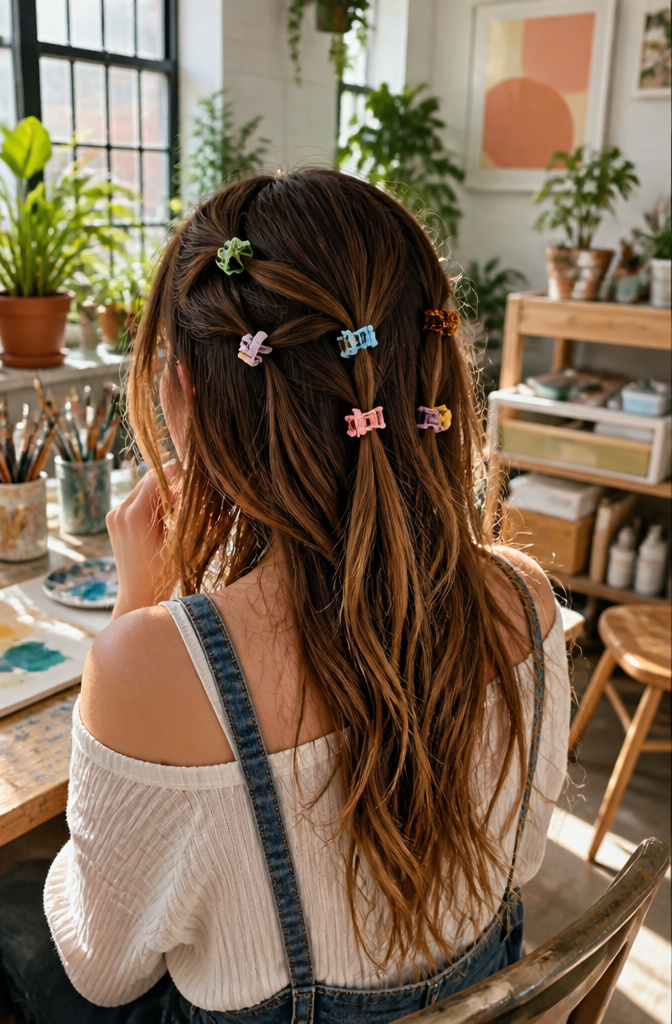
Mini claw clips earn their place in your styling kit by doing the jobs bigger clips can’t manage. They pull back small sections of hair or work purely as accessories, which makes them ideal for partial holds along your hairline or decorative placement throughout a style.
I like using them for securing the front pieces that always slip loose, or for adding a little structure to an otherwise plain down-do. Slide one above each temple to keep stray strands out of your face, or cluster a few at the crown for a half-up effect without the bulk of a full-size clip.
They also lock down the ends of braids and twists without weighing them down. A mini clip at the base of a slim braid keeps it from unraveling, and the butterfly designs or fruit-shaped options add color without trying too hard. For a low ponytail, wrapping a small section of hair around the elastic and pinning it with a mini claw clip dresses up the finish without changing the whole style.
Neutral colors keep the look subtle; bolder hues or shapes like stars and animals turn the clip into the point of interest. Either way, the hold is light, so these work best on hair that isn’t fighting gravity too hard.

Sturdy: Made of premium plastic and springs, these mini hair claw clips are sturdy enough for daily use.

✿FEATURE:tortoise claw clip gives you quick styling solutions, no-slip grip, and does not feel heavy on your head. Gracefully receive compliments by creating a variety of hairstyles. The size of claw is approx. 3 inch x 1.8 inch x 1.8inch (7.5 cm x 5 cm x 5 cm)
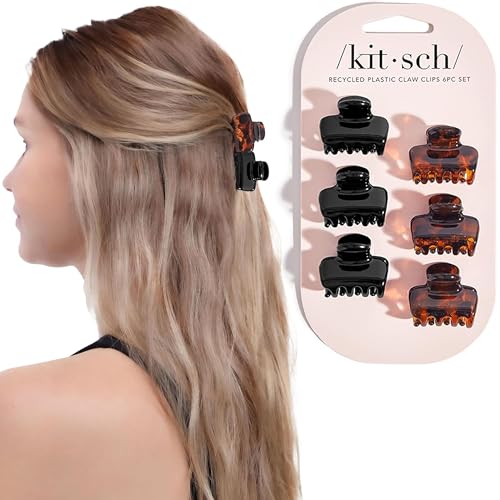
MADE WITH HIGH-QUALITY RECYCLED MATERIALS: Our small hair clips for women are expertly crafted from durable recycled materials and professional-strength springs, making them the perfect eco-friendly choice for all your hairstyling needs!
9. Casual Top Section Clip
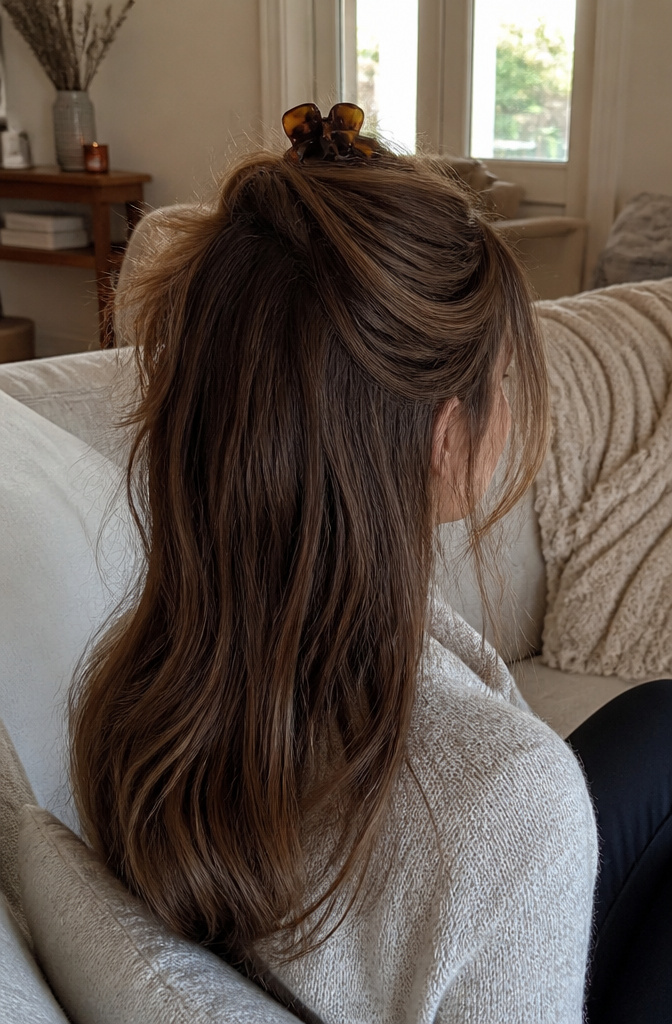
Sometimes the best hair clips hairstyles are the ones that barely look styled at all. The casual top section clip is exactly what it sounds like: gather the hair from the crown, pull it straight back, and secure it with whatever clip you have within arm’s reach. The rest stays completely down and loose, so you get the polished feel of an updo without actually committing to having your hair up.
This move works with any clip size, which means you’re not hunting for a specific tool. A smaller claw clip handles finer hair; a bigger one grips thick sections without slipping. The whole thing takes under thirty seconds, and the result still changes the overall shape of your hairstyle in a way that reads intentional rather than lazy. If your face is wider, leave a few strands loose in front or sweep them to one side so they frame your features instead of pulling everything straight off your forehead.

Unique moisturizing texture spray won't dry hair or glue strands together
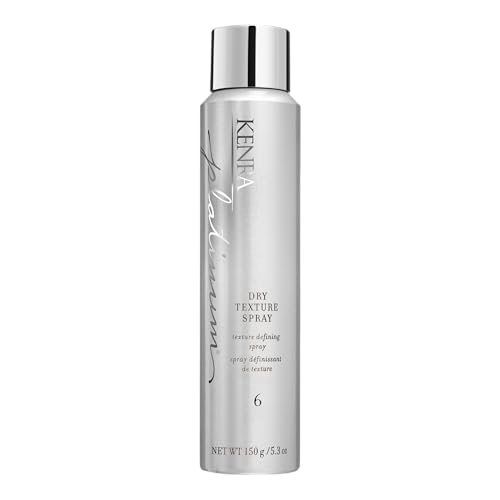

A revolutionary (invisible) dry spray for incredible volume
10. Messy Updo
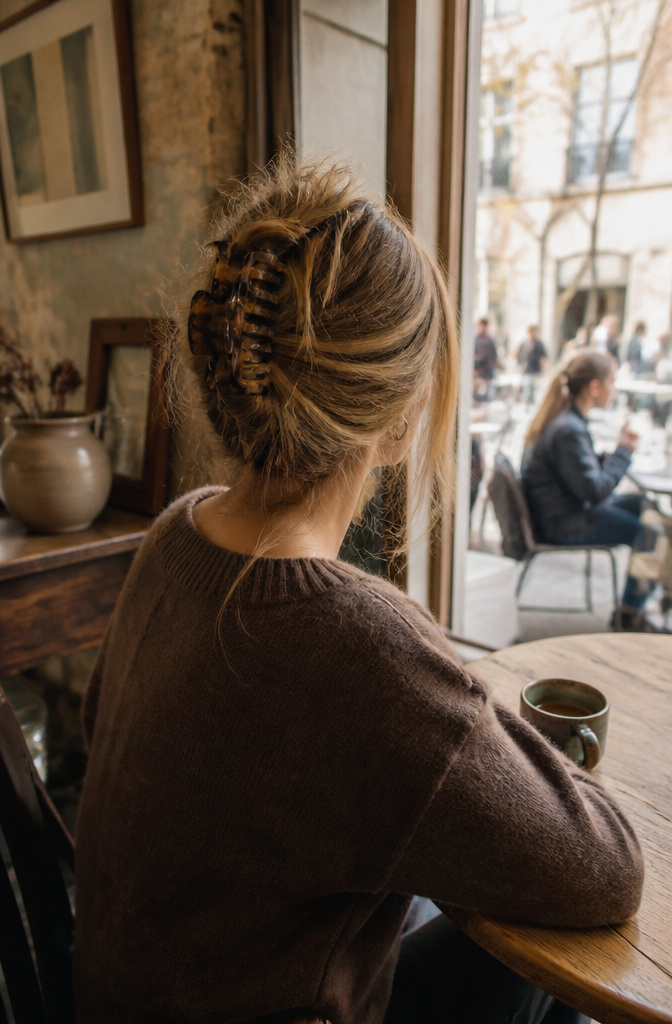
A messy updo with a claw clip is the style I reach for when my hair has gone a day or two without washing. Second-day hair has just enough grit and natural texture to hold the shape without slipping out. Start by gathering everything loosely at the crown with your fingers, no brush. Twist haphazardly upward, tucking the ends under rather than rolling neatly, and secure with the clip wherever it feels stable. Pull out a few face-framing pieces deliberately; they soften the look and keep it from seeming like you tried and failed. The goal is intentional disarray, not a neat updo coming apart. A light mist of setting spray can keep the planned mess in place without freezing it. This one works because it leans into what your hair already wants to do on its own.

Slideproof Classic Claw Clips: From the most loved & trusted hair accessories brand, Goody, these medium hair clips keep your hair effortlessly in place and are ideal for all moments, be it brunch, date night, a formal party or an office event

DURABLE:These jumbo hair clips are made of durable plastic which painted with a matte paint. The paint doesn't scuff, peel .The reliable spring is strong and The hair clips open almost 180 degrees versus which enough to help keep your hair in placeand whether dry or wet! The teeth and long enough that the keep a good grasp.They are the perfect durable material without feeling too heavy.Great for thick hair, curly or straight!

Effortless Styling – Easily twist and clip your hair into half-up or full updos with these sleek, medium-sized claw clips, adding a stylish touch to any hairstyle.
Why Claw Clips Beat Elastics
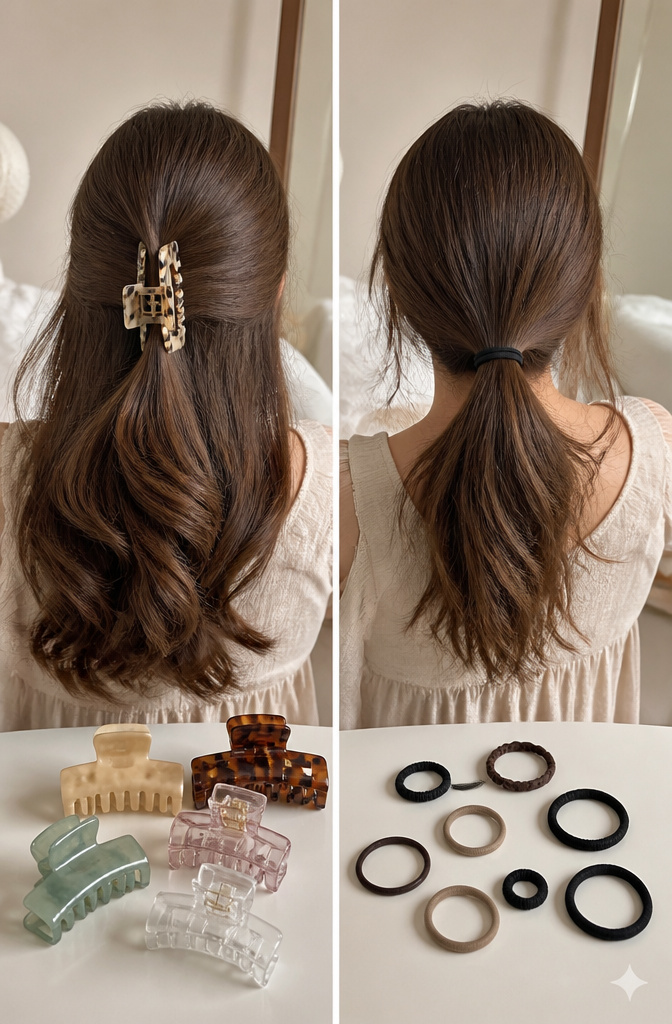
Claw clips distribute pressure across a wide surface instead of cinching hair into a band, which means far less breakage and frizz than you’d get from traditional elastics. The grip holds without crushing the cuticle, and the open design lets air move through so your style doesn’t trap heat and puff out by noon.
Versatility is the other draw. A large claw clip swallows thick hair whole for a full updo, while smaller ones section off half-ups or secure short layers at the nape. Matching clip size to density matters: thick or abundant hair needs a bigger clip to hold without slipping. I’ve found the sweet spot is keeping a few sizes on hand so I’m never forcing too much hair into too small a grip.
They actually elevate a look in seconds, so you get all the polish of an updo without any of the effort.
— Elle
That ease is what makes them worth swapping in. No technique needed, no tension headaches, and your hair stays healthier through repeated styling.
Picking the Right Clip Size
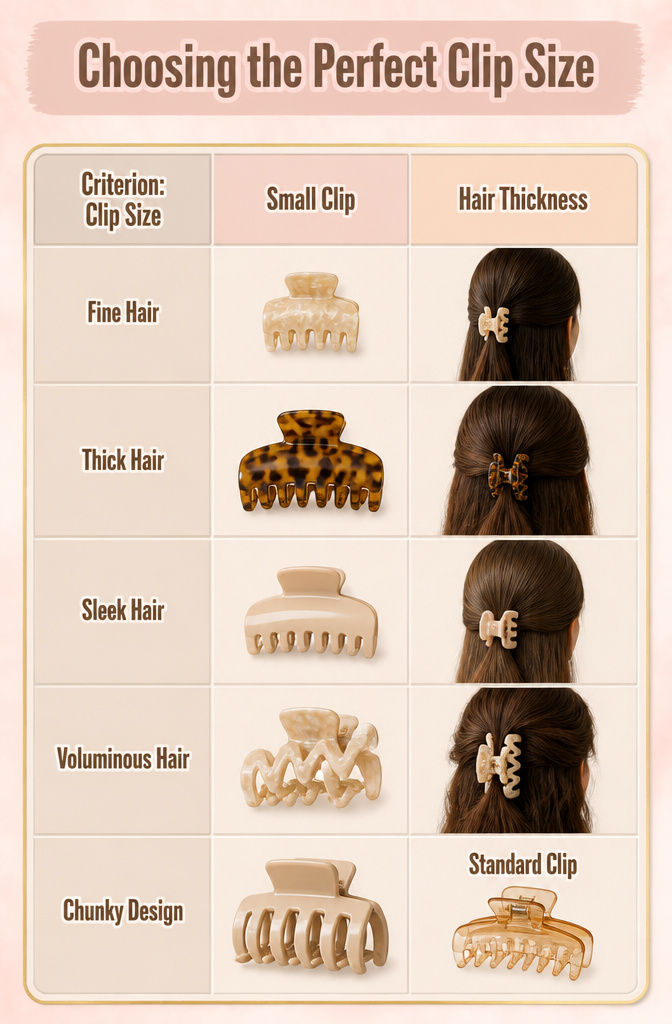
A clip that is too small for your hair will slide out by noon, and one that is too large will gape and loosen its grip. Matching the clip size to the amount of hair you are securing is the whole trick. People with thick hair or a lot of hair will need a bigger-sized clip; finer hair does better with a smaller one that can close fully around the section.
The question of what size claw clip to use comes down to hair thickness and how much hair you are clipping back. A big, chunky zigzag design can handle voluminous hair while adding a little visual interest, but the same clip on thin hair would feel like overkill and hold poorly. For a clean pullback or a small half-up section, a standard medium clip usually does the job without bulk. If you are doing a full updo with thick hair, size up until the teeth meet properly when closed.
Styling Tips for Better Holds
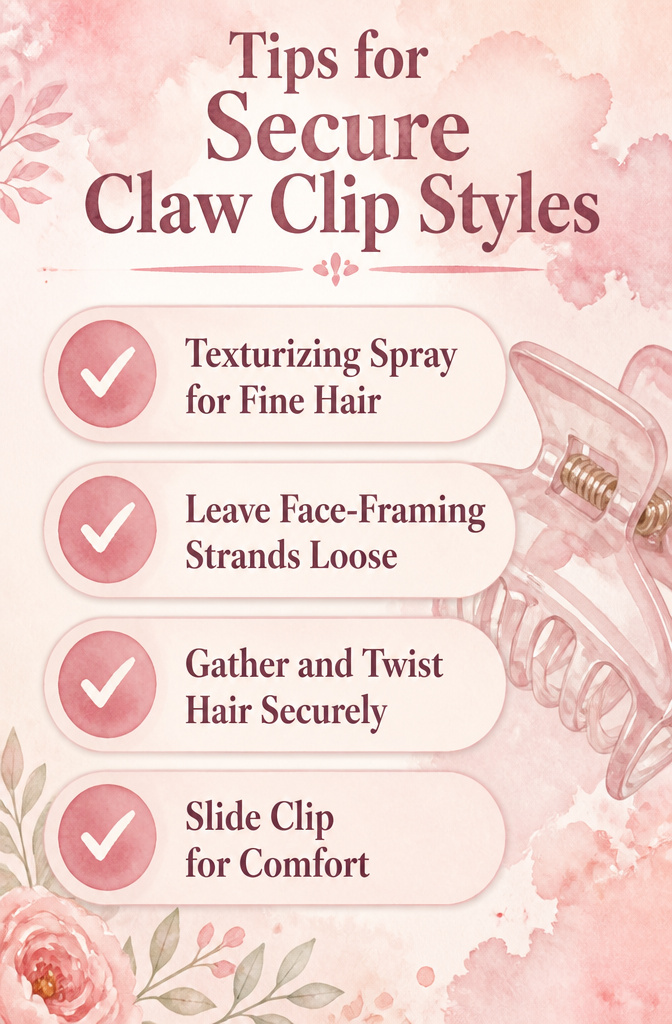
A few small adjustments make the difference between a clip that slips by noon and one that stays put.
- Use texturizing spray on mid-lengths if your hair is sleek or fine. Smooth hair has almost nothing for a claw clip to grip. A quick mist from roots to mid-shaft, keeping the ends bare, gives the teeth something to catch without killing the flow.
- Leave two slim face-framing pieces loose when you twist the top section back. It softens the whole look and keeps a polished style from reading too severe.
- For a basic claw clip hold, gather your hair where you want it, twist or fold it upward, and let the clip do the rest. Position the teeth against your scalp and snap shut. If it digs in after five minutes, slide it half an inch lower; comfort matters more than perfect placement.
- Pull out a few strands around your face after securing a messy French twist. The relaxed pieces make the style look intentional, not like you gave up.
Frequently Asked Questions
What are some easy hairstyles with claw clips?
French twists, half-up half-down styles, loose buns, twisted half-ups, side-swept twists, slicked-back updos, braided styles, mini clip accents, casual top section clips, and messy updos all work well with claw clips. Each takes under a minute once you know the motion, and the clip does the holding work so you aren’t pinning and spraying. The French twist is the most popular, while the half-up and loose bun are fastest for everyday wear.
How do you use a claw clip?
Gather your hair where you want it, twist or fold it upward, position the teeth against your scalp, and snap the clip shut. For a full updo, twist the length and let the clip swallow the hair in one bite. For a half-up, pull back the top section starting behind your ears and secure it slightly above the crown for lift and comfort. If it digs in after five minutes, slide it half an inch lower.
What size claw clip should I use?
Match the clip size to your hair thickness and how much hair you’re securing. Thick or abundant hair needs a bigger clip so the teeth meet properly when closed; finer hair does better with a smaller clip that can close fully around the section. For a full updo with thick hair, size up until the grip feels secure. A medium claw clip works for most clean pullbacks and small half-up sections without adding bulk.